Afterthoughts About Public Readings

I wrote a book based on my experiences in a kayak on a huge, ever-changing lake. Because I believed in what I had written, and that a portion of my life could be expressed in language, I felt a responsibility to face the public.

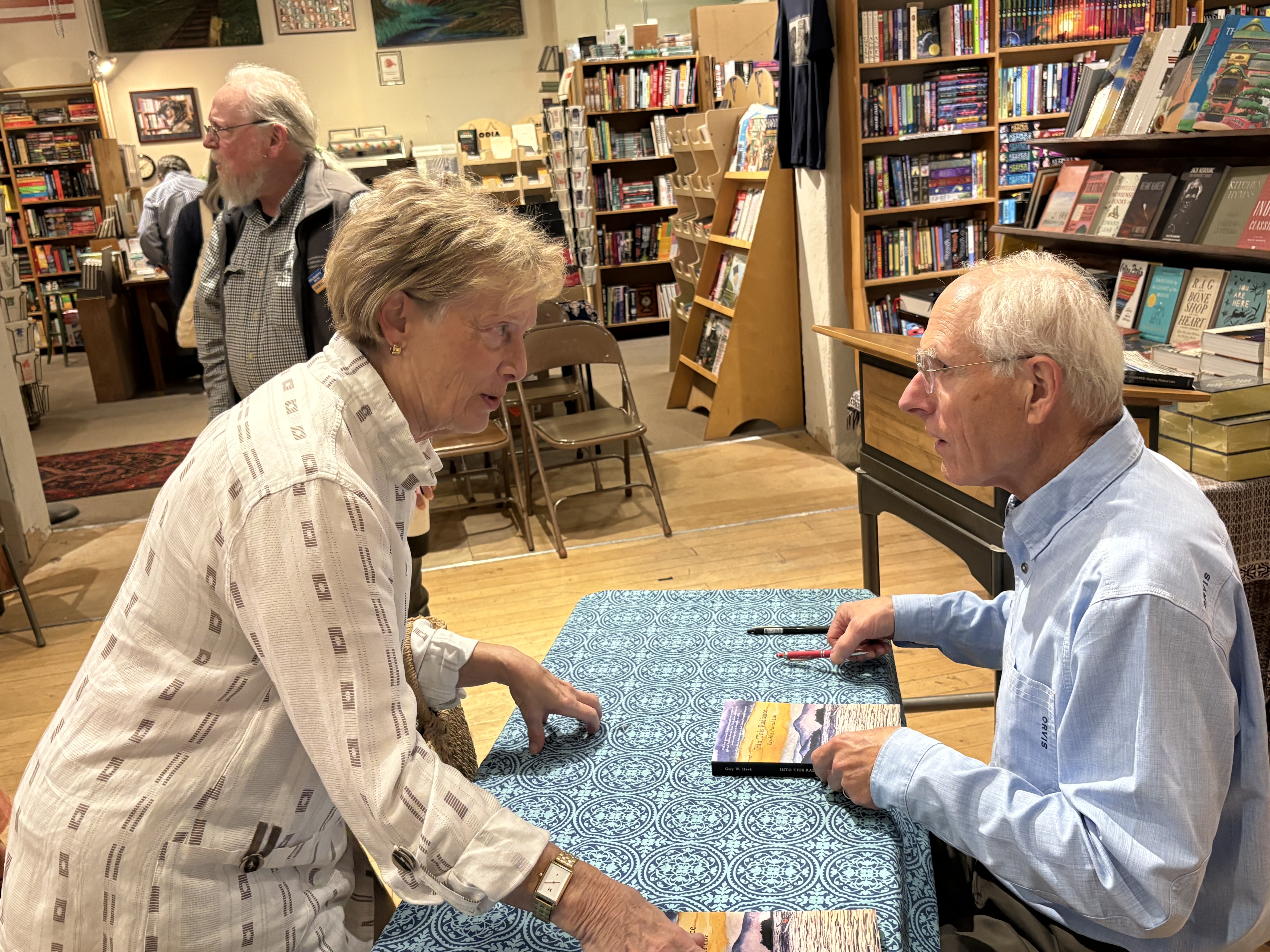
I have read twice now, once in a bookstore and once in a public library. A couple of other events hang on the calendar. I have learned something important, something I did not expect. On the surface a public reading can interest attendees in a book and a few copies might be sold. But I now see clearly that drawing attention to a book is not the purpose of the event.

On both occasions before different kinds of audiences, conversations flew through the air like October’s leaves yanked from stems by gusts of wind. The reading of an essay stimulated activity in the minds of listeners and helped them connect with their own experience. Suddenly this usually silent and invisible mental activity became visible and audible. People began to tell stories about their own encounters with light and sound, waves and wind, stories about friends they have loved and lost, things they make, things they have done and hope to do if given the time. The room began to sparkle with ideas and interaction. People spoke not just to the author but to each other.

Reflecting on these experiences I have concluded that people are hungry for interaction, seem eager to be heard by anyone who stands still long enough to hear a story or pay attention to a question. I do not know if this need is the lingering aftereffect of the pandemic and imposed isolation or, if in fear of the other, we have held ourselves back from interaction because we anticipate criticism or conflict. Whatever the reasons, I witnessed a great desire to speak and feel heard.

I learned an equally important thing. The second event was held in the public library in Polson, Montana. It seemed as if people in the community knew that a library is a safe place for all kinds of people, almost as though an unwritten covenant guides behavior and brings people together in a common purpose. To be sure, this sense of safety and openness is fostered by the librarians, their knowledge, warmth and hospitality. But I had never seen so clearly the value of a library to a community, especially in a small town. A library or an independent bookstore fills minds and hearts with fresh ideas, awakens generosity, and makes clear that not every contact is driven by the repetitive and reinforcing loops of algorithms.

On both occasions a writer became a listener.
Drifting through the Questions

In early October, good friends invited us to spend a night at their cabin. In the face of uncertainties we did the best we could to work out a protocol for minimizing exposure to the virus, planned meals, and eventually joined them at their place on the east side of the Mission Range. Unsure how to strike the balance, we tried to find a middle way between the safety of isolation and the desire to connect. As we turned into their driveway I realized that I never cease to be moved by that first glimpse of water, the wavy horizontal dabs of blue, yellow and green on the textured surface of the lake.

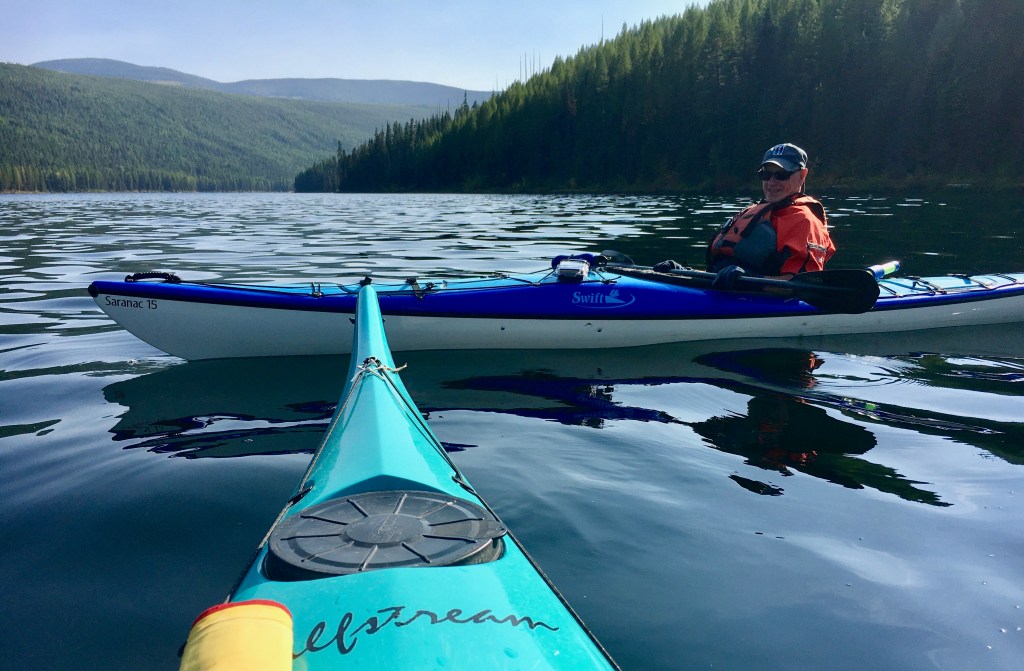
After peanut butter and jelly sandwiches and sharing too few cookies because I ate two of them while driving, we went down to the dock. I helped Joyce get in her boat, watched Glenn work bravely around a knee needing replacement, and Jeanne slip easily into her autumn-colored Swift. We did not feel ambitious. On this paddle we meandered into a shallow bay not far from the cabin and then ventured out into open water. Joyce struggled with a sore shoulder, inflamed perhaps by helping her brother stack firewood for the winter. Seeing Joyce in the distance behind us, Jeanne said she would turn back, join Joyce and spend time with her on the dock. Glenn and I paddled on toward the delta where Herrick Creek flows across a gravelly beach into the lake.

Satisfied with this destination, Glenn and I put our paddles across our decks and let a north wind carry us down the lake. We simply drifted. But as the wind pushed us we talked. Stimulated by a class Glenn was taking, we talked about our own unconscious racism, all the destructive assumptions built into America’s “doctrine of discovery,” where we encountered people of color in Kansas and California as we grew up. Mindful of Breonna Taylor, we asked each other about our own encounters with law enforcement, how even as white men we had experienced the way some officers can flaunt their power to humiliate and control. We shared the sense that If these things could happen to white boys, imagine, we said, what it must be like for people of color. For fifteen minutes or so we drifted through the questions and stories, finding connections between our own lives and the current state of the nation.

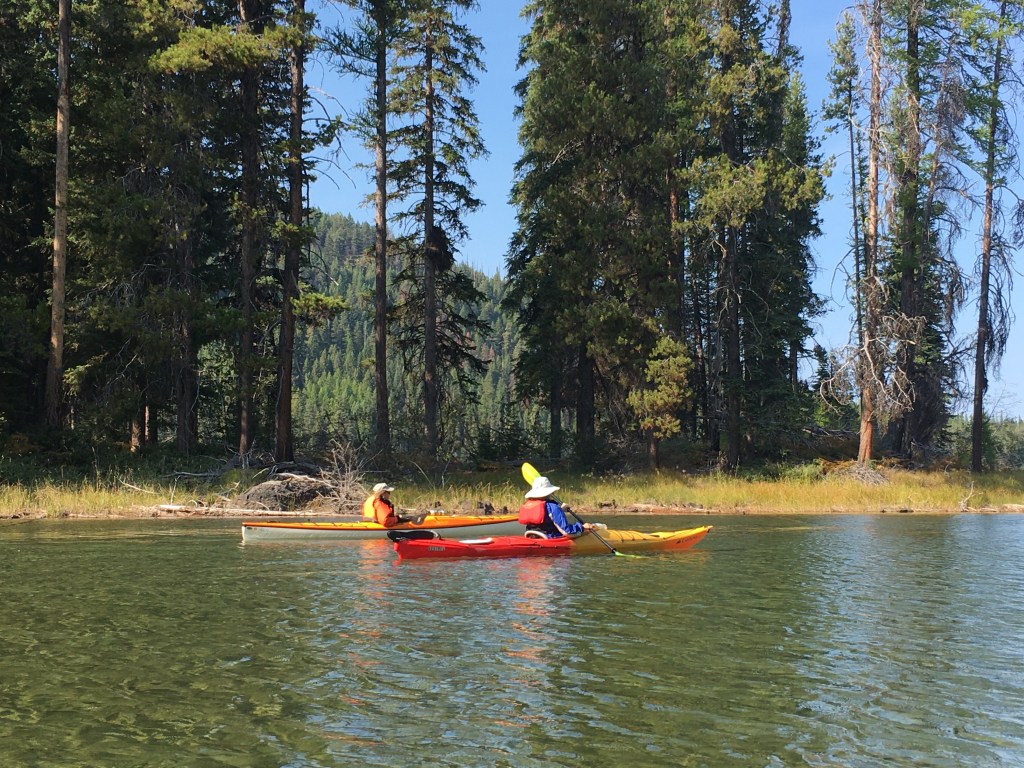
After a while, wanting to see our partners again, we picked up our paddles, turned our boats and dug into the wind. In the shade of the opposite shore we saw another paddler in a bright red boat, a striking contrast in relation to larch and Ponderosa. In a deep part of the lake we stroked past fishermen who had caught a nice trout they were beginning to fillet. Still, the effort to make sense of our own histories and that of the nation stayed with us and influenced conversations for the remainder of our time at the lake.

After dinner, despite choppier conditions, I convinced Jeanne and Glenn to join me for a night paddle. I wanted to see a full moon rise over the Swan Range, a pale wall of stone across the valley. Heading west we navigated by looking at Saturn, and heading east toward the cabin, we returned inside a cone of moonlight. Though we might have extended this paddle, we wanted to get back in time for the news, the President in the hospital, questions about our nation and its future ever on our minds.

This fall Joyce and I are taking a class on the poetry of Tony Hoagland. During the second week of class we considered a poem called “Theater Piece.” Here the poet imagines a bunch of well-meaning white people inviting a “black performance artist” into their troupe and a conversation with the playwright who “…won’t give unlimited shoeshines/ to white millionaires with season/ tickets to the Coliseum.” In the awkwardness and difficulty of the conversation and ensuing silence, “tangled in feelings and thoughts from the past,” they all wonder how they are going “to get into the future together.” At the lake with thoughtful friends we, too, are wondering how to get into the future together and what kind of future it will be. We drifted through the questions, shared stories, and lacked answers.