Finally, Close to Painted Rocks

Every time I go to the lake I am aware that I am passing through land that belongs to The Flathead Nation, the Salish, Kootenai and Pend Oreille peoples. This is not my land; it is theirs. Their roots in this landscape reach into the ground of at least 7,000 years of history and their stories reach back to a time before that. As I travel to the lake and pass over its waters, I wish I had a way of making a deeper connection with the people of this place. In an effort to make contact with the history of these people I have tried many times to approach Painted Rocks, a pictograph site on the west shore of the lake. Whether I am paddling north or south I often find that the waves in this area of the lake seem to be focused on the cliff where these red markings can be found. In these conditions waves bounce off the cliff at odd angles and create a complicated, chaotic sea. Or, even if the waves are calm, wakes from passing boats make this a somewhat hazardous place for a kayaker to slip the paddle under a deck line to pause and wonder.
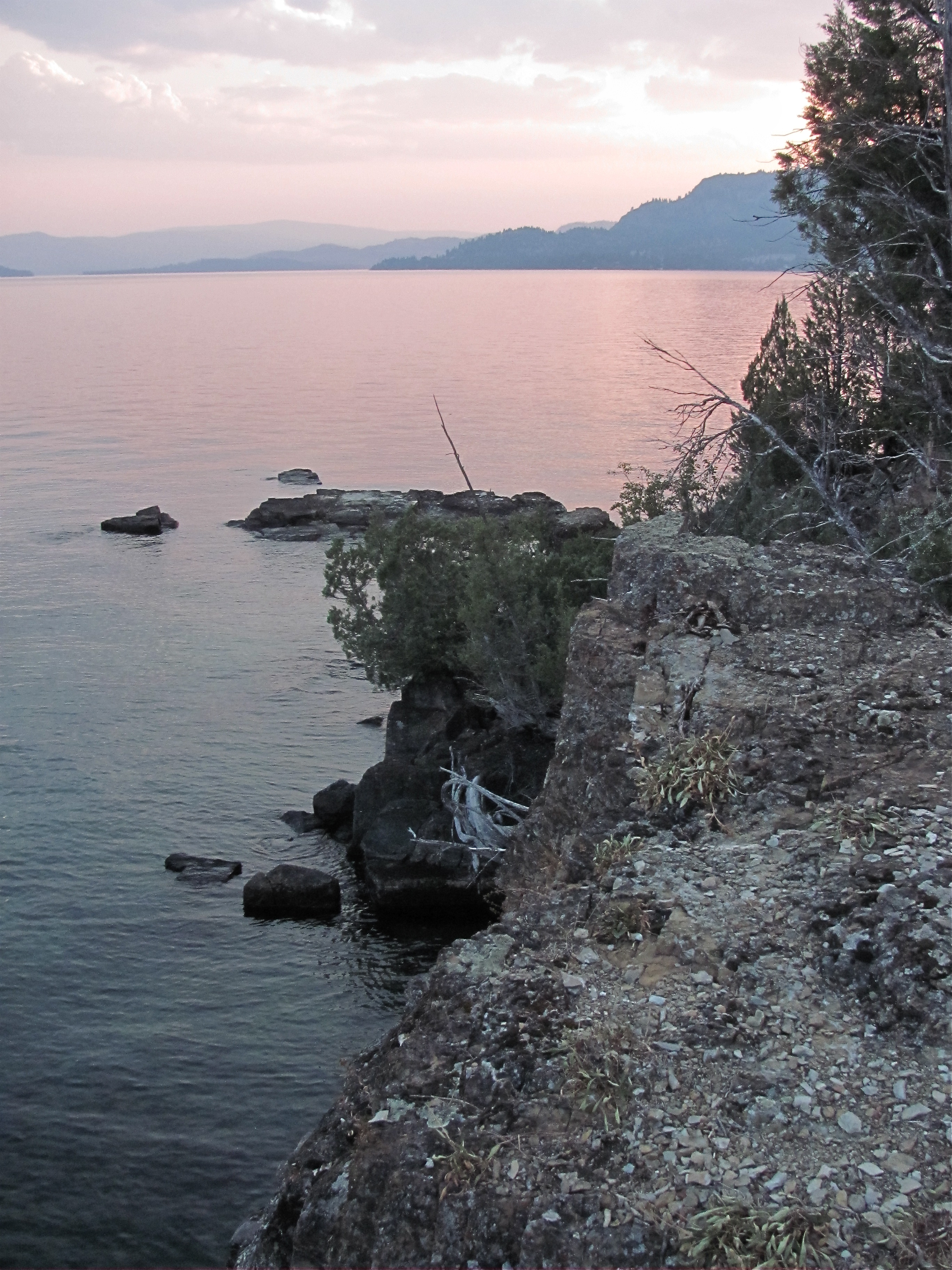
IMG_2717

One Monday evening, however, when a friend and I had made arrangements to camp on Cedar Island, just south of the cliffs, the lake was so calm that we could safely approach the cliffs and their enigmatic markings. We were able to touch the wet dark rock under the limestone cliffs overhead and look as long as we pleased.
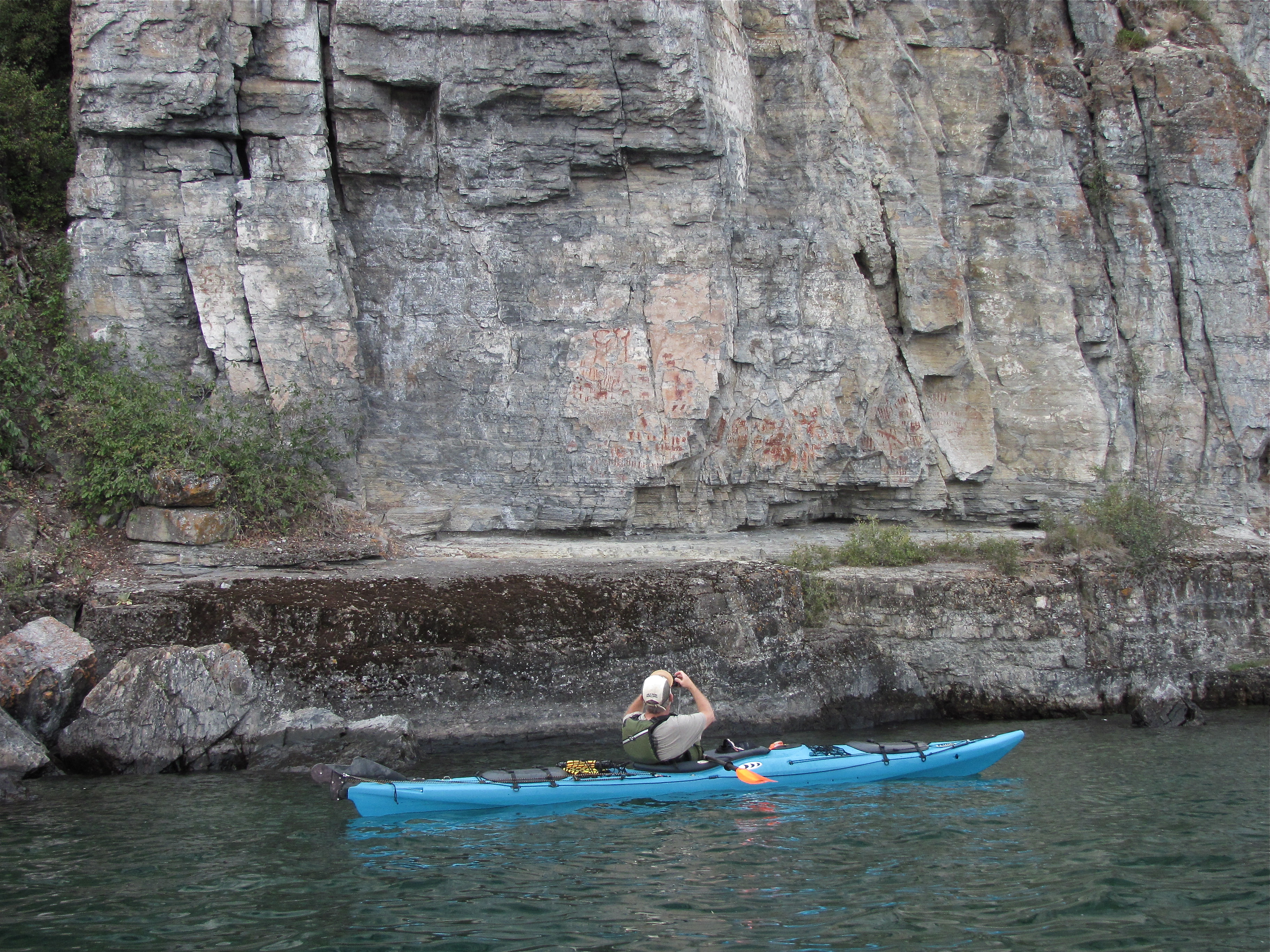
IMG_2695

To untrained eyes it appears as if the cliff bears depictions of bison, perhaps bison headdresses, and tick marks, possibly indicating kills or visits to this site. A book by Sally Thompson, the Kootenai Culture Committee and the Pikunni Traditional Association, People Before the Park, makes very clear that bison were “real food” to the Kootenai. Despite the risks, they made seasonal treks over the mountains into bison country east of the Divide to obtain the kind of protein that would sustain them through long winters west of the mountains. No wonder bison appear on these walls.
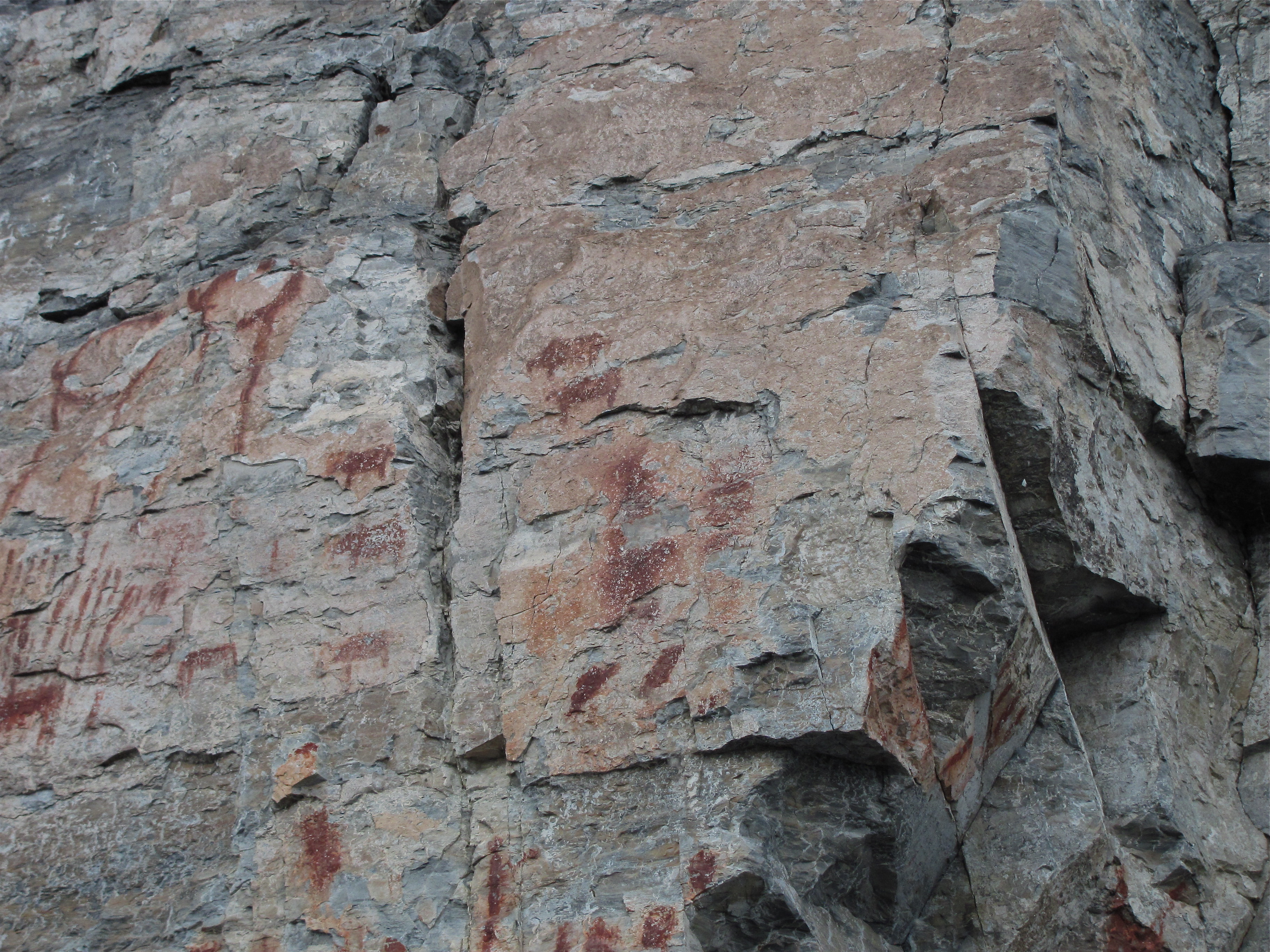
IMG_2698

Thanks again to Sally Thompson, an anthropologist and ethnographer, I was directed to Legends from the Northern Rockies by Ella Clark. The book contains stories related to this area and a Kootenai story about Painted Rocks in particular. For anyone curious about this area and the deep memories of its original inhabitants, this story may be meaningful. Amazingly, it recognizes a time before and after the geological cataclysm of what we call Glacial Lake Missoula. I especially enjoy the humor in the characterization of Rabbit. In Clark’s words:

This myth about them (Painted Rocks) was recorded from William Gingrass. His Kutenai name, given him by his great-grand-mother, means “Grizzly Bear War Paint.”

 After the great flood long ago, no human beings were left in this country. But the spirits were left. Some of them were in the form of animals. They gathered together on a bench of land above where Flathead Lake is now. At that time there was no lake—just a big river coming down from the north. It wound around and flowed down through where the Hot Springs are now. All that country was under water; you can see the water marks yet on the east side of the Lone Pine country. A little stream flowed at the south end of the present lake. A long time after this story, Yawonick, something that lives down below the water, came up from the bottom of the river and changed its course. Then the lake was formed.

When the great flood went down, the spirits held a council there on the shelf above the old river. They had heard that new people were coming, and they knew they should decide what to do when the Indians arrived. While they talked, one spirit kept watch.

“The people will come in canoes from the north,” said the chief of the spirits. “We must have everything decided when they come, as to how we can help them. Each of you will have to have a special song that will help people. You will sing it and then put your picture or your name on these big rocks.”

“But why should we put them up here?” asked on spirit. “They will be so high that they will be hard to get to or even to see.”

“That is what we want,” replied Nupeeka, the chief of the spirits. Nupeeka means “spirit”; in the old days he was a kind of teacher also. “We want the people to go to the high places when they seek spirit power. Seeking power will be too easy if they can find it in the low places. They will have to climb to get to the spirit pictures and the writing in the high places.”

So the spirits sang their songs and painted their names in pictures on the rocks. The first Dawn of the Morning sang the first song and put his sign highest up on the rock; that spirit gave the strongest power. The spirits of Grizzly Bear and Cougar and Eagle—they sang their songs and painted their pictures. Each of them gives strong power. All the other spirits sang their songs and put their writing on the rocks—all except Rabbit. He just hopped around.

At last the lookout called, “We must end our meeting. I see the new people coming around the bend.”

“But I haven’t made up my song yet!” exclaimed Rabbit. “I haven’t a song yet and I haven’t painted my picture.”

“It’s too late now,” the other spirits told him. “The people are landing below the Painted Rock.”

So Rabbit was left out entirely. He has no power song. He gives no power to people seeking spirit power. He can do nothing but hop around.

The new people landed below the Painted Rocks, near where Rollins is now, in the Big Lodge country. It is called the Big Lodge country because of a vision two men had many years ago. Each of them saw in a vision where he should put up a lodge for a Sun Dance, for a sacrifice to the spirits. When they followed their dream, they came to the same place; each had seen the same spot in his vision. So they put one big lodge there for the two groups of people.

The harder a person had to work to get to the place for the power quest, the higher the spirit power he obtained. The spirit who appeared to a person in a vision recorded on the rocks how many days and nights he had been there and what power had been given him (149-151).

IMG_2699

Like first peoples, I, too, have had to work to get close to Painted Rocks, to the deep history the site depicts and to the long, almost geological memory of the people or spirits who left their marks here, recording and celebrating a time even before the lake.

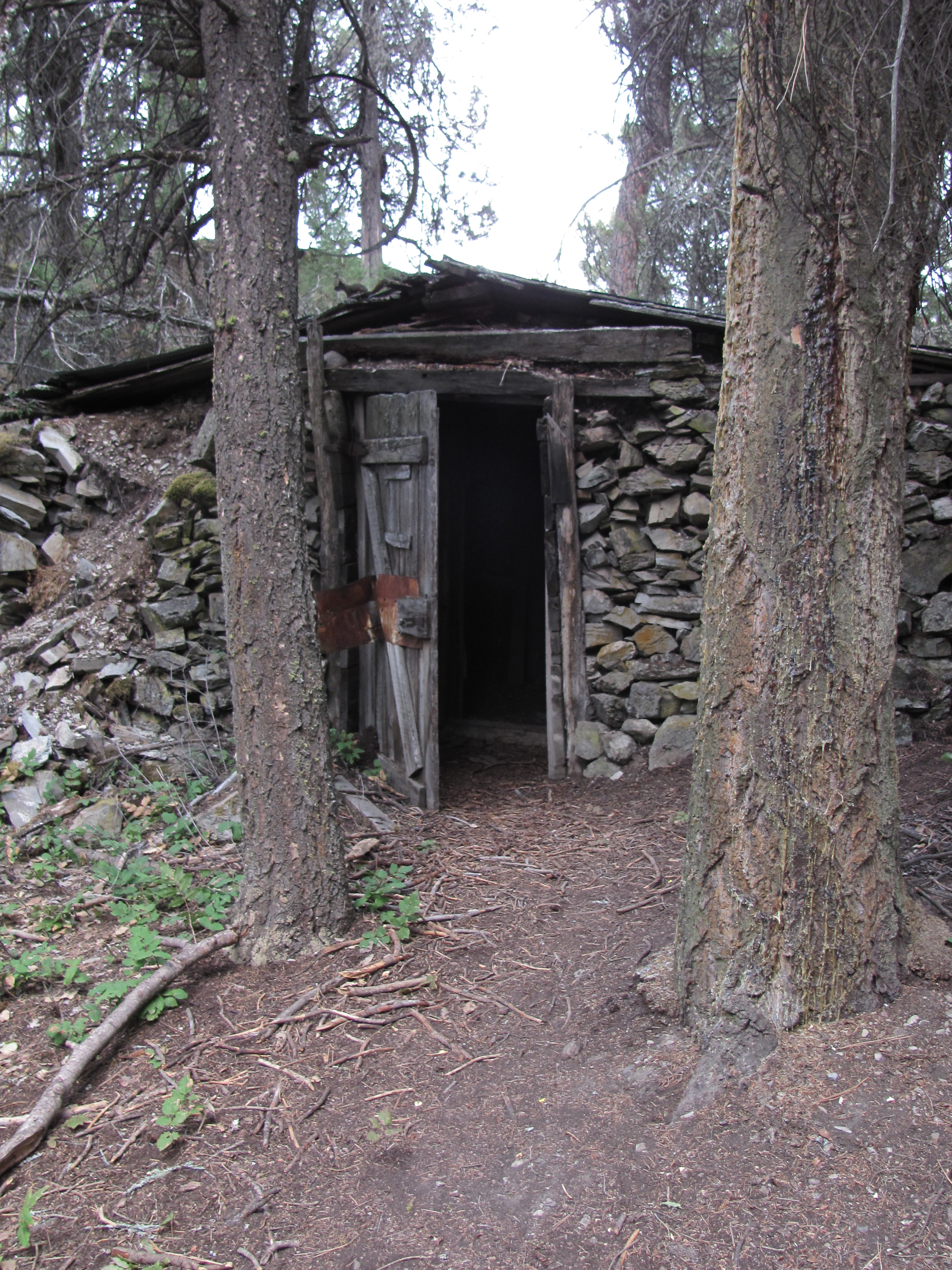
The Return

The Return

On August 16-17, a friend and I made one of my favorite mid-summer paddles. We put in at the Walstad Fishing Access point near Big Arm and paddled north against waves and wind past Wildhorse Island and then on to Cedar Island.

IMG_2713Before setting up camp we decided to walk around the island. I showed my friend the remnants of a craftsman style home and the cold cellar where geese now build nests, the meadow, untended orchard and derelict corral, the cistern now filled with garbage instead of cool, clear water. We found goose eggs lying open on the now brown moss covering the deep forest floor. But we also found trash—a margarita bottle balanced on a drift log, aluminum cans that never burn in fire pits, lots of toilet paper, a few diapers, an empty potato chip bag, bottle caps and plastic on the beaches. In this exceptionally dry year, with 86 fires burning around us, the sere conditions help to preserve garbage as if it had been sealed in a desert tomb.

IMG_2691

On our walk I complained about what we were seeing. I felt the disjunction between this island outpost in the largest lake west of the Mississippi and the effects of human visitation. Internally I asked, how can someone not care about this place? I could acknowledge pure accident, the way a gust of wind whips an object out of an upraised hand; but my judgments about the carelessness that follows the consumption of too much alcohol and the thoughtlessness of the privileged piled up like logs on the beach. As I walked along I felt unprepared to pick up the garbage I found. I needed gloves and nose plugs; I needed a garbage bag with a tie; I needed an empty boat, not one full of camping gear.

In the same way that one should not pray for the hungry without being willing to feed them, I do not want to complain about garbage on Cedar Island without being willing to do something about it. I need to return to the island, leave Bluebird’s chambers empty so that I have room to pick up what I find. This island has given me a vantage point on sunrise, a high perch to watch the sun go down and cast its red glow on the Mission Range. This island sails like a ship through the night sky. On one level I feel as though I have a debt that I want to find a way to repay. I can work off this debt to beauty by making time to return to the island and come prepared to transport its garbage to a proper depository. I cannot do anything about Syria or help immigrants on Greece’s shores, but I can do something about the condition of Cedar Island. I must return.

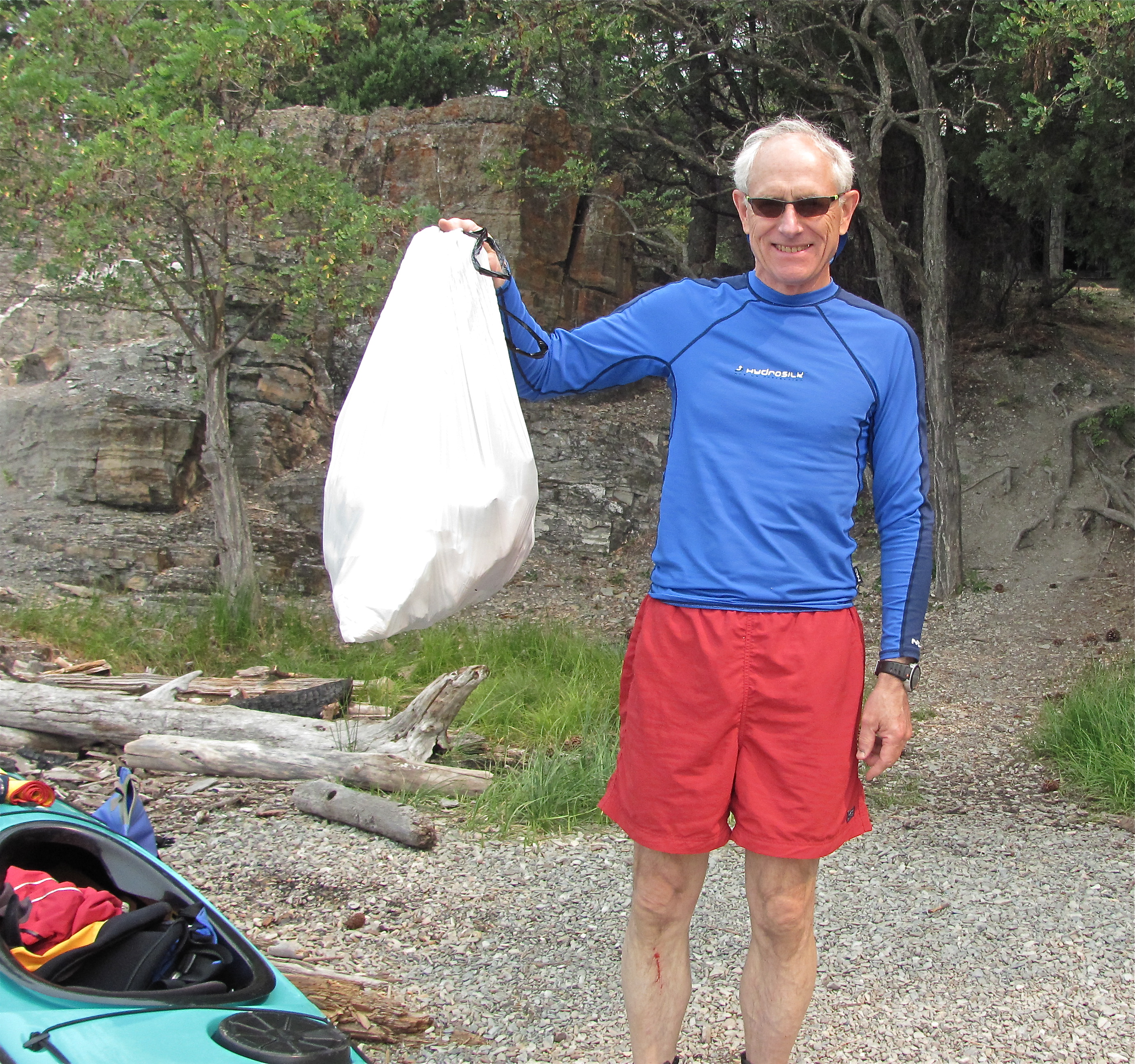
Early on Monday, August 24, I headed back to the lake. My boat was empty except for emergency gear. I slipped Bluebird into choppy conditions around the Westshore campground and sped south, timing my strokes to coincide with the push of the lake on my port stern quarter. I covered four miles in 45 minutes, lifted my boat into the drift logs, and took gloves and bags out of the stern hatch.

I circled the island counterclockwise, alternating between the forest interior and the beaches where people had burned their fires and left their trash. Predictably, I picked up glass, plastic and Styrofoam, but also managed to free a rope tied around a tree, and steeled myself to pick up the paper trails; but I drew the line on corrugated steel and plywood. On one beach I saw how a beach fire radiated outward, its flames following the flammable roots of cottonwoods, then climbing the trunks and killing the grove.

When I reached the east side of the island I heard the voices of a young man and woman. They had spelled a name by laying little stones on the bleached back of a drift log, their cell phones nearby as they swam in the coves. I eventually completed my circle and returned to the beach where I had left Bluebird and saw that the young couple had crossed to the island in a small open kayak and a stand-up paddleboard. They eventually joined me on the beach as I paused to eat a snack before heading north. They had figured out what I was doing and were willing to take a photo of my trash before I tucked it in the wide mouth of my stern hatch. The young man kindly inquired about the shin I barked on a broken limb from a fallen fir. As they left the beach for nearby Zelezny Bay, I felt happy watching them play on the stage of their mutual affection.

Using a kayak as a garbage barge is a strange thing to do. Drawing the moral lines sharply, one might even argue that it was wasteful to drive the distance from Missoula to clean up the island. Further, the garbage on Cedar Island does not compare to plastic in the Pacific or on Caribbean beaches. But I have learned how important it is for me not to suppress the empathic or moral response. With every suppression the impulse to respond to the world grows weaker. As often as I can I try not to let this happen. I don’t want the sympathetic response to the world within my reach to die out. Ultimately, this is why I returned to the island.

IMG_2739

On the Other Side of the Range: A List of Riches

On the Other Side of the Range: A List of Riches

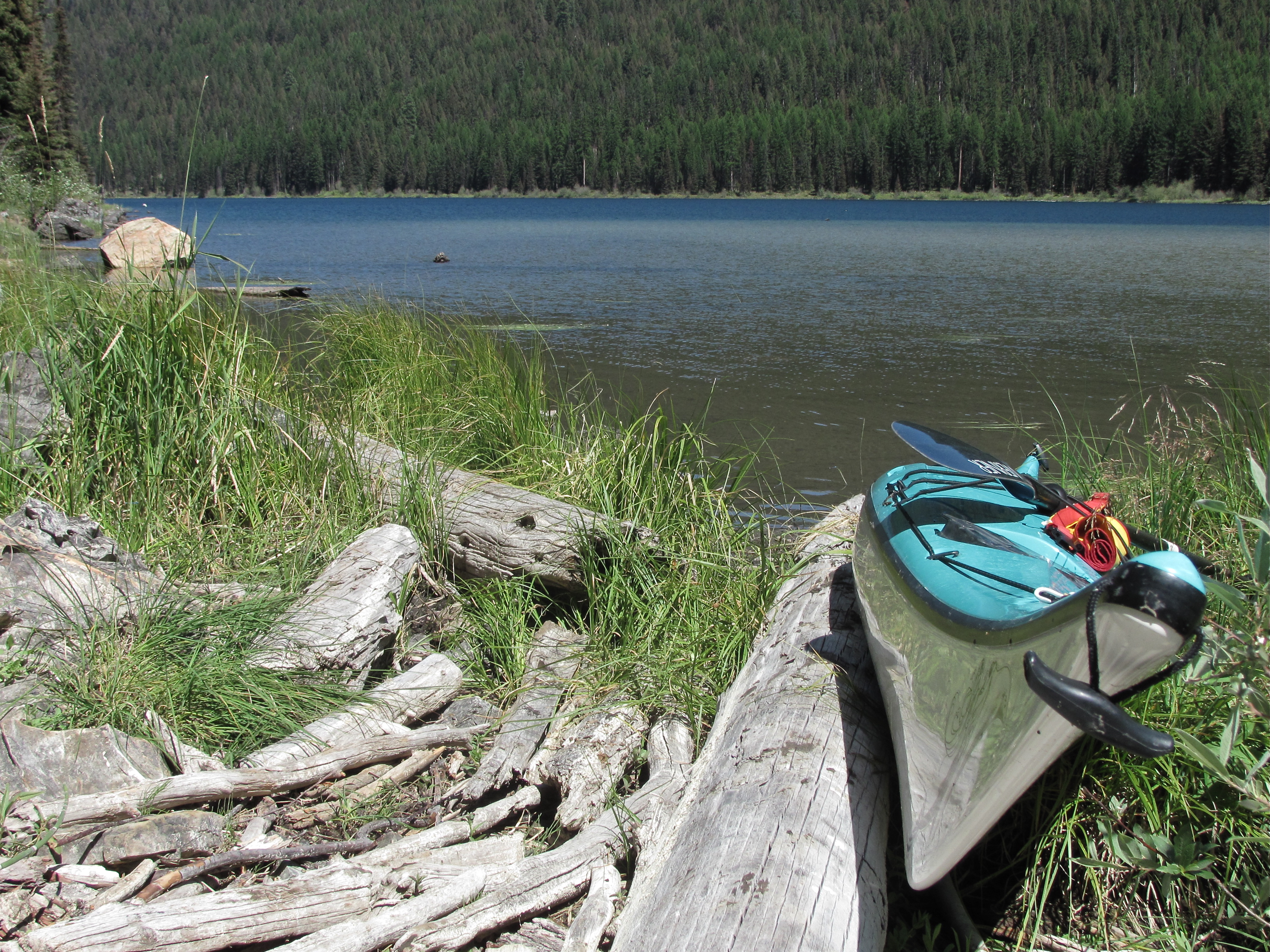
On the morning of a day predicted to reach the mid-nineties I load Bluebird and follow The Blackfoot River east and then a chain of lakes north to Lindbergh Lake, on the other side of the range from where I usually paddle. I plan to paddle to the end of the lake,

logged outhike the trail to Crystal Lake,

Crystal

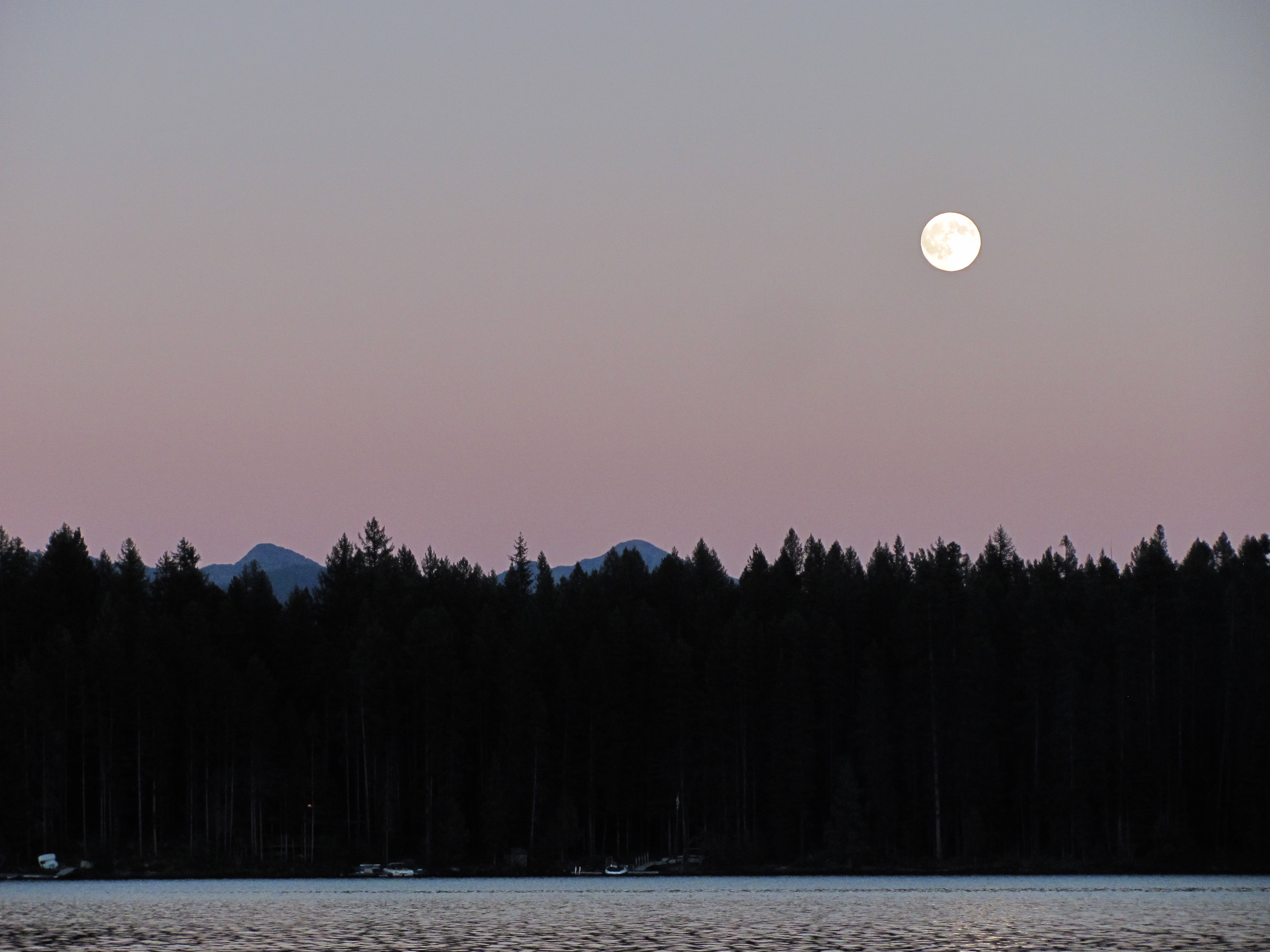
go for a short swim and return to camp for a late supper. Then I hope to watch a full moon rise over the Swan range.

fullmoon

As I sit at the picnic table before and after my paddle I make a list of riches:

my wife’s soft kiss as I depart

yesterday’s massage that left me almost pain free

an old tent that still provides shelter depending on how hard it rains

a multi-grain bagel, a can of sardines and an apple

a water filtration pump in a campground without a spigot

a place to sleep, even if on the ground, in a sleeping bag that feels perfect

memories that tell me how to get to this place and where to find the trailhead at the end of the lake

memories of having been here with dear deceased friend John and my friend Lee who is still more than alive

a Werner graphite paddle

an eight-year-old kayak that is almost good as new despite scores of paddles

a clan of warblers in the chokecherries

clothes that are comfortable and safe in a variety of conditions

a tube of sunscreen I can tolerate

two mini-monster cookies now, and three later

a butterfly on my right shoulder

sunlight in the leaves

not needing several people to help me park or diesel fuel for a generator that runs all night

an extra tea bag

an Optimus Svea stove that is almost as old as I am

a hot moist washcloth in the morning

a visiting rabbit that pads soundlessly through camp

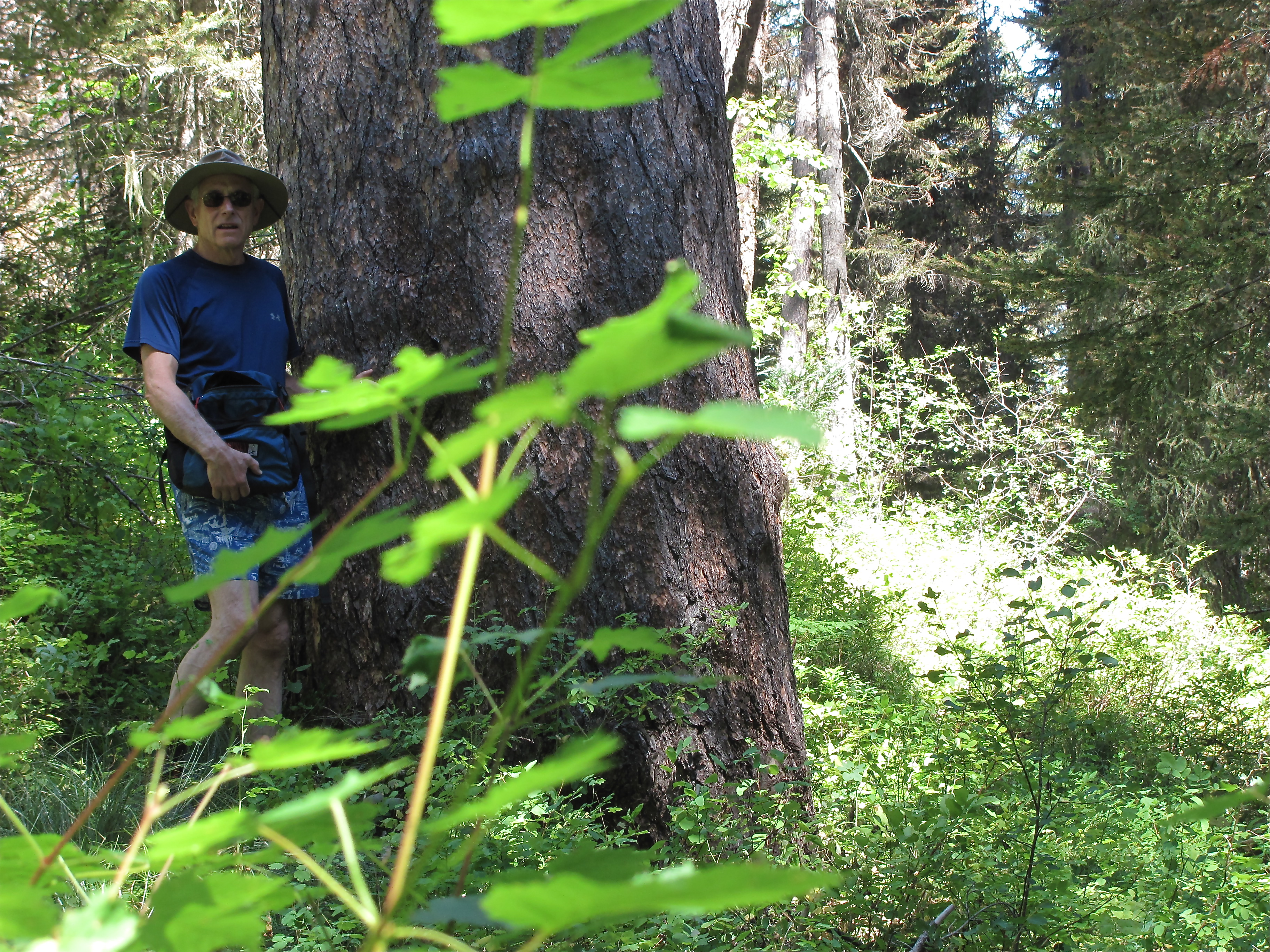
a larch tree the sawyers missed or recognized should stand five more centuries

Big Larch

geese that swim past my stillness

a hawk on the path as I go for a walk at dusk

a female American Redstart who allows me to watch her while she forages on the ground.

After making my list of riches I pack up my tent, other equipment, and cinch down my boat. Ready to drive home, I suddenly remember a warm conversation the day before with a man who was new to the campground and lake. I decide to walk over to his site and say goodbye. I see that the man and his wife are packing up, but clearly they are eager for more conversation. Maurice and Polly ask me for more local knowledge, intending to return. Then the conversation drifts toward discoveries of things we have in common—years of teaching, friends in common, the sense that the earth is rapidly changing. This year rain in February washed all the mid-level snow out of the mountains and left many of the lowland streams de-watered or dry, a bitter foretaste of things to come. Walking along the trail around the lake, and then along the trail up to Crystal lake, I could not find a single huckleberry where there would normally be buckets of berries. The three of us are able to talk freely and openly about the evidence of change and the consequences, especially for wildlife, our children and grandchildren. This conversation feels like a drink of fresh water on a day that is already hot.

I could count my riches in objects or experiences in the natural world. But as I turn away from the red van Maurice and Polly have outfitted for camping, I also feel deeply grateful for human interaction and talk about things that matter. We discover shared concerns and values on both sides of a dry stream bed. This, too, is part of what makes us wealthy on either side of the range that rises above the lake.