
Early last week I sensed an opportunity to paddle. By midweek a wave of tropical moisture that substantially dampened fires north and west of Missoula headed into British Columbia and Alberta. Canadians would be as happy to receive rain as we were. The remnants of the storm made it possible for me to make my favorite paddle—an open-water crossing from Finley Point State Park to Wild Horse Island—this time with a little help from winds out of the south.
When I arrived at the campground I saw what the lake looks like when it is 2.5 feet below its normal summer level. Boaters cannot use the docks at this level, so no boats were in the marina. Beyond the nearby islands and beyond the three fingers of Rocky Point my destination appeared as a rounded hump in the distance.

I have heard people complain about the lower water level, occasionally blaming the tribes for this disappointment. In fact, the Salish and Kootenai peoples who control water releases at the dam are bound by federal contracts. In addition, they cannot be held accountable for climate change and drought, both contributors to the lower-than-normal water level.
I stowed emergency gear and lunch and made ready to paddle. As soon as I crossed the mouth of the marina I felt the corkscrew motion caused by waves slapping the port stern quarter. I paused and took the feather out of my paddle. In these conditions I did not want to stroke air while thinking I would meet the resistance of water. A flat paddle would be better, the wave motion making balance a little tricky. Having made this adjustment, I settled into ten miles of water and the rhythm of countless strokes, eventually landing at the East Shore access on Wild Horse Island. From a kayaker’s standpoint the lower water level allowed me to come ashore on a broad beach normally unavailable unless one is willing to risk paddling in the cold conditions of April.
On the comfort of a big log I ate my banana and blueberry muffin and a thick triangle of Spanish Manchego cheese. I drained my water bottle, knowing I could filter a full bottle for the return trip. While I ate my eye was drawn to a long cottonwood log. At some point in its life the wind broke off a side branch that had once been married to the main trunk. Time, water, and stones polished the soft ripples in the grain.
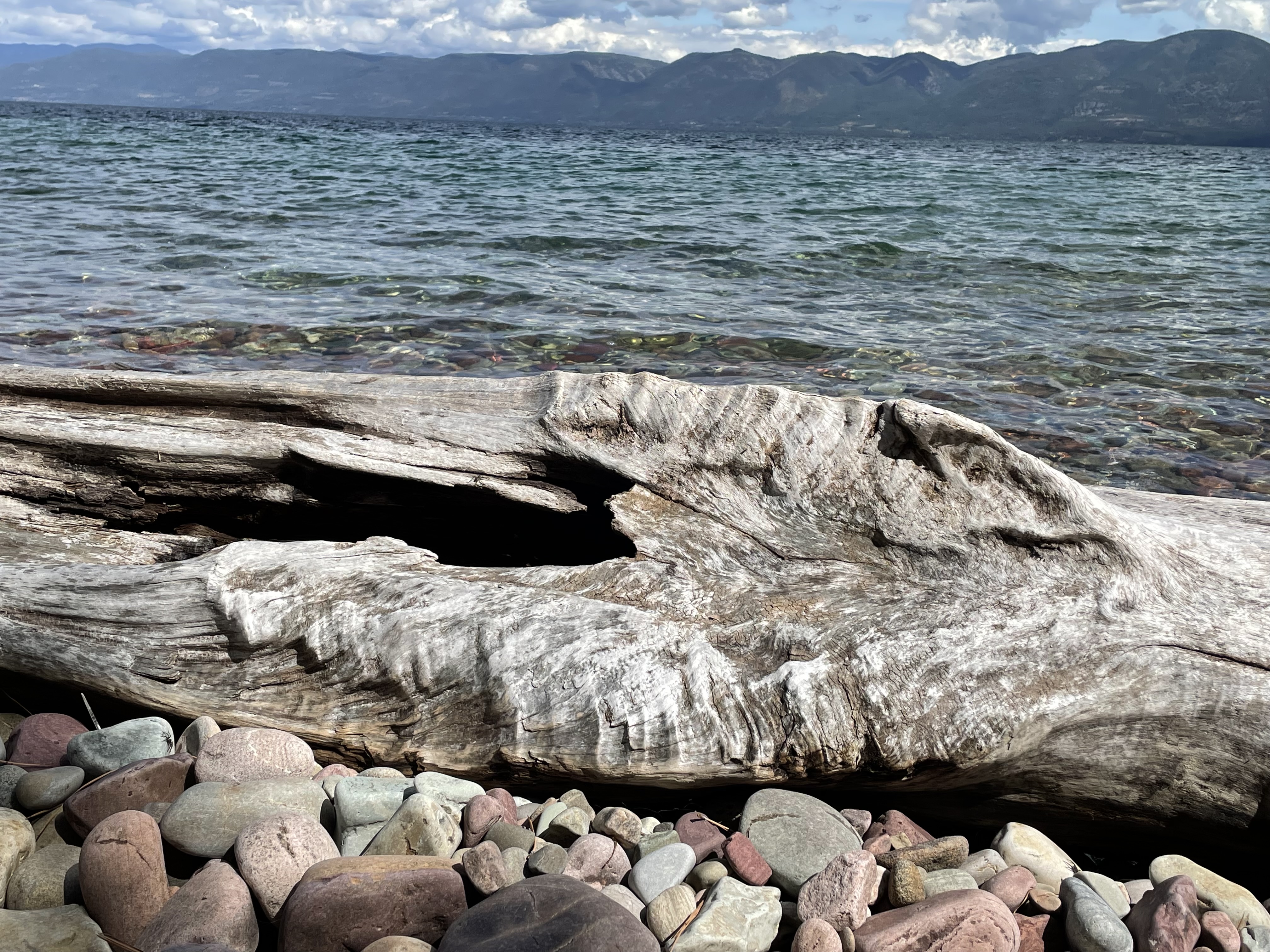
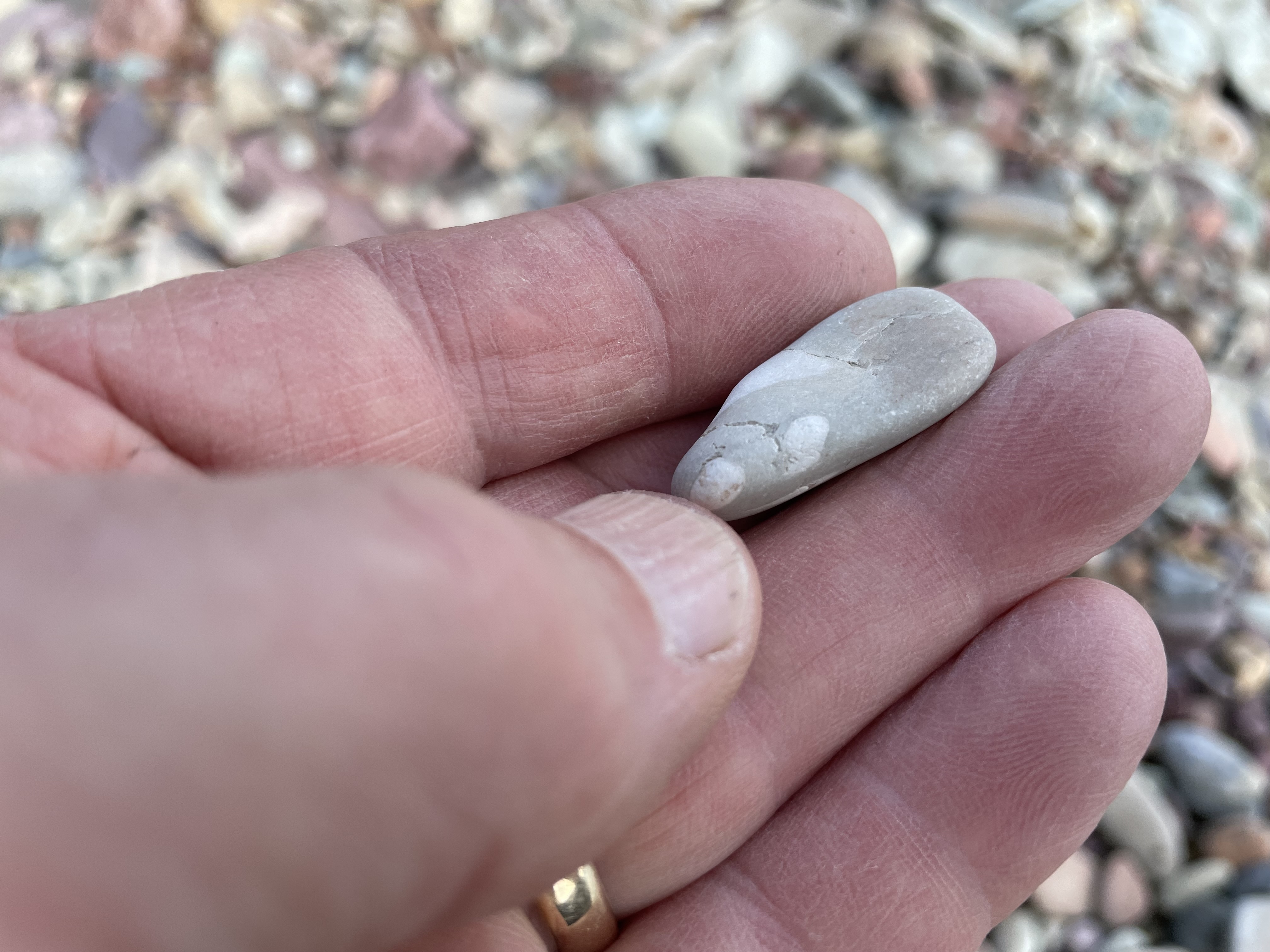
Though I had visited this spot several times, usually while circumnavigating the island, this time I decided to look more closely. I noticed many things I had ignored or overlooked. With the lake at a lower level I saw harder stones trapped in the mudstone ramps that once formed the floor of the lake basin and may have been part of the foundation of the mountains raised by shifting tectonic plates. I found a miniature version of the process among the countless stones on the beach.
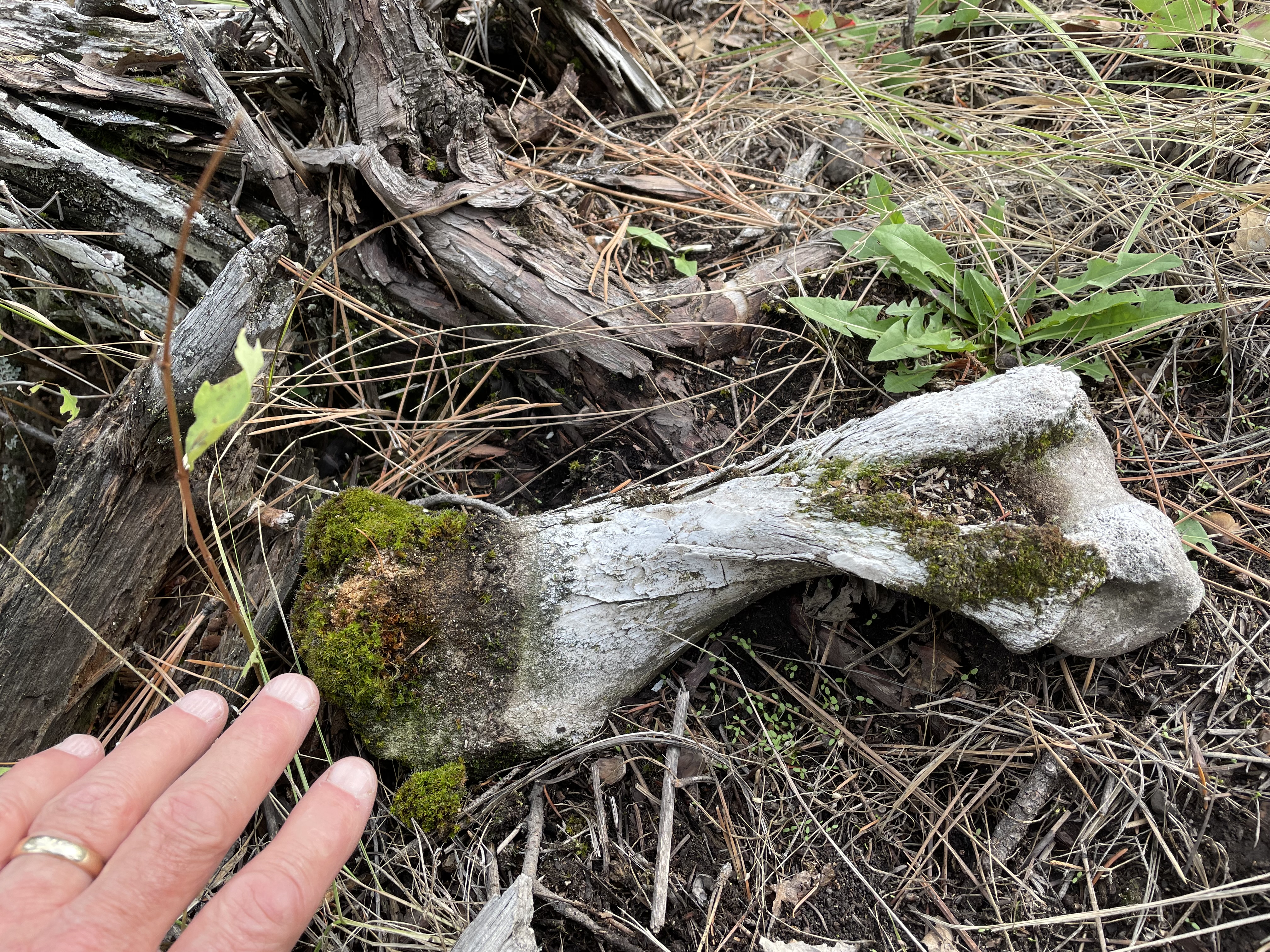
Climbing into the forest I immediately sensed the effect of more than an inch of rain. Within a day the patient mosses had swollen and recovered. Among the mosses I found the humerus of a horse that long ago had laid down its heavy bones.
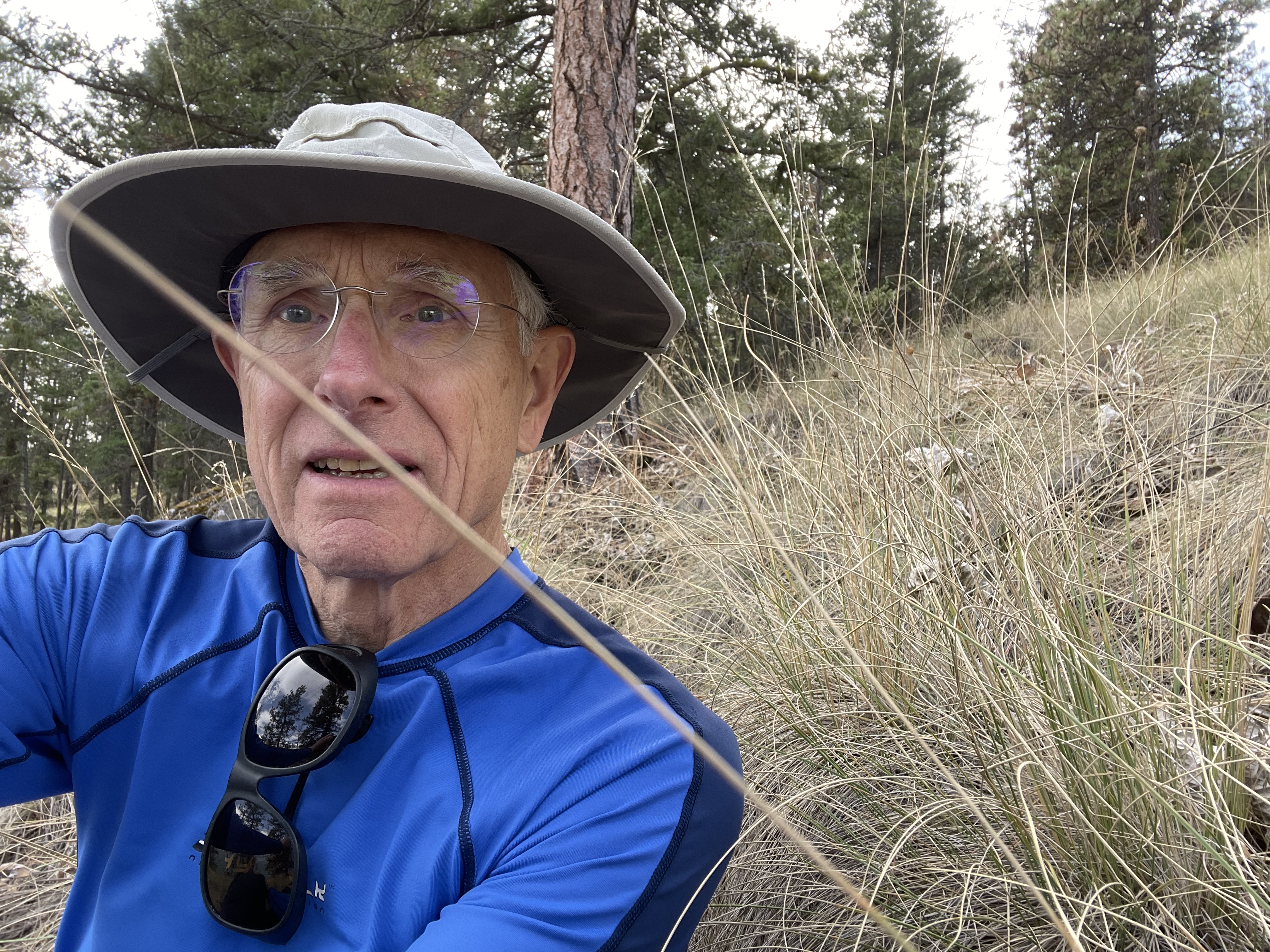
Bunch grasses were full and soft and invited me to sit down and enjoy them.
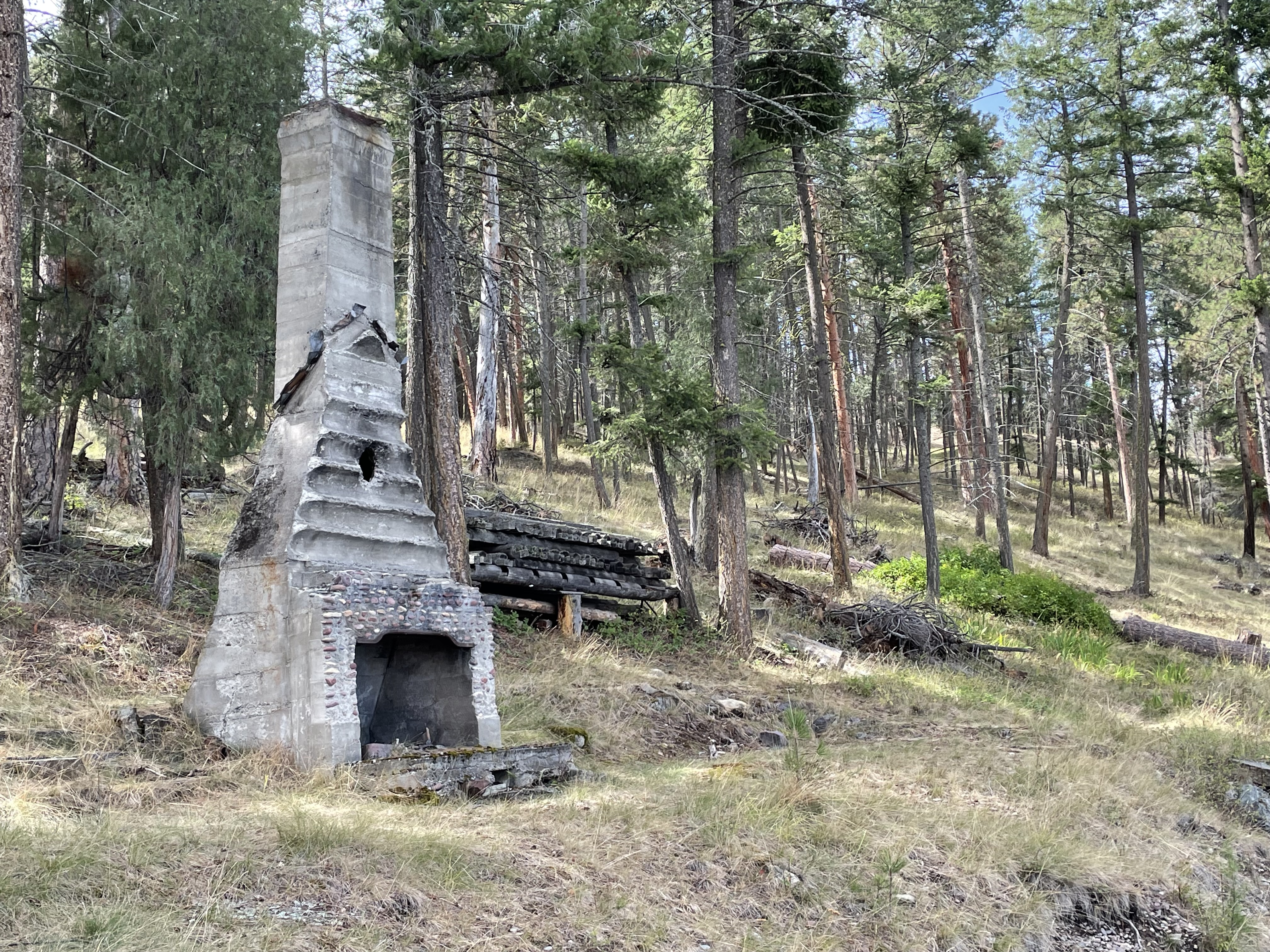
Hiking higher I saw massive pine trees thrown south by relatively recent storms. Dropping back toward the water I inspected more closely the chimney of a once splendid lodge that was built in a cantilevered fashion over the lake. The concrete had been poured against the log walls leaving horizontal flutes, and the face had been decorated with beautiful stones from the beach.
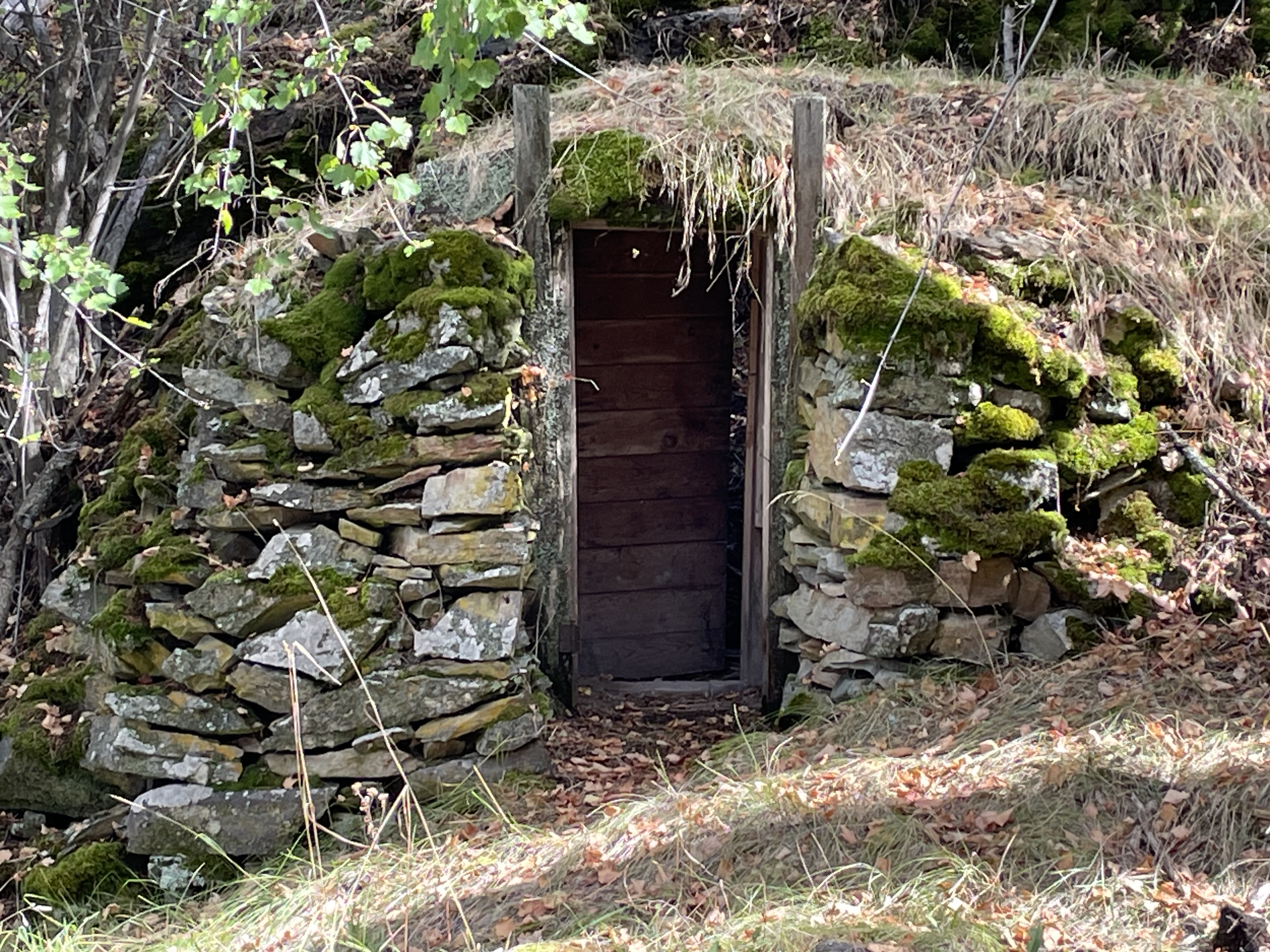
About a hundred yards away I found strands of an old telephone line, white ceramic nobs like flashlights in the forest, but telling the story of how people once communicated on the island. I also discovered a cold cellar that the lodge cook must have used to keep meat and vegetables cool for hungry guests arriving from the mainland. As the roof had fallen in, it seemed like a gateway to nowhere.
While wandering around I sensed that the wind was beginning to shift around to the north. If this change continued it would ease my paddle back to Finley Point but would again create quartering seas requiring my concentration. I went back to Bluebird, made ready, and headed home. Along the way I was careful to avoid the rocky spine now exposed at the northern tip of Rocky Point. Here the waves were actively breaking and seemed a hazard. In another hour I slipped into the marina and was relieved to be out of the rocking motion of endless waves.
Having a whole day and an evening to enjoy the experience, I put my extra food on the picnic table for an early dinner of sardines, Dakota bread from Great Harvest bakery and a crisp apple. Unfortunately, I was out of monster cookies.

Sometimes a paddle takes the form of a story. It has a trajectory, a narrative arc, and concludes with something that feels like arrival. But other times a paddle leaves one only with images, fragments and small observations that might eventually find their place in a story or simply sit in one’s memory like stones on a beach. I have learned that it is best not to force life into the form of a story. I am content with seeing clearly, looking more closely, enjoying the time we are given.
 ospreypaddler
I enjoyed reading about your paddle adventure to the distant island. The added photos of your skillful observations and found treasures helped to clarify images of your trip.
Thanks, Lois. I’m glad to hear that the photos make the observations more available to you and others. Regards.
Good morning Gary – I really appreciated your thoughts on story and/or holding observations. I suspect they all have a story, but not yet a
revealed story. They may eventually reveal themselves, but the ability to just be open to the observations is a wonderful gift you have. Thanks for sharing them with us.
Thanks for writing Glenn. I can’t go to the island without thinking about being there with you and Jeanne. Among many happy memories.
I have enjoyed coming along with you on this day, Gary, each time I read your observations that the low water uncovered.