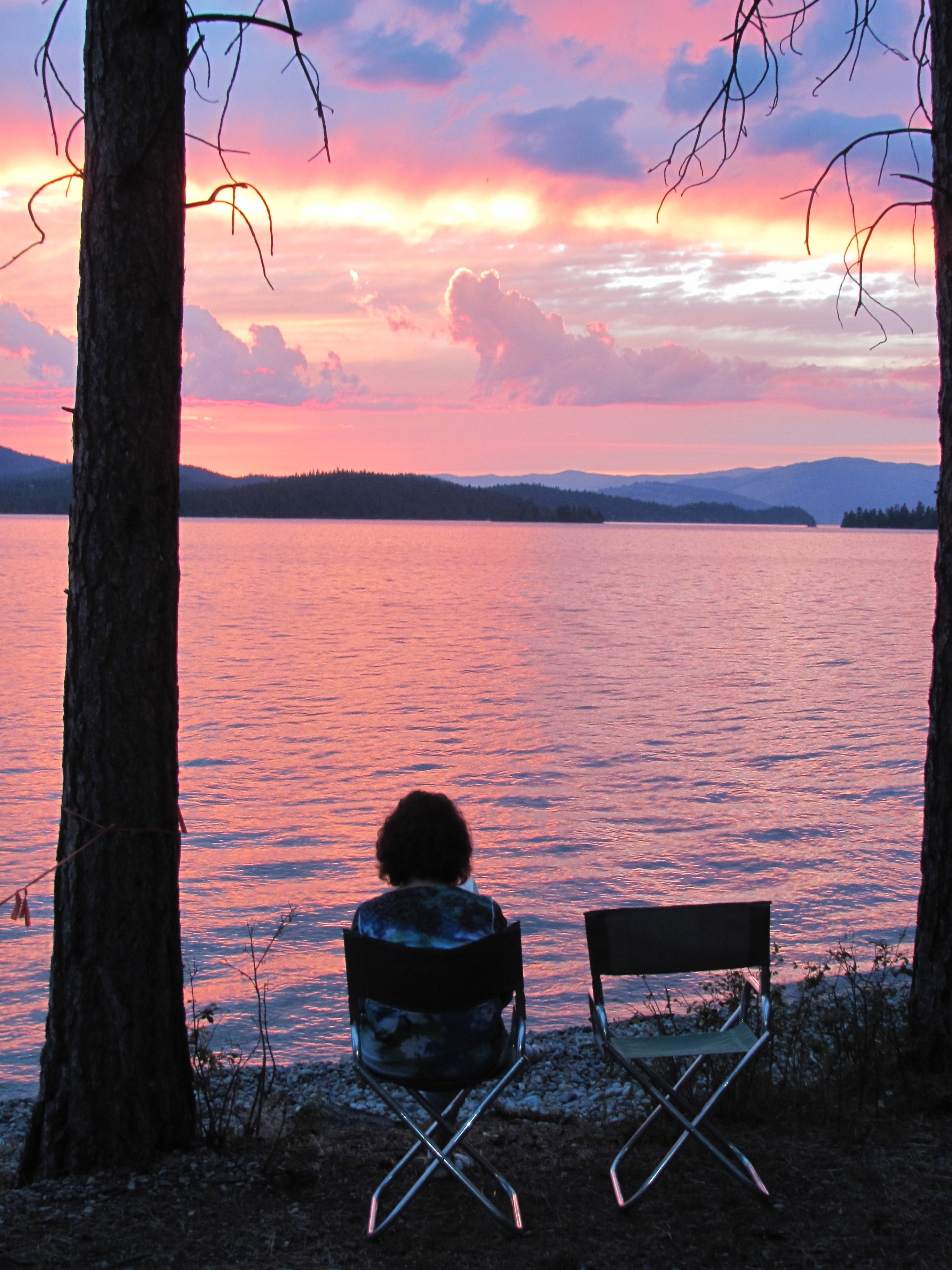
May 3, 2026
It was early in the paddling season and conditions were cold. Depending on which online site I consulted, water temperatures stood at either 39 or 43 degrees. But I knew that if I did not head for the lake after work on Monday, May 3, I would miss the whole month of May. I had an opportunity to attend my grandson’s final high school concert before beginning his undergraduate studies at the University of Montana and a similar opportunity to see my youngest Pennsylvania granddaughter. I was happy to devote the time to them.
In the absence of NOAA’s graphical forecast for the lake, I would need to guess at conditions on the lake. Though I had seen online vectors suggesting wind out of the north, when I pulled into the state park at Finley Point, I found steady wind of about 15 mph and small whitecaps on waves about one foot high. These conditions seemed manageable if I were cautious.
My first glance of the marina told me that the lake level was about three feet below its summer peak. It appeared that Energy Keepers, careful stewards of the Seli’s Kasanka Q’lispé dam that controls the lake level, had held back as much water as possible over the winter. Perhaps they were planning for decreased runoff from this spring’s snow melt. Holding onto water increases the likelihood that the lake will be near full pool during the summer boating season. On the drive north I was fortunate to hear an interview with Brian Lipscomb, head of the tribe’s operation. He explained that the lake was entering the fourth year of the lowest runoff on record. No wonder the dam operators were careful about the release of water while attempting to fulfill contracts for water downstream.
With plenty of water for a kayak in the marina, I carried my boat down the concrete ramp, set the bow in the water, loaded emergency gear, stepped into the water, and settled myself before gliding out of the marina. Having studied the waves while eating a peanut butter and jelly sandwich, I knew that the waves at the mouth of the marina were a jumble of conflicting forces. They collided with the concrete wall of the marina, bounced back toward incoming waves and created a chaotic mix. I took things slowly as I paddled through the traffic of waves.
Wherever I went from Finley Point I would be contending with the wind. For my first paddle of the season, I decided to head out to Bull Island. If conditions allowed, I planned to circle the island before returning to Finley Point. I drew hard against the quartering headwinds until I slipped into the lee of the island. Six geese took off from the rocky shore as I approached, their powerful wings propelling them through the same wind. Seeing no boats in the first little bay, I paddled quietly over muddy shallows and then into a small green pool where I often see sailboats at their moorings. In higher water it seemed like a perfect place to take shelter when not under sail.
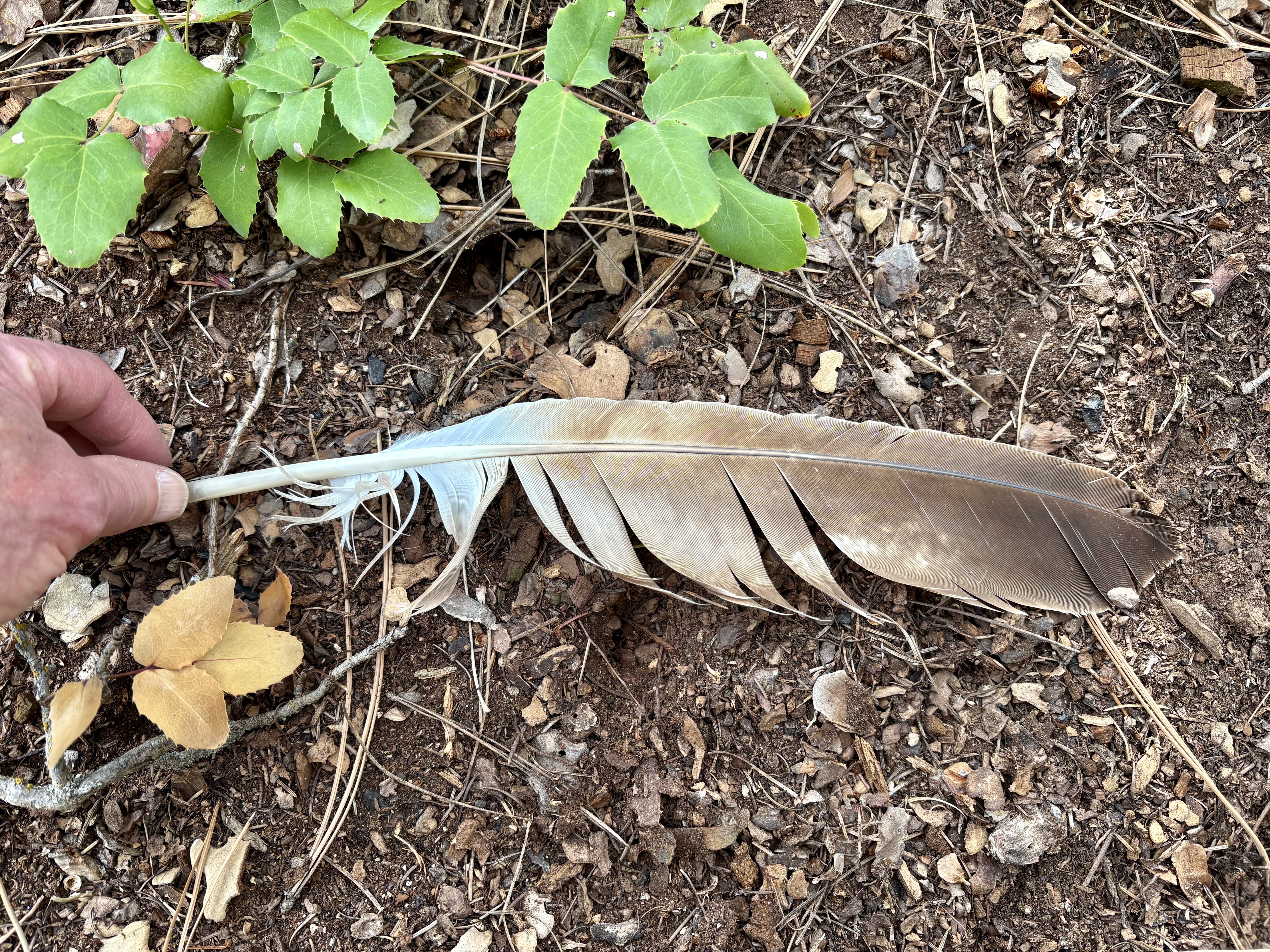
I then reversed course, exited the bay, and paddled over to the first of the two larger coves on the south side of the island. I am always curious about what winter leaves at the highwater mark, so I walked the wrack. Plastic bags, bits of clothing, candy wrappers, and a child’s red plastic golf club did not belong on the beach and deserved to be removed, but I had not thought to stow a garbage bag; so, I left everything where I found it. When I spotted the white shaft of a quill sticking out of the gravel, I bent and pulled gently. A magnificent eagle feather emerged from the stones. I stroked some of the barbs until they closed, partially mending the molted feather, and began to feel the tension of a moral dilemma. If I kept the feather, I would be breaking the law; if I released the feather I would be letting go of a treasure. For some people this is not a hard choice either way: obey the law or believe that the finder is the keeper. But these things are not simple for me. I am a law-abiding person, but I stand in the middle of at least five generations of awe when in the presence of raptors. I knew I would cherish and honor this magnificent plume if I kept it, but I would bear the weight of my guilt. Pondering the choices, I carried the feather into the forest and laid it at the base of a large Ponderosa. If no one found the feather, it would always belong to the island. If someone found the feather, they might feel the same exhilaration when I lifted it into the light and stroked its curves. I felt most at peace laying the feather down, happier about the discovery than the illusion of possession.
I returned to my boat and paddled back into the wind and waves. Moving north along the island’s west side, I could see the line where cobalt met jade. If I rounded the island, I knew that I would be exposing myself to the unimpeded energy of wind flowing south over about twenty miles of cold, open water. I kept paddling, having seen these conditions on previous paddles. Careful and prepared to retreat, I kept my eye on the waves as I rounded the north end of the island and began my return. Quartering seas, as sailors call them, can be tricky. At one point a wave struck the stern of the kayak on the left side and pushed the boat into a trough running parallel to the waves. Several fast strokes on the left and a lean into the force of the wave put me back on track and prevented a roll.
I let wind and waves drive me on, passed between the two small islands to the east of Bull Island, slid into the opening of the marina, landed, and carried everything back to the truck. I drove up the hill to the Paintbrush cabin where I would spend the night and felt more than ready for Joyce’s beef and barley soup heated on my backpack stove. With no reliable data about conditions the next day, but hoping to circle Bird Island, I decided to let the lake tell me what might be possible on Tuesday. When I woke to similar conditions—wind out of the north and the potential for waves, I decided to let go of my original hopes and prepared to return home. Two forms of letting go during the same excursion. Yet, I had begun the cycle again. I put trust in the gift of another day.