Sheltering Place: Return to Deep Bay

IMG_2750

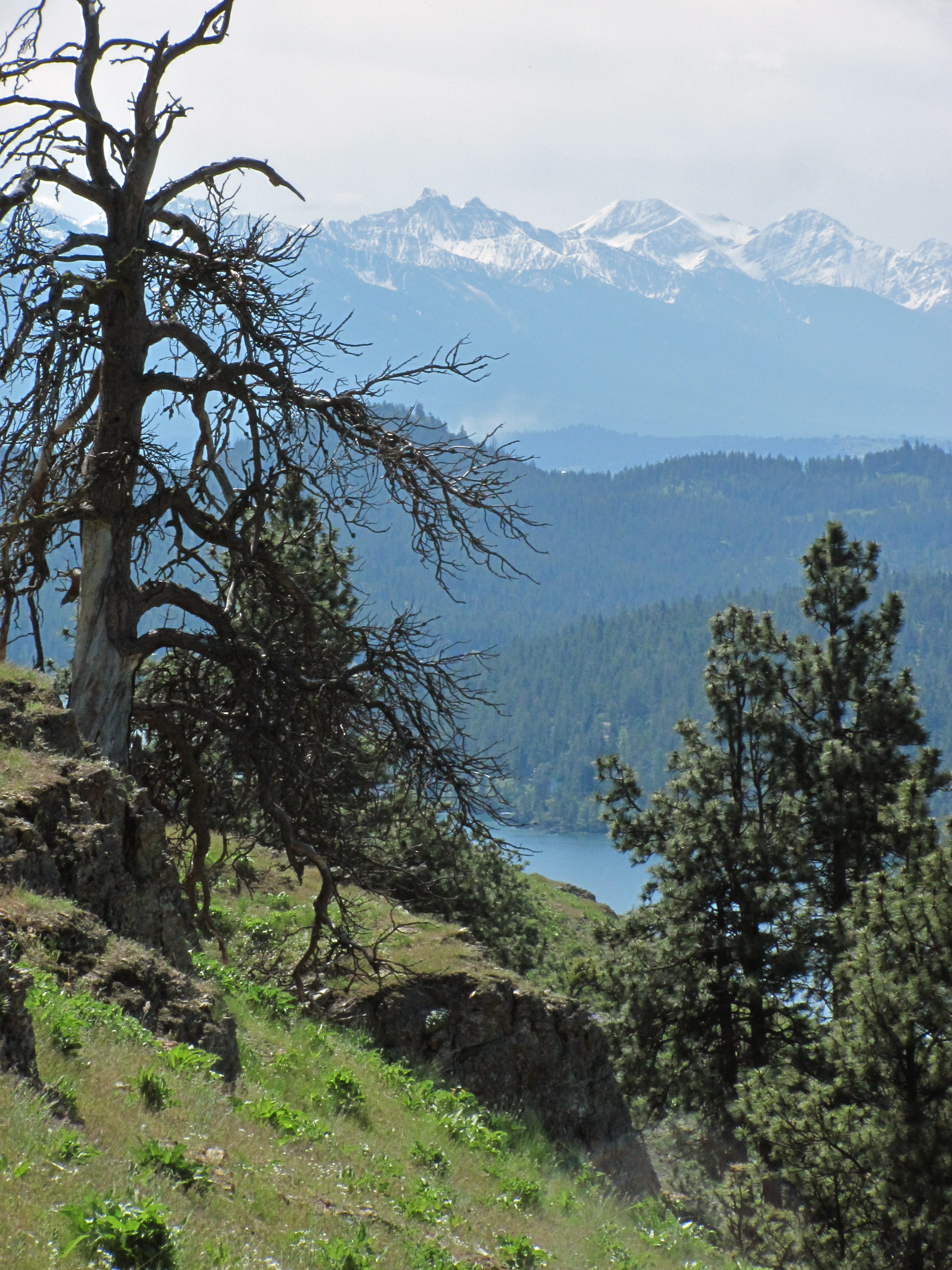
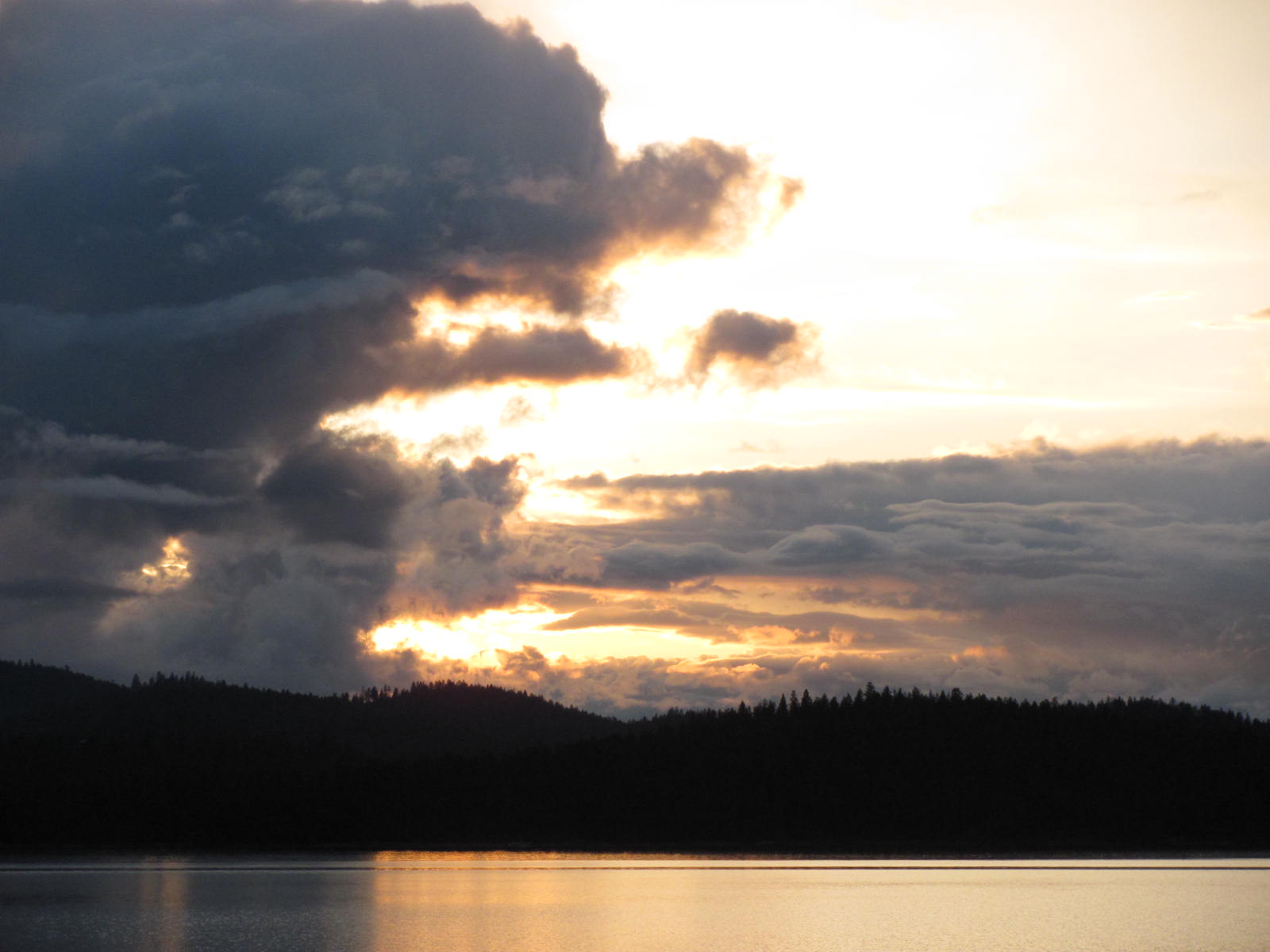
In 2015, the plight of refugees fleeing Syria, Afghanistan and Iraq is on the mind of most people. Whatever our private thoughts or acts of charity, I cannot help but give thanks for various forms of shelter in my own life. In mid-September friends allow us to rent their cabin just south of Lakeside. From the deck we look north and see the flats of the Flathead River delta and Glacier Park’s peaks in the distance as well as waves breaking around Angel Point to the south. During a week of unremitting wind it never seems prudent to make the long, open-water crossing to Bigfork. Instead, I honor the pull toward Deep Bay in the south, a pull as sure as the one that causes cliff swallows to return each spring.

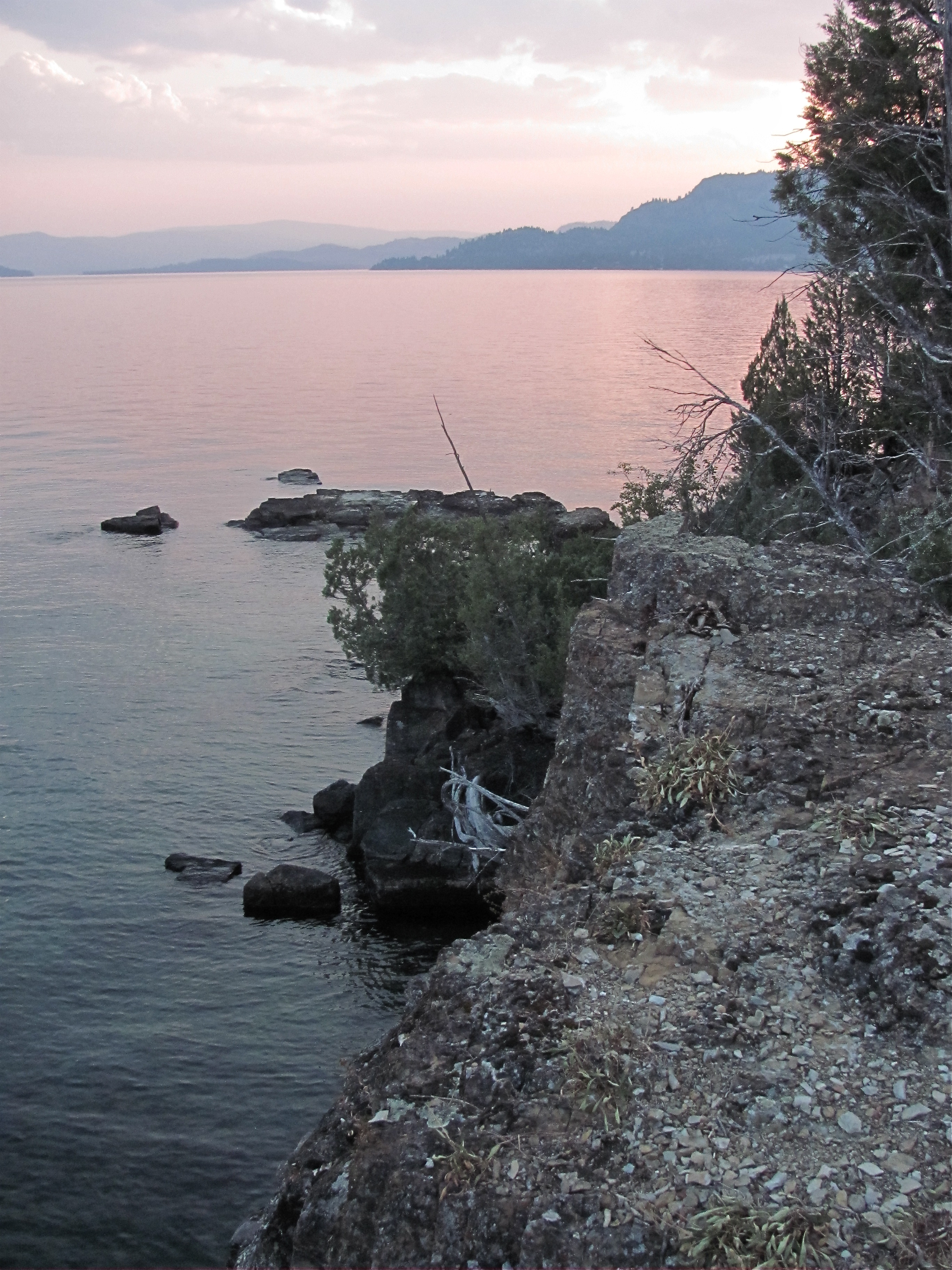
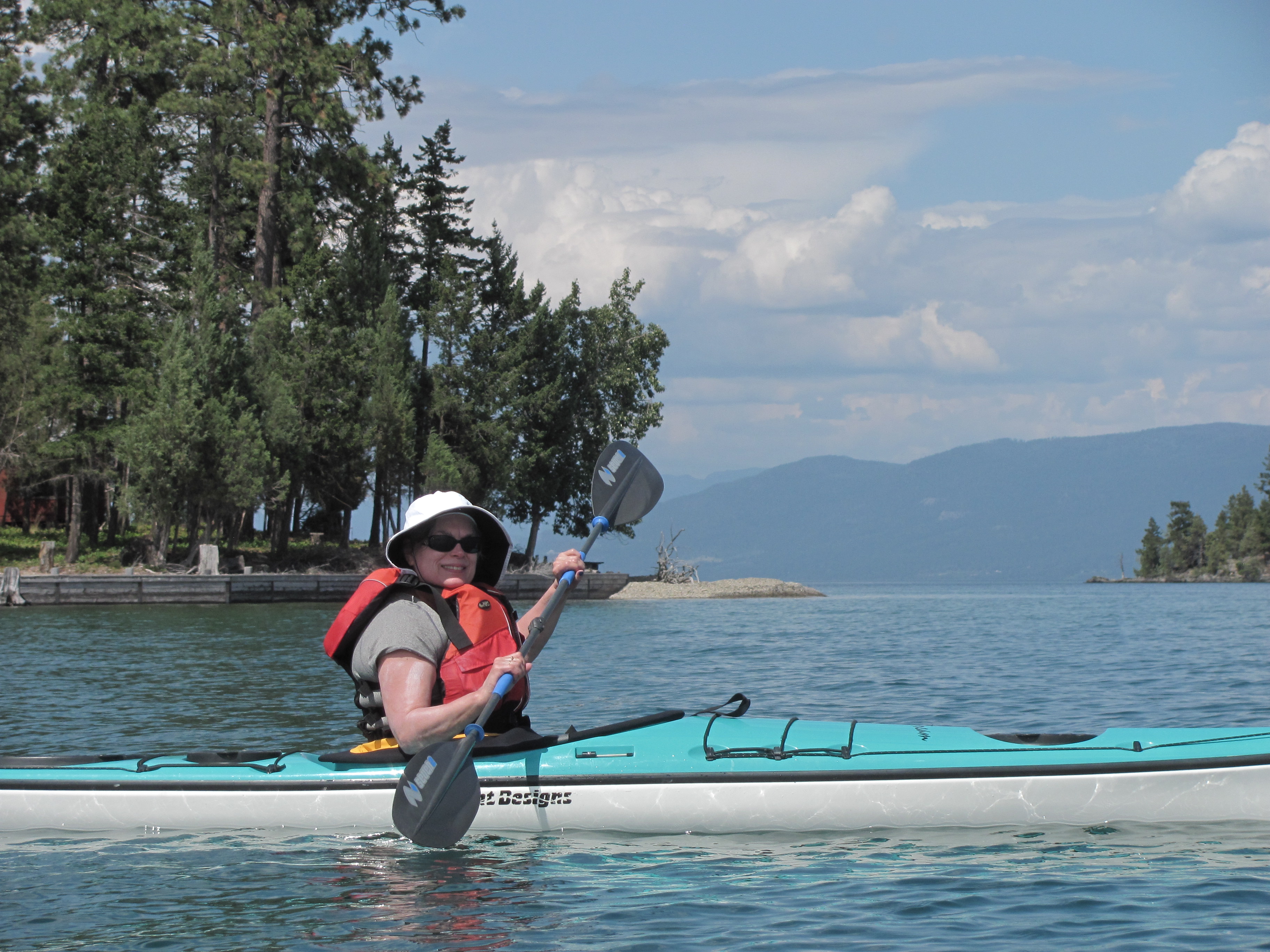
As I paddle south I let memories of Deep Bay come to me. For at least twenty years Deep Bay has seemed like a sheltering place. My wife led retreats here for organizations and small groups. When we were remodeling our home we came to Deep Bay to recover from the effects of sheet rock dust, hammer drills, and concrete saws. This cliff-side perch with a deep green bay below has always seemed like a place to restore the mind to stillness. Recognizing the difficulties of maintaining this place and its original vision, we understand that Deep Bay Center is no longer available to the public and may be up for sale. Nevertheless, I feel pulled toward this deep notch between the cliffs and the quiet I have always found here. Whoever owns the land and timber-frame structures, Deep Bay will always seem inviting, like a place of safety and rest. So, I continue south past Angel Point, Hockaday Bay and Hughes Bay. I pass the reef on the northeast corner of the refuge and make a right turn into the quiet. In the pocket of the bay I wander among drift logs.

IMG_2753

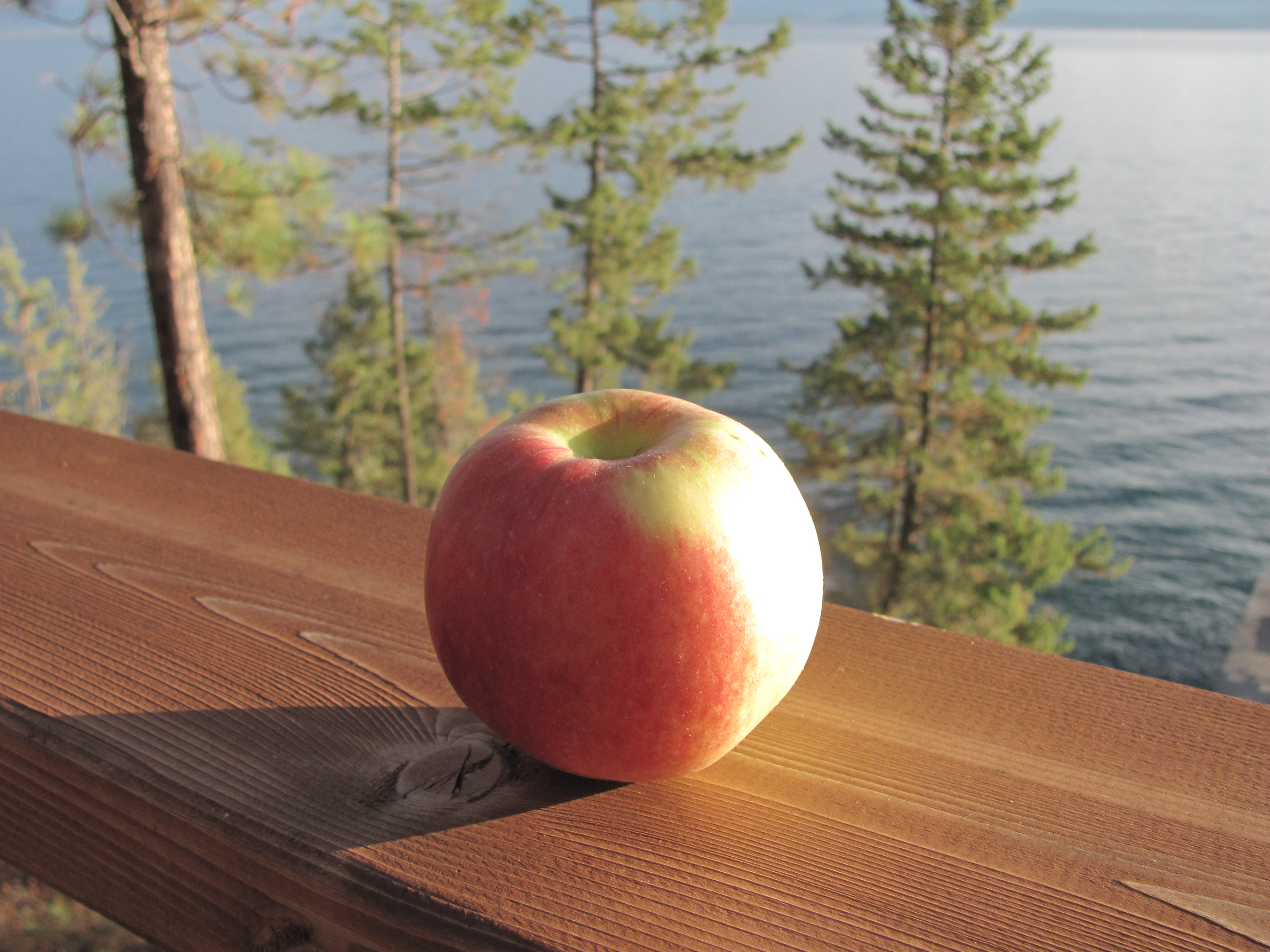
Continuing to wander, I find a perfect apple in the wild depth of the forest. There is no way to know if it sprung from a picnic’s tossed core or a bear’s secret deposit. Either way it shines bright against the gray light. Not equal to Augustine’s scruples, I reach up and pick the apple hoping to turn what might be considered theft into a present for someone else, my way of expiating the guilt and sharing a beautiful surprise.

IMG_2773

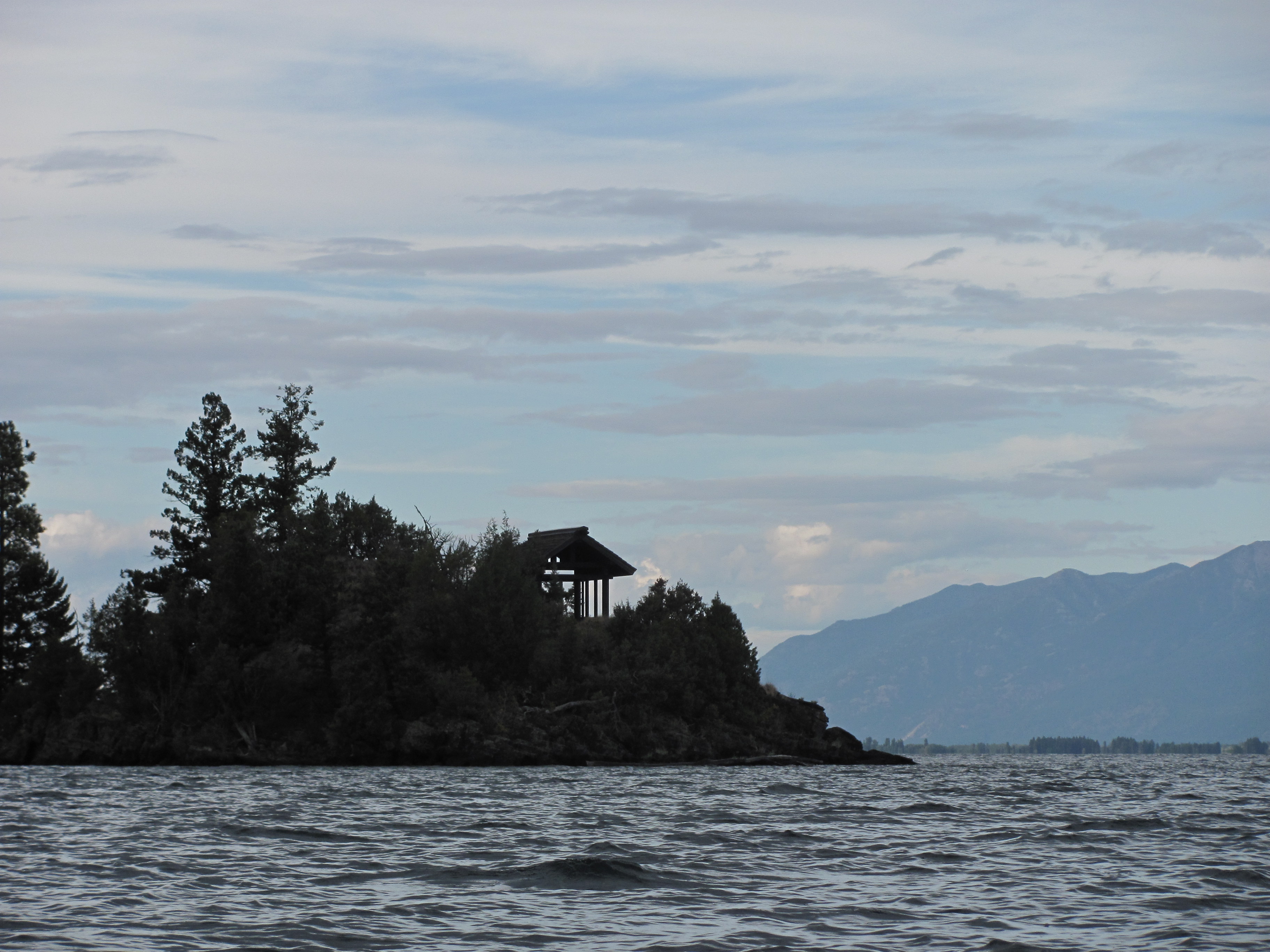
On the return paddle I slip the right blade under the bungee cord, lift the loop of my skirt and carefully extract my camera for a shot of the meditation center on the top of Angel Point, a structure I have always admired.

IMG_2760

After I come into the narrow slot between the dock and the cliff I think of lines I wrote long ago after my first encounter with Deep Bay.

Deep Bay Swallows

From the top of the cliff above the lake

swallows launch themselves into air,

never wondering if air will support them,

never doubting that air

will lift their pointed wings.

They seem not to need to rehearse

first lessons, nor do they hesitate,

hundreds of feet above the rocks

or the flat plate of the lake.

No, in the insubstantial medium of air

they draw their unselfconscious arcs.

They do not seem to have suffered a fall

that did not end in flight.

What wings have we with which to fly

except the trust

that for now someone or something

holds up all our falling,

intending for us to learn

to lean forward into apparent emptiness

and push off from where we cling

into all that waits to meet

our outstretched faith.

Finally, Close to Painted Rocks

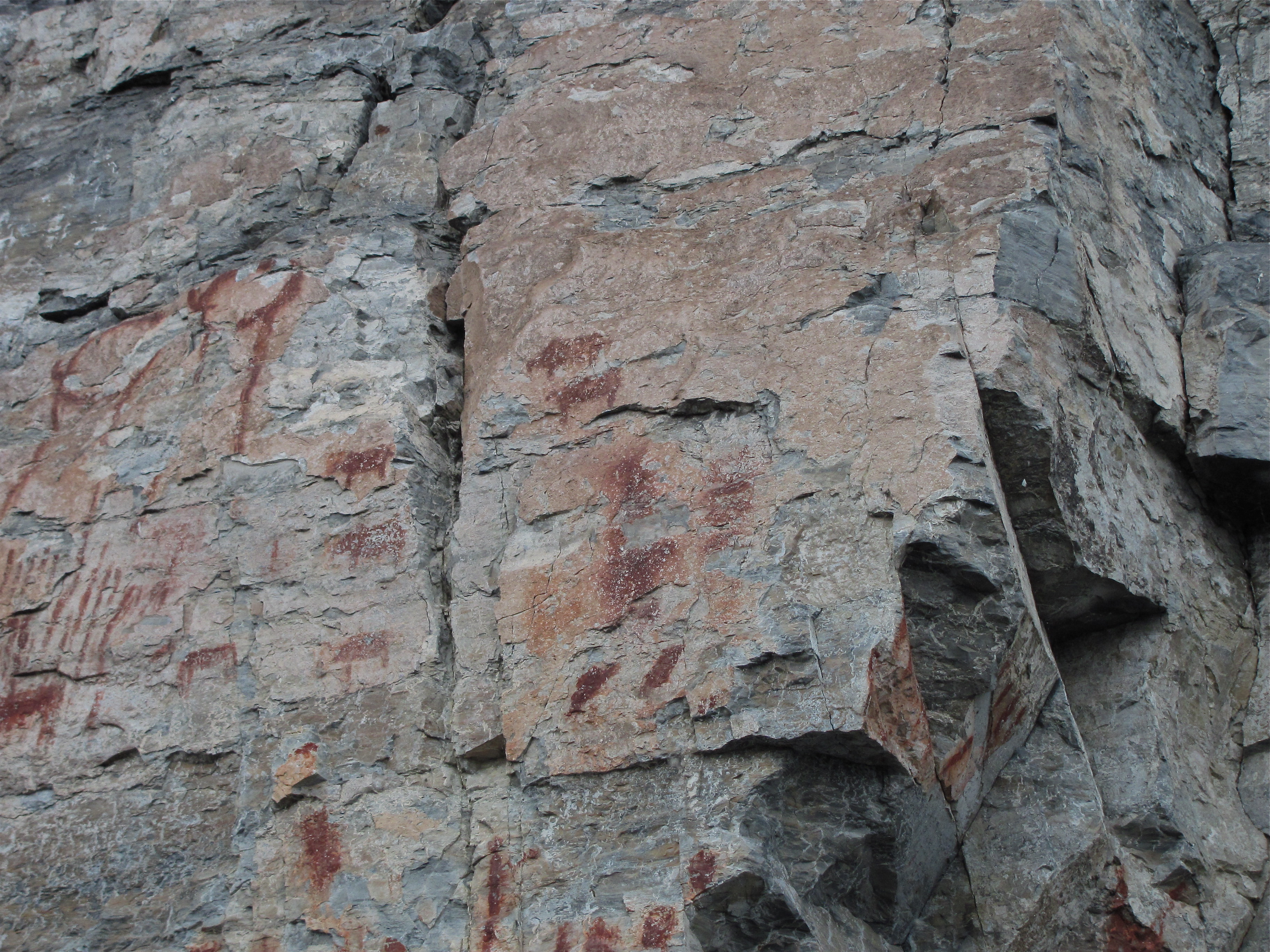
Every time I go to the lake I am aware that I am passing through land that belongs to The Flathead Nation, the Salish, Kootenai and Pend Oreille peoples. This is not my land; it is theirs. Their roots in this landscape reach into the ground of at least 7,000 years of history and their stories reach back to a time before that. As I travel to the lake and pass over its waters, I wish I had a way of making a deeper connection with the people of this place. In an effort to make contact with the history of these people I have tried many times to approach Painted Rocks, a pictograph site on the west shore of the lake. Whether I am paddling north or south I often find that the waves in this area of the lake seem to be focused on the cliff where these red markings can be found. In these conditions waves bounce off the cliff at odd angles and create a complicated, chaotic sea. Or, even if the waves are calm, wakes from passing boats make this a somewhat hazardous place for a kayaker to slip the paddle under a deck line to pause and wonder.

IMG_2717

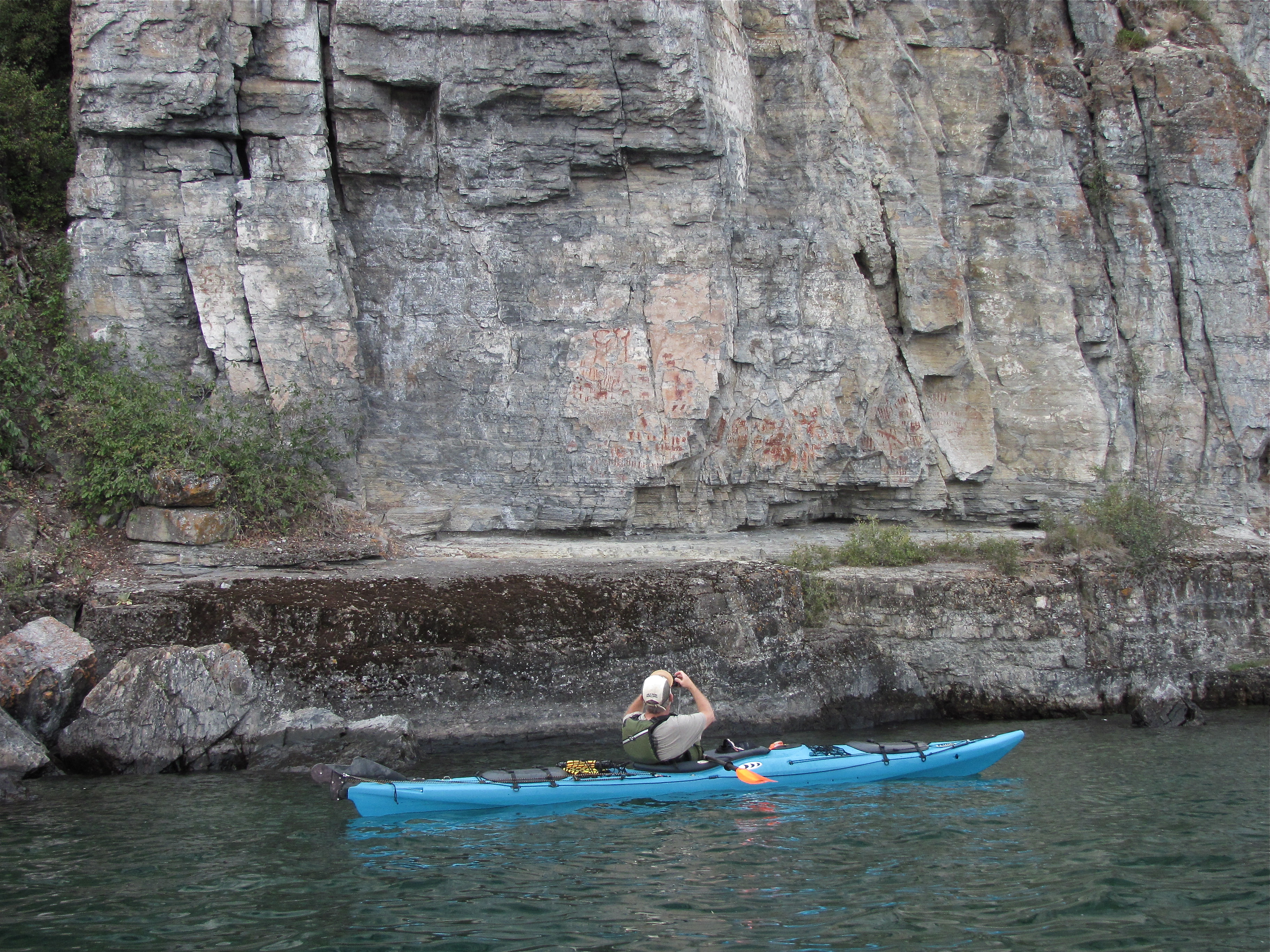
One Monday evening, however, when a friend and I had made arrangements to camp on Cedar Island, just south of the cliffs, the lake was so calm that we could safely approach the cliffs and their enigmatic markings. We were able to touch the wet dark rock under the limestone cliffs overhead and look as long as we pleased.

IMG_2695

To untrained eyes it appears as if the cliff bears depictions of bison, perhaps bison headdresses, and tick marks, possibly indicating kills or visits to this site. A book by Sally Thompson, the Kootenai Culture Committee and the Pikunni Traditional Association, People Before the Park, makes very clear that bison were “real food” to the Kootenai. Despite the risks, they made seasonal treks over the mountains into bison country east of the Divide to obtain the kind of protein that would sustain them through long winters west of the mountains. No wonder bison appear on these walls.

IMG_2698

Thanks again to Sally Thompson, an anthropologist and ethnographer, I was directed to Legends from the Northern Rockies by Ella Clark. The book contains stories related to this area and a Kootenai story about Painted Rocks in particular. For anyone curious about this area and the deep memories of its original inhabitants, this story may be meaningful. Amazingly, it recognizes a time before and after the geological cataclysm of what we call Glacial Lake Missoula. I especially enjoy the humor in the characterization of Rabbit. In Clark’s words:

This myth about them (Painted Rocks) was recorded from William Gingrass. His Kutenai name, given him by his great-grand-mother, means “Grizzly Bear War Paint.”

 After the great flood long ago, no human beings were left in this country. But the spirits were left. Some of them were in the form of animals. They gathered together on a bench of land above where Flathead Lake is now. At that time there was no lake—just a big river coming down from the north. It wound around and flowed down through where the Hot Springs are now. All that country was under water; you can see the water marks yet on the east side of the Lone Pine country. A little stream flowed at the south end of the present lake. A long time after this story, Yawonick, something that lives down below the water, came up from the bottom of the river and changed its course. Then the lake was formed.

When the great flood went down, the spirits held a council there on the shelf above the old river. They had heard that new people were coming, and they knew they should decide what to do when the Indians arrived. While they talked, one spirit kept watch.

“The people will come in canoes from the north,” said the chief of the spirits. “We must have everything decided when they come, as to how we can help them. Each of you will have to have a special song that will help people. You will sing it and then put your picture or your name on these big rocks.”

“But why should we put them up here?” asked on spirit. “They will be so high that they will be hard to get to or even to see.”

“That is what we want,” replied Nupeeka, the chief of the spirits. Nupeeka means “spirit”; in the old days he was a kind of teacher also. “We want the people to go to the high places when they seek spirit power. Seeking power will be too easy if they can find it in the low places. They will have to climb to get to the spirit pictures and the writing in the high places.”

So the spirits sang their songs and painted their names in pictures on the rocks. The first Dawn of the Morning sang the first song and put his sign highest up on the rock; that spirit gave the strongest power. The spirits of Grizzly Bear and Cougar and Eagle—they sang their songs and painted their pictures. Each of them gives strong power. All the other spirits sang their songs and put their writing on the rocks—all except Rabbit. He just hopped around.

At last the lookout called, “We must end our meeting. I see the new people coming around the bend.”

“But I haven’t made up my song yet!” exclaimed Rabbit. “I haven’t a song yet and I haven’t painted my picture.”

“It’s too late now,” the other spirits told him. “The people are landing below the Painted Rock.”

So Rabbit was left out entirely. He has no power song. He gives no power to people seeking spirit power. He can do nothing but hop around.

The new people landed below the Painted Rocks, near where Rollins is now, in the Big Lodge country. It is called the Big Lodge country because of a vision two men had many years ago. Each of them saw in a vision where he should put up a lodge for a Sun Dance, for a sacrifice to the spirits. When they followed their dream, they came to the same place; each had seen the same spot in his vision. So they put one big lodge there for the two groups of people.

The harder a person had to work to get to the place for the power quest, the higher the spirit power he obtained. The spirit who appeared to a person in a vision recorded on the rocks how many days and nights he had been there and what power had been given him (149-151).

IMG_2699

Like first peoples, I, too, have had to work to get close to Painted Rocks, to the deep history the site depicts and to the long, almost geological memory of the people or spirits who left their marks here, recording and celebrating a time even before the lake.

The Return

The Return

On August 16-17, a friend and I made one of my favorite mid-summer paddles. We put in at the Walstad Fishing Access point near Big Arm and paddled north against waves and wind past Wildhorse Island and then on to Cedar Island.

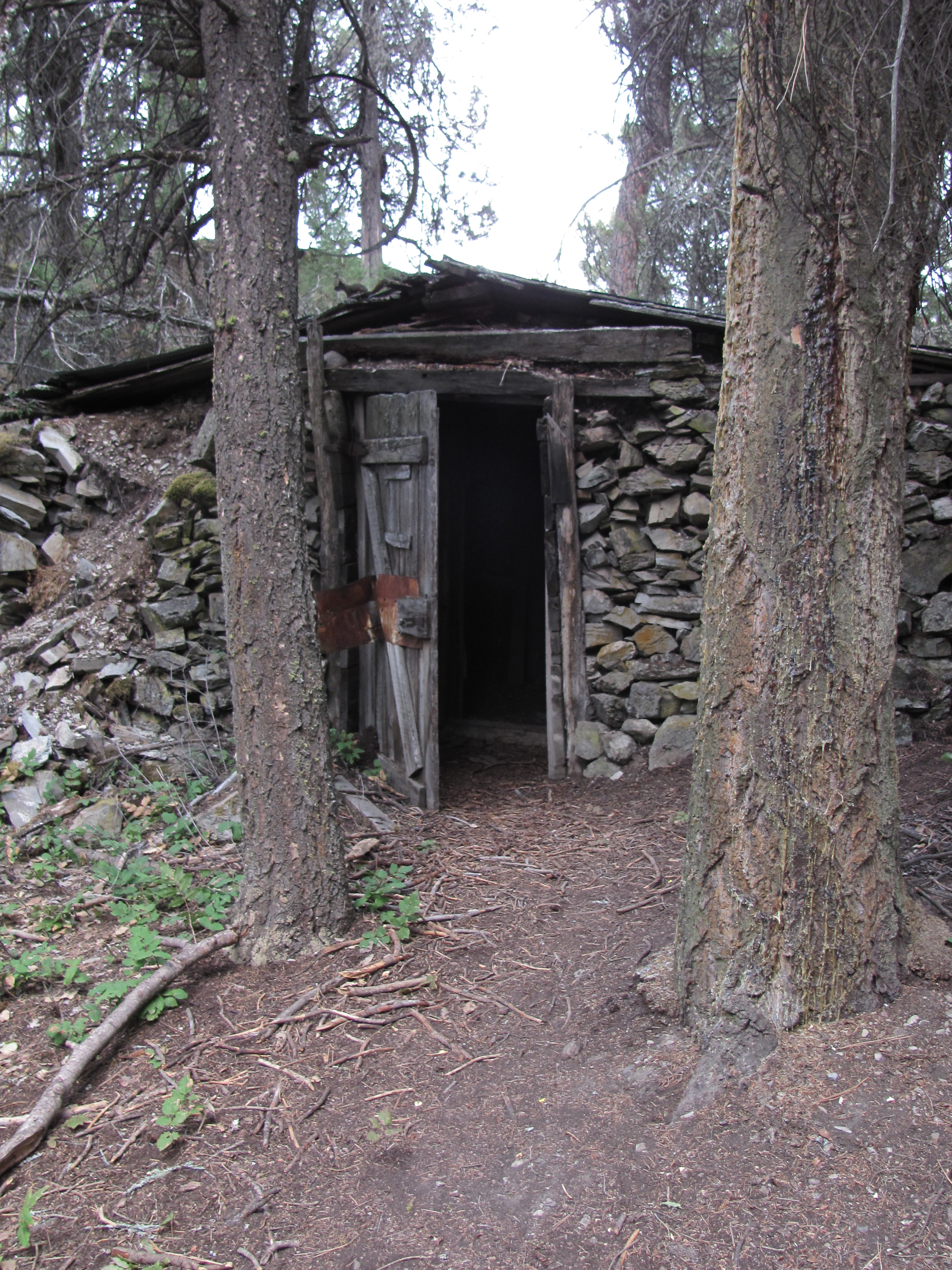
IMG_2713Before setting up camp we decided to walk around the island. I showed my friend the remnants of a craftsman style home and the cold cellar where geese now build nests, the meadow, untended orchard and derelict corral, the cistern now filled with garbage instead of cool, clear water. We found goose eggs lying open on the now brown moss covering the deep forest floor. But we also found trash—a margarita bottle balanced on a drift log, aluminum cans that never burn in fire pits, lots of toilet paper, a few diapers, an empty potato chip bag, bottle caps and plastic on the beaches. In this exceptionally dry year, with 86 fires burning around us, the sere conditions help to preserve garbage as if it had been sealed in a desert tomb.

IMG_2691

On our walk I complained about what we were seeing. I felt the disjunction between this island outpost in the largest lake west of the Mississippi and the effects of human visitation. Internally I asked, how can someone not care about this place? I could acknowledge pure accident, the way a gust of wind whips an object out of an upraised hand; but my judgments about the carelessness that follows the consumption of too much alcohol and the thoughtlessness of the privileged piled up like logs on the beach. As I walked along I felt unprepared to pick up the garbage I found. I needed gloves and nose plugs; I needed a garbage bag with a tie; I needed an empty boat, not one full of camping gear.

In the same way that one should not pray for the hungry without being willing to feed them, I do not want to complain about garbage on Cedar Island without being willing to do something about it. I need to return to the island, leave Bluebird’s chambers empty so that I have room to pick up what I find. This island has given me a vantage point on sunrise, a high perch to watch the sun go down and cast its red glow on the Mission Range. This island sails like a ship through the night sky. On one level I feel as though I have a debt that I want to find a way to repay. I can work off this debt to beauty by making time to return to the island and come prepared to transport its garbage to a proper depository. I cannot do anything about Syria or help immigrants on Greece’s shores, but I can do something about the condition of Cedar Island. I must return.

Early on Monday, August 24, I headed back to the lake. My boat was empty except for emergency gear. I slipped Bluebird into choppy conditions around the Westshore campground and sped south, timing my strokes to coincide with the push of the lake on my port stern quarter. I covered four miles in 45 minutes, lifted my boat into the drift logs, and took gloves and bags out of the stern hatch.

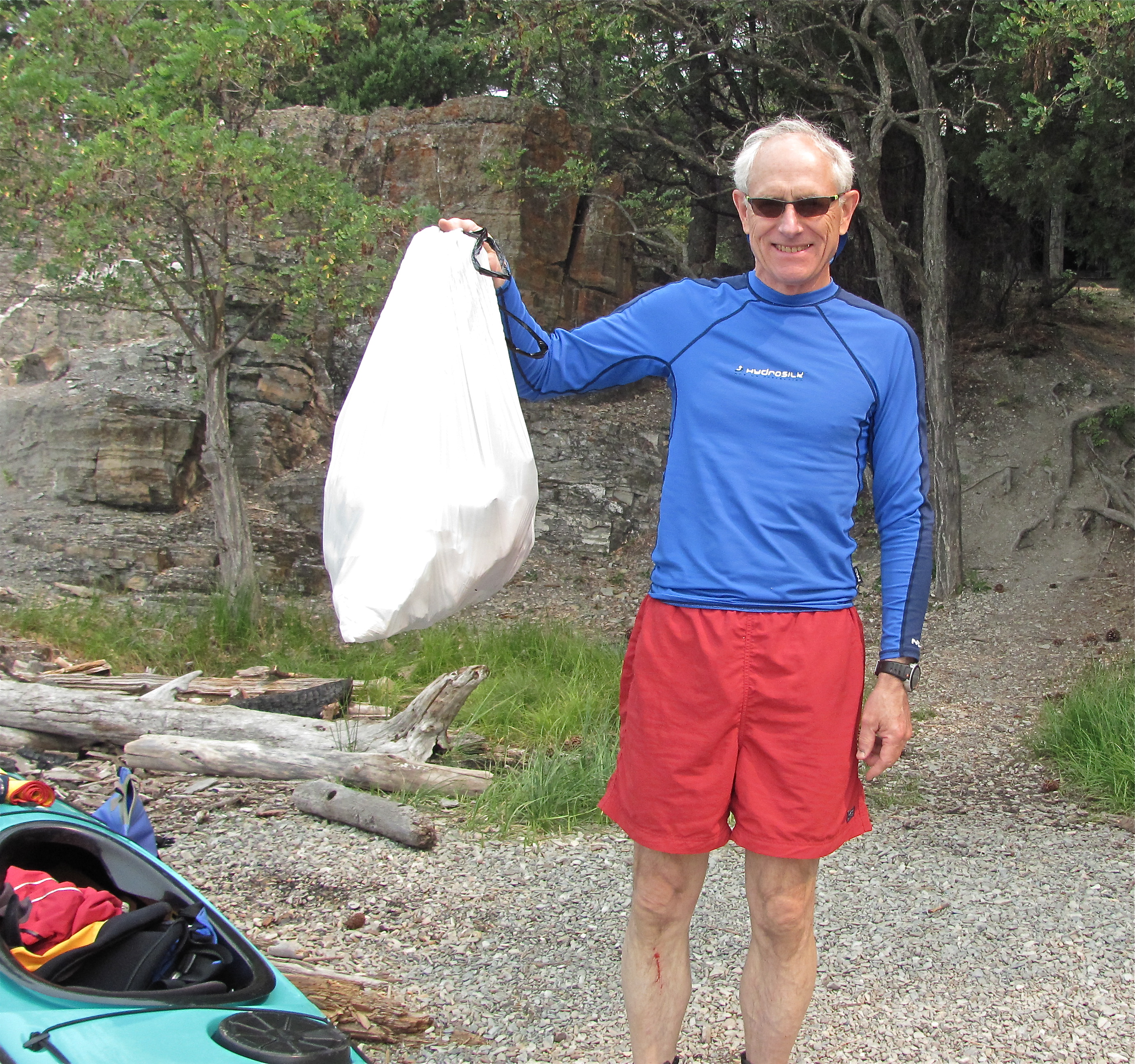
I circled the island counterclockwise, alternating between the forest interior and the beaches where people had burned their fires and left their trash. Predictably, I picked up glass, plastic and Styrofoam, but also managed to free a rope tied around a tree, and steeled myself to pick up the paper trails; but I drew the line on corrugated steel and plywood. On one beach I saw how a beach fire radiated outward, its flames following the flammable roots of cottonwoods, then climbing the trunks and killing the grove.

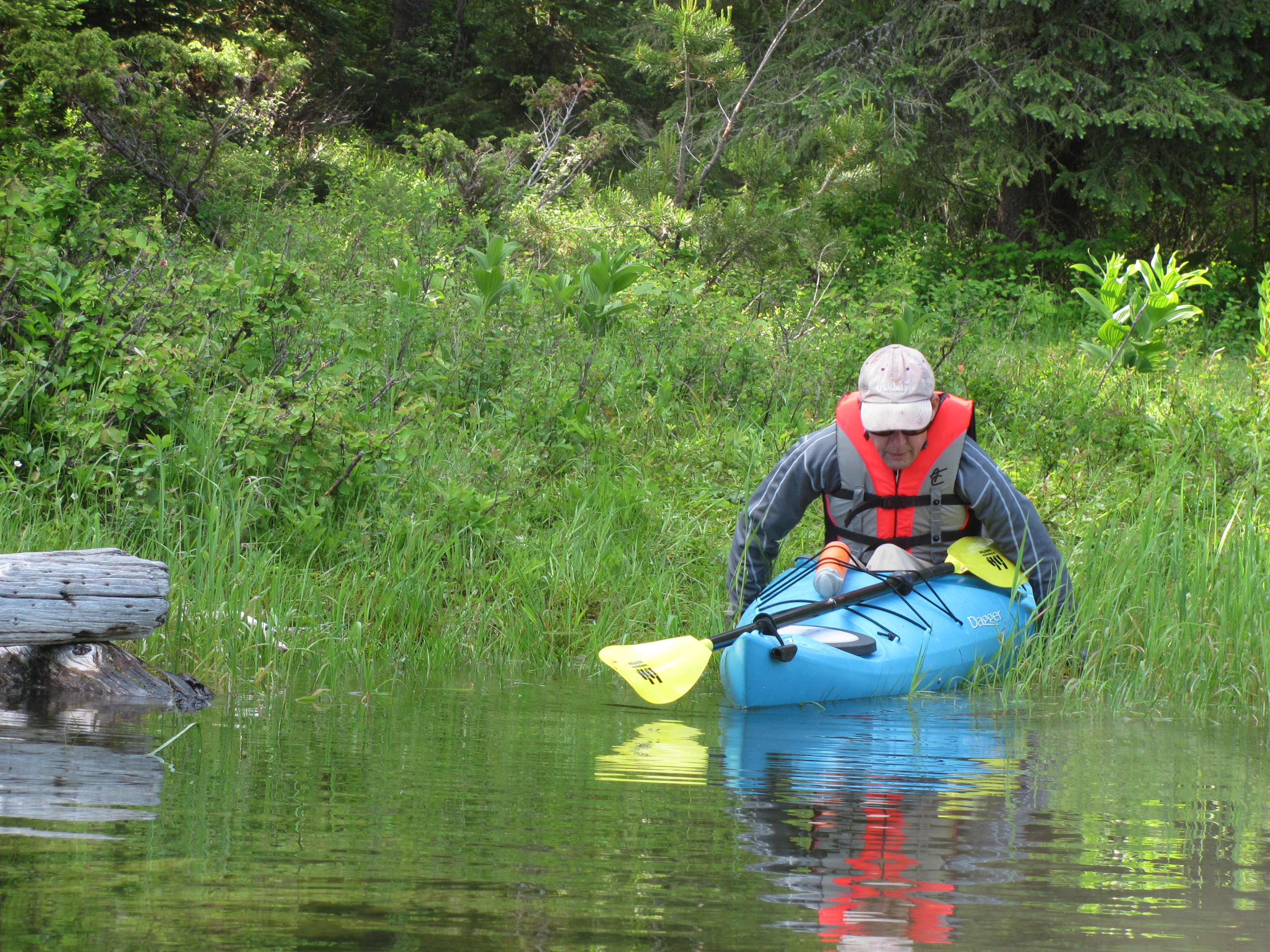
When I reached the east side of the island I heard the voices of a young man and woman. They had spelled a name by laying little stones on the bleached back of a drift log, their cell phones nearby as they swam in the coves. I eventually completed my circle and returned to the beach where I had left Bluebird and saw that the young couple had crossed to the island in a small open kayak and a stand-up paddleboard. They eventually joined me on the beach as I paused to eat a snack before heading north. They had figured out what I was doing and were willing to take a photo of my trash before I tucked it in the wide mouth of my stern hatch. The young man kindly inquired about the shin I barked on a broken limb from a fallen fir. As they left the beach for nearby Zelezny Bay, I felt happy watching them play on the stage of their mutual affection.

Using a kayak as a garbage barge is a strange thing to do. Drawing the moral lines sharply, one might even argue that it was wasteful to drive the distance from Missoula to clean up the island. Further, the garbage on Cedar Island does not compare to plastic in the Pacific or on Caribbean beaches. But I have learned how important it is for me not to suppress the empathic or moral response. With every suppression the impulse to respond to the world grows weaker. As often as I can I try not to let this happen. I don’t want the sympathetic response to the world within my reach to die out. Ultimately, this is why I returned to the island.

IMG_2739

Beginner’s Mind

Beginner’s Mind

From two decades as a woodworker I have learned that sometimes I need to approach a problem in the shop as if I know almost nothing. I need to return to what Buddhists call “beginner’s mind.” To solve the problem at hand, like imagining a jig that allows me to perform a safe cut, I sometimes need to put aside habits that dull perception and assumptions that prevent me from thinking in new ways. A few days ago I had an opportunity to return to a version of beginner’s mind in relation to paddling a kayak.

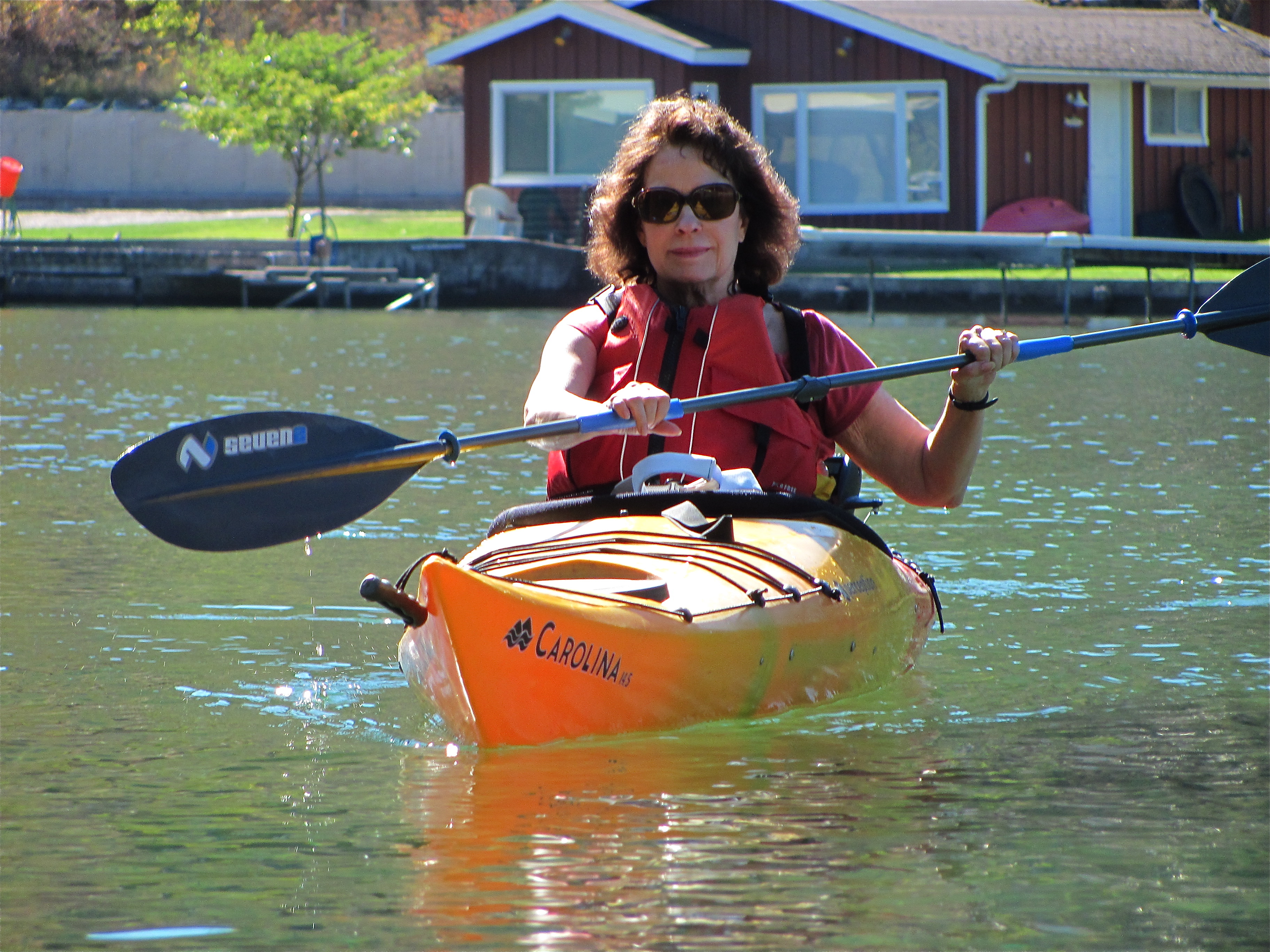
Last October a local church held an auction to raise money so that girls in Myanmar could go to school. A friend who belongs to the church asked me to offer a guided paddle on Flathead Lake. Wanting to support the education of girls, I happily wrote up a description of a day-trip on the lake and submitted it to the church. After the auction, I heard who won the excursion and kept in touch with her over the winter. The night before the trip, this last Monday, I loaded Bluebird, my Current Designs Gulfstream, and Kestrel, my Perception Carolina, onto my wooden rack. I went through a long mental list of everything I might need, including some emergency gear if we got caught on an island during a thunderstorm or mid channel when the wind kicked up. The next morning I met the person who made the winning bid at her house. She was ready with red bag, sunscreen and water bottle in hand. We drove down to the local Italian deli and picked up sandwiches, drinks, cherries, and chocolate I ordered ahead of time.

On the way up to the lake I gently inquired to learn more about N’s interests and abilities, her motivation for submitting the winning bid, and the kind of experience she hoped to have. As I listened I held two paddles in mind, one to Wild Horse Island that would include a hike, and the other into The Narrows where the archipelago might offer shorter paddling distances and a little more shelter if monsoonal weather suddenly descended on us. When we crested the Polson moraine I got my first view of the lake and its conditions. Wind out of the south and a choppy surface led me to turn right at the light and go for the nearer islands, choosing safety over adventure.

As we began to unload the boats and all the gear I felt a little tension. I wanted to insure N’s safety and give her the best experience possible. I wanted to impart necessary information without loading a new paddler with anxiety. Knowing how fear blocks the integration of information, I decided on a very gradual approach. I placed both boats on the lawn, not on the shore. This way we could take our time getting ready. I tried to keep in mind how excitement and fear might vie with each other in the mind of a beginner. In response I tried to pare down instructions to the bare essentials that I gave her a little at a time: skirt first, pfd second; this side of the paddle blade faces forward, this side toward you; this is how you get into a kayak without tipping it over; I’ll adjust the foot peddles until the boat feels like it is part of you; attach the rear of the skirt, then the front, then the sides; if you happen to tip over, grab this loop, pull the skirt loose and you will roll out and float to the surface; try not to paddle with your arms, paddle with your core (a way not to get tired). While speaking I noticed N’s respiration rate go up and down. Whenever it rose I slowed down or became still.

After a few things made sense to N. on land, I decided that it was time to get near the water. We lifted Bluebird over the concrete curbing and gently placed it on the boat ramp, half in, half out. I helped N. settle herself in the keyhole, handed her the paddle and again paid attention to her breathing. I could tell that she had practice calming herself. When she seemed more at ease I returned to final assurances: the skirt will protect you from waves and drips from the paddle; the hatch gaskets will hold and the boat will not fill up with water if waves wash over the deck; we can’t prevent power boats from making waves but we can ride through and over them; its Monday, so few boats will be on the water.

Eventually I slid her in the water and encouraged her to simply hang out while I picked up Kestrel. N. sat in the shallows of the marina and waited for me. When we were side-by-side I said, Go ahead and rock side to side. Get a feel for how the boat moves. Now take a few strokes and see how it feels. When I could tell that N. sensed the initial stability of an already stable boat we paddled out of the marina and into the open water between the campground and Bull Island about 1.5 miles to the west. I rafted up with her, showed her how two boats together, paddles across each boat, felt even more stable. I said, let’s just sit here in these little waves and see how the boat responds; let the boat move a little; don’t try to freeze it; your safety is in the boat, not in being able to touch bottom.

When N’s breathing settled toward something like a resting rate I encouraged her to take a few more strokes. I tried to reassure her by saying, as we make the crossing I will stay very close to you. We are going to a beautiful bay where we will have our picnic. Let’s take one stroke and then the next.

Ever so slowly we began to advance into the channel. I slipped upwind and just ahead of her to break the effect of small waves and a little wind coming from the south. I kept N. in the corner of my right eye at all times. We paddled for several minutes in complete silence. I wanted her to find her own rhythm, to work the fear-born tension out of her body. After a long stretch of quiet I thought it might be helpful to provide a distraction. So I asked some questions about her previous adventures: When were you in Saudi Arabia? What took you there? How did you decide to become a diver? Have you ever traveled to Asia? We went back and forth, stroke after stroke.

The conversation worked like a tail wind. Before we knew it we glided over the foundation of the island and entered the green water of the first of two south-facing bays. With the sunny shore at hand I sped ahead, telling N. that I would land first and catch Bluebird as she came in.

As she stepped ashore I could tell that N. felt relief to be on land. I raised my right hand to congratulate her and got a palm slap in return. After securing both boats I laid out the picnic on a drift log. I was not surprised when she said, “I’m hungry.” She reached for half the roast beef sandwich known as The New Edition and half of the prosciutto and walnut chutney version known as Kiss. We ate the dark red cherries, tossing the seeds over our shoulders, hoping for an island orchard, and then topped things off with Blood Orange Sanpellegrino and chocolate.

We took time to digest our food and told a few more stories. Though the forecast had been good, I knew how fast weather can change and that the lake responds to the slightest change in wind velocity or direction. As soon as I could I laid out some options for extending the paddle, but trusted her own judgment when she said, “Let’s paddle back.” Again, I helped her feel settled and centered in the boat and gave her a gentle push off the beach. I turned to Kestrel, tucked myself in and sprinted to catch up. On the way back I could tell that N. felt renewed by lunch and much more comfortable in the boat, perhaps even enthusiastic about being on such intimate terms with the lake. The conditions were calmer than during the initial passage, almost glassy as we paddled east. Ring-billed gulls called overhead and an occasional ski boat passed in the distance.

I entered the marina first so that I could keep Bluebird from grounding on the course concrete ramp. I gave N. a hand as she got out and found her legs. This was a successful first paddle for her. My guest on the lake had covered the distance. She had done something new and felt proud of herself for overcoming her initial fears at being in a kayak on the largest lake west of the Mississippi, a lake that feels like an ocean.

We worked together to re-load the boats and all the gear. I kept an eye on clouds racing in from the west. The wind began to blow and within ten minutes a once- placid lake turned into a gray-green milkshake. With some apprehension we watched a paddle border stroke through the whitecaps and waves that crashed against the breakwater. N. got into the truck for shelter while I finished tying down the boats. We drove home grateful that we had gotten off the water when we did. The lake was no longer a safe place for a novice paddler.

On the way home we soaked up the beauty of the Mission Valley, the way hayfields abut the high peaks of the range. In the distance we saw lightning spear the clouds over St. Ignatius, so we turned west to take the back road through Moiese and avoided most of the storm. We drove the rest of the way talking about community theater and family, took a shortcut to her house and arrived safe and sound.

After dropping N. off I felt relief. I had not exposed a new paddler to anything like the dangers of paddling in a storm. I had not forgotten anything and been forced to improvise. I had not asked too much of her in relation to distance or time. Now I can return to my own adventures on the lake, trying not to let assumptions and habits dull my perceptions or shut the door on the unexpected. I will try to be as open as I was twenty-five years ago in Sitka, Alaska, when I took those first wondrous strokes. I feel glad that in October more girls will be at school in Myanmar.
IMG_2627


Paddling Lessons, Part IV: Pinesmoke

This post is the last in a four-part series. In these posts I remind myself and other Flathead Lake paddlers about some of the risks and rewards of early season paddling.

In early June of 2010, on a cool but clear morning, I drove up to the Walstad fishing access with the thought of paddling to Wild Horse Island to see what flowers were in bloom. On this day I saw something I had never seen before. The memory of this experience reminds me to keep venturing into the world of early season paddling.

Again from the logbook:

This early in the season there are only a few trucks and boat trailers in the parking lot. I take a minute to walk out on the dock and assess conditions on the lake before setting Bluebird in the water. The jet stream flows in a straight line from the southwest—unlike the mid-summer norm. Wind from this direction means I’ll have a quartering tail wind and corresponding waves as I cross to Wild Horse Island. I adjust myself mentally to what it will feel like to be pushed from the stern quarter. I slip Bluebird into the water and settle myself, feeling for a low center of gravity before advancing into the waves that create an awkward rolling motion. Assisted, even if awkwardly by waves I cannot see, I make the crossing quickly and soon slide above the tumbled ramp of island shallows. I round the island’s tail and drop into Skeeko bay.

I love to hike on the island at this time of the year, so I haul Bluebird out of the water and roll the boat over in the shade of one of the big pines. I tuck my wetsuit, pfd, and booties in the cave of the cockpit and switch to more comfortable clothes and footgear for the hike. Before starting up the trail to the isthmus I check the State Park log. I discover, somewhat to my surprise, that no one has recorded an earlier visit to the island this year. Looking forward to whatever I may discover, I hike up the ridge, down into the canyon between peaks and then back up to the top of the middle peak. As memories are attached to places, I recall that this saddle between peaks was important to friends who died in a January crossing of the strait. I come to pay my respects to other people who loved this island.

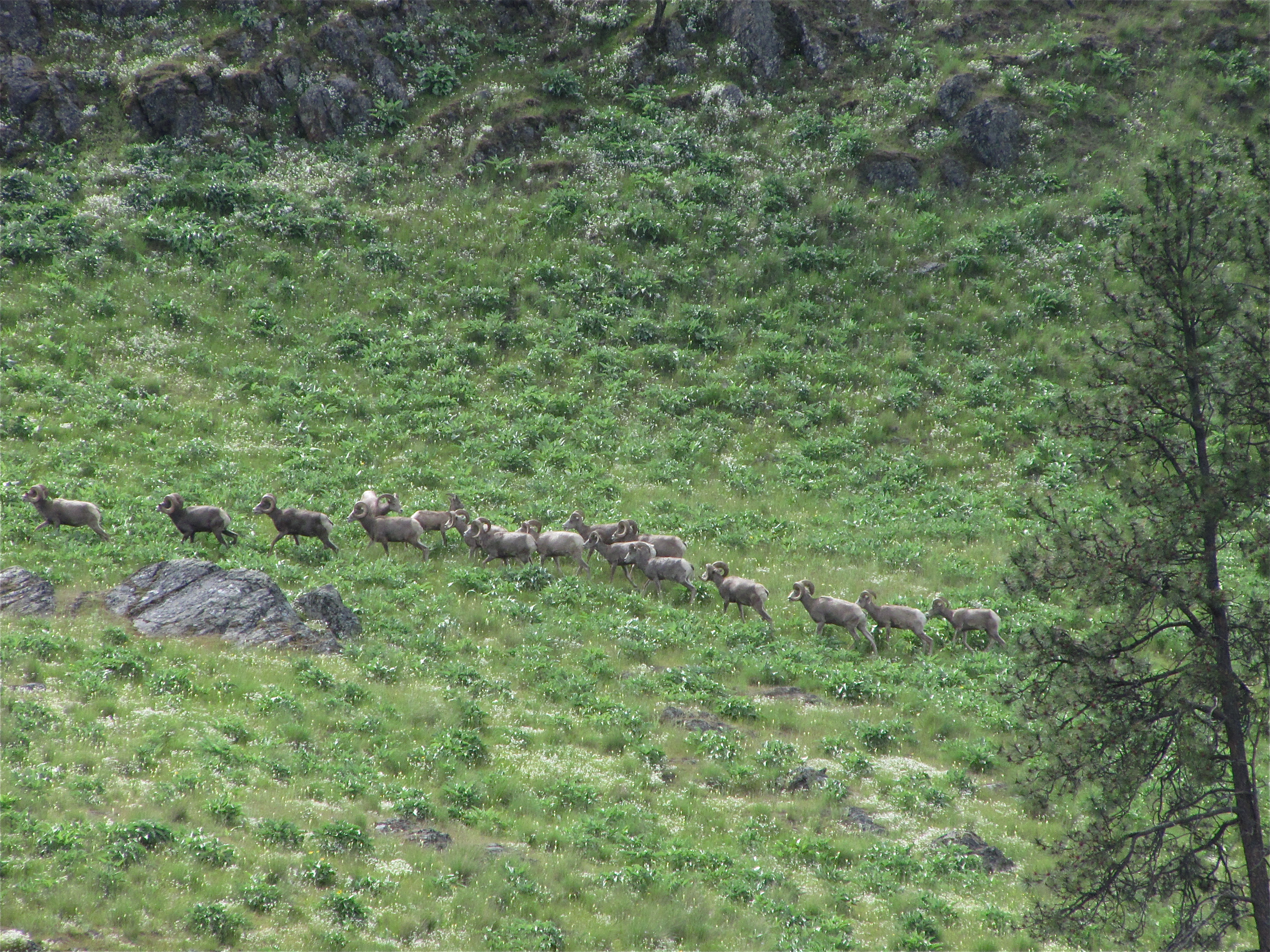
I move quickly and fairly quietly through the soft bunch grasses and the windblown pine needles. It feels good to walk on the moist, almost spongy ground, so unlike the conditions in August or September. Below me to the right I spot five big deer and a red-tail hawk. From this high vantage point I take time to look at everything around me, searching for movement and anomalies. Taking time to look before moving, I find Bighorn sheep in the distance. They are bedded down in the trees. On a scabby, west-facing slope I find dozens of Bitterroot, blazing out of the windblown gravel like pink stars. It feels as if springtime is rising out of the ground and into my legs.

IMG_0744

Pleased with everything I see, I drop back into the canyon then pant up to the west peak. Before skipping down to the bay I take time to look south. From this last high point I see something that startles me. It looks as though the forest is on fire. Thick clouds of smoke rise up out of the trees and billow away in the wind. The smoke is thick enough to cast running shadows over the forest and grasslands below. Remembering the Mann Gulch fire and the fifteen men who got caught in an upslope conflagration, I don’t want to be caught in a similar situation. Needing a good decision, I study the scene below. It eventually dawns on me that the smoke is the wrong color—yellow not brown or gray. I suddenly realize that the wind is blowing pollen from the pine trees not smoke. Pollen streams from the trees in enormous yellow plumes that look like smoke. This explains why I saw so much pollen on the water while in mid channel. All is well. From an ecological perspective the timing of the wind and the release of powdery pollen have met each other perfectly. Astonished by the conjunction of such things, I continue my descent more amazed than afraid.

IMG_0751

Back at the beach I change clothes again, tuck myself back into Bluebird and slide into the bay. During the hike I consumed all the water I brought. I sweep away a fan of pollen beside me and dip my blue bottle into the lake. I raise it and take a big, long drink, leaving just a little for when I land again at Walstad. Refreshed, even if on my way to gastric distress that shows up later (I should have filtered the water), I turn out of the shelter of the bay and paddle down the west shore of the island. Now I face into the same quartering headwind that helped me fly to the island earlier in the day. I settle into an even pace, having learned not to hurry the process in an attempt to get out of the wind. It is enough to take one strong firm stroke and then the next, to let my body roll slightly with the boat’s roll rather than fight the motion. I try to let the energy pass through me rather than oppose it as if it were an enemy. I am reminded of Lao Tzu’s approach to resistance. In Mitchell’s translation of Chapter #30 the old man says:

For every force there is a counterforce.

Violence, even well intentioned

Always rebounds upon itself (#30).

Trying not to rely on force, I paddle on, accept rather than resist the quartering seas off the starboard side.

As near as I can tell, I was the only person on Wild Horse Island today, the only person to see billows of pollen so dense that they cast shadows over the undulating slopes. Though the weather at this time of the year is volatile and the water still cold, I am grateful for a chance encounter with the perfect timing of the living world.

Paddling Lessons, Part III: Under Fire

Paddling Lessons, Part III: Under Fire

IMG_0400

In June of 2009 my wife and I had an opportunity to spend a week at Flathead Lake. A friend had rented a cabin near Big Arm but needed to travel elsewhere for one of her four weeks. She offered us a chance to sublet the little cabin. On Tuesday of our week at the lake the weather seemed to be building toward afternoon thunderstorms. Despite the uncertain weather I launched my kayak with the intent of exploring the north-facing shore between Big Arm and Black Point. In the process I learned another lesson.

In my logbook I find the following account:

After breakfast I slide the boat off the lawn and head east along the shoreline. I take my time and explore each of the bays—where the Episcopal Church’s Camp Marshall will soon become a hub of playful activity, White Swan Bay, Indian Cove, the narrow slots of Whiskey Cove and Brindstone Harbor, then back out to Cat Bay. Along the way I pass a couple of boys daring each other to jump or dive off a dock into the still-cold water. They are as happy in the growing light and warmth as I am. At Black Point I turn around and begin the return journey. In the distance I see two thunderclouds beginning to build above Cromwell Island to the west. I recognize the potential danger of being caught out in the open. Clearly, I must race to safety before these clouds tower over me and electrify the lake.

I start back downwind and down wave. I ride the energy being drawn into the rising towers of the approaching storms. Ahead of me the two mushroom clouds begin to pour water and lightning down their thick grey stems, one onto Cromwell to the northwest, the other into the warm shallows of Big Arm Bay. Under the crash of thunder and the accompanying flash I feel terribly exposed. I am like a little black wick before an approaching flame. Too invested in my current direction to turn back, and knowing no one along the shore where I might ask for temporary shelter, I paddle on and hope to reach Melita Island before the lightning reaches me. As the fireworks continue further west, powerboats scatter like schools of fish. I sprint up the back of a wave until it catches my boat and launches it down the face, speeding me toward what I hope will be the shelter of trees and a little lee. I ride the storm’s energy toward its source.

When I start around the north side of the island a downdraft from one of the clouds drops out of the sky. All at once the wind reverses direction, blows the tops off the waves, and soaks me in spray. I laugh out loud and instantly see that I can’t go this way around the island. Forced to circle back I cling to the shore on my right. I reach Driftwood Point where flotsam and ducks pile up on in calmer water. I peek around the corner to see if I can paddle the last mile home. I want to get out of the red eye of the weather so I sprint to close the distance between the island and the shore, make a left turn into the area beside the dock, slide the boat out of the water, dash across the lawn, take the steps two at a time, and duck breathless under the porch.

From the safety of the deck and its overhanging roof I watch the storms continue to advance toward The Missions. The light changes. It casts a yellow-green hue on the ridges between peaks, throws a full rainbow over the lower lake to the south and produces orange, backlit clouds that appear to have been tumbled. It occurs to me that even when we are not on the water we live our lives caught between the rainbow and the lime-colored light, between the lightning and the dock, between fire and water. On this paddle I took a chance, placed myself in and under all the energy that poured out of the sky. I might have paid a high price; next time I will be more cautious. On this day I was too far out on the end of a long branch.

IMG_1587

Paddling Lessons, II: Learning to Yield

(May, 2008)

When two great forces oppose each other,

The victory will go

To the one that knows how to yield (Tao 69)

A few years ago my brother and I arranged to paddle together on the first anniversary of our mother’s death. She had been a difficult person in our lives, chronically ill and prone to trying to trying to control her sons. By paddling together on this anniversary my brother and I would celebrate our good health and freedom, two riches she never enjoyed. One day in May my brother drove to Montana from Seattle. The next day we drove together up to Flathead Lake. At this time of the year it was not hard to find a campsite at Big Arm State Park, so we erected his old Sierra Designs Starlight close to the beach. We spent the late afternoon and long evening paddling around Cromwell and Wild Horse islands.

During the night the weather changed. From inside the tent we heard wind in the trees and waves breaking on the shore next to us. In the morning we crawled out to find the wild conditions that made for a restless night. As we stood on the shore wind bore through the strait between Wild Horse and Melita Islands, turning the blues and greens into a froth of white. We knew it would not be a good day to paddle in an area receiving the full brunt of the wind. Hoping for calmer conditions elsewhere, we decided to drive up to Westshore Campground.

Conditions at Westshore were much the same. Determined but with trepidation, we launched at the boat ramp and paddled south—downwind and down wave, hoping to reach Cedar Island about four miles away. On the way conditions become even more severe. The wind blew harder and the waves became more ominous. We drew closer to shore in case we got into trouble. By the time we reached the Douglas Islands we knew it was not wise to continue; the further south we went the more difficult the return trip would be. The water opposite the cliffs at Painted Rocks would have been chaotic and dangerous.

In the narrow channel between shore and Mary B Island we turned around. In the lee of the little island we hopped out of our boats, stood in the shallows and rested. We kept our boats from blowing away by holding onto the combing around each cockpit. We took a few minutes to reconcile ourselves to the work ahead of us; returning to Westshore would be exhausting, a hard beat against the wind. Resigned to the inevitable we resumed positions. Choosing safety over further adventure, we headed north against waves that broke over our decks and swept up and around our skirts. Waves swallowed the upwind arm when we reached for a stroke on the starboard side and ate the downwind arm as they rolled under us. Looking north we saw wind gusts rattle the surface of the lake and then flail us. It took our best effort to make any progress. Someone observing our struggle from his deck shouted at us, but neither of us could afford to pause between strokes, turn to the side, or respond. We never knew whether he was shouting encouragement, offering us a chance to come ashore and rest, or whether he was cursing us for being on the lake. Each wave required our complete attention. Photographs were out of the question. Using my ears I kept track of Jeff just off my stern on the port side. We saved words for later but listened to the sound of each boat meeting the train of waves. Hoping that the peninsula above West Shore would break the wind for us, we dropped into the crescent of Goose Bay and circumscribed its perimeter.

When the dock at Westshore finally came into view we felt a great sense of relief. Three miles of this kind of paddling had been enough. We pulled in next to the dock wanting to avoid having our boats smashed on the rocks adjacent to the ramp. But even as we stood on the dock, waves blew through gaps in the planks and shot into the air. A gust of wind caught Jeff’s paddle and nearly blew it off the dock into the bay. He caught it with a toe. Barely able to control the boats when we lifted them into the wind, we secured them to Jeff’s rack and climbed into his Forrester. Inside the shelter of the car we felt the buffeting of the wind and gave thanks to be out of it. In the warmth of the car we noticed maple leaves beginning to unfold. We began to relax.

As hard as the return trip was for us, Jeff and I learned our own limits and the maximum conditions we can face in our boats. We learned that sometimes it is necessary to abandon a goal, no matter how desirable it seems. In the face of forces far greater than our own strength and determination it was prudent to yield and turn back.

After this day, as much as I love to paddle, I can imagine choosing not to paddle. There are days when morning wind whips the willows and causes big pines along the shore to sway. On stormy days light and shadow shift continuously and each leaf or needle or wave crest becomes a chip in the mosaic of light. On such days I must be able to imagine sitting inside, relieved that I am not contending with waves that break over the bow or lift the boat from behind and spiral it down into deepening troughs. There are days for tea in the tent.


One Reason

With another round of snow expected this weekend and temperatures in the twenties it is no time to paddle. It is a good time to reflect. In the interior space of winter I ponder my motivations for paddling Bluebird on Flathead Lake.

Over the years I have certainly gone to the lake to test myself, to lay out a course and press through whatever conditions I find to cover the distance, set off for a bay or island, even spend myself in an effort to reach a destination in the fewest possible hours. I have gone to the lake to introduce the experience to friends, taking as much delight in their encounter with the lake as when a companion catches a fine fish upstream of where I cast. I have gone to the lake when I have grown tired of the focused work of preparing for class or reading student essays. I have gone to the lake to be broken open by the distances, snow-covered ridge lines, the effect of moon and starlight on the dark field of night. I have often gone to the lake to bathe in the colors, passing in and out of variations on green and blue. Especially in springtime I love to go to the lake to brush by the flight of geese, to pass under their wing beats and imagine their migrations. Though I paddle for all these reasons it is also true that I have gone to the lake to work through loss. Sometimes I relate to the world physically in search of a different state of mind.

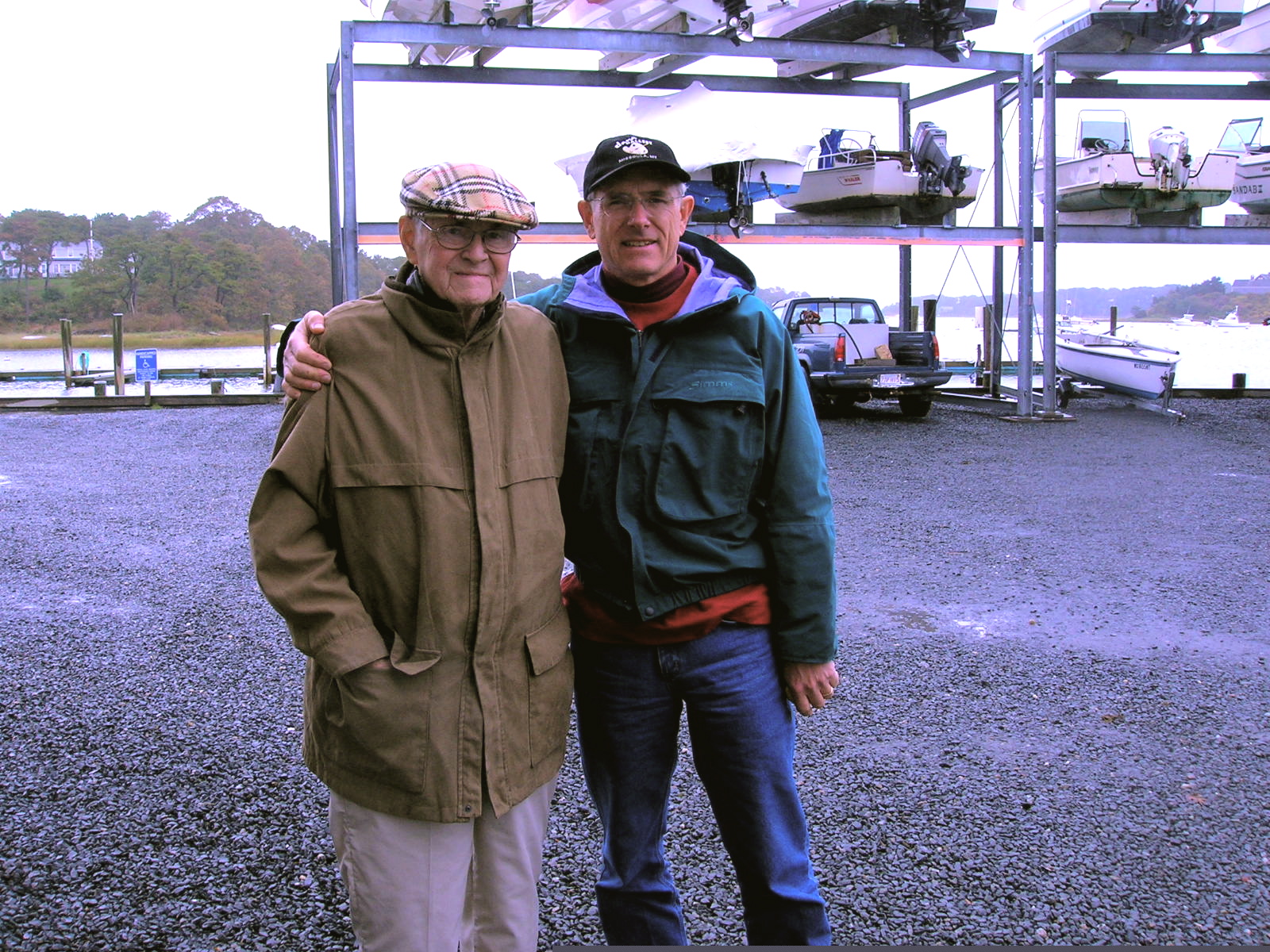
I grew up sailing with my father. We spent many hours learning the idiosyncrasies of a heavy wooden but beautiful Swedish sloop. We raced and we dawdled, sanded, varnished and scrubbed. We poked around in a little sabot or entered it in short races launched from a beach; for some unknown reason it seemed to win every race we entered. We came home smelling of salt. When he died the remnants of his life helped me realize that boats had been a central part of his identity, one of the many ways he brought joy into his life. In his absence I took up the paddle, partly as a way of honoring this part of our life together.

Dad&G Looking back on the last several years I see that I occasionally sought out the lake to paddle through grief at losing a man I loved. This must be one of the reasons that I only mildly complain about a headwind. It gives me an opportunity to work through the resistance we feel at having to accept a loss. As each wave slides down the length of the hull I have an opportunity to let go of things I have lost. Endless strokes become practice in making contact, laying hold, and letting go, in admitting something into awareness and allowing it to slip by.

In trying to describe the experience of grief, and remembering Europe’s mountain tunnels, Rilke uses the image of drilling through stone. The work of grief can be this hard, whether we have lost a father or friend, a spouse, child, or position we thought we deserved to receive or retain. If I blend the images, I realize that I have often drilled through waves and wind, through fatigue and fear in the hope of arriving at a distant shore, not necessarily the shore of an island but the shore of a lighter state of being. I have pressed through the weight of water and let it pass in order to stand more available to the present and less anchored to the past. This is one of the reasons I carry Bluebird down to the margins of water and stone.

IMG_1296

Gratitude

As anyone knows who reads this blog, more often than not I paddle alone. I love the freedom this gives me, paddling where and how I choose, setting my own pace, paying my own form of focused attention to the liminal space between water, light, and human consciousness. But as I look back on the year now behind us I feel extremely grateful to those people who have paddled with me. Standing on the edge between one year and the next, I feel particularly grateful to the following people:

my beloved who prefers to stay close to shore;

JoyceonWBay

my dear friend John who, like Rilke’s swan, slipped quietly into deeper water;

IMG_0338

Professor Clem Work who brought his camera and artist’s eye to the lake and allowed me to see the world through his lens;

IMG_1612

Jeanne and Glenn who followed me to the island and carried a picnic into the cove where we ate and talked as Bighorn rams and ewes traveled the trail to the isthmus;

IMG_0890

Jeff who joined me for a bronco ride across Finley Bay and a downwind race in the strait between Melita and Wild Horse islands;

IMG_5253_1


my brother, also named Jeff. Here the debt is larger as I remember how he taught me to use my camera more skillfully, began to teach me about the physics of waves, and is in the process of forgiving me for taking him nearly three miles past our haul-out because I completely forgot myself (and him) in the joy of meeting an approaching headwind and the waves it generated north of White Swan Point.

Flathead-2285

We can count our riches in coins and objects or we can count them in the form of gratitude for time spent with other people who expanded the island of our awareness. With these people I have braided wakes left by every stroke.

Memories

We lose everything, but make harvest

of the consequences it was to us. Memory

builds this kingdom from the fragments

and approximation. We are gleaners who fill

the barn for the winter that comes on.

 –Jack Gilbert, “Moreover”

This is the time of year when ranchers in Montana pull stored sunlight out of their barns and spread it on frozen fields for hungry animals. This is the time of year when Blackfeet, Salish and Crow pull stories out of ancient storehouses and remind each other who they are and where they came from. Memories are the feast of the season.

At this time of the year a paddler builds a kingdom out of remembered fragments and approximations of the season past. In many cases the memories are composed only of images—a wave that caught my brother on the upwind side of a dock, lifted him on its crest and almost set him down on its deck; a wall of stone where water flowed out of cracks and created a bank that overflowed with green and living things; an encounter with an eagle where the air flowing over its feathers was felt on my skin; a vast space of open water with the paddler a mere speck in the blue distance. And sometimes the memories take the form of a story. Like a tool in a cabinet, we keep pulling it out of the drawer where it is stored, handle it, turn it, reflect on its significance and use to us.

stones

Though I could pull open any of several drawers of stored memories, this winter I feel drawn to return to a day in September a few years ago. Having begun the semester but not yet burdened with the first batch of student essays, I drove up to Finley Point. Drawing on the strength of a full season of paddles, I wanted to depart from the state campground and stroke my way to Wild Horse Island on as direct a line as possible. But I hesitated as I stood on the concrete abutment that helps to form the marina. Breaking waves flowed down the fetch from north to south. Would it be foolish to paddle alone on such a day, on a day when no one else was on the lake and available to render aid if I got in trouble? Was I willing to take the risk?

Trying to quiet these questions in my mind, I slid Bluebird into the channel between the bobbing docks. The moment I passed the mouth of the marina I felt the full force of the waves running down the lake and striking the starboard quarter of my boat. I committed myself to the process of meeting each wave as an individual, rose in the crests, dropped into the troughs, and adjusted to each push and slap with more or less forceful strokes. I maintained this focused attention for about two hours before I began to realize the true danger of my situation. If my attention faltered or wandered even slightly, as fatigue began to pervade my body, I might lose my balance in the waves and find myself in grave danger. This realization tapped the last measure of my strength and allowed me to reach the island safely. I hauled Bluebird out of the waves on the backs of some drift logs, climbed the bluff and drank all my water. I rested, waited, watched. I needed time to recover.

I wandered around the island’s east shore, grateful for the stability of rock and earth beneath my feet. When I eventually returned to my overlook I realized that the wind was beginning to drop. The waves no longer broke, though swells swept the surface of the lake. These were safe enough conditions for me to paddle back across the lake to another island and then the last three miles home.

I continue to reflect on this day. At times I think I was willful in relation to far greater powers and that my safe arrival and return were less a matter of skill and strength and more a matter of luck. Other times I feel the exhilaration that this day brought me, recalling, as Mihaly Csikszentymihayi said of happiness:

 Contrary to what we usually believe…the best moments in our lives are not passive, receptive, relaxing times—although such experiences can be enjoyable if we have worked hard to attain them. The best moments usually occur when a person’s body or mind is stretched to its limits in a voluntary effort to accomplish something difficult and worthwhile. Optimal experience is this something we make happen.

As near as I can tell, we live somewhere between the stone, feather, or spring that we happen upon and the happiness we “make happen.” If this is true, then I strive for consciousness not only of the wave as it surges toward me and the exhilaration of meeting it, but of the space between forcing my will upon the world and simply receiving its inexplicable gifts. I want to be aware of the edge of each, the things we make happen and the things we receptively receive. In this consciousness we make a way in the world.

I know I will lose the ability to make such paddles as I lean into the middle of my late decades. But between now and then I want to glean my experiences from the field of the lake and its islands; I want to harvest the consequences of memories, and fill the barn as long as I can. On a winter day I open the drawer where they are stored, pull them into the light and turn them in my hands.

into the wind