
This June we produced our annual crop of whitetail fawns, a pair of twins born on the west side of the house and a single fawn born in the grove somewhere on the back slope. Again, I noticed something about how fawns perceive the world. Because everything is new to them, they are curious about everything––the smell of fence wire around the peonies, the behavior of crows, anything their mother eats. Early days with fawns remind me of the first few years of my sons’ lives. They were as curious as fawns about everything in the human and natural environment. Fortunately, they have maintained much of this early openness to the world.
These observations about young deer and my sons remind me of the qigong practice called Eight Silk Brocades. As this practice was taught to me, the fourth movement in the first set invites the practitioner to see everything in one’s field of vision. While doing this practice almost every morning, I have noticed that I tend to skip over some objects in my field of view as I turn my head back and forth. For example, I notice mahonia blooming in the rock garden on my right but miss the mix of shadow and light in the lilacs on my way toward my neighbor’s pine tree on the left. This practice asks a person to see not just the objects we want to see but everything else in the field of awareness. This is a tall order.
On July 23, the weather seemed perfect for a paddle out to Wild Horse Island. I began by paddling through a stiff headwind to reach the east shore of the Island, swam a couple of times off a driftwood-covered beach, then proceeded counterclockwise around the island, pausing again on the west shore before letting a faint tailwind push me back to my starting point. During the day I noticed my tendency to skip over some things in the field of awareness, but I kept reminding myself, influenced by qigong, to attempt to see the whole. As I approached the first cove, I noticed bighorn rams grazing grass and forbs on the slope above the beach.
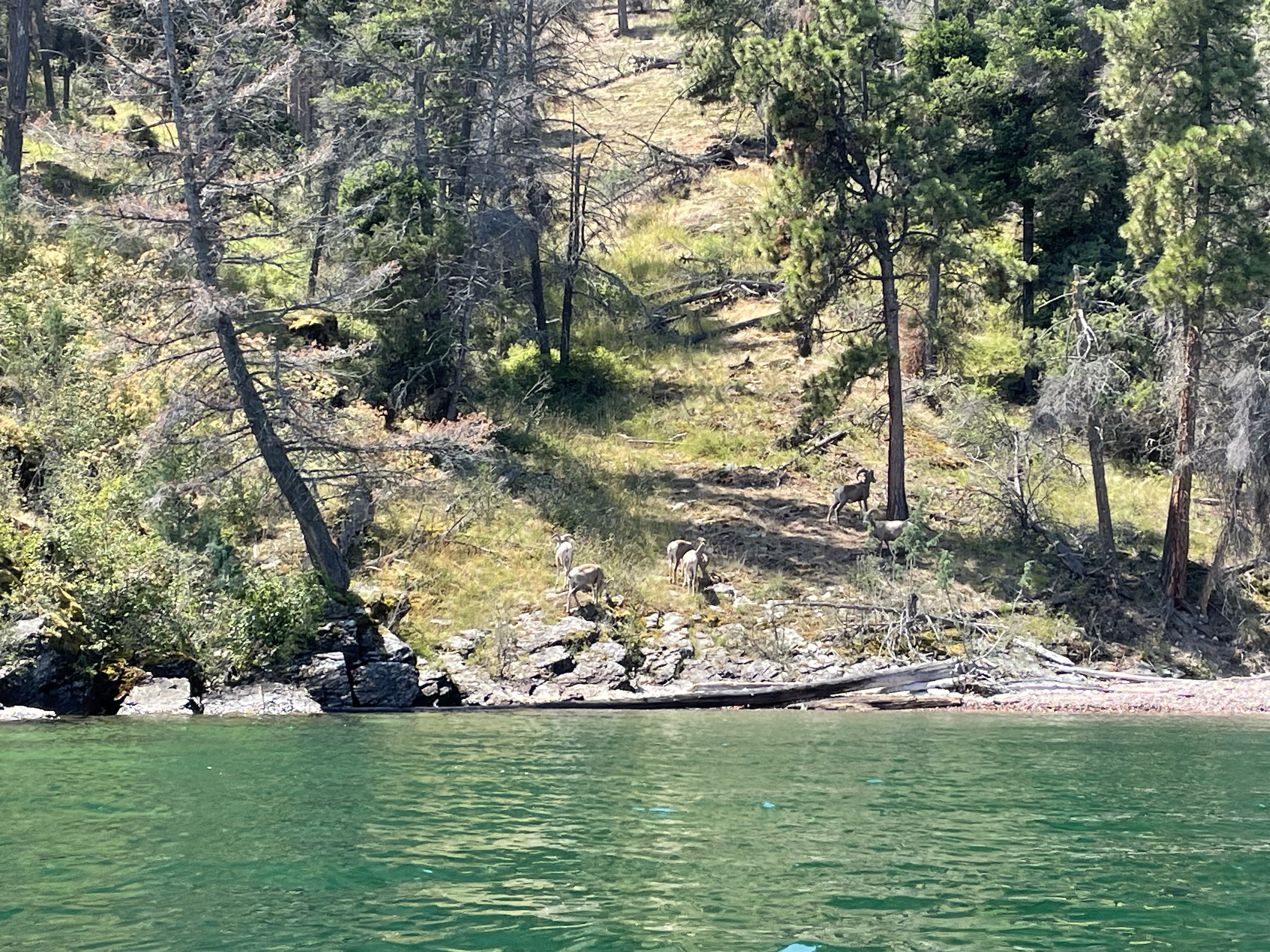
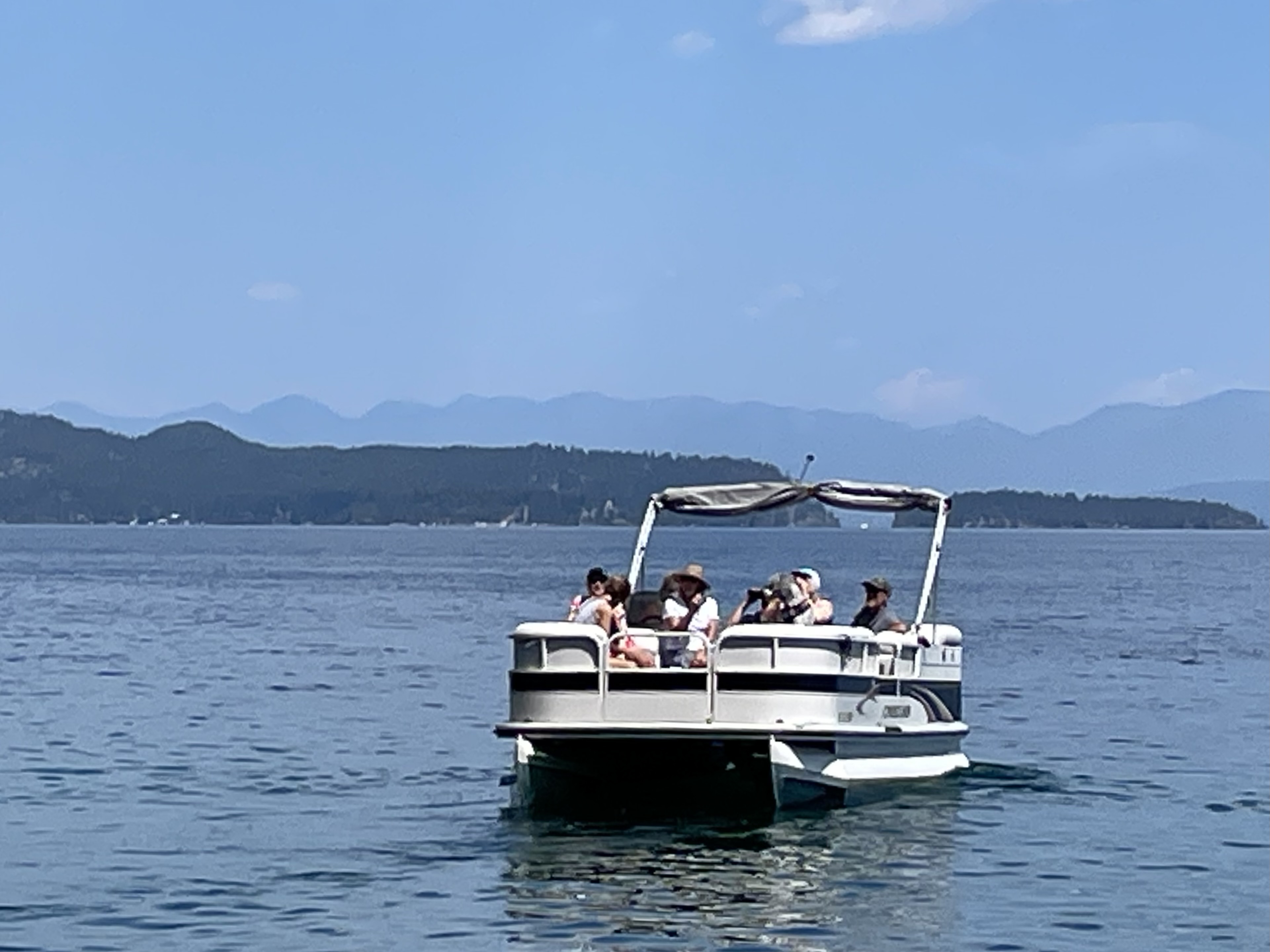
This was indeed a wonderful encounter with wild animals at close range as they went about addressing the business of hunger and thirst. But trying to take one of my spiritual practices into my daily life, I reminded myself to also notice the three boatloads of people watching the sheep.
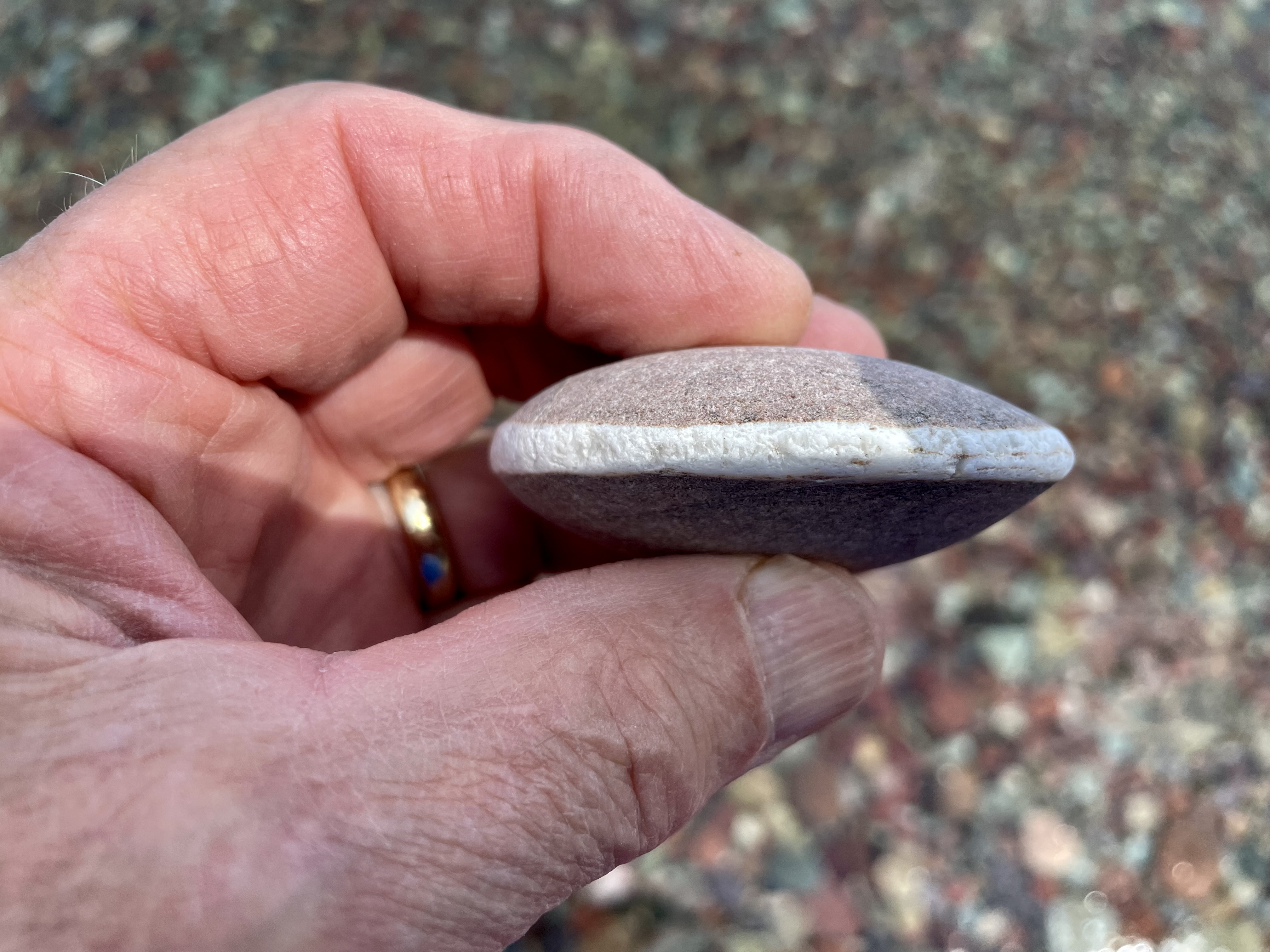
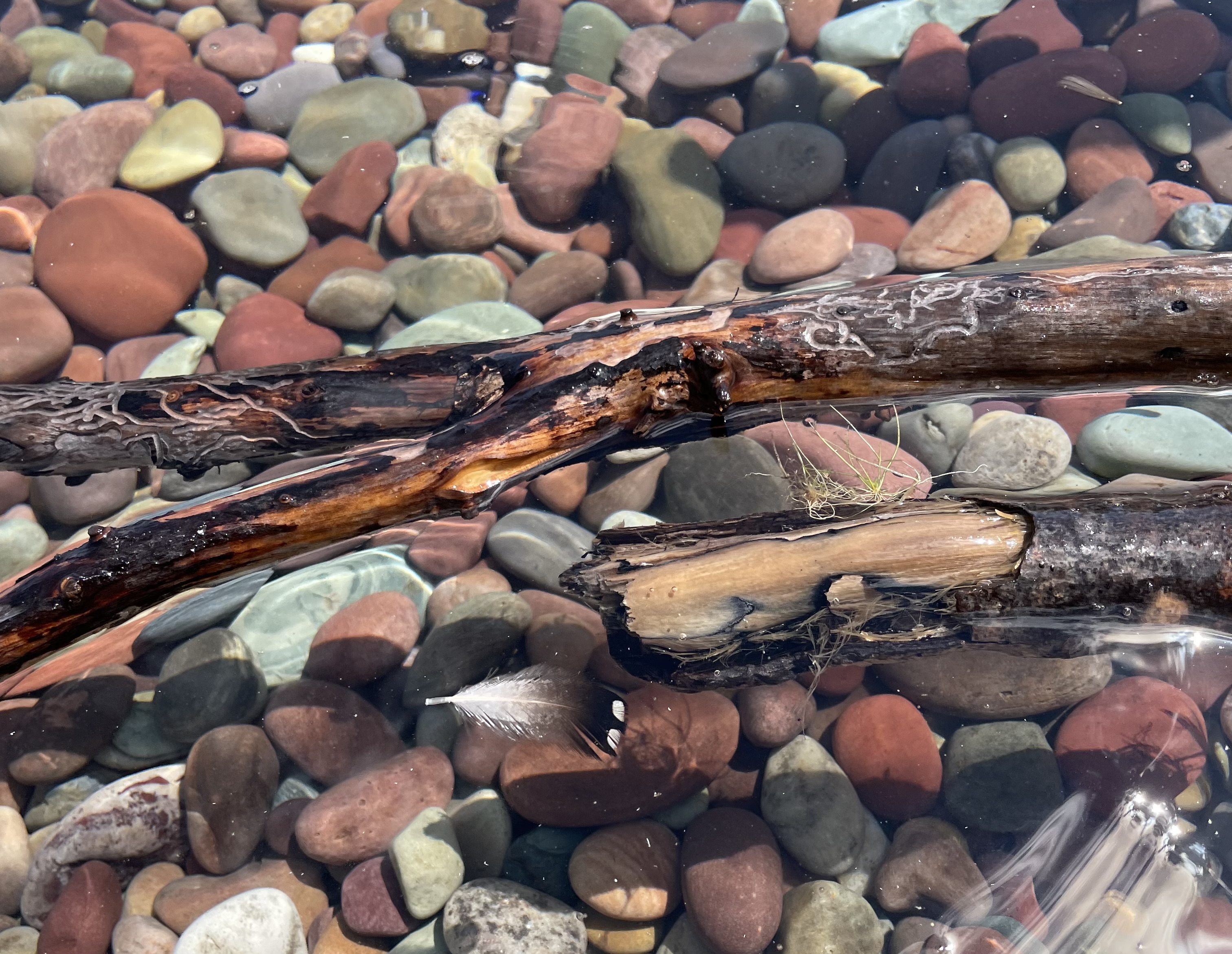
Beyond that, I reminded myself to notice two stones that seemed to have washed downstream from the same strata and were distinctly different from surrounding stones, a stone that reminded me of a flying saucer, and then a floating feather unlike any feather I had ever seen, one with two white dots in a black field.

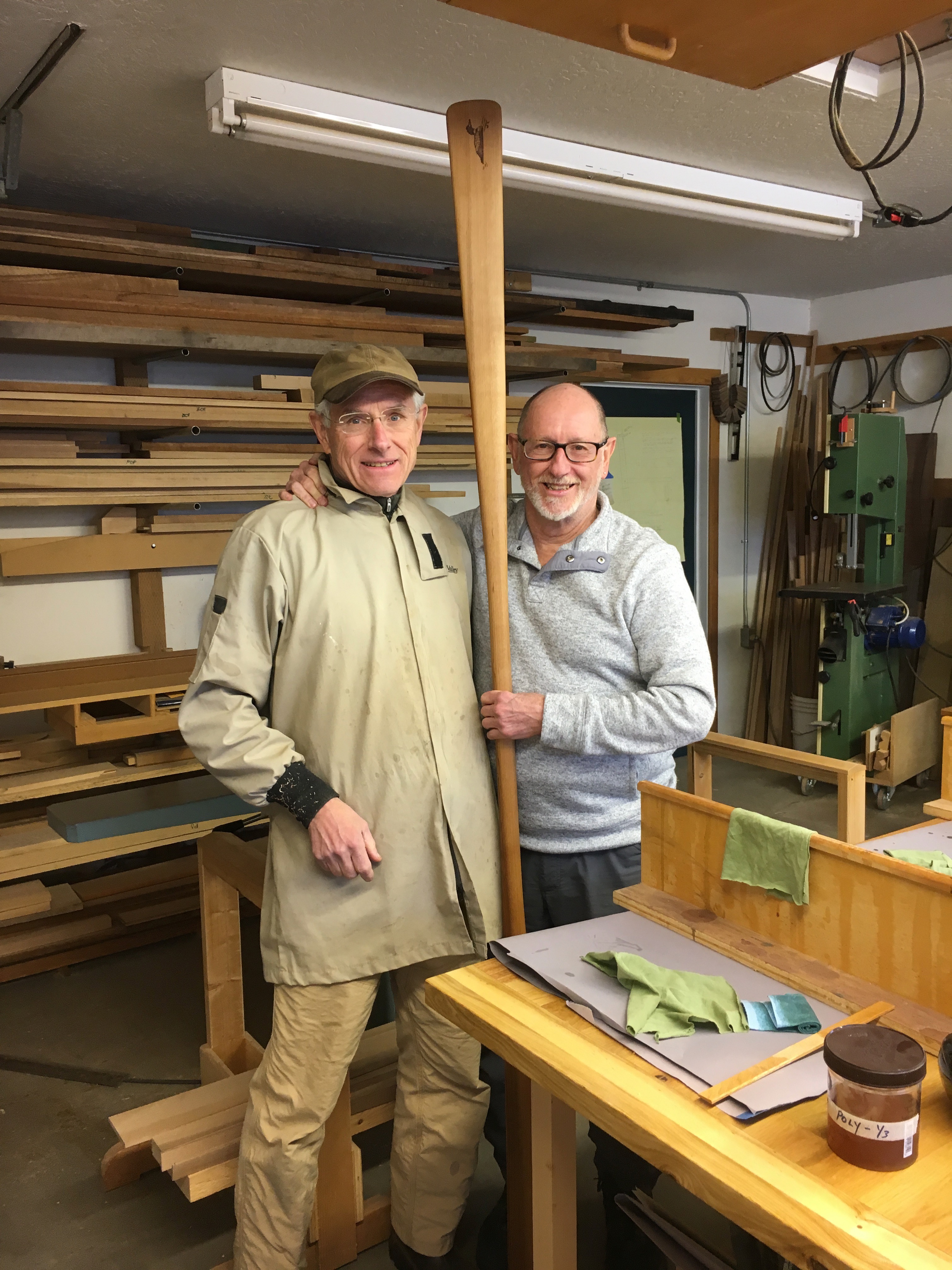
After leaving the cove I noticed two kayaks traveling east. Again, trying to practice a way of seeing, I slowed down and adjusted my course as we converged from different directions. The woman asked about my “strange looking paddle.” This led to a wonderful conversation about Greenland paddles and then an even more amazing conversation about an academic background the man, my father, and I had in common, all in the middle of the lake. When I reached the west shore all my favorite spots were occupied by other people. Eventually I found a few square feet of gravel where I could secure my boat during a brief hike. I climbed a steep slope up to a bench, noticing that this trail was well traveled by animals on the island. After a brief exploration of the area, I dropped back to my boat. After lifting Bluebird over some sharp boulders and into the water, I felt a faint tug of intuition suggesting that I needed to simply stand still. I kept in touch with my bobbing boat by letting small waves push the kayak into the back of my legs while I kept watching the slope above me. Moments later about 30 bighorn ewes and lambs came bounding down the same slope I had climbed. They poured over logs and boulders, tried to balance on driftwood rolling in the waves, and walked past me, almost as though I was invisible.

Seeing the world as qigong asks us to see presented close encounters with two herds of sheep, their absolute confidence in their own footing and strength, but also the intuition that told me to stand still and wait.
It may be asking too much of the human brain to remain open to the whole field of awareness all the time. But at least on this one day in July, I felt richly rewarded for trying to see the whole field––objects and interactions that interested me as well as everything else in between.

 ospreypaddler