Different Ways of Being: A Meditation on Speed

Different Ways of Being

Different Ways of Being

After I wrote “A Perfect Summer Day” several people thought I may have been too generous toward those who race across the lake r on massively powerful machines. When I wrote more tolerantly than I sometimes feel I must have still been under the salutary influence of the lake. This post is an attempt to articulate more precisely what I feel and think with respect to this contrast, the contrast between the jet ski and the kayak.

First, I want to acknowledge that this is an old conversation, even older than Kenneth Brower’s attempt to address the same problem in his 1978 book The Starship and the Canoe. In this book he reflects on the difference between George Dyson and his astrophysicist father Freeman Dyson. The elder envisions a starship powered by the controlled explosion of nuclear devices while the son dreams of a wooden sea-going canoe. Undoubtedly, the conversation is as old as the day the Spanish introduced horses to the North American continent, or the first automobile rolled down a street, or someone on snowshoes encountered the first snow machine.

I once was asked to baptize two children at another large lake in Montana. The family that invited me to lead this ceremony owned jet skis and offered their use as inducement so I would honor their unusual request to baptize their youngest children in a lake rather than at church. Before the ceremony they convinced me to ride one of their machines. I confess it was really fun to make tight-radius turns, to leap over my own wake, and to speed across the surface at a hair-plastering rate. But after a few minutes I found the experience boring. It did not engage me at depth. I slowed down, motored back to the beach, thanked the family and thought to myself, I’ll never do this again. I did, however, baptize their children.

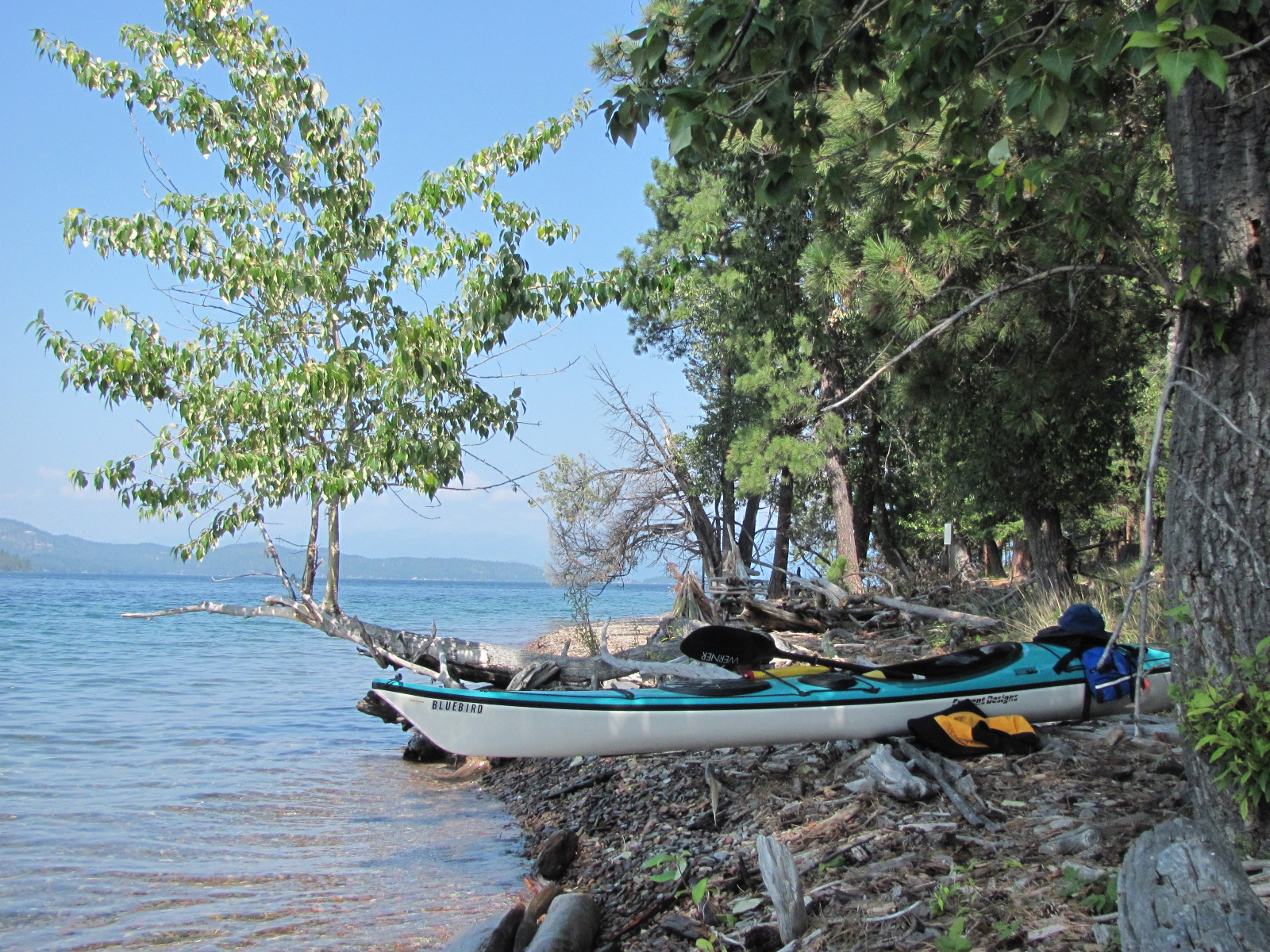
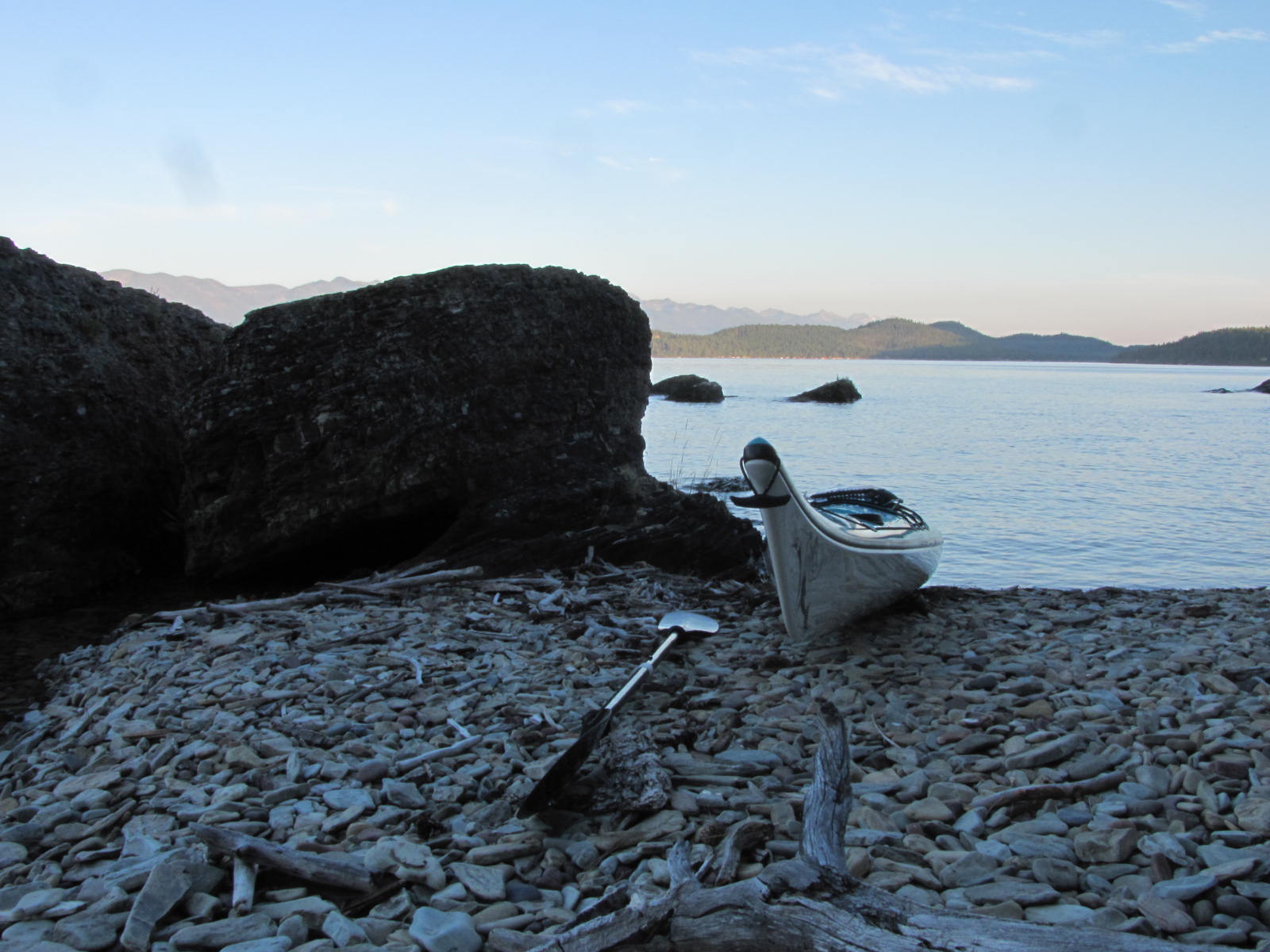
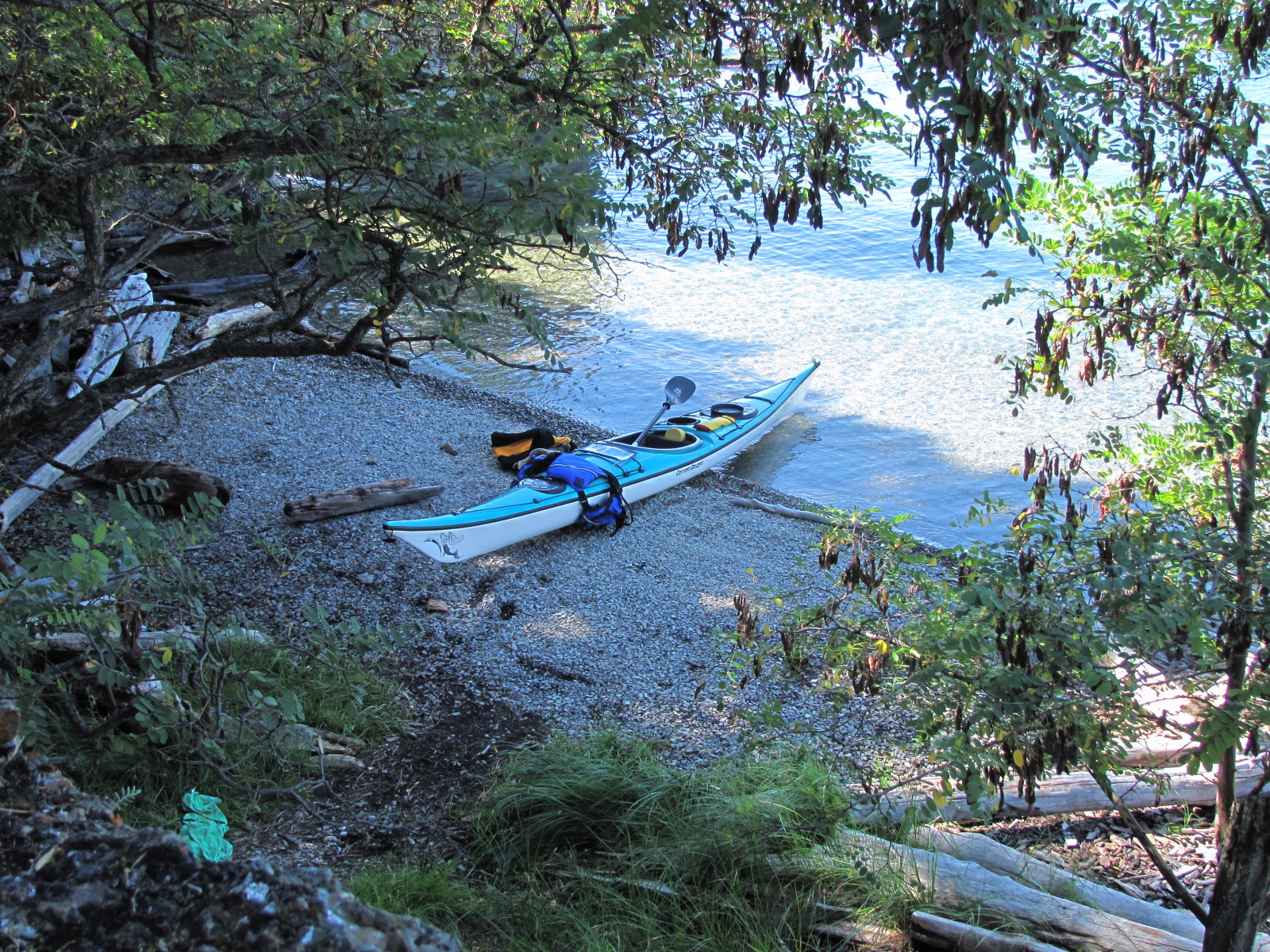
As someone who paddles a kayak, I notice that not every wave is the same. Some waves seem to have excavated the depths of the lake and carry in their bodies a hidden power. Some waves are like the whorls in a fingerprint; the angles of encounter vary with every stroke into their forms. Waves are not always parallel to each other. If for no other reason than safety, a paddler must pay careful attention to these changes. While paddling I enjoy the sounds of water sliding by the boat or lifting and dropping Bluebird in the interval between crest and trough. When I visit with people around the lake I occasionally hear people say things like, “The lake is alive; it is its own being,” or “We must learn its moods and respect them.” For anyone who is this sensitive to the world, who listens this carefully to the world embodied in the lake, passage through the water in the thrall of these energies and changing temperaments is part of what makes the encounter so varied and valuable.

Flathead-2313

For many people there is more than enough pleasure in speeding over the surface, arriving at a destination quickly, and feeling the wind wash over their skin. I once caught a wave in the open water off Yellow Bay and was propelled at a breathtaking speed. In those moments the boat belonged to the wave not me. I know the appeal of speed. But it seems to me that the difference between the kayak and the jet ski is similar to the difference between a Big Whopper received at a drive-through window and a meal at our dining table when my wife has set it with crystal glasses, candles, and her Pembroke china. It is similar to the difference between a You Tube video of the Wailin’ Jennies and a live concert at the Top Hat on a summer evening in Missoula when the temperature is 96 degrees. The difference between the two approaches to the lake is as great as the difference between driving through the Redwoods at Prairie Creek State Park and walking through them, smelling the duff, feeling the texture of the bark, having one’s face stroked by a little wand of moist and lacy needles.

The problem with technology generally, and the jet ski or powerboat in particular, is that its encounter with the world is shallow. It skims over the surface of experience rather than moves into and through the physical substance of the world. Some things are simply too fast. I often feel this way when I ride my bicycle across campus. Even this pedaled machine is too fast and its relationship to the world too shallow to allow me to adequately greet people I know, to recognize a person from a distance and recall a name as the distance closes. In much the same way, as a craftsman, I realize that one tool is occasionally too fast for a given task and that it is better to slow the process down, to create less momentum and open up more time for the careful consideration of consequences. Sometimes the rasp is better than the router.

One approach to the relationship with the lake requires the rider to listen to the machine; the other approach listens to the body and senses all the subtle but incredibly important changes that take place within it. As I paddle I register when I feel strong, when I am beginning to tire, when I need hydration or food, when the layers of clothing seem just right or need to be adjusted. I pay exquisite attention to every perceptible change in the weather—every shift in wind direction, velocity and cloud formations. In these situations where the pace is slower we read the lake through its effects on the body. In choosing a lower level of technology, a vessel like a kayak, labor and joy are unified and reconciled.

Except in the most extreme situations there is no such thing as being out of gas. In one mode of transportation the cessation of the machine is absolute and the silence that follows it must seem stunning; but in the other case, we are always capable of one more stroke. There are depths of strength in the body and mind that the machine cannot imagine. In these situations, perhaps after several miles of headwind, we find out what we are made of.

After more careful consideration of the problem this is what I think. Some might dismiss the distinction between those who go fast and those who make the passage more slowly as a problem of age. At 64 I should know; but I think the division is much deeper than the separation between young and old. It has to do with one’s whole orientation to the world.

I have seen people speed across the lake and throw their wakes wherever they please without any awareness of their effects on the water and atmosphere, much less a paddler. In the kayak or canoe one’s awareness extends outward to the whole living body of the lake, down into its depths, up into the sky, and during a night paddle, even to the moon and stars. The issue, it seems to me, is how far does consciousness extend. It is becoming clear to me that the character and future of civilization depends on this question and how we answer it.

Jeff at speed

Jeff at speed

A Perfect Summer Day

(August 18, 2014)

The syllabus needs to be revised. A Moodle shell needs to be created to contain all the readings for the course set to begin in one week. And the window trim needs to be scraped and painted yet again; but the weather is perfect. I decide not to waste the gift.

I load everything in my truck on Sunday night, hoping for an early start on Monday morning. I load Bluebird and stretch the cover over the cockpit to keep out the dew and spiders. I go to bed early with a keen sense of anticipation about the next day at the lake.

IMG_2222 When I arrive at the Walstad access site the lake is calm. I take time to load the boat thoughtfully so I know where everything is and so I can reach my camera relatively easily.

IMG_2223

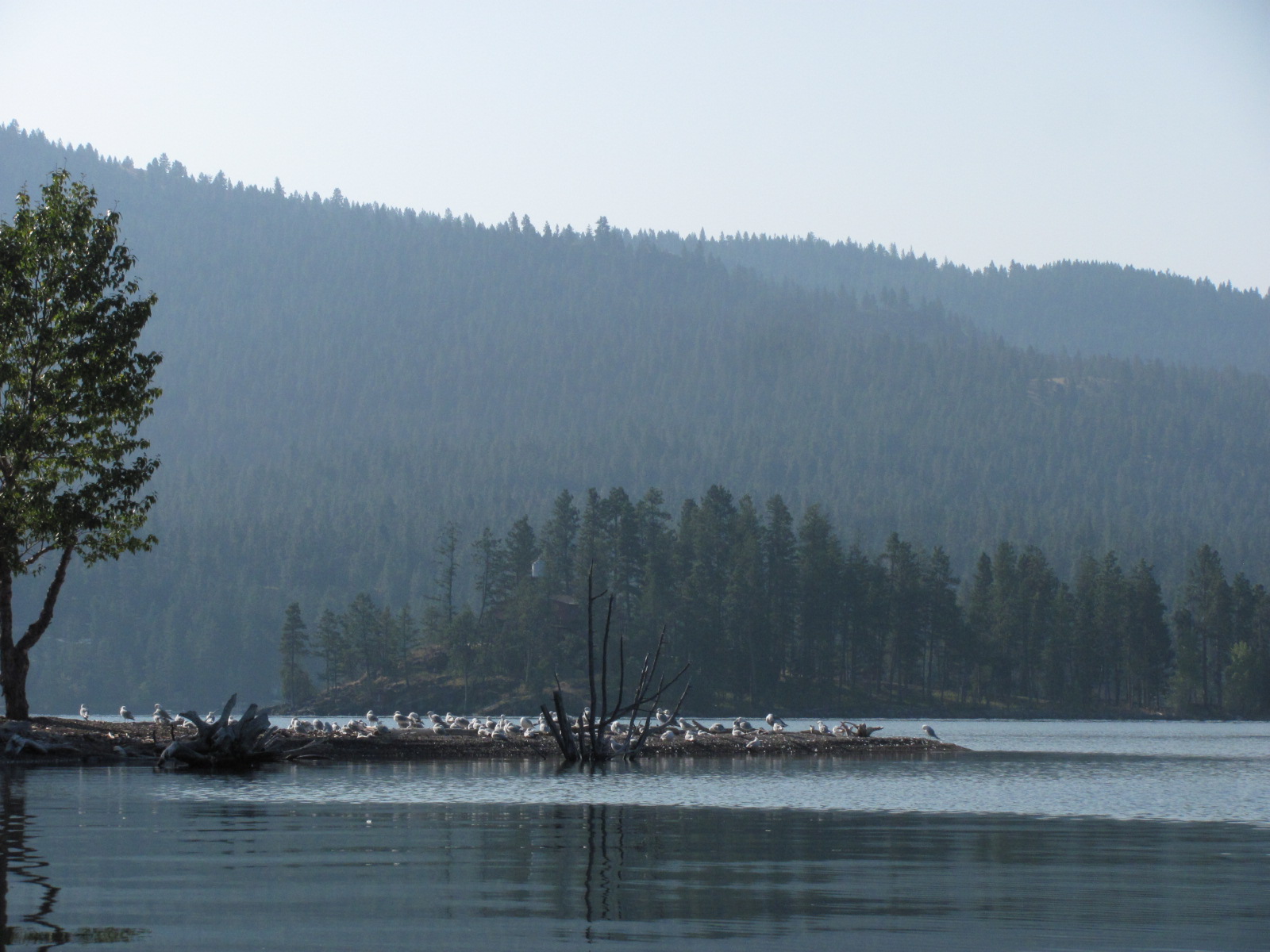
Though I had planned a different circuit in my mind before stepping into the water, something calls me to paddle into the morning light, to head out to Melita Island and the gravel bar where birds gather and preen, then to touch each of the points along the Rocky Point peninsula—White Swan, Matterhorn, and Block before dropping into the bottom of Cat Bay to see a friend’s place where she has erected a bright tipi on a platform. I pick a pace I can sustain all day, recognizing however, that I am paddling over the top of a layer of physical pain that is a daily feature of my life, one I refuse to let rule my days. Along the way I see several people in bathrobes or, in one case much less, having coffee on their decks, reveling in the light and warmth, not taking for granted the comfort of summer at this latitude where winters are cold and dark.

IMG_2225

Paddling into the light everything before me is backlit, including the paddler who suddenly emerges from behind White Swan point. I feel pleased to see another paddler even in silhouette. I greet her, but unskirted and in deep water, she seems disinclined to have a conversation; she simply waves and heads into the sheltering bay, perhaps to join friends for breakfast. After my own visit to these sculpted points and bays I head out toward Wild Horse Island. I face a modest headwind that has not yet raised sets of waves. When I finally reach the big island I see boats tucked in almost all the little pockets of gravel that accumulate between the ledges and ridges of fractured rock. They have waited all summer for the water to warm and so now they swim, mess around on a paddle board, lounge in deck chairs set in the stones.

I find a spot of my own to rest, eat, and recover from a morning of paddling. I tuck myself behind a juniper brought down when an upwind Ponderosa crashed in a windstorm. I lay back in the shade and let the cool stones soothe my lower back. I close my eyes under the shadows of osprey that pass back and forth in search of fish.

IMG_2240

When a large boat loaded with parents and grandchildren pulls ashore on the other side of the juniper and plays a radio while handing out hotdogs and potato chips, I decide to cut short my respite and paddle on. I slip away almost silently, but they follow me, making no effort to trim their boat. They leave a big wake to rock me. I love this exposed north shore of the island and decide to focus on my own pleasures at seeing the wild edges of water and stone and the way life roots itself in the most unlikely places.

IMG_2246 I round the north end of the island, pass the crescent coves, and slide toward Skeeko Bay. Now that we are past July 15, it is legal to walk into the Special Resource Zone on the island set aside to protect the wild horses and the deer and sheep that give birth here in the spring. So I look for and find another small beach between parties that have also stopped here to soak up afternoon light and warmth. I find and take the shore-side trail and walk a mile or so to the saddle that overlooks the strait between Wild Horse and Melita Islands. Along the way I see people reading in their canvas chairs, gathering interesting pieces of driftwood, enjoying their beer, and desperate parents contending with a two-year-old who is content with nothing they offer.

IMG_2247

Back at my little spot I dive into the lake, as comfortable as it will ever be, but refreshing after a hike. It is time now to paddle on. First though, I finish the apple I have saved for this phase of the paddle, tuck everything away, and slip back into my boat for the paddle home. About half way between the south shore of the island and my landing point I see a sailboat moving at what seems to me an astonishing speed. I pick up my pace and alter my course a hair so that I can see them more closely as they fly by. Three men are hiked out over the upwind side of an extremely slick boat that cuts through the water like a blade. I shout “Beautiful.” They shout, “If you had been a jet ski, we would have sunk you with our torpedoes,” and summing up the conditions, “A perfect summer day.” I would have taken a photo of this magnificent boat with a circled “V” on the mainsail, but then I would have missed the encounter, so quickly did they pass.

Like the sailors I often feel a dark current of judgment toward other people who move about the lake differently than I do—team testosterone that throws wakes and noise all over the surface, tubers that burn through enormous quantities of precious fuel, party boats that bring their social clamor ashore or into the most quiet bays. But today I feel less of this. Everyone is enjoying the lake in the ways they know how to enjoy it. I want to relate to the lake on the most intimate terms. For me the kayak, my slim little shell, is the way to do it; but other people choose to and can afford to relate to the lake differently. They do not know my satisfactions; perhaps I do not know theirs.

After I come to shore and load everything back in my truck I turn on the radio for the drive home. I hear the day’s headlines: an eight-year–old girl fell off the cliffside trail on the way to the falls in Yellowstone Park; Ferguson, Missouri is still in turmoil after the shooting of another unarmed black man by a white policeman; the conflict with ISIS in Iraq has entered another stage in this long, costly contest; the ceasefire between Hamas and Israel has again broken down. I sometimes feel guilty when I slip out of the envelope of the news and into the beauty of the lake. Some deep part of me says that I should stay for what is difficult, grief-stricken, and full of rage or anguish. At the same time the lake offers itself to our thirst for beauty. To refuse the gift seems like another betrayal of life. I take in both, the heartbreaking news and the music of water and light playing on stone. As the sailors said, “A perfect summer day.”

Overnight Solo

(June 9, 2014)

Glacierinthedistance

I had almost forgotten. Packing for an overnight paddle is a lot of work. Even though I take the simplest approach possible, especially with respect to food, I have to make a list of essential items. I cannot afford to forget anything. I begin to wonder whether such a trip is worth the effort. It would be easy to succumb to inertia. The lawn needs mowing. Weeds grow faster than I can pull them. I haven’t finished all the preparations for my fall course at the university. Several projects wait for my attention in the shop. I can think of dozens of reasons to stay at home. Yet, something calls to me.

I drive north through the light traffic of a Monday afternoon in early June and park at the Walstad access point, deciding to enter the lake via the little bay south of the parking lot and boat ramp. I want this area’s soft ground under my boat when I load it with gear. On the beach protected by a screen of willows I change into my dry suit. The lake is rough and the water is still too cold for a spill. I then reverse the morning’s process of packing the truck by taking everything out and loading it in suitable hatches, saving the day hatch for my camera, keys, cell phone for emergencies, an extra water bottle and a rescue rope.

On the way to the island I ride the back of the green dragon. It is not often that I have a tail wind, but this time wind and waves push the stern port quarter. I make the yaw of the boat less disconcerting by deploying the skeg and enjoy the rush and hiss of waves passing under me. I quickly reach the strait between Wild Horse and Cromwell Islands, advance through the channel, then set my sights on Cedar Island to the northeast. I cover the nine miles in relatively short order, round the island’s south tip and begin to paddle slowly up the east side searching for a place to land. Several spots seem promising but many are barred by fallen logs driven ashore by winter storms. I select one with a gradual slope and good access to the forest.

MonsterCookie

I haul out, choosing to skid Bluebird over the backs of two large pieces of polished driftwood rather than lift the loaded boat. I unpack everything I stowed and set up camp. I choose not to erect the tent, relatively confident about the weather and wanting to sleep in the open. (I will later regret this decision when carpenter ants come to visit and force me to erect the tent after midnight). In the course of the evening I explore the island and gradually make sense of some of the island’s history. Intact sections of a wire fence remind me that in years past the Montana Department of Fish, Wildlife and Parks used the island’s interior to corral bighorn sheep brought over from Wild Horse. The once grand bungalow on the north end of the island has become an easel for painted graffiti. Where cedar shingles have not been ripped off to start fires people have written their philosophies, proclaimed their love, declaimed themselves, cited scripture, sprayed wild mages. On the south side of the house tall lilacs, a symbol for domestic life, still bloom. In the shady forest interior behind the house the limestone root cellar recently provided shelter for nesting geese. Down covers the floor just inside the entrance, the door ripped from its hinges when the lock would not yield to someone’s curiosity or inclination to steal. In the course of the evening I play hide and seek with a doe that must have swum over from the mainland. On the edge of the meadow I spot a buck in velvet without him spotting me.

Cedargoose Back at camp I watch the effects of sunset to the west on the Mission Mountains and Swan Range to the east. Near dark I let myself down into my own down and begin to let sleep take me like a wave. I am suddenly roused, however, by an advancing sound. I look up just in time to see a bald eagle pass low over me. I do not so much hear the big pumping wings as feel the effect of the airflow. I have never been so close to an eagle as to feel the movement of the air it displaces.

I fall asleep to the image of the eagle passing over me but wake several times to sweep ants away. I don’t sleep well until after I erect the tent. Dawn arrives like a cymbal crash and I wake with a start. Before the atmosphere warms little puffs of clouds pass over the ranges to the east and disappear into the light. I make hot water for tea on my almost fifty-year-old Primus stove, amazed by its simplicity and efficiency; this must be the least technical stove still in use. After granola and raisins I repack my simple camp, re-stow the gear and circle the island counterclockwise. I pass into the cool shadow cast by the island over the strait between Cedar Island and Shelter Island with its incongruous castle. As I pass the imposing structure I think, at least the builder had sense enough to place the breakfast table in the morning light.

Crossing the open water again I set my sights on a small cove on the north side of Wild Horse. I am alone on the lake, stroking my way through distance and time.

I eventually come into the shelter of this shallow arc of land, one of my favorite places on earth. As I pull the boat out of waves’ reach I see that someone before me erected a simple marker by placing a large feather upright in the gravel: a fitting way to honor the bird and the beach.

As I explore this part of the island I am pleased that unusually dry conditions for May and early June have not kept flowers from blooming and lush grass from growing in the swales. I take a moment to study the complex interior of a sago lily,

Cedarsago

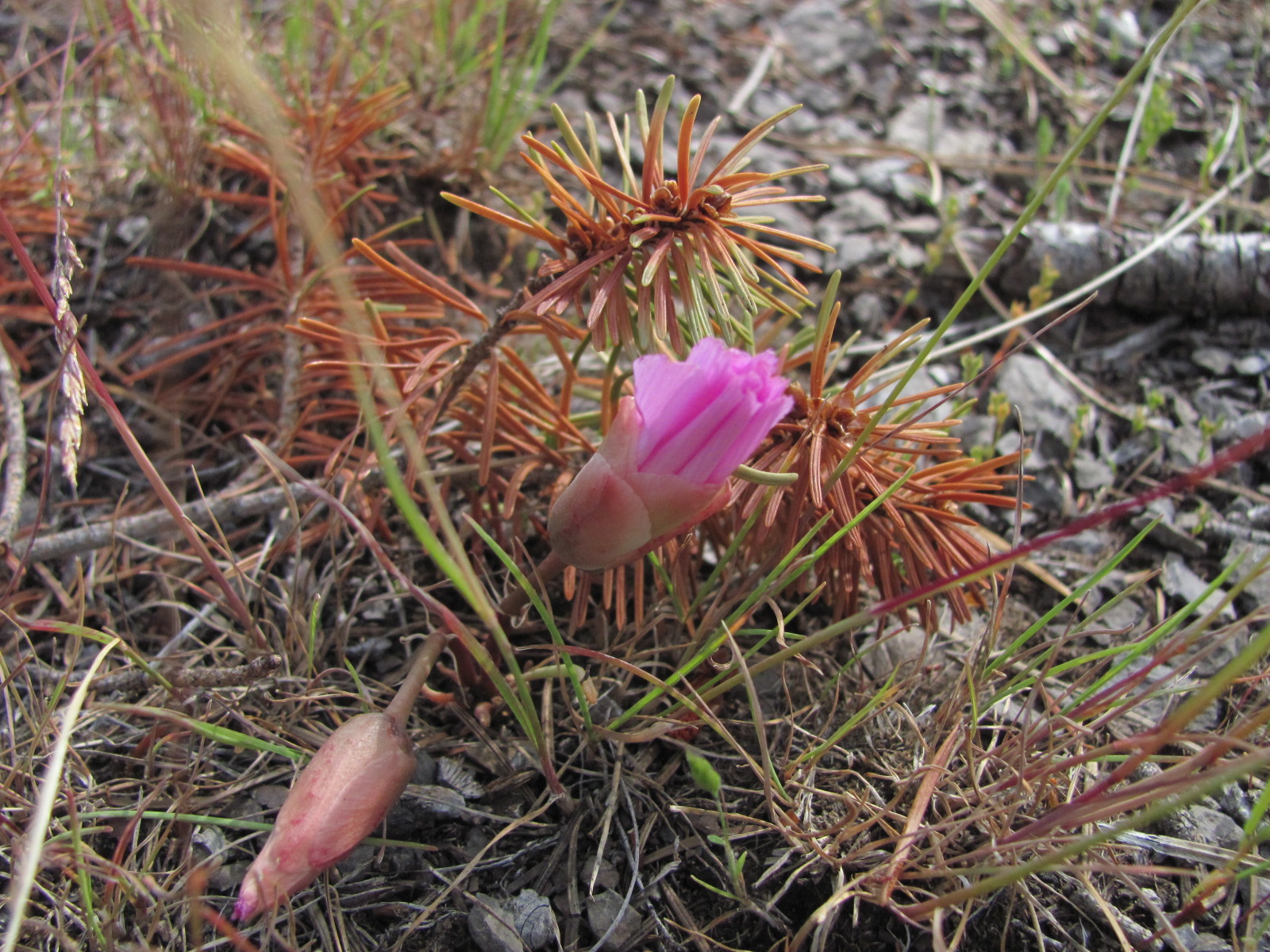
the intensely pink blooms of bitterroot flowers sprawled improbably over a rocky spine,

IMG_2104

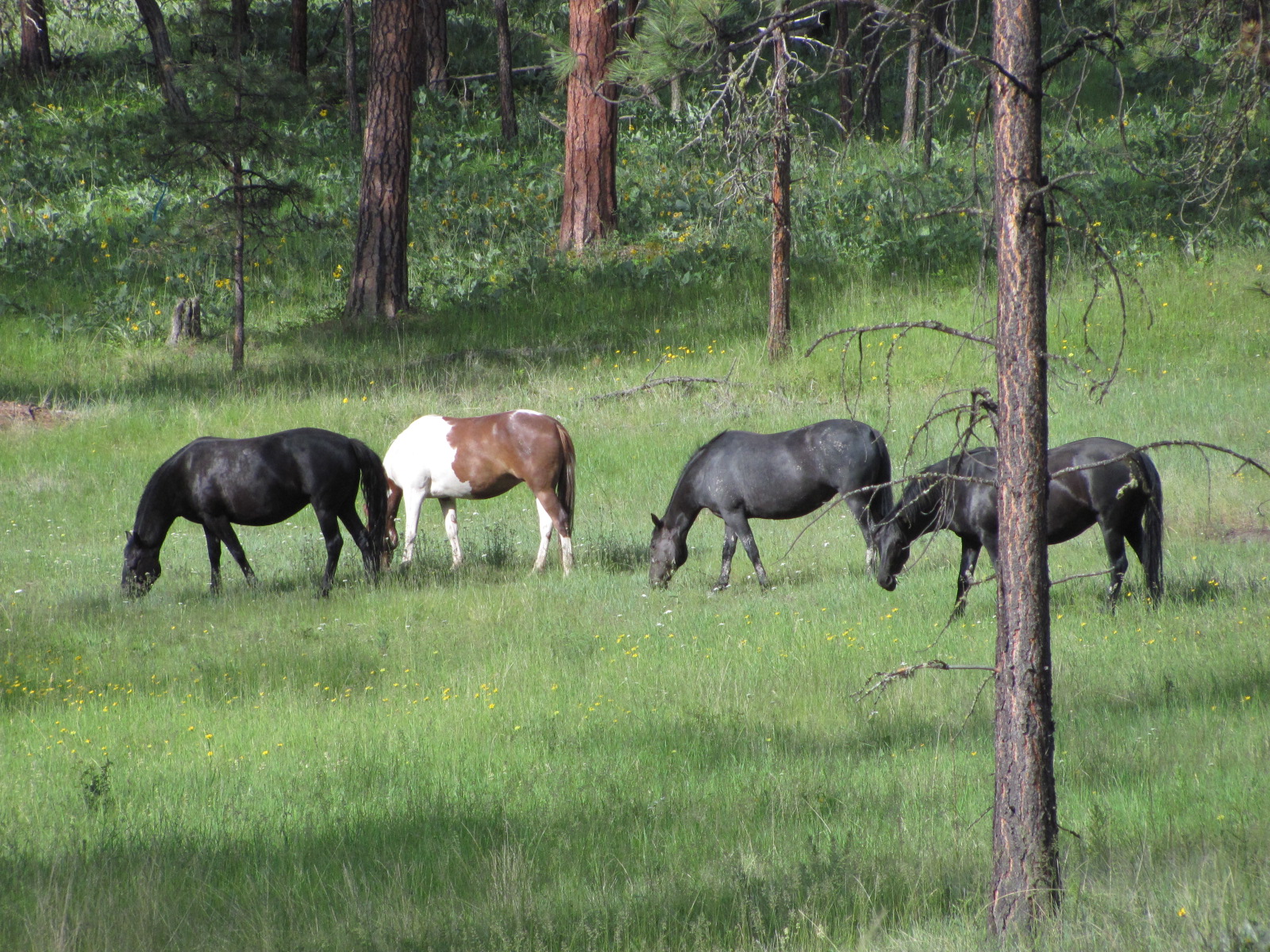
and some kind of ceremonial site set in a circle of stones and cones. Curious, I lift the central stone for clues. Only a little mold remains to commemorate a life or whatever led someone to create this modest circle of remembrance. After climbing the first ridge I drop into deep forest and hear a whinny: the wild horses are nearby and have detected my scent. I stand behind a large Ponderosa and wait. I see the lead mare come into the open. When she sees the lush grass she breaks into a gallop and her four companions, including the now-full-grown horse born on the island, race after her. They bend to the grass, switching their tails in what must be a sign of pleasure. I do not cross into the Special Resource Zone, obeying the sign that asks people to leave the area as a sanctuary for island animals until at least July 15. I am content to stand on the boundary watching the horses.

IMG_2113

I retrace my steps through the timber, over the ridge, and down to the beach. I tuck myself in and paddle the last miles home.

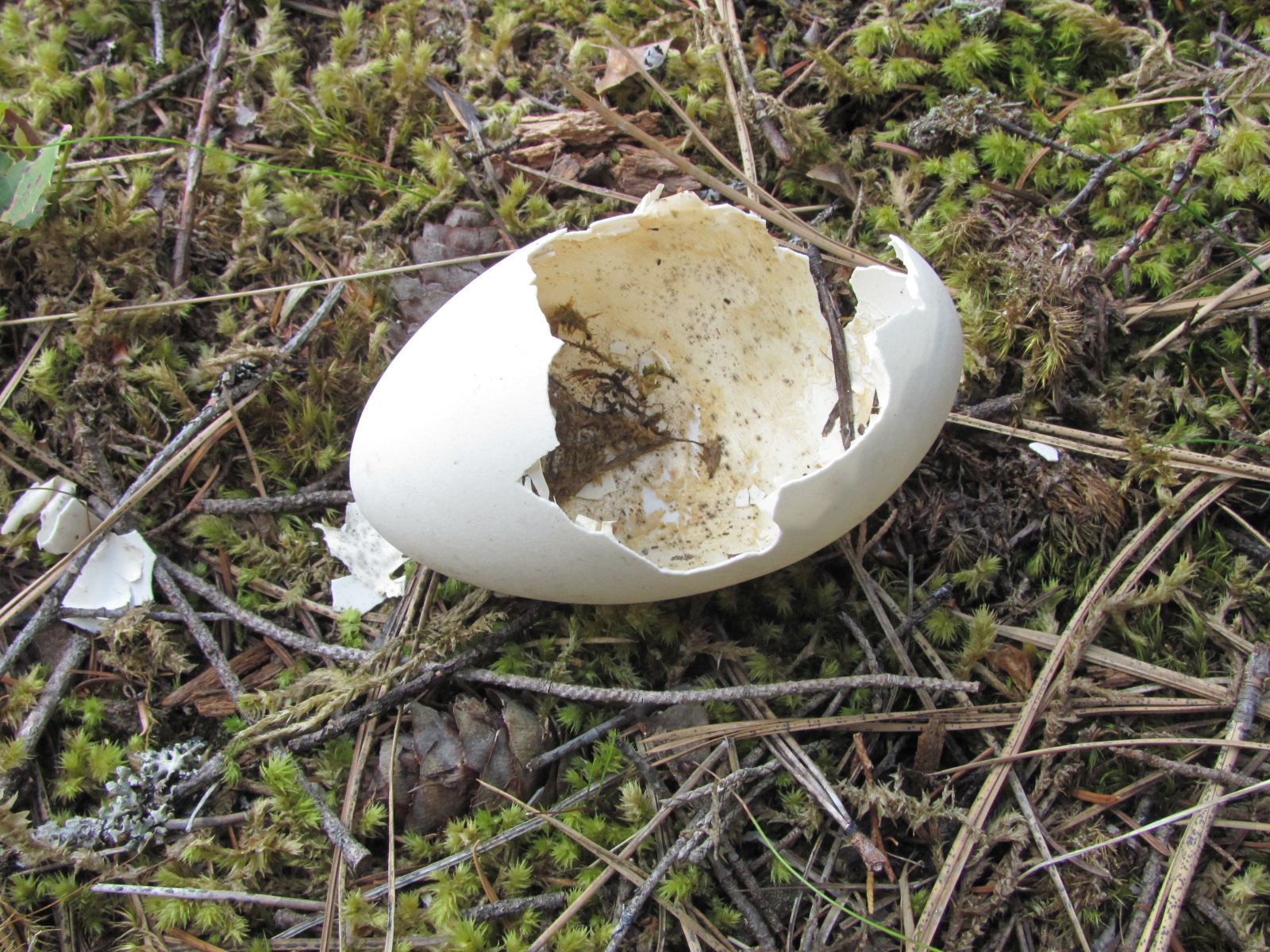
On the drive back to Missoula I review my decision to make this trip. If I had not left some things unfinished; if I had let inertia or a nagging sense of responsibility stop me in my tracks; if I had pulled back from the thoughtful packing of gear I would have missed the pulse of eagle wings at dusk. On the second morning I would have missed the calliope hummingbird attracted to my bright red paddle jacket, mistaking me for the largest hibiscus on record. I would have missed the architecture of the sago, the scent of spent balsamroot, the ghost of a goose in the broken shell it left behind, and the way morning shadows flowed over the island like a watercolor brush loaded with water and pigment.

Sometimes it is worth the effort to leave home, to take a few essentials on the way to experiences one might be able to imagine but not receive without pulling away from the gravity of responsibility and the drag of routine. It was good to let the islands and the lake pull at me and to respond with my consent.

Sunset, Moonrise, Dawn

(July 2013)

Image

The moon this July has been extraordinary. At home it rises over Mount Dean Stone like a plate of ivory, climbs through the branches of a black ponderosa, and throws a wave of light against the south-facing shop where I build my furniture. For a couple of years I have wanted to do another night paddle, perhaps in moonlight. Before driving to Colorado to see family, Joyce and I quickly pack up the camping gear, secure a sloping site at Big Arm and eat a dinner we prepared at home. I sit facing the lake so that I can judge the conditions. Under high atmospheric pressure the lake basin receives a breeze out of the north that sweeps around Wild Horse Island and aims its energies toward the bottom of Big Arm bay. I watch as white caps lose their crests and the wind gradually lessens, leaving waves about a foot high.

I launch from the beach where Fish, Wildlife and Parks docks its big aluminum-hulled boat with the 200 horsepower Honda outboard. The contrast in vessels strikes me as humorous. If I were ever to need a rescue I might see all that power differently. Once in the water I enjoy releasing the energy of anticipation as I face the waves and wind. Bluebird splashes onward toward Wild Horse Island in progressively calmer conditions. In the lee of the island the water is much quieter. As I begin the paddle around the island, I notice a few landowners leaving the shade of their cabins after a day in the mid-90s. They come down to the beaches and docks for a swim. At Driftwood Point I pull into the snags of dead junipers and pines and read a FWP sign saying that a bear has been seen recently on the island. Perhaps the bear, too, wanted to cool off with a swim.

As the sun disappears over the horizon I paddle up the eastern shore of the island. In the distance The Missions have turned a pale violet, rocks near shore the black of silhouette. One crescent south of Osprey cove I hear a commotion over head. I see the middle act of the eternal drama between osprey and bald eagles. I look up in time to see the eagle bear down on the osprey from above. The osprey rolls onto its back. The birds lock talons and lose altitude. Then I see the eagle pumping toward me, fish in its grasp.  I can’t tell for certain who caught the fish first—probably the osprey. Next,  a second eagle pursue the osprey while the first eagle rises to its roost. Again, the osprey is the loser, beaten by size and weight. In Darwin’s terms, this is the struggle of existence.

In the growing darkness I continue paddling north, close to the rocky shoreline and at a slow pace. I would love to see bighorn sheep or the island’s mule deer, or something as secretive as an otter near shore, but the island does not reveal these inhabitants. Travelling along what is now the back of the fish-shaped island, I begin to look for a place to rest and wait for the moon. I find a deep cove with a beach of small pebbles and pull ashore. It feels good to get out of the boat, to step into the coolness, to feel rock under my feet. After the windy crossing and the paddle north I go for a swim in the darkness. I am refreshed by immersion.

I change into dry clothes, eat one of my two cinnamon raisin bagels, drink a quart of water and guess where the late-arriving moon will rise. If I had come a few days earlier, the rising of the moon and the setting of the sun would have occurred simultaneously. Tonight, I must wait for the moon. Around 11 p.m. it rises over the tops of the island trees to my right. Two or three days past full, it fills the forest around me with white corridors and long shadows and takes over where the sun left off. Trusting the light and the dark, I nestle into the stones beside a long straight cottonwood that has fallen parallel to shore. I sleep for a few hours and wait for the approach of dawn.

The sun rises like a trumpet blaring over The Missions. Feeling the heat of the day the moment the sun appears over the range I gather my gear, eat a duck egg, an apple and my last bagel. I launch in the early light to complete the paddle and have morning tea with Joyce. I head out of the cove into gently flowing air and calm water. After rounding a couple of points, I see the moon again, four fingers above a ridge. I am surprised by how glad I feel to see it again. It seems like a friend departing for another land. Something in me wants to wave goodbye. In the quiet of early morning I paddle past six sailboats tucked into Skeeko bay, two of them tied head to toe, silence suggesting that everyone is still asleep. I continue slowly along the west shore of the island, hoping to see the animals I could not spot last night. At the tail of the island I look southwest and try to locate the campground three miles away.

In the strengthening light I begin the crossing. About a half hour into the process I see jet skiers, camped along the shore, begin to cast their wakes into the air as they take advantage of the calm conditions. Though I do not enjoy the whine of their engines, they help me locate my landing. I paddle on, spot Joyce’s wave, step on shore. I feel happy to have paddled through sunset, moonrise, and dawn and all the subtle variations of light. I put down paddle, pfd and skirt, and come to the table for tea.

Summer light can seem almost garish in quality as it glances off the water. Convection raises wind and waves that fill the shore with noise. All the people, desperate for the cooling effects of water, and needing distance from the heat of home, add to the activity along the lake’s perimeter. All of this helped me feel drawn to the afterglow of sunset, the quiet of the night, the subtleties of moonlight’s shadows, the first hints of morning light before the sun claims the day. I timed my exploration of this other world well. Everything has been gentle, even in July. I have lived into the Celtic Blessing:

 Deep peace of the running wave to you,

Deep peace of the flowing air to you,

Deep peace of the quiet earth to you,

Deep peace of the shining stars to you,

Deep peace of the gentle night to you,

Moon and stars pour their healing light on you.

Deep peace to you.

Image

Guilty Escape

cedarisland

I feel like I am doing something illicit as I drive away from Missoula on August 21, 2013. The Lolo Complex fire has burned 8500 acres, displaced 200 people from their homes, detoured and inconvenienced thousands more. As I travel west on I-90 I look over my left shoulder and see smoke from the fire drape itself like a five hundred foot thick blanket over the hills south of town. I feel as if I should stay with my fellow citizens, endure what they endure, not slip away to the north for a paddle under clear skies.

By the time I get my first full view of The Missions the sky is clean and blue except for an area high in the Mission Creek drainage where a small fire is allowed to burn in the wilderness. Dropping into Polson I see that a steady breeze from the northeast has turned Polson Bay into a turquoise frappe. Today I want to paddle from Westshore campground down to Cedar Island, round the island, then head back north to Deep Bay for a swim, and return. So, I head through town, check out the fishing access site at Elmo as a launch site for a possible future paddle, then turn off at the campground further north.

After unloading my boat and related gear I stand in the shallows. I want to get a feel for the lake and what it will permit. Modest white caps roll southwest down the length of the lake. I will have to take these waves on the port stern quarter for several miles. As long as the wind does not strengthen and start to blow the tops off the waves, experience tells me that I should be able to paddle back against this energy. It seems safe enough to proceed.

Almost immediately I am in the grip of the wind and the waves. I deploy the skeg for a little directional assistance and added stability. Paddling gives me a chance to brace intermittently, as needed. A few fishermen speed by, their wakes adding to the mix. As is so often the case the waves are particularly unpredictable around Painted Rocks. Once again I won’t be able to take a photograph of the pictographs. Suddenly the island comes into view. I proceed with my plan, speed down the east shore of the island and swing around into the lee. Only an osprey on a snag breaks the quiet. The bird seems incensed that I have intruded upon its morning.

I drift into the rock shelter near the derelict home on the island. I extract my lunch from the hatch and climb the rocks so I can look out on all the water to the north. I find my spot—part sun, part shade, and enjoy my peanut butter and jelly sandwich. Below me waves roll the logs trapped against rocks. Blue, green, and yellow mix with each other according to the depth of the water. Everything is airy and bright.

I leave my vantage point feeling refreshed. On my way back to the boat I find a particularly fine goose feather, and pick it up for admiration. Before dropping back into Bluebird I wade out into the water to pick up a glass lemonade bottle that someone tossed away. I stow it in an extra bag in my rear compartment. I don’t want broken glass in these shallows. If I were really responsible, I would also remove the green shirt someone left behind. I am not quite that conscientious. I use my paddle to move it away from the water’s edge and hide it among the drift logs. I hope it will degrade.

I always feel a little anxious as I head out into the wind and wave train that now advances toward me. I remind myself to trust the cumulative effect of thousands of strokes. I glance to my left for reassurance and see that I am indeed moving north in relation to the shore. The day may come when I will not be able to move against these forces, but for now it feels good to apply myself in this way.

After a couple of hours I am at the mouth of Deep Bay but need to adjust my course to make way for the enormous tour boat operated by Far West Cruises. Tourists look shoreward from the canopied upper deck and never see me. I am not sure the captain does either, preoccupied as he is with his narrative about the lake. I feel grateful for the intimacy I have with the lake compared to their far remove.

I haul out in the bottom of the bay, wade back in and take the plunge. This is as warm as the lake will ever be, I tell myself. It feels good to be thoroughly wet, head to toe. On my way back to the campground I stay very close to shore. I pass through the milky water against the cliff, wondering if there is a clay deposit here, and see that in late August the reds and yellows of autumn are beginning to emerge on the dry slope above.

Bathing beauties sun themselves on the gravel where I normally pull out, so I slide up the adjacent concrete boat ramp and am careful to not let Bluebird come to ground against the abrasive surface. As I begin to carry everything back to the truck someone calls out, “Hey, I like your craftsman-style boat rack. Mine is made of two-by-fours and screws. Yours is beautiful.” I am not sure how to respond and can only muster, “Thanks. Yours works as well as mine.” I laugh to myself thinking, my truck rack may be the most-admired thing I ever made.

As I drive back down the west shore of the lake I return to the sense that I stole this day, stole it from school preparation, stole it from my community laboring under the smoke, stole it from the grip of anxiety. As I head south I try to bring along with me today’s experience of ease and pleasure at paddling in clear water under a clear sky. I return bearing treasure.

Mayflies, Part I

(July, 2012)

Soon after her birthday, Joyce and I decide to camp at Finley Point. Joyce uses the new reservation system with Montana Fish, Wildlife and Parks to secure a walk-in site for a Monday and Tuesday night. Without advance planning I doubt we would be able to secure this site for a weekend in July. Montana FWP has plans to expand the campground but this project will have to wait for a time when more money becomes available.

On the way out of town we pick up sandwiches from our favorite shop. We spread out the white wrapper in our laps and make a delicious mess as we drive north. We stop, as we must, at the inspection station. I have been through here so many times that I am well known by the staff. We combine the serious business of making sure that my boat will not be importing dangerous plants and mollusks with some gentle teasing (They would like me to remove the road-killed skunk on the highway across from the station, and offer this job twice). It is essential that Montana succeed in stopping the importation of non-native aquatic mollusks like zebra and quagga mussels. I strongly support these efforts, answer all the questions, give the team a clean boat to inspect, and skip through in a few minutes.

The day is hot by 2 p.m. when we pull into the campground. We set up our Hobitat on the gravel pad, pump up air mattresses, and stow food in the bear-proof boxes. By the time the chores are done, we are both ready for a swim. I can barely contain my desire to put my boat in the water; so while Joyce lets a light breeze cool off her wet bathing suit on shore, I slide Bluebird into the water using the new gravel ramp that Fish Wildlife and Parks created near the south boundary of the campground. This is a much friendlier area for paddlers who don’t want to negotiate summer congestion and the noise of engines and jet skis at the other end of the campground.

Thrilled by the freedom of a summer evening, I make a quick circuit around the islands in the Narrows. I scout for places Joyce and I might explore together, revel in the warm air and water temperatures that feel much safer than they are in early June, not to mention April and May. I circle Bull Island clockwise, take the north end of Bull Island on my right and speed back to camp ahead of thunderclouds forming along the western horizon. I roll the boat upside down on the new beach in case it rains and walk toward camp as Joyce begins to cook pork chops from a local farm and onions on her old three-burner Coleman, a gift to her from her parents when she graduated from TCU forty-five years ago. The smell whets our appetites.

During the evening the once-distant storms pass to the north and west; nevertheless, the lake becomes riled and wild. All the color washes out of the ridges of the Salish Mountains beyond the opposite shore. Everything becomes a variation on the theme of gray. As the sun goes down, the wind drops, quieting the lake. The ragged remnants of graphite cumulonimbus suddenly become a full palette of pinks, blues, and oranges. Then the surface of the lake picks up the sky’s colorful stain. Even the stones on the beach reflect the colors that shift from one shade to another over the course of an hour. Eventually the islands and west shore turn into black silhouettes. During this display, Joyce reads in her not-so-comfortable aluminum and canvas chair perched on the edge of a steep drop above the water.

Meanwhile, I watch the largest mayfly spinner fall I have ever seen. Something about the photo period and the temperature of air and water cues the insects. Though not an entomologist I think these mayflies are Gray Drakes (Siphlonurus occidentalis). Millions of them climb into the sunset and then fall toward the water to drop their eggs.  They fill the sky in every direction and clog the spider webs that have been suspended like aerial drift nets between branches of fir trees. The mayflies also call out common nighthawks that swoop through the air and pick them off with their fine beaks. One second the birds cut through the air like flung blades; the next they make sharp cuts and turns to fly into a concentrated cloud of insects, their movements as erratic as jacks bounced across summer concrete. The climax of this hatch becomes a banquet for birds and spiders. Every photograph I take of the sunset catches a blur of insects in the immediate foreground.

If I had focused only on a day paddle, if we had not chosen to camp, we never would have seen these things. Sometimes the best I can do is drive up and back in a day; but spending a night or two we get to enjoy the changes, something as ephemeral as a hatch of insects or a shifting color in the sky. This evening I am conscious of all that we would miss by hurrying home in the squint of headlights. We crawl into our sleeping bags with a sense of anticipation about tomorrow. Let’s see what a new day brings.

IMG_1302

Through New Eyes

Image(June 2013)

People occasionally ask me to introduce them to paddling on Flathead Lake. They want the benefit of my experience before they venture out on their own. At a chili feed for a local nonprofit my friend C.W. bid several times during the silent auction on a guided paddle on Flathead Lake. When the opportunity went to someone else, I turned to him and said, “Would you like to go with me some time for free?” His eyes brightened. He said, “Sure.” Two years later, after his retirement and several other major events in our lives, we finally found an opportunity to make good on our plan.

Before C.W. arrives I check the graphical forecast and a satellite image (http://www.wrh.noaa.gov/mso/flatheadlake/. A big yellow comma full of rain hangs over the lake but will pass to the east later in the day. After C.W. pulls into the driveway we load his extra clothes, lunch, and camera gear into my truck and take off. On the way up the valley we see clouds clinging to The Missions. Elsewhere, the ceiling is flat and gray. When we crest the Polson moraine we see a calm lake, sections of black water that are perfectly breathless. It has stopped raining. When we pull into the Walstad access, with the thought of crossing to Wildhorse, I say, “I have never seen it so calm here in mid-June. We’ll have a great day.”

As we pull away from the dock we stay close together until I can see that C.W. is comfortable in the boat. When I see him pull the skirt while we are in mid-channel and reach into his lap where he stowed his camera, I know he will be fine. He takes photographs throughout the day, evidence perhaps of his habits as a journalist. He had been a reporter for Rocky Mountain News before coming to the University of Montana where he had a distinguished career as a professor in the School of Journalism. As I keep watching, I realize that he is as much an artist as a reporter recording a story.

When we reach the island C.W. feels drawn to the margins where trees have fallen into the lake and left long ghostly bodies angling down toward darkness. Later, when I see his photographs, I discover that he was also drawn to the abstract forms on shore, tree branches sticking out of the trunk of a tree in parallel curves that reminded him of ribs, gnarled root balls that revealed a tree’s contortions around impermeable stone. As a photographer he recognizes the moment when an angle of sunlight allows him to see objects underwater but near shore, blocks of stone dusted with spring sediment or gravels scrubbed by shore waves. He keeps seeing and recording the interface between things: the line between shadow and light, the comparatively hard or sharp forms of things on shore—dead tree branch, or leaf edge, and the soft forms of pebbles beneath the surface. Using his telephoto, he finds a trio of adult geese introducing eighteen goslings to what must have been their first open-water paddle. We pass them going opposite directions far from shore. When we slip beneath an eagle on its overhanging perch he frames it from below. When we are on the island and find a band of rams, he selects a trio of particularly big boys out of the whole group, their massively thick horns protruding above the island’s long and, for now, still-green grass.

Later in the day, after we climb to a rocky promontory with a ledge full of bitterroots, the blooms tightly folded under gray skies, we search for the island’s horses. By not hurrying, and consulting my memories of where I had seen them in the past, we spot the foal, now a full-grown horse, startling red and white among black mares. Again, with an artist’s eye, C.W. looks for the patterns in their arrangement with each other. When we find the skeleton of the horse that died this past winter he asks me to hold a femur that I extracted from the grasses beginning to conceal it. He takes a photo of me holding the massive bone. Afterwards I think of Georgia O’Keefe painting found objects in New Mexico. Keeping an eye on the muted sun I suggest that we head back down to the bay. Because the water is still calm I suggest that we put a bend in the route of our return and circle Melita Island before heading back to the dock.

Kayaking on Flathead Lake is about crossing from mainland to island, the beautiful rhythm of strokes, countless adjustments to wind and waves–all the things that bring me a sense of exhilaration. But on this paddle I learned that paddling the lake is also about seeing in new ways, taking time to see patterns I usually ignore or fail to recognize, seeing the interaction between water and shore, object and reflection, even the beauty in death. This morning I pulled out of the driveway hoping to introduce a friend to a new subject. I returned as a student learning to see in a new way. By trying to view the world through my friend’s eyes every time he raised his camera, I learned that I had been passing by some of the marvels of form, color, and relationship as I sped from point to point. On this day the teacher became a student. I learned another reason to paddle with other people. As I helped my friend load gear back into his car he said, “Thanks, this opens up a whole new world.” I felt the same way.

Blue Silk

In spring the day may begin clear as a button-down pinpoint fresh off the iron. In the morning geese call to one another overhead as first light ignites their wingtips. But as the day warms the engine of the sun seems to lift moisture out of the lake and into the air. It reaches for little wisps, gathers them, kneads this moisture into clouds, packs them tighter until they begin to have weight, until they begin to tumble and rumble. Then the wind blows or it rains, and the waves on the water begin to build. And after all this energy is spent and night comes on, the heaviness in the sky breaks up and blows away. Pearly clouds pick up sunset’s fire like opals as the sun touches the horizon. If the last of the gray clouds in the foreground move off and dissipate in a lighter atmosphere, we see a light blue line at the horizon, a line sometimes tinged with green. In springtime a paddler needs to look for intervals, the openings between storms and windy conditions. This interval might come soon after sunrise or in the space between sunset and starlight. We especially need these openings when far from shore.

In mid-May we experience record-breaking heat for this date, the kind of heat that already makes us think about fire season. I head for the lake. Trying to get the maximum number of paddles per drive, I set up camp around 4 p.m. The weather seems dependable so I don’t bother with the rain fly. Around 5 p.m. I begin to paddle toward Matterhorn Point. The whole surface of the lake is like my blue silk shirt—smooth with a few soft wrinkles. I experience none of the noise and chafe of rough conditions, nor the anxiety that goes with having to respond to the odd, large wave.

When I get to the point I see Wild Horse Island about three miles away. Even though it is dinnertime and I had planned to turn back, the water is completely calm and irresistible. Many times I have looked from this point to the island and felt that the intervening space seems almost impassable, but not this evening. As I ponder the decision to turn back or go on, it feels as though the lake is offering me a series of open gates. Almost any paddle feels possible. I am amazed that no one else is on the lake experiencing these conditions. Seizing the opportunity, and knowing it is rare, I enter the opening. Dinner can wait. I leave the point behind and cover the intervening distance quickly, the sun still high in the sky. I feel almost no resistance to anything I might like to try.

I find a place to land between cabin sites, no one in sight, and lift my boat above the water line. I slip my water bottle out of its special spot next to the right side of my seat, rummage through emergency gear for an energy bar and dried apricots. I hike up a steep slope and find a downed tree where I can sit and marvel at calm water in May. The island is lush, the Palouse prairie grasses long and drooping. Everything smells of balsamroot and warm sap. Like the plants at my feet I soak up water and light, look south to the mountains still mantled in snow. The lake registers no more than a whisper.

Having paddled farther than I planned, I finish up my snack, drink all but a sip of my water that I will save for later, descend the slope and slip Bluebird back in the water. I am alone on the lake in the most perfect conditions I have ever seen. If I had the strength, this would be an ideal evening to add a circumnavigation of the island to this long crossing. Though nearly intoxicated by the conditions, I have enough experience to resist the temptation. I know how fatigue can fall on a paddler like a sudden weight. So, in a state of joy I paddle the 8 miles back to camp and arrive just after sunset. I carry Bluebird up to my campsite and think now I can eat. I get the cooler out of the truck. Simple but rich fair again— leftover Columbia River steelhead on multi-grain bread, fresh fruit, more water, and two big cookies. It is all I can do not to eat the cookies first. In light that seems reluctant to leave the sky I sit for a while on the concrete breakwater and savor both my food and this paddle, valuing the memories as much as the food. I have seen geese on all the islands, a mated pair of eagles in a snag on the south shore of the island due east of Bull Island. They sat on a huge nest made of driftwood from the beach. I wonder when the downy nestlings will begin to peer over the lip of the tangle that protects them.

After almost all the light has been swallowed by darkness I settle into my sleeping bag. A final image appears in my imagination. As if from the vantage point of a small airplane, I see a lone paddler on a still lake. A long faint trail dissipates behind his boat. The lake is a sea of blue, purple, and pink. Venus blazes away just above the horizon to the west. The evening ends with gratitude for this image. I drop myself into it and fall sleep.Image