I am a contemplative sea-kayaker who at age 56, after renting boats for short paddles in Sitka, Alaska, decided to take up his own paddle closer to home. I build furniture in a shop in Missoula, Montana and teach at the Davidson Honors College at the University of Montana. I am also engaged in a long process of increasing biodiversity on one acre of land on the south edge of town. It is too much to say that I am a poet. It is more the case that poems happen to me and I do my best to write them down.
I began this blog in part because someone asked me to write about my experiences on Flathead Lake as a way of helping other paddlers overcome their hesitations about being on such a vast and changeable body of water. I write to help people experience the lake’s generous heart, range of moods, and potential dangers. I also write about my paddles because I have come to love this lake, and therefore want to insure that its clean water, forests, and all the other creatures who depend on it remain available for as many generations as we can imagine.
I am not an expert paddler; I am simply attentive to the process of propelling little more than a glass envelope through the waves. I delight in the mix of shadow and light, the colors of shallows and depths, and the sound of moving water.
Peach and rose-colored leaves lie at the base of the euonymus like a fallen skirt. Now I can see the chickadees who flock there early in the morning. Though this week is unusually warm, by the weekend the weather will be what we expect in mid-November. I turn inward, begin to reflect, retrieve a feeling, a memory, and awaken to a goal in the distance.
When I read from Into This Radiance at the library in Polson, Montana, conversation with people turned toward what it feels like to slide a kayak into the water and begin to bring the boat up to hull speed. The conversation reminded me of Denise Levertov’s poem “Avowal.” From a friend I had learned who might be drawn to the reading. Anticipating that this poem might speak to this audience, I had typed the poem into my outline for the evening and read it to everyone:
As swimmers dare
to lie face to the sky
and water bears them,
as hawks rest upon air
and air sustains them,
so would I learn to attain
freefall and float
into Creator Spirit’s deep embrace,
knowing no effort earns
that all-surrounding grace.
(from Oblique Prayers)
People in the audience described their experience of paddling a kayak in these terms, trusting the lake to bear and sustain them, the all-surrounding grace of buoyancy and wonder. When I read Levertov’s poem to the group, head nods and sighs told me they understood. This shared sensation is one of the reasons I keep returning to the lake.
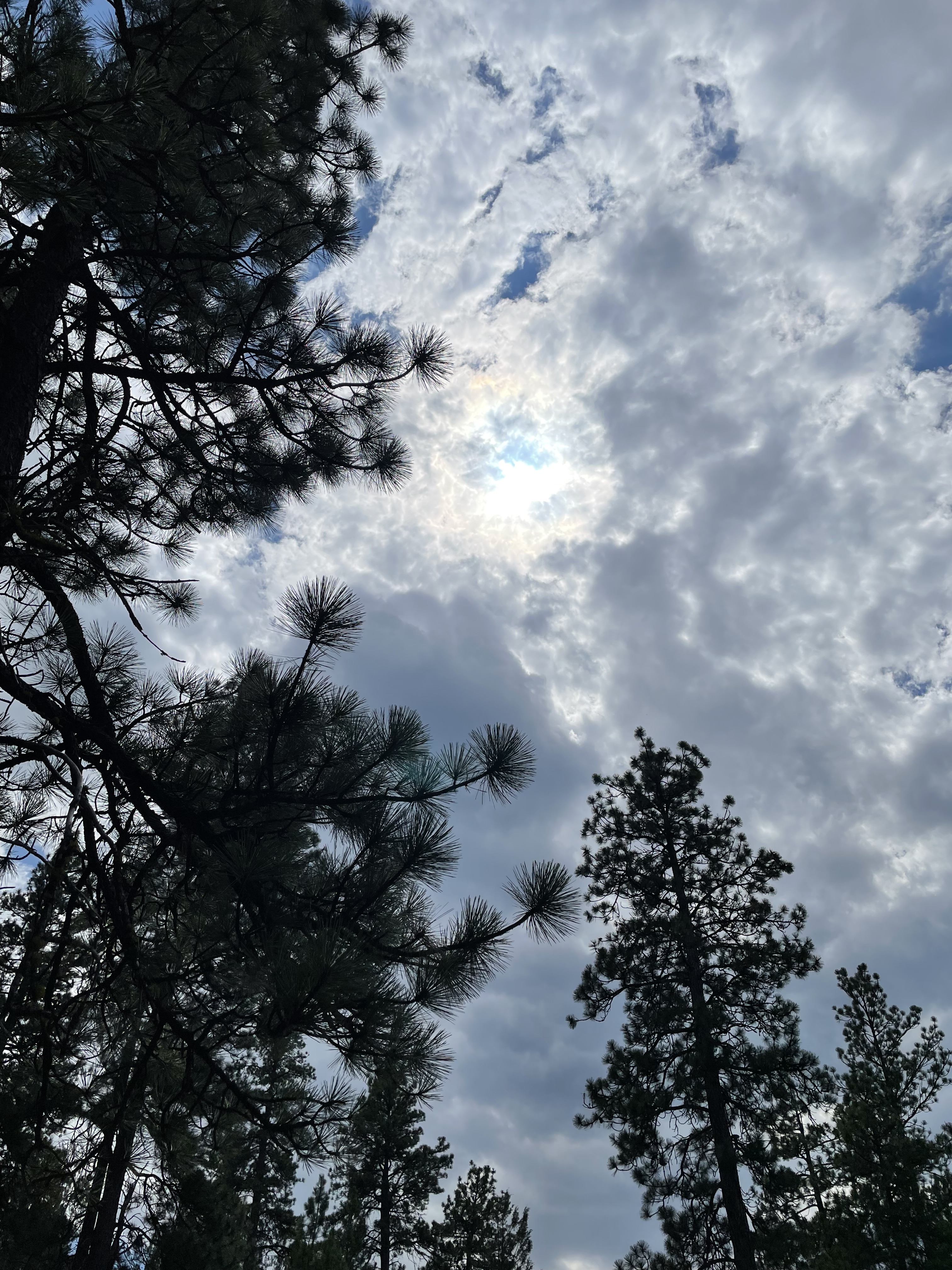
But then there is a memory. This past summer, on two different occasions, I was on the east-facing shore of two islands as weather approached from the southwest. Once on Wild Horse and once on Bird Island, I looked almost straight up and sensed the changes, but because I could not see the whole sky––my vision blocked by trees and the terrain of the islands––I felt alarm. I could see clouds amassing and flowing overhead, but I could not see if they were part of a larger system that might make the paddle home more menacing. Both times I suspended my explorations and resumed paddling so I could see around the islands. Fortunately, the weather systems did not become dangerous, and I returned without incident to my starting points. In November of 2025 it is as if we are on one of these islands, can look straight up but cannot read the whole sky. We see the edges of change and potential danger but have no way of knowing how they will develop, if they will pass benignly overhead or become life-threatening to more of us. On the islands I felt anxious when I sensed what was coming but had no way to evaluate it. If in the kayak, so as a citizen.
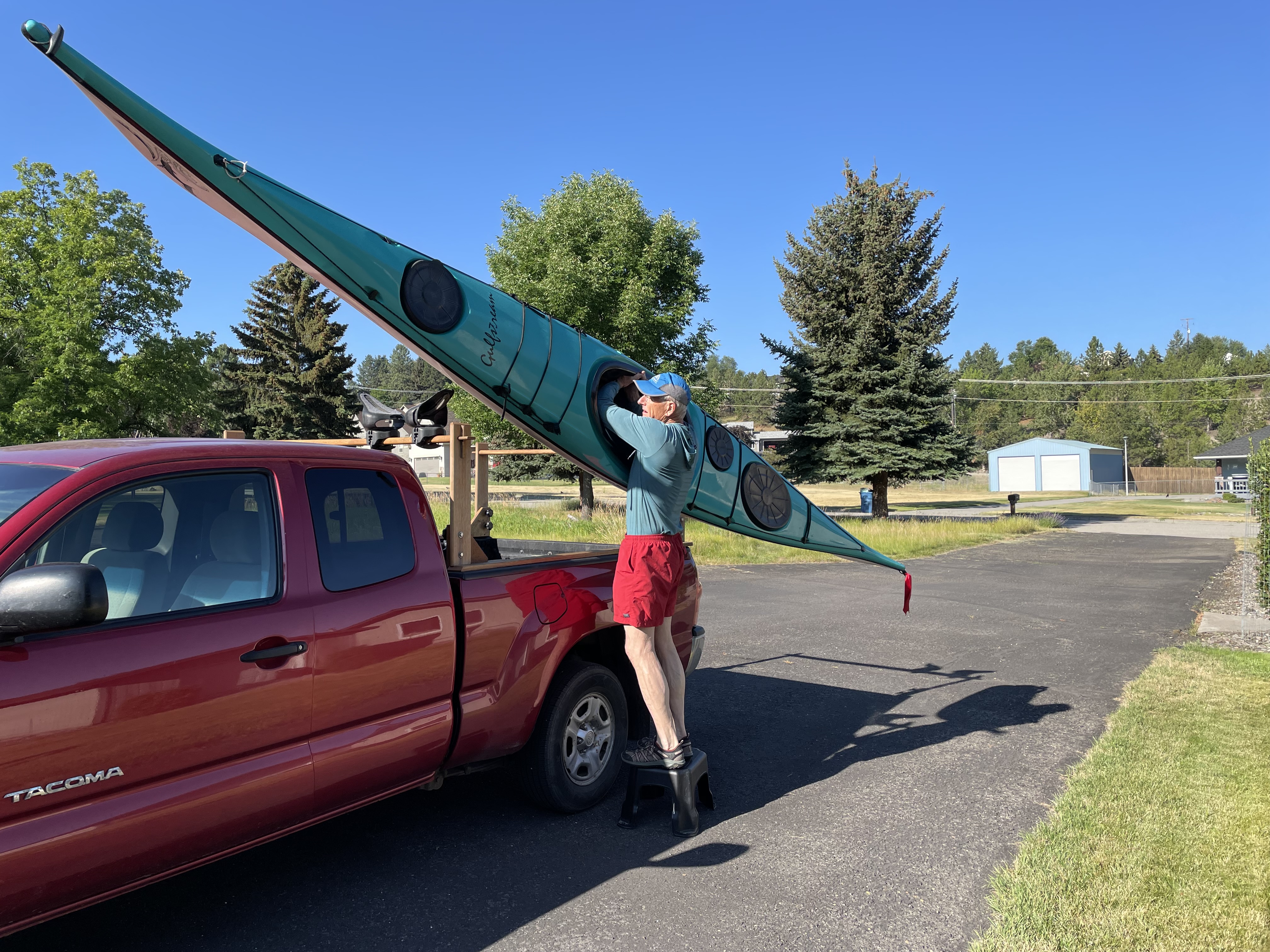
And finally, sorting memories before winter, I have a goal. Next spring I will be seventy-six. It is not getting easier to load my boat on its wooden rack, unload it without bumping the stern on asphalt, or pull knees to chest before sliding my legs into the tunnel of the kayak. Yet, I aspire to move smoothly, to apply strength at the fulcrum when it is called for and ease up at just the right moment. I aim to keep my balance and not move abruptly. As in the kayak, so as a citizen.
Almost every morning I put my hands in a yogurt container full of black oil seed, carry the seeds out the front door and cast a black arc to hungry birds. The way it feels in those first moments on the water, a memory of having only a partial view of the world, and a goal to move through it gracefully will sustain me until late April or early May.
I wrote a book based on my experiences in a kayak on a huge, ever-changing lake. Because I believed in what I had written, and that a portion of my life could be expressed in language, I felt a responsibility to face the public.
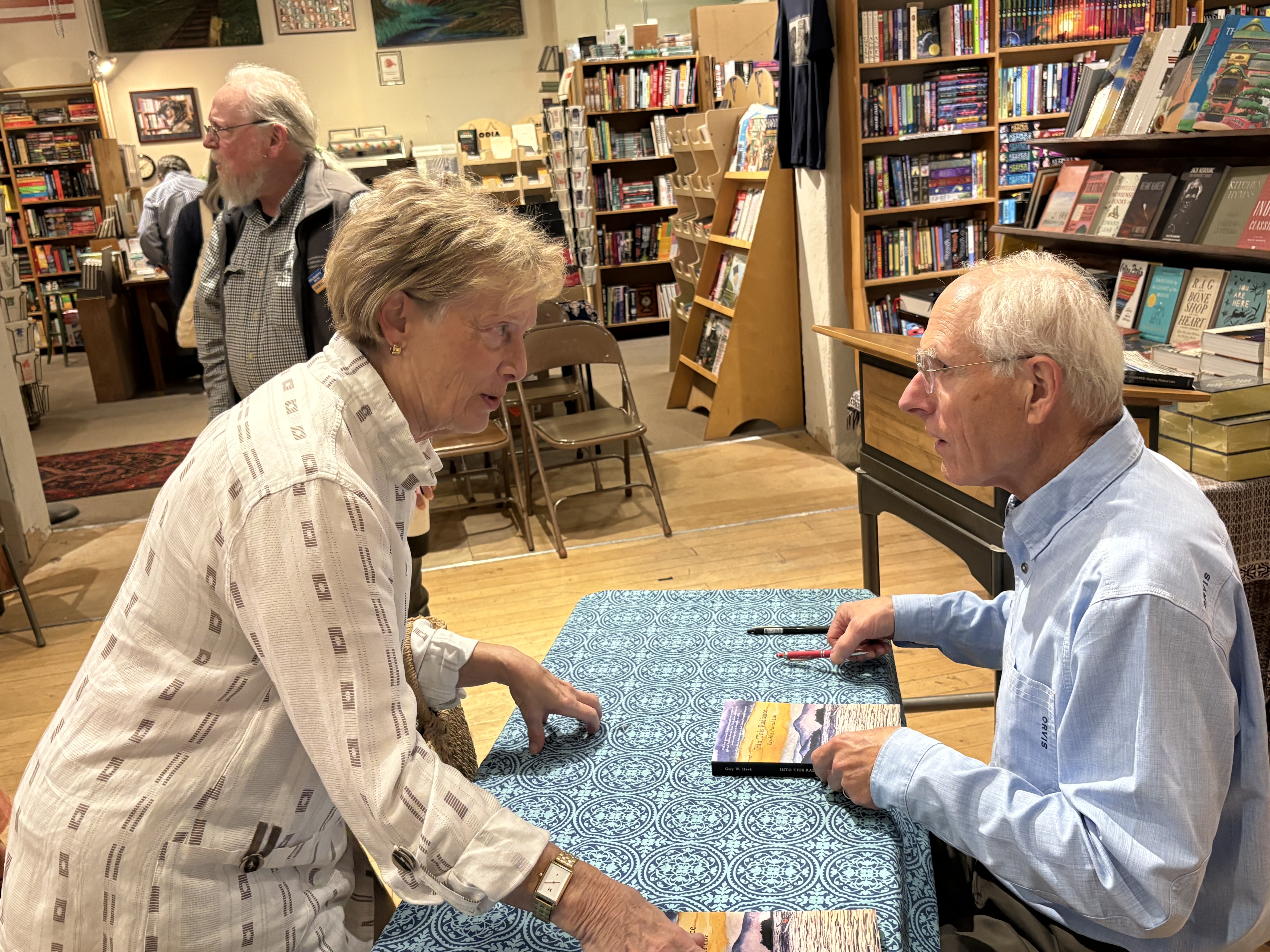
I have read twice now, once in a bookstore and once in a public library. A couple of other events hang on the calendar. I have learned something important, something I did not expect. On the surface a public reading can interest attendees in a book and a few copies might be sold. But I now see clearly that drawing attention to a book is not the purpose of the event.
On both occasions before different kinds of audiences, conversations flew through the air like October’s leaves yanked from stems by gusts of wind. The reading of an essay stimulated activity in the minds of listeners and helped them connect with their own experience. Suddenly this usually silent and invisible mental activity became visible and audible. People began to tell stories about their own encounters with light and sound, waves and wind, stories about friends they have loved and lost, things they make, things they have done and hope to do if given the time. The room began to sparkle with ideas and interaction. People spoke not just to the author but to each other.
Reflecting on these experiences I have concluded that people are hungry for interaction, seem eager to be heard by anyone who stands still long enough to hear a story or pay attention to a question. I do not know if this need is the lingering aftereffect of the pandemic and imposed isolation or, if in fear of the other, we have held ourselves back from interaction because we anticipate criticism or conflict. Whatever the reasons, I witnessed a great desire to speak and feel heard.
I learned an equally important thing. The second event was held in the public library in Polson, Montana. It seemed as if people in the community knew that a library is a safe place for all kinds of people, almost as though an unwritten covenant guides behavior and brings people together in a common purpose. To be sure, this sense of safety and openness is fostered by the librarians, their knowledge, warmth and hospitality. But I had never seen so clearly the value of a library to a community, especially in a small town. A library or an independent bookstore fills minds and hearts with fresh ideas, awakens generosity, and makes clear that not every contact is driven by the repetitive and reinforcing loops of algorithms.
The days around the solstice seem to flatten into a kind of sameness. In winter a curtain closes on light. A broad wash of gray flows across our lives, occasionally punctuated by clear skies and sudden cold. Then in mid-summer we experience the flatness of lingering light and heat. But around the equinox we come face-to-face with the dynamism of rapid change.
If possible, I like to paddle at these times. I feel especially drawn to the autumnal equinox. The water sits a few degrees above the temperature of the air and suggests a sense of safety that feels elusive in the spring. Autumn also reminds me of the season of my father’s death. I cannot help but think about him when chokecherries and red-twig dogwoods turn red and orange. But I also prize a paddle in early October because the sky can be wild. High, flying clouds sweep over the heavy, rain-laden clouds that stack up against the Mission Mountains and drop squalls of moisture through huge columns. As the clouds break over the crest and move toward the plains, the color of the lake changes moment to moment. Within a fifteen-minute span the lake can go from black to cobalt to green, from graphite to amber to pale blue.
I also sense the excitement of the birds. Geese form staging committees as they sense the migration to come. A double-crested cormorant with its long neck races one direction and suddenly returns. Then there are the waves. They shift directions as quickly as a swinging compass needle and may suddenly lay down as if for a nap, almost as if sensing a need for rest.
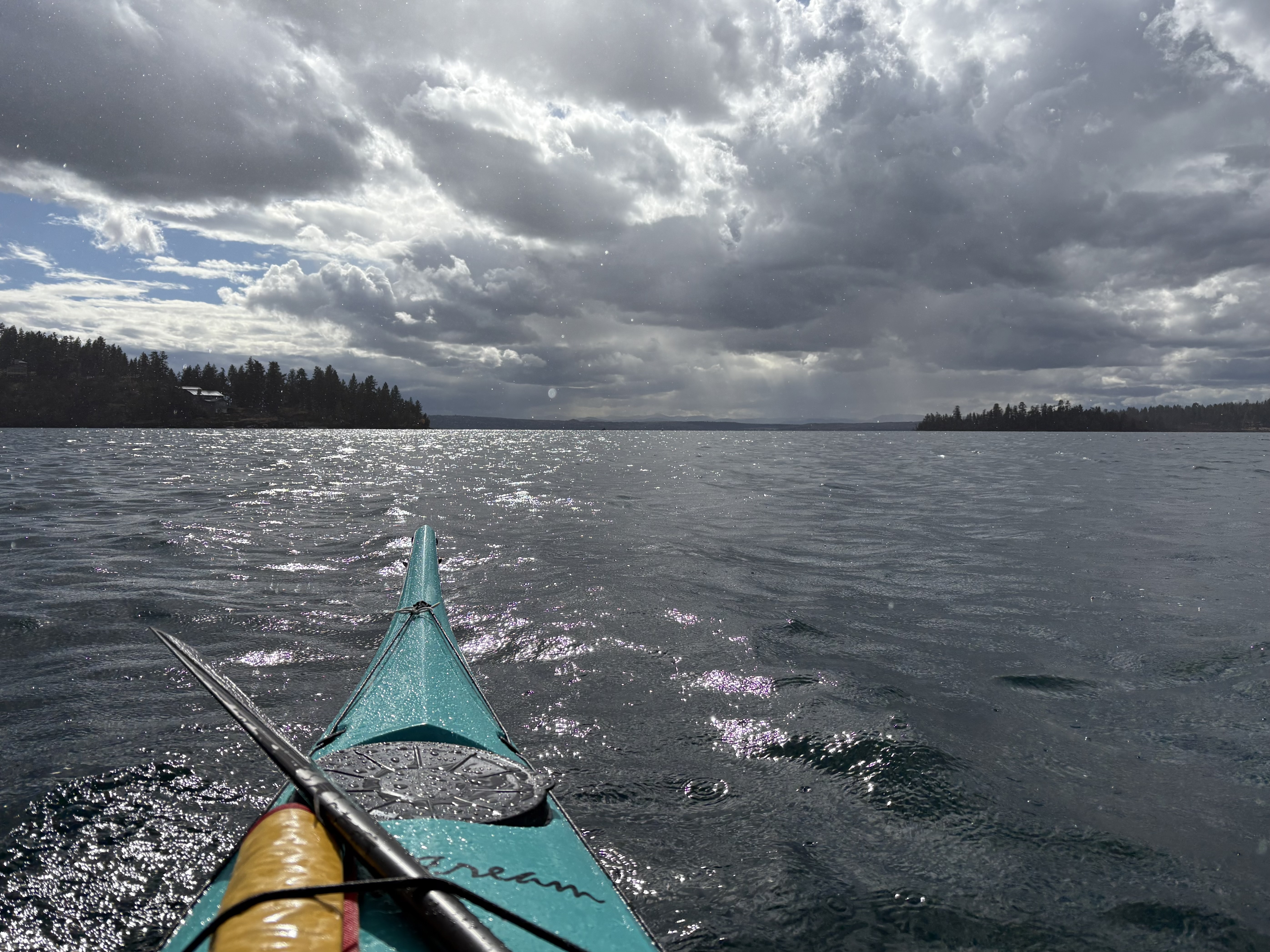
A few photos suggest the dynamism of this season, the improbable combination of rain and light,
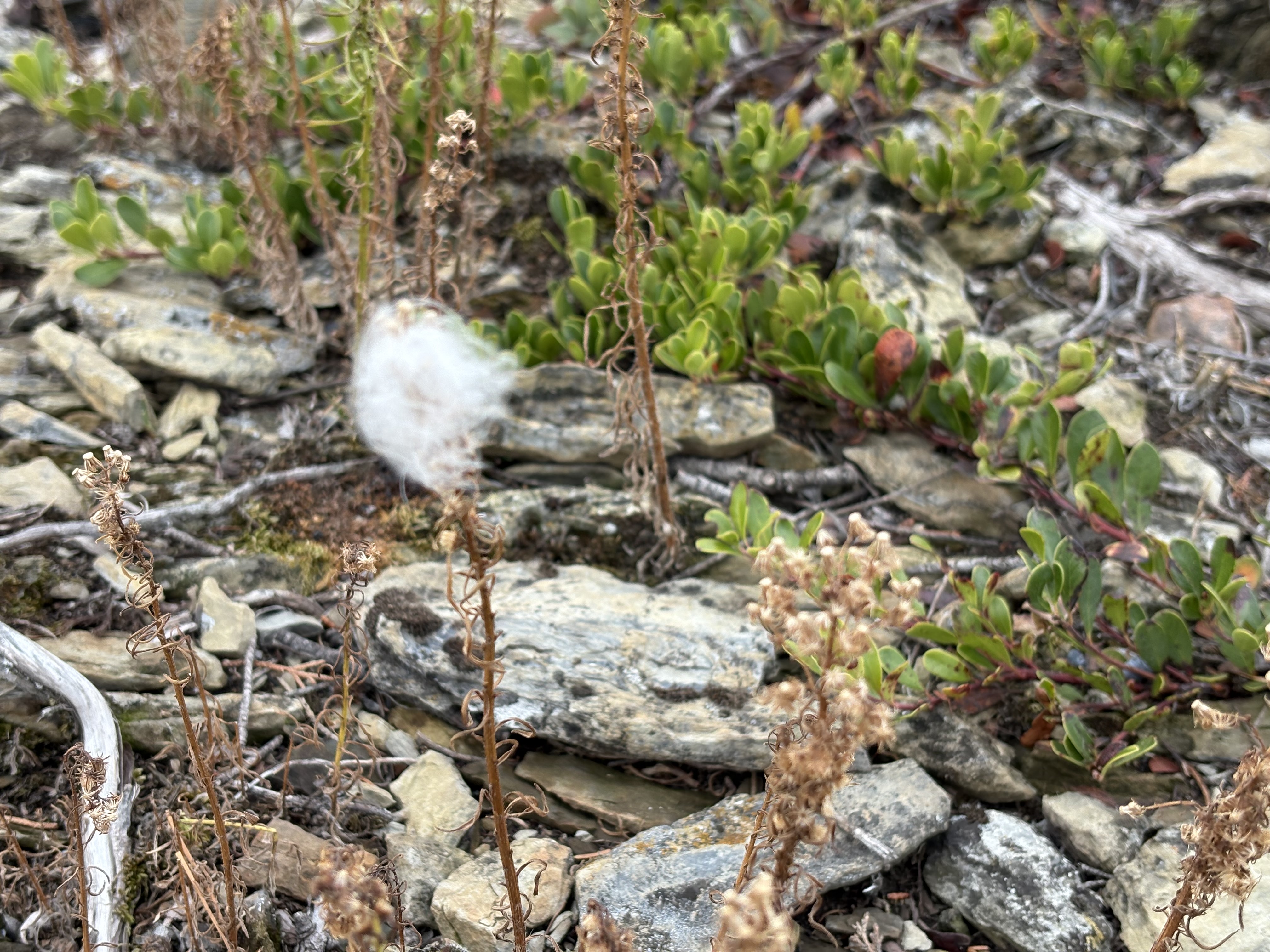
the way mosses awaken,
and how goose down catches on a dry stem and flutters so fast that the camera cannot stop its quivering. Welcome to the season of change.
Years ago, when I was making furniture for clients and a couple of local galleries, I brought a table into a gallery for an upcoming show presented by local woodworkers. When the manager asked me about the sales price I gave him a number. He laughed and said, “You’ve got to be kidding. Get out of here. Let me take care of this.” So much for marketing my own work.
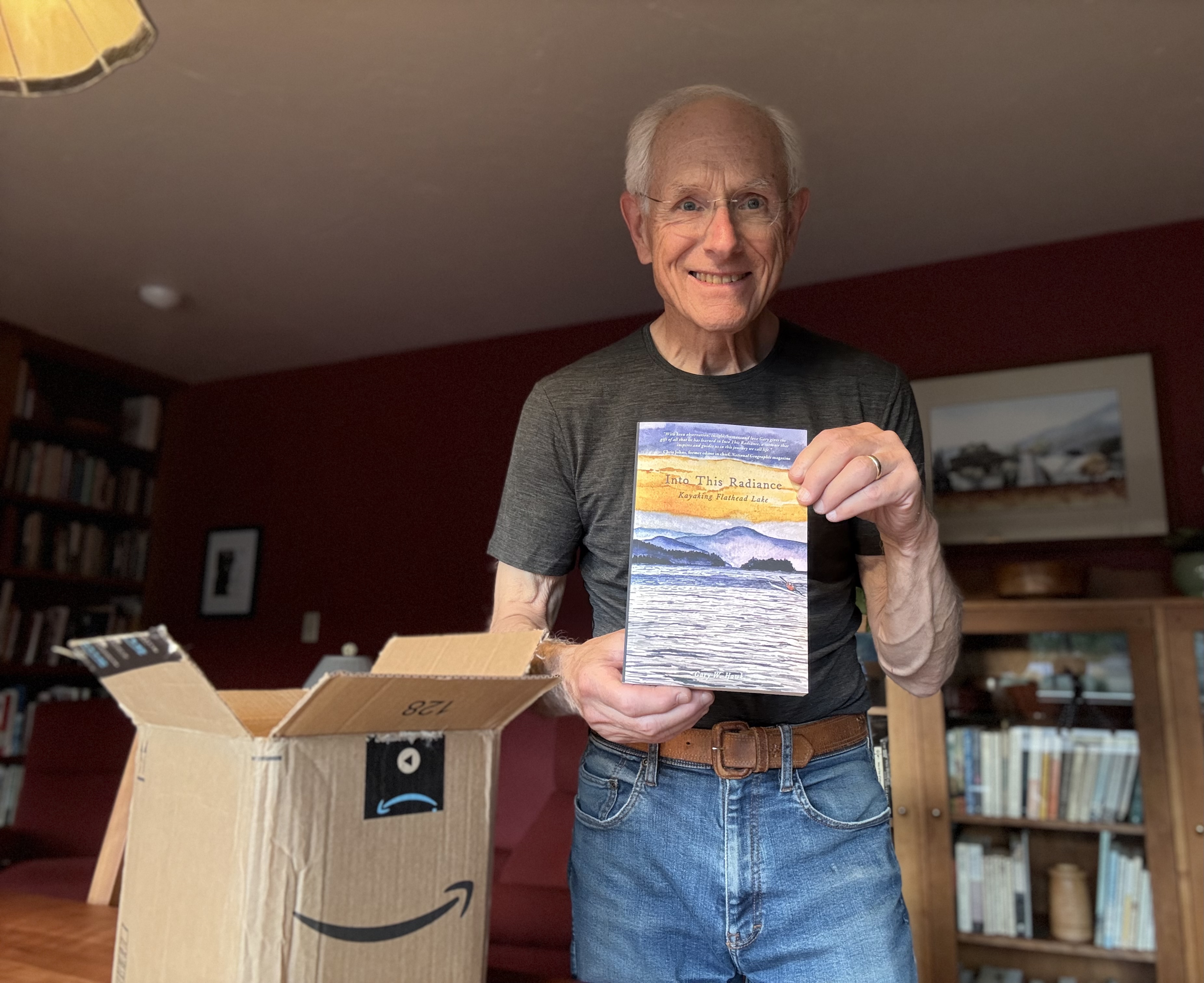
Once again other people have set a price on several years of almost daily work that now takes the form of a book. My in-house marketing agent says I am supposed to tell you that I have published Into This Radiance in both a print and digital format. It is easily available through Amazon, though I hope you will buy it from an independent bookstore. It looks like this:
When people ask me what the book is about, I usually stumble, not feeling sure how to answer. Perhaps it is enough to say that the book contains as many colors as the green ash tree outside my window in October. The book is part memoir, a tribute to a place, a set of lyric essays, a little cautious instruction, and musings about how to live thoughtfully in the world around us. If a crushed leaf emits a fragrance, so the turning of the pages reveals an appreciation for the gift of life and a sense that the whole world is alive, conscious, and waiting for us to be attentive, if not loving witnesses to its conditions and changes.
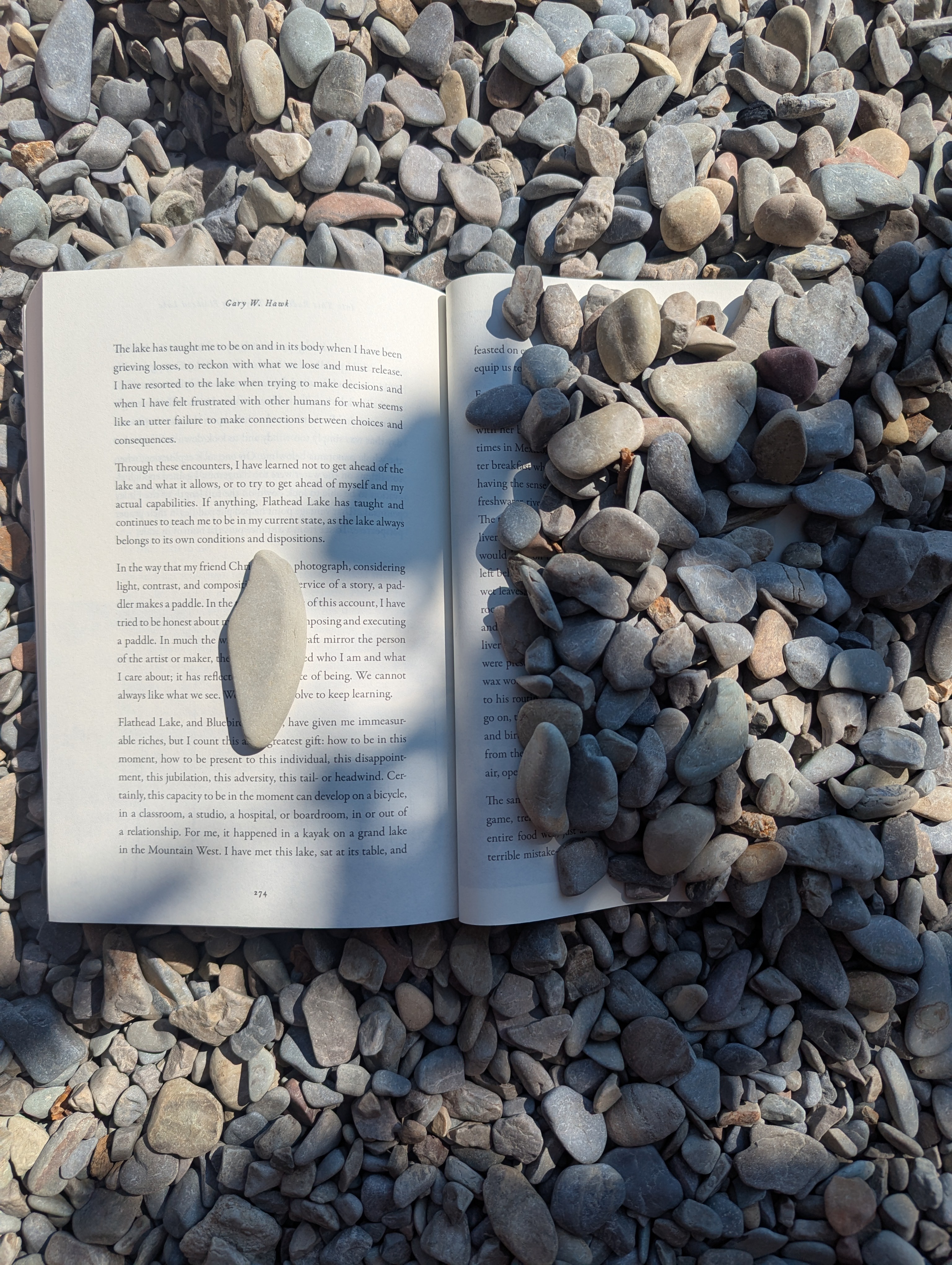
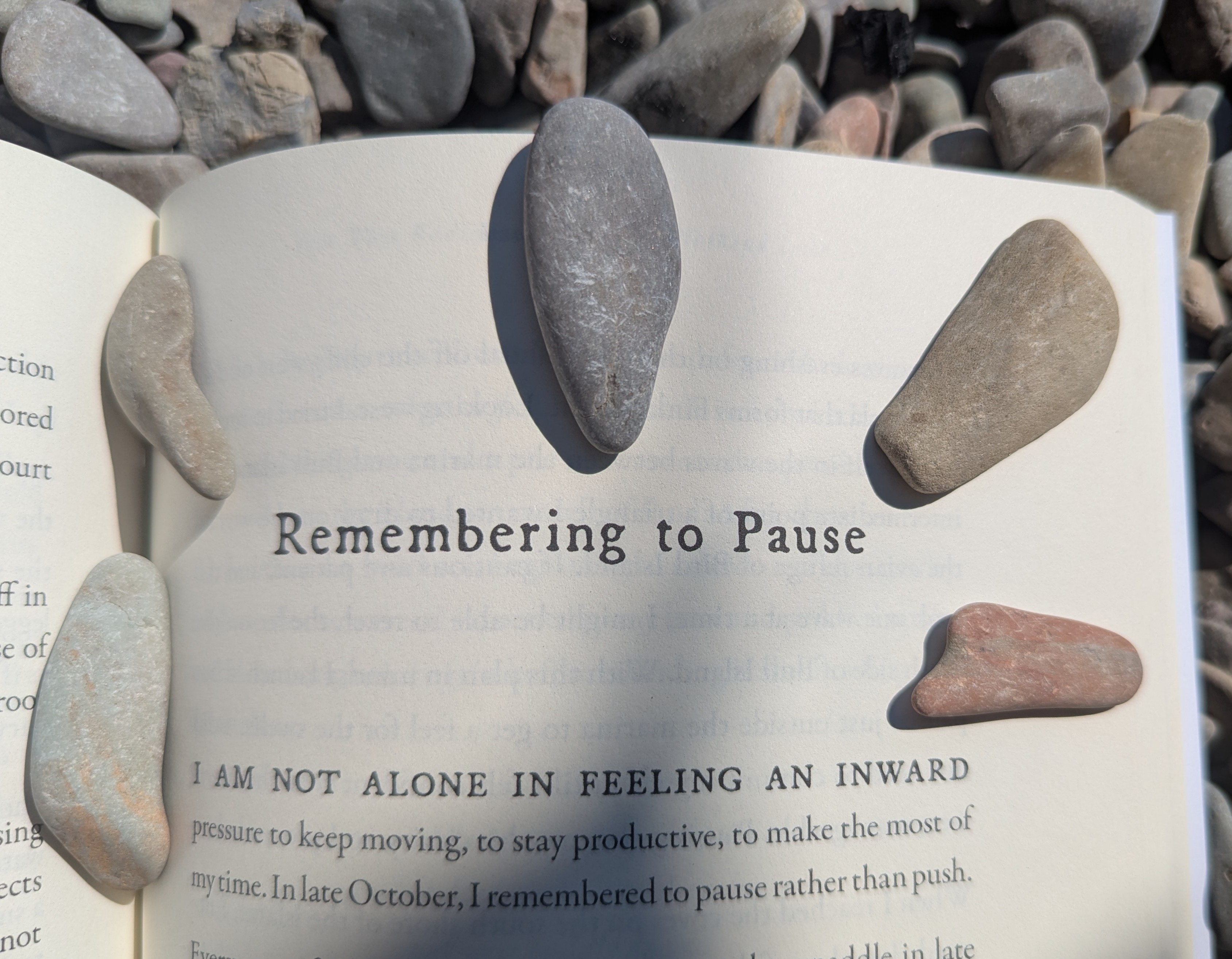
As people begin to read the book, they tell me that they are approaching it as if it were a daybook: they read one of the short essays each day and take time to ponder its themes. Another person sent me photos of her amazingly creative response. Constanza von der Pahlen, whom I met at the first public reading of the book, arranged Yellow Bay stones on the pages to reflect images in some of the essays.
I have at last completed a very long process of awakening to an idea, converting that idea into language that required editing and arranging, painting a cover, and then releasing all this into the world. If you purchase the book, or happen upon one, I hope you find something of value, as did the person who bought my table long ago.
In the forecast I saw what looked like two good days of promising weather for a paddle from the Walstad Fishing Access site to Cedar Island, about four miles north of Wild Horse Island. I gathered the necessary gear for camping overnight on the island, remembering numerous occasions when I made this trip alone or with friends. One more time I wanted to experience this island in the middle of the lake, gaze at the star river overhead, enjoy the gentle decline of sunset and the drama of sunrise.
When I arrived at Walstad I avoided the traffic of boats being launched or returning to the ramp by ducking through the trees and putting my boat on the ground in front of the shallow pool of water west of the parking lot. As I unloaded gear from the truck and thought about its careful placement in the boat, two mothers with young children waded in the shallows. One little girl crossed an invisible boundary and dared to squirt her mother’s friend with a powerful squirt gun. This set up a splashing contest and led to all the noise of water-play.
Once the boat was loaded, I left a note on the dash saying “Out to Cedar Island” for anyone who might wonder why my old Tacoma sat parked in the lot overnight. I then slid Bluebird into the shallows and gave mothers and children a wide berth in case I, too, might become a target for a long shot of water. As soon as I made the turn into the main body of the lake, I felt the resistance of a headwind. Calm and determined, I paddled on.
Paddling a boat full of camping gear feels very different than paddling an empty boat that bobs and swings. Unschooled in physics, I simply trusted the power of momentum. In good time I arrived at the point that helps define the entrance to Skeeko Bay. But here, I made a good decision based on years of experience. After studying the waves and wind I decided to cross over to the west shore of the lake, preferring to face the direct opposition of this energy rather than face it obliquely. I knew I could use landforms to blunt the effect of the wind and eventually cross over to the island once I reached the entrance to Canal Bay.
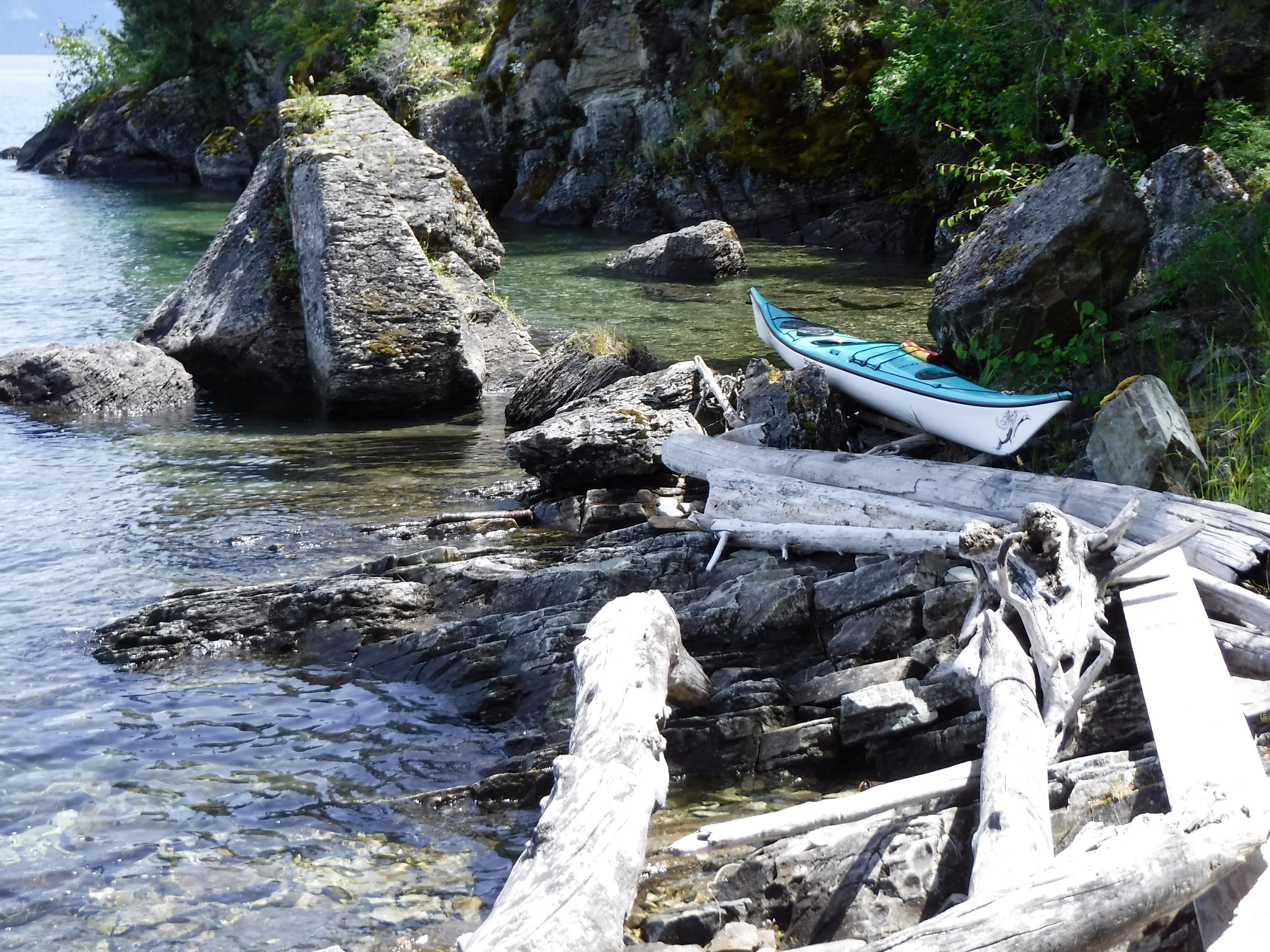
This plan worked well. I passed to the north of Shelter Island, crossed the beautiful gap between islands then coasted down the east side of Cedar to the little pocket where I have always camped. In late August of 2025 this area of the island had accumulated massive amounts of wind-driven debris, feathers from birds, grass torn from riverbeds, huge logs, pieces of broken docks, and bits of garbage. I found a little slot where I could pull Bluebird well above waves flowing down from the north.
Before setting up camp I took some time to think about the tall red crane erected on the point slightly south of Painted Rocks on the mainland. Red steel high in the air catches one’s attention. There is no point in lamenting what people choose to do with their own property, especially in Montana, but I could not help thinking about how this site is sacred to Native peoples, the stories they tell about Painted Rocks, the centuries of vision quests in this area, how this red tower and the massive concrete structure emerging beneath it must seem like a huge middle finger in the air.
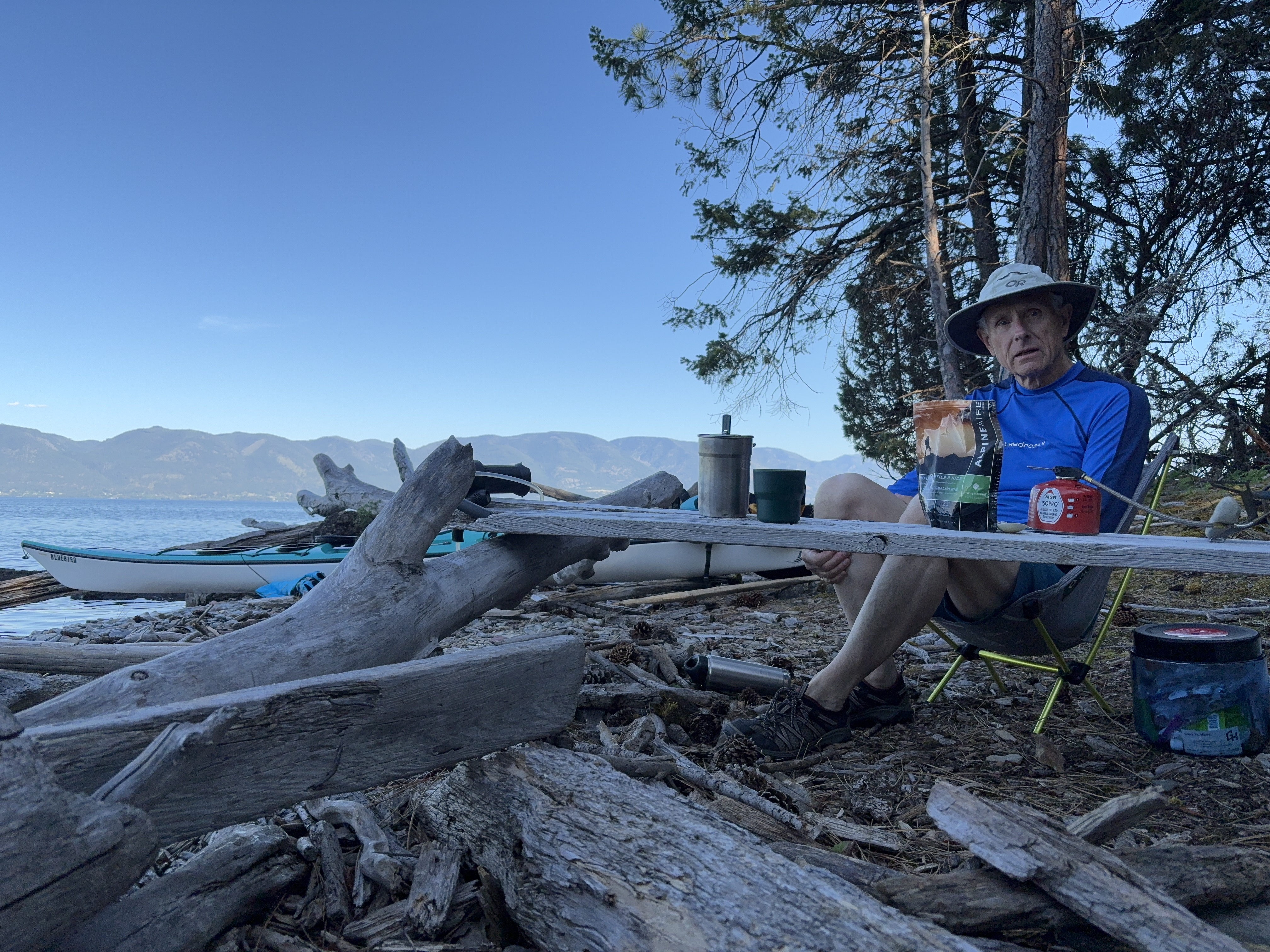
Eventually, I swallowed this sorrow and set up camp on the ledge about fifty yards above the beach. Next, I returned to the beach and used two big sawn blocks of wood and a long plank to make a level, informal table, a perfect place to set up my stove, cook dinner and watch water and sky.
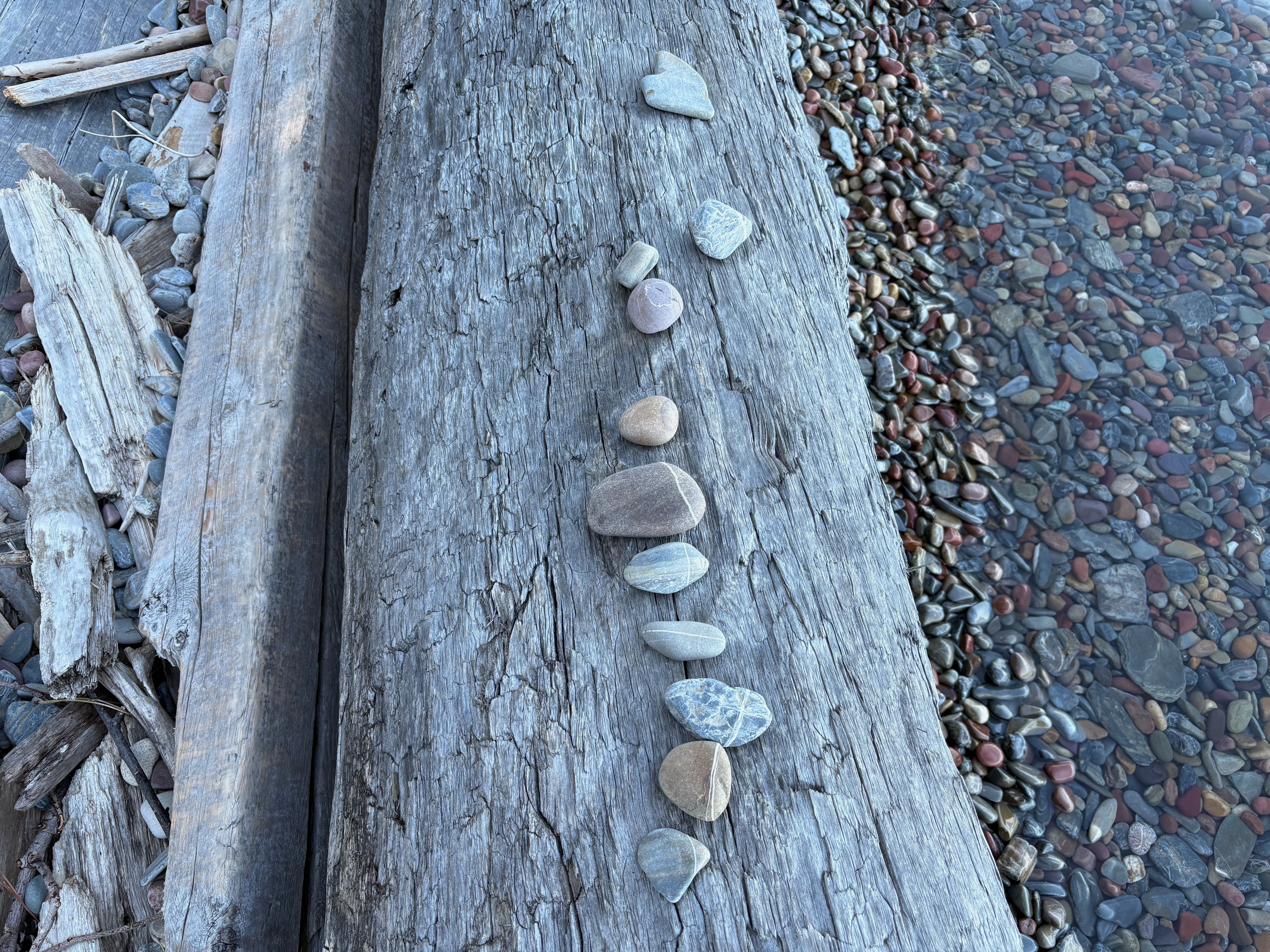
During the remainder of the afternoon, I wandered all over the island, re-familiarizing myself with the location of things I remembered—trails old and new, a memorial to a man who died at 55, the tattooed bungalow (an unholy Lascaux), and the location of the new tent sites created by Montana Fish Wildlife and Parks. In the process I found an artistic arrangements of stones with a common theme
and discarded cannabis paraphernalia, an accelerant to the island’s high. Then after dinner of freeze-dried lentils and dehydrated apples from a friend’s orchard, I found my way through dead fir trees and fallen mistletoe to the point on the southern tip of the island where one has a view of everything to the south, from Finley Point, up to the Mission Mountains, to the north shore of Wild Horse Island. As I stepped onto this limestone platform, I also noticed a milling flock of ring-billed gulls below me. When they eventually saw the disturbing silhouette of a human profile against the sky they took off. The setting sun turned the backs of their wings a golden hue before they disappeared. This is an image I must hold in my memory, my iPhone camera left behind in camp.
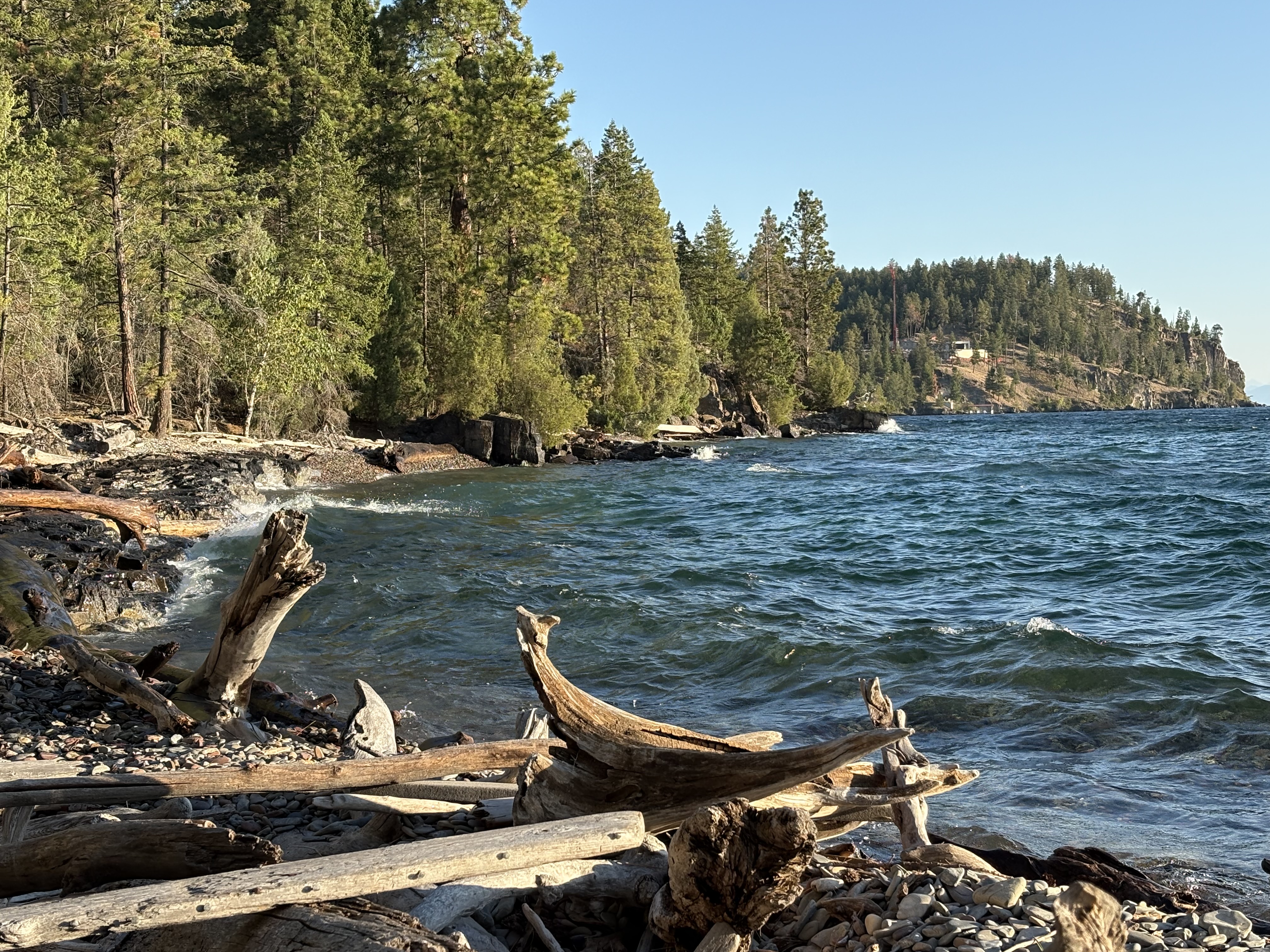
I returned to my tent, settled into my own nest and went to sleep. But during the night I woke numerous times to the sound of wind and waves slapping, then thundering against the rocks that form the pocket where I left my boat. I kept trying to evaluate the sounds, the meaning of the occasional boom when a bigger wave hit the shore’s stony armor. I got up twice, my path illumined by a headlamp, and pulled Bluebird even higher up the beach, eventually tying it to a small tree. I could not afford to lose my means of return. At first light I went down to the beach and sat in my folding chair to study the conditions. Waves continued to break against the north facing beach, swirled around barely hidden blocks of stone, and sent white splashes into the air. I could not time my photos to capture the actual chaos of the conditions. What should I do?
I had launched from the beach in these conditions on one other occasion when I made the trip with my friend Jeff Stickney. On that day we had each other if one of us got into trouble. Alone, with no one else on the island and no one coming to the island on such a rough day, I could not afford a spill in the waves or to have my boat broken against blocks of stone. Gathering information before making a decision, I took my water bottles and pump to the opposite side of the island where I could safely stand in the shallows, refill the empty bottles, and assess my options. Standing in the lee of calm water and looking at the waves between Cedar and Wild Horse Islands, I decided to carry my boat and all my gear over the island’s crest and down to the east side. In four stages I carried everything over the same ledges, through the same trees, down the dusty trail, turning right at the dead pine tree, and down to the opposite beach I marked by tying a strand of tow rope to a tree branch.
Eventually everything was stowed in a proper position, and I dropped into my seat. On the one hand it was a tremendous relief to have launched safely and to feel the push of a tailwind. On the other hand, I was quickly gripped by inexorable forces. I knew it was not safe to let these forces come at me from the right, crossing the way I had come. So, I made the barely better decision to let this energy push me south toward the southeast tip of Wild Horse Island. I had not reckoned, however, with what I call the wrap-around effect of even bigger waves coming from my left out of the main body of the lake. Waves from behind corkscrewed the boat. Waves from the left lifted and plunged the vessel of return.
I do not want to exaggerate the danger of these conditions. It is enough to say that a spill in the middle of this channel with almost no chance of rescue probably would have been fatal. I used nineteen years of experience to brace, accelerate and, crucially, to conserve energy, depending on each wave and the overall pattern of them, to make a long arc toward and then down the east side of the bigger island until I could rest a moment in the temporary lee at the end. From there I knew I could return to Walstad in smaller waves due to the protection of both Wild Horse and Melita. On a gravel bar opposite from the Boy Scout camp I hauled out, waded up to my knees and washed my face in the waters of relief.
Again, I pulled into the shallow pool and reversed the process of unloading gear from the boat. Stepping out into the parking lot, I was hailed by a young man in a big Ram pickup. He quickly began to tell me his story. “When life gets hard, I come out here from Wisconsin,” he said. He then filled in a few details, telling me about his experiences in Kalispell, Lakeside and Butte which he called “a fun town.” I wondered about what he meant by “fun.” He chatted on about breakfast that morning at a café in Lakeside that offered more breakfast than he could eat. At one point he held out a paper carton from the café. “Feel this,” he said, as he asked me to hold the weight of his huckleberry pound cake which certainly weighed more than a pound. He would have calories for the foreseeable future. After telling me about his new origami kayak back in Wisconsin, he offered help loading my boat. By my slow movements he could tell I was in no position to refuse. After casting lures from the dock a few times, he returned to his truck as I completed final preparations for the trip home. He gave me a fist bump, a strong handshake, and a lovely Irish name before we both pulled out of the lot and on to the highway.
Deprived now of precise information from NOAA about wind speed and direction, as well as wave height, I may never make this trip again, at least not by myself. On this occasion I brought the full strength of experience and knowledge of the lake to bear on the situation. I celebrate having made all the right decisions at exactly the right moment, but I do not wish to repeat this experience. There are other reasons to stay alive. It is time now to rest.
This June we produced our annual crop of whitetail fawns, a pair of twins born on the west side of the house and a single fawn born in the grove somewhere on the back slope. Again, I noticed something about how fawns perceive the world. Because everything is new to them, they are curious about everything––the smell of fence wire around the peonies, the behavior of crows, anything their mother eats. Early days with fawns remind me of the first few years of my sons’ lives. They were as curious as fawns about everything in the human and natural environment. Fortunately, they have maintained much of this early openness to the world.
These observations about young deer and my sons remind me of the qigong practice called Eight Silk Brocades. As this practice was taught to me, the fourth movement in the first set invites the practitioner to see everything in one’s field of vision. While doing this practice almost every morning, I have noticed that I tend to skip over some objects in my field of view as I turn my head back and forth. For example, I notice mahonia blooming in the rock garden on my right but miss the mix of shadow and light in the lilacs on my way toward my neighbor’s pine tree on the left. This practice asks a person to see not just the objects we want to see but everything else in the field of awareness. This is a tall order.
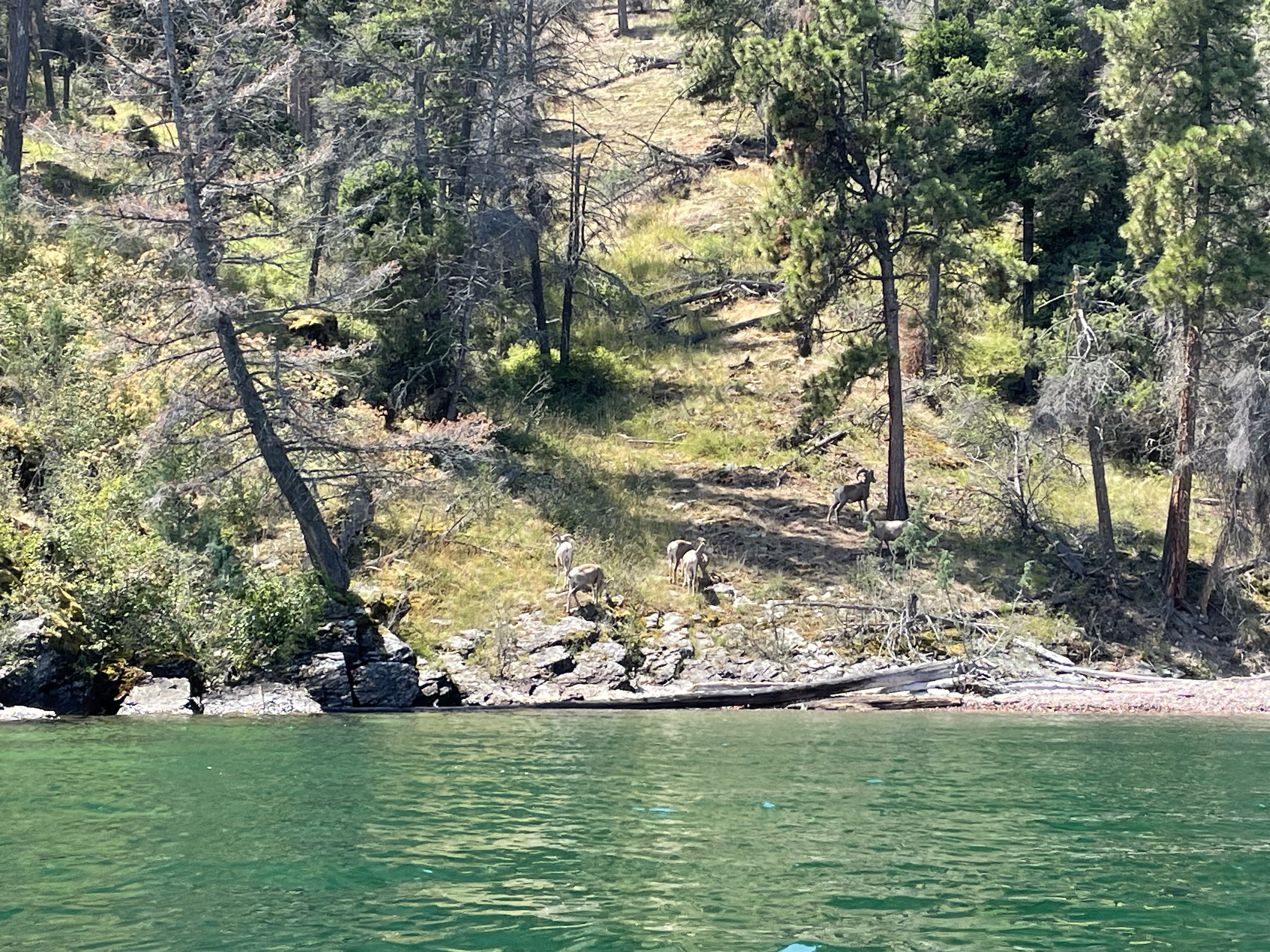
On July 23, the weather seemed perfect for a paddle out to Wild Horse Island. I began by paddling through a stiff headwind to reach the east shore of the Island, swam a couple of times off a driftwood-covered beach, then proceeded counterclockwise around the island, pausing again on the west shore before letting a faint tailwind push me back to my starting point. During the day I noticed my tendency to skip over some things in the field of awareness, but I kept reminding myself, influenced by qigong, to attempt to see the whole. As I approached the first cove, I noticed bighorn rams grazing grass and forbs on the slope above the beach.
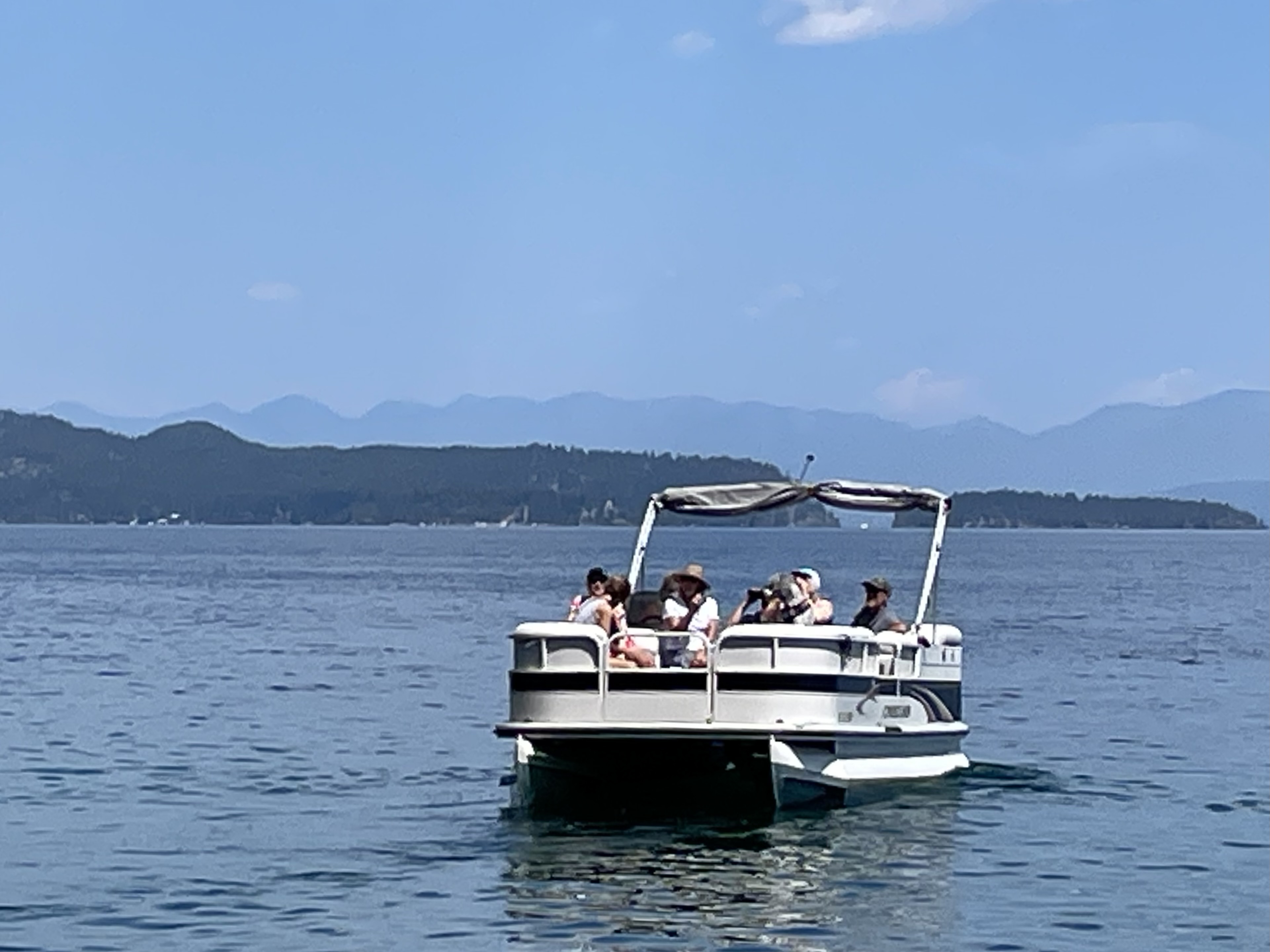
This was indeed a wonderful encounter with wild animals at close range as they went about addressing the business of hunger and thirst. But trying to take one of my spiritual practices into my daily life, I reminded myself to also notice the three boatloads of people watching the sheep.
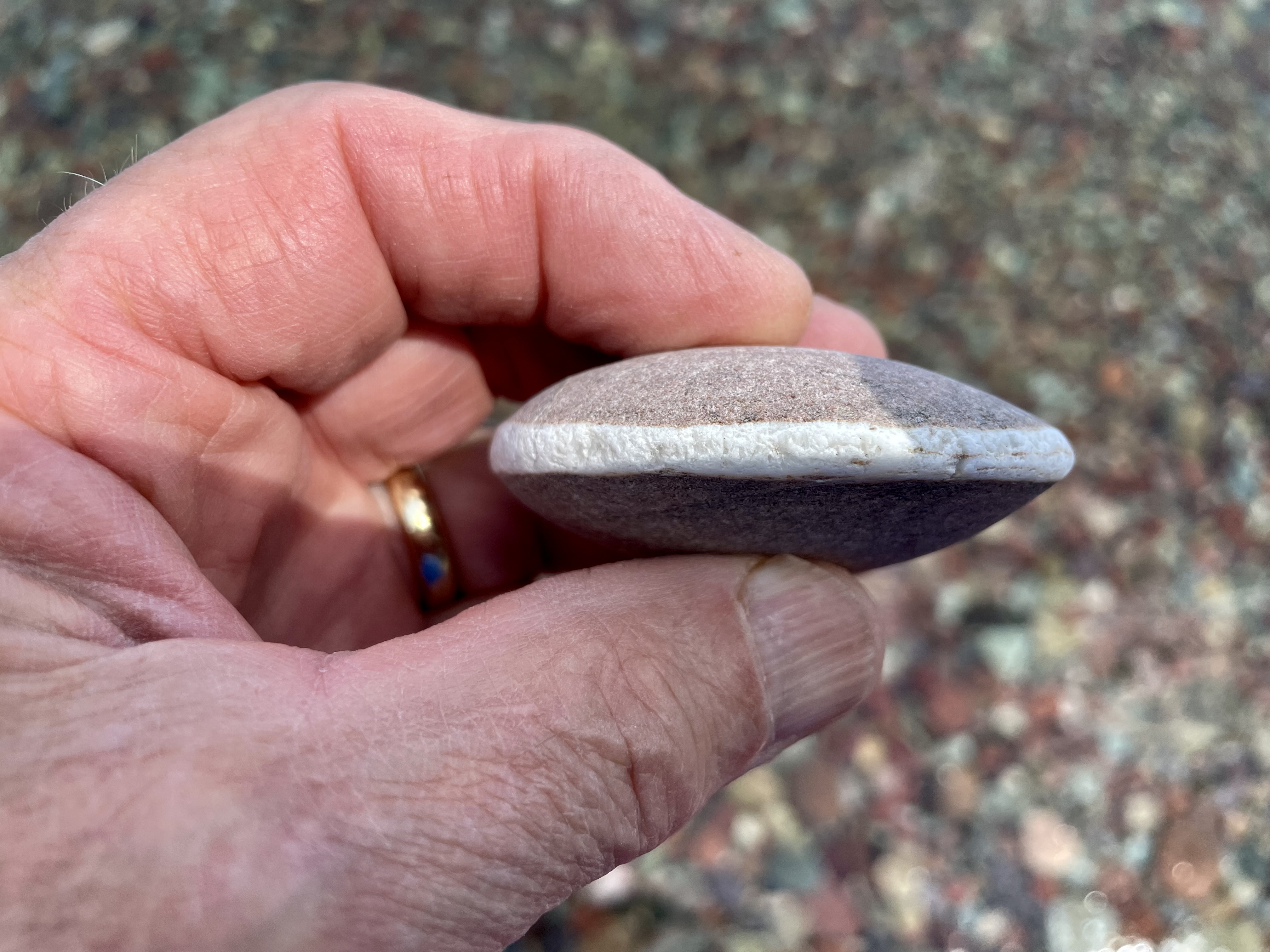
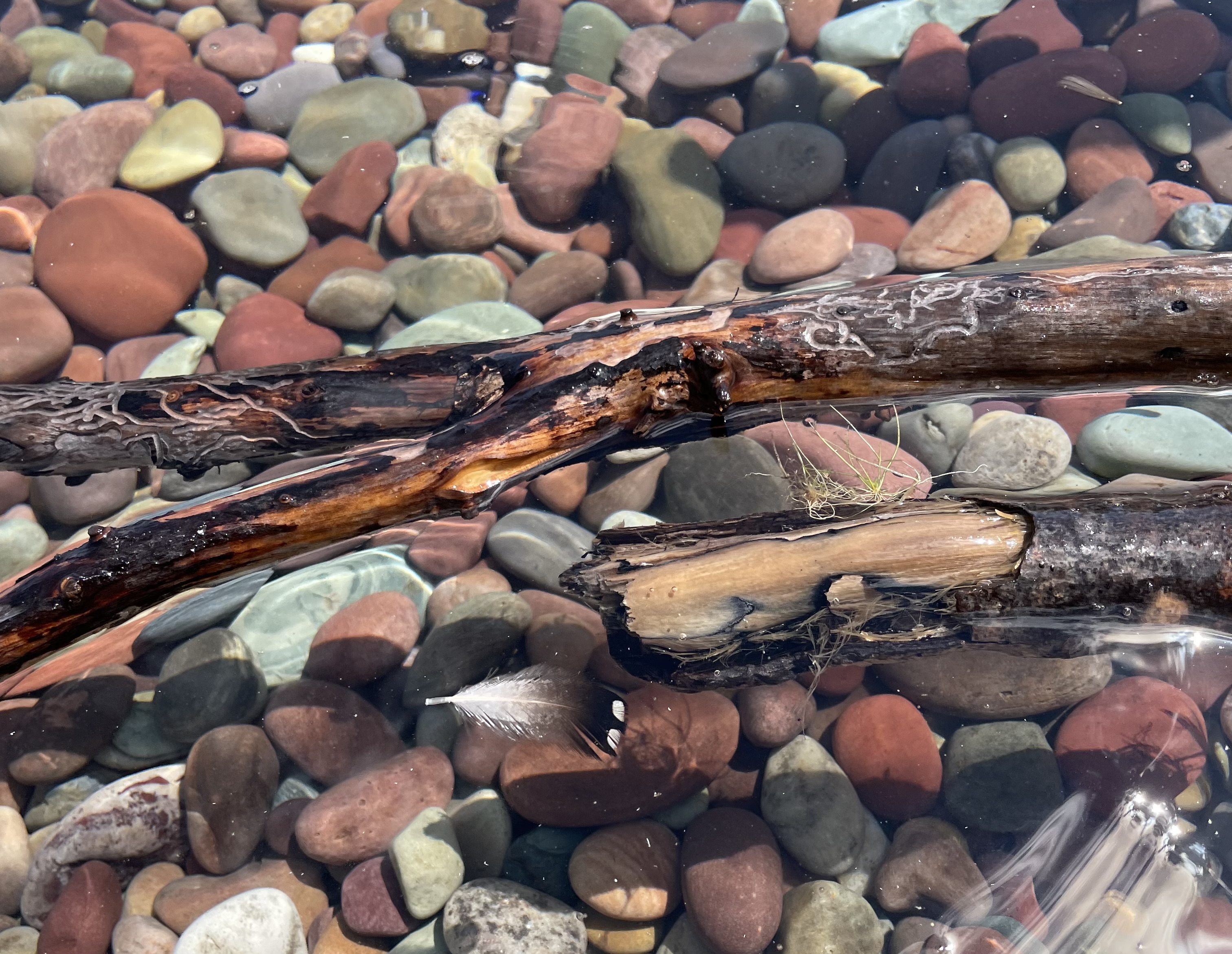
Beyond that, I reminded myself to notice two stones that seemed to have washed downstream from the same strata and were distinctly different from surrounding stones, a stone that reminded me of a flying saucer, and then a floating feather unlike any feather I had ever seen, one with two white dots in a black field.
After leaving the cove I noticed two kayaks traveling east. Again, trying to practice a way of seeing, I slowed down and adjusted my course as we converged from different directions. The woman asked about my “strange looking paddle.” This led to a wonderful conversation about Greenland paddles and then an even more amazing conversation about an academic background the man, my father, and I had in common, all in the middle of the lake. When I reached the west shore all my favorite spots were occupied by other people. Eventually I found a few square feet of gravel where I could secure my boat during a brief hike. I climbed a steep slope up to a bench, noticing that this trail was well traveled by animals on the island. After a brief exploration of the area, I dropped back to my boat. After lifting Bluebird over some sharp boulders and into the water, I felt a faint tug of intuition suggesting that I needed to simply stand still. I kept in touch with my bobbing boat by letting small waves push the kayak into the back of my legs while I kept watching the slope above me. Moments later about 30 bighorn ewes and lambs came bounding down the same slope I had climbed. They poured over logs and boulders, tried to balance on driftwood rolling in the waves, and walked past me, almost as though I was invisible.
Seeing the world as qigong asks us to see presented close encounters with two herds of sheep, their absolute confidence in their own footing and strength, but also the intuition that told me to stand still and wait.
It may be asking too much of the human brain to remain open to the whole field of awareness all the time. But at least on this one day in July, I felt richly rewarded for trying to see the whole field––objects and interactions that interested me as well as everything else in between.
In May we arranged to stay at an old resort for three nights on both sides of the summer solstice before desire to see other family members took us out of town. The first afternoon and the next morning I made a couple of paddles––south and then north along the east shore of the lake, covering about 26 miles in total. Everyone seemed anxious, however, about an impending storm.
When the sky turned gray and the temperature dropped into the 40s, leaving a distinct snow line on The Mission Mountains, people headed home, lost restaurant reservations, or tucked themselves inside with a book. Deck chairs sat empty as rain pelted the Trex. We were grounded.
Though I felt tempted to paddle in the cold conditions, having adequate clothing, my old skirt had begun to leak, and I did not enjoy the feel of cold water dripping into my lap. I relented. There was still so much to do. I watched a merganser mother teach six offspring how to chase little fish into a shallow corner between the dock and the storm wall. While the little birds pursued their breakfast, the mother kept a close eye on approaching swells and would eventually lead them toward a safer spot. I enjoyed watching big waves break against the sub-surface boulders marked by the weather station monitored by the Flathead Lake Biological Station. When their energies felt the boulders on the sloping bottom, they spent themselves in a white crash. From our second-floor deck I sensed the rhythm of the swells as they rose, rolled, and slid diminished up the shore. The lake had become an ocean. During the storm, a huge diesel-powered barge loaded with rock and a bucket loader gave the point a very wide berth before rounding it and entering the bay. I imagined interviewing a skipper of such a craft. Commissioned to build shelter all over the lake they would have weather stories to tell. Meanwhile, squalls like giant thumbs, pressed on the roiled surface of the lake.
In a brief interlude, I watched a man using a four-footed cane. While supporting himself with his sturdy prop, he worked patiently to make a transition from steep steps to dock to beach. With one hand he undid the knot tying the board to a stanchion, then positioned himself on the board so he could take a few strokes into the bay and back. He did not let the lack of adult-sized floatation devices stop him. I was pretty sure he would have been offended if I had offered to help. Later, I met him in the rain as he walked slowly up the driveway. He introduced himself and his Parkinson’s disease. He summarized his relationship to the diagnosis by saying, “I have learned a lot.” He did not linger or extend the conversation, however. Taking another step, he said, “I’ve got to keep moving.” I later learned that he had devoted his life to the protection of the Great Burn area along the divide between Montana and Idaho. It was a place he knew and loved even if he could not secure its final protection as wilderness.
I am glad I accepted my grounding. I know I would have enjoyed the thrill of paddling in a storm, but I was richly rewarded in my observations. Thwarted, we discover new doors and windows on a changing world.
I went to the lake thinking I would write about one thing—a way of understanding the kayak’s motion in relation to the paddler—but now feel called to write something different.
An overnight stay in Polson allowed me to paddle twice in succession, first an evening paddle in The Narrows in the calmest of conditions, then an early morning paddle from Finley Point to Bird Island and back. During both paddles I felt the shell of self-protective boundaries dissolve until I became I felt permeable to patterns of light, depths of blue and green, dabs and dashes of color in the shadows,
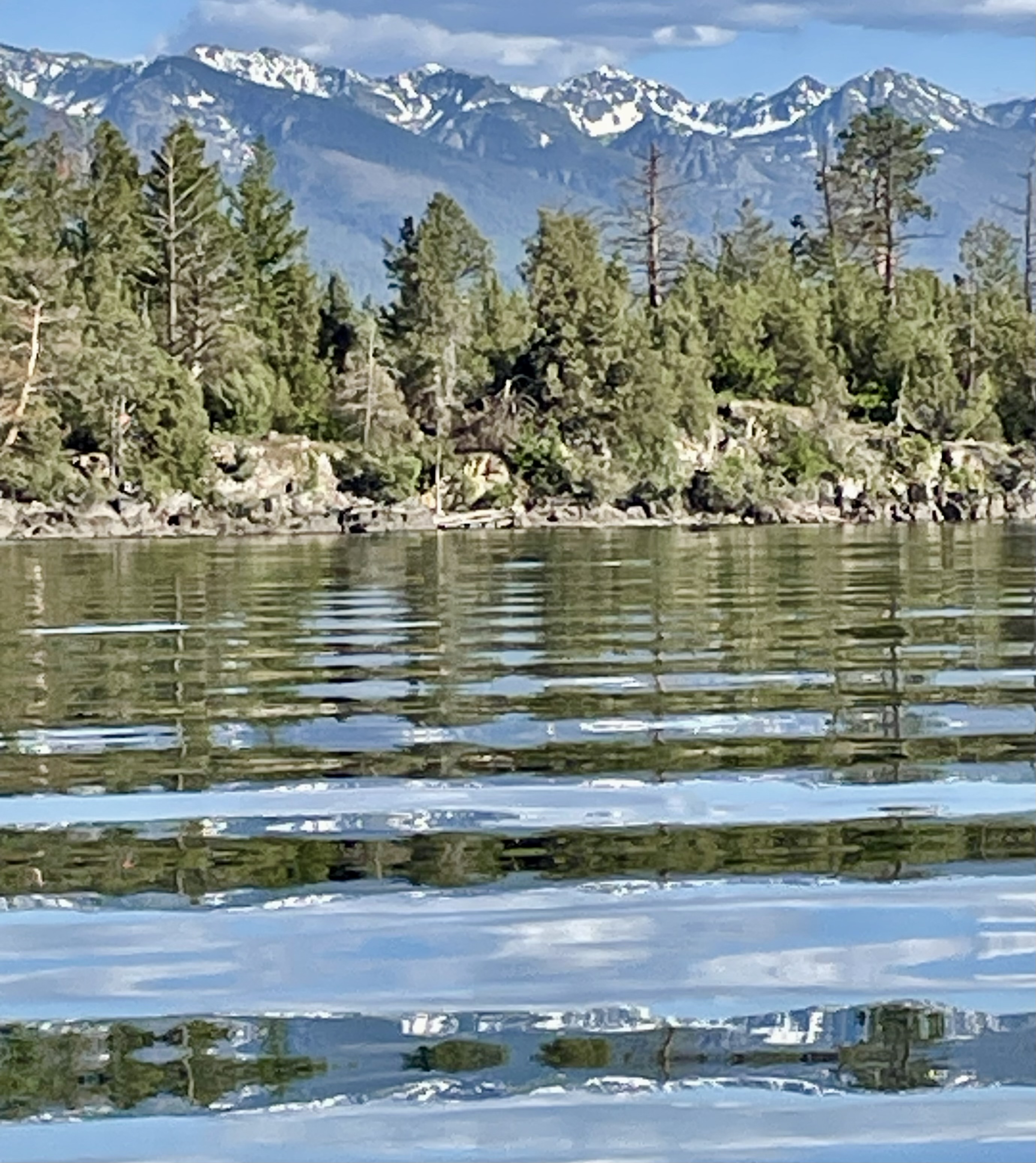
how the back of a swell became a convex mirror displaying the length of the Mission Range.
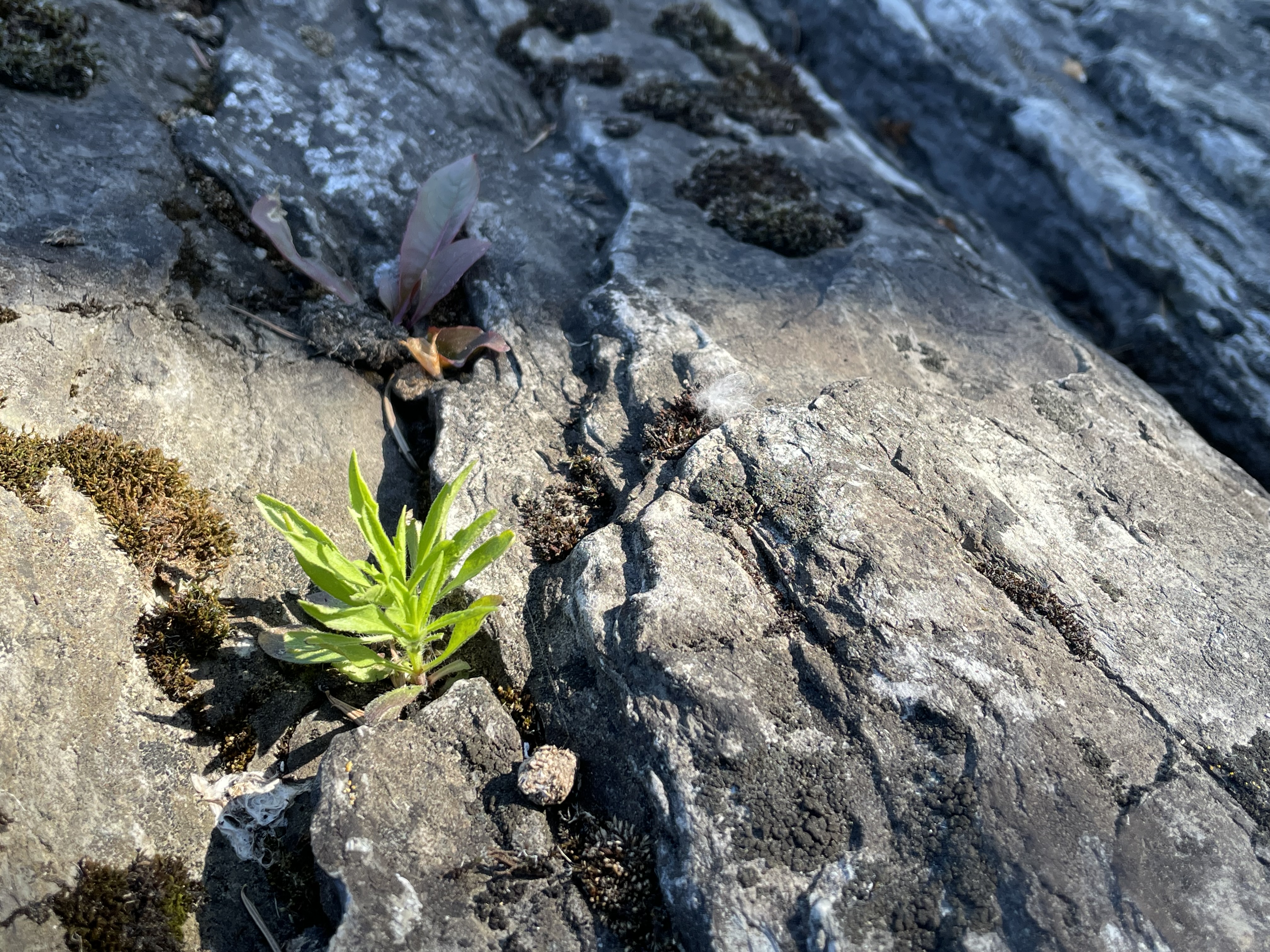
The next morning, launching from the state campground, I felt porous to the wonders of late spring before heat forced almost everything to become crepuscular. Here a pair of ospreys, there a pair of bald eagles. Here a plant growing, it seemed, out of stone,
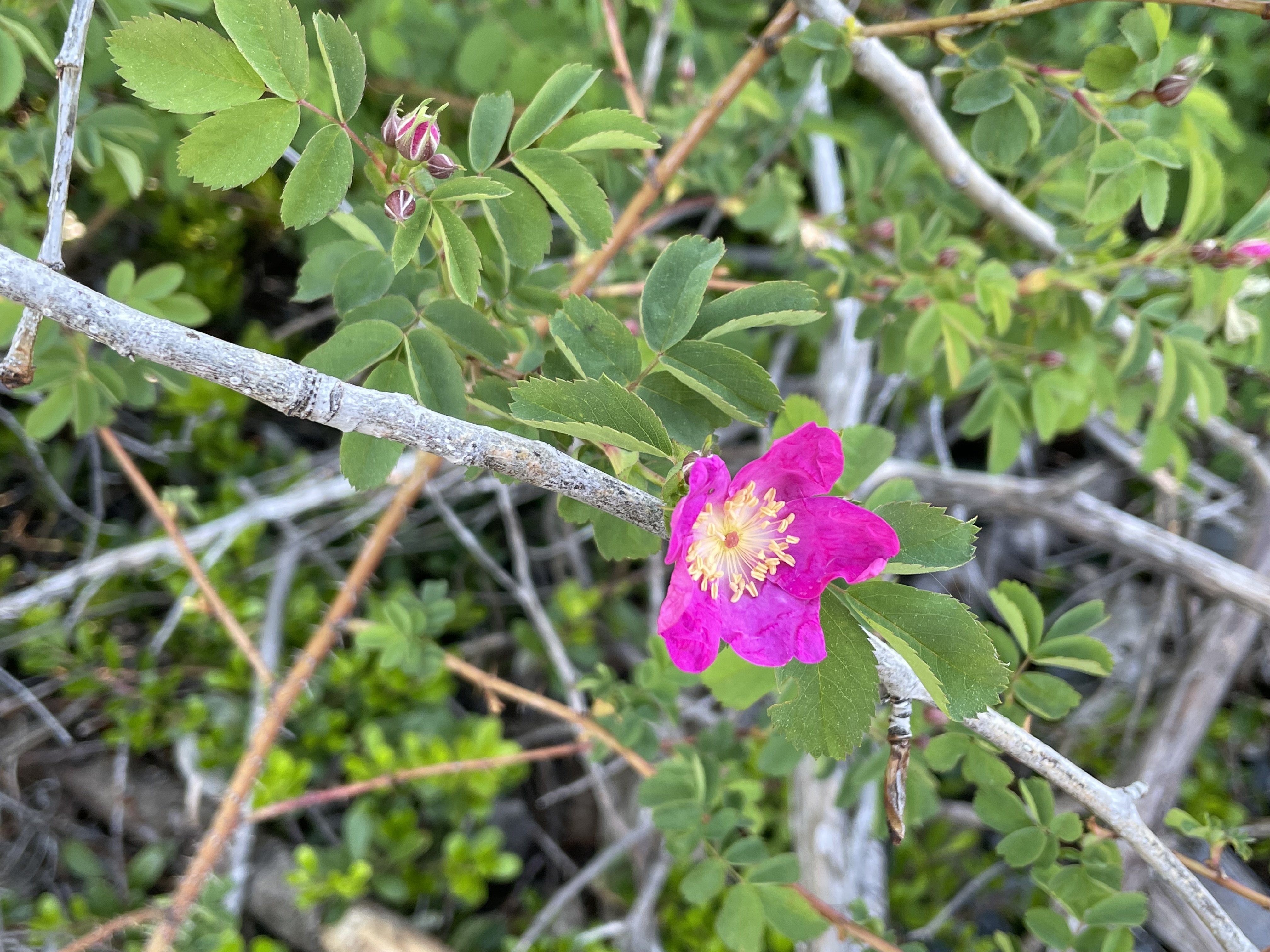
then in the sudden release of nutrients after fire—pink fireweed, honeysuckle, mock orange, ninebark, Rocky Mountain maple, and Wood’s rose. Here young geese growing into the weight of their formidable strength, then a squadron of swallows snipping gnats all around my gliding boat. Even my own breathing—out with a stroke on the left, in with a stroke on the right, seemed to coincide with the energy of gentle waves.
Wondrously, this radical openness to the flourishing of Life extended to the human realm. As I made a turn into the Finley marina, I could feel the sense of anticipation in a group of people who seemed to be preparing for a weekend wedding on the point. I felt the development of a deep bond between a muscular father pumping up an inflatable paddle board by hand and his son who watched his father’s every move. Then, as I began to load gear into the car, a woman approached me. She skillfully balanced offering information about her life on the edge of the Chiricahua Wilderness in Arizona with questions about the water temperature of Flathead Lake, how to pronounce Sel’ǐs Kasanka Qlispe’, and places to camp near shore. I knew more about places to camp than the pronunciation of Salish, though I did my best version of a glottal stop.
In Confessions of a Guilty Bystander Thomas Merton describes an astonishing experience on the corner of Fourth and Walnut in Louisville, Kentucky when he suddenly sensed the holiness of all the people around him and the breakdown of separateness between one life and another. These experiences are given to us rarely, but this different way of seeing into the secret beauties of other hearts can happen in the most congested of urban environments as well as on a lake surrounded by mountains. As William James knew so well, there are varieties of religious experience and boundaries can melt away almost anywhere if we are sufficiently open.
I went to the lake thinking I would write about a relatively technical matter in paddling a sea kayak, but having paid attention to everything my senses could apprehend, I think this is the wonder the lake wanted me to describe.
Calling from Colorado, Ed, my brother-in-law, expressed the hope that we might paddle out to Wild Horse Island, a capstone of sorts to his long driving trip through the Rocky Mountain West. On Wednesday, we paddled from the Walstad Fishing Access to the biggest island in Flathead Lake. After we returned home I wanted to write about the experience, but it took me awhile to realize what most needed to be expressed. Not what it is like to paddle against a headwind both in crossing to the island and in returning to shore. Not the contrast between May’s warm air and lake water at 43 degrees. Not the island’s eponymous horses we never saw. I want to describe sight and insight about the snake, the geese, the rams, and the Shooting Stars.
After reaching the island and padding up its west shore I waded ashore in Skeeko Bay. I noticed a garter snake swimming about my ankles; it too wanted to be on shore and to warm up. After lunch on a sun-silvered Ponderosa log, I returned to the boat and found the snake in the shade of the kayak where it had sought shelter from the sun. While Ed and I prepared to walk the trail to the island’s isthmus, we watched a mated pair of geese sail through the trees behind us, fly out over the water, and with sun on their backs, make synchronous wing beats to slow their descent and land smoothly on the bay.
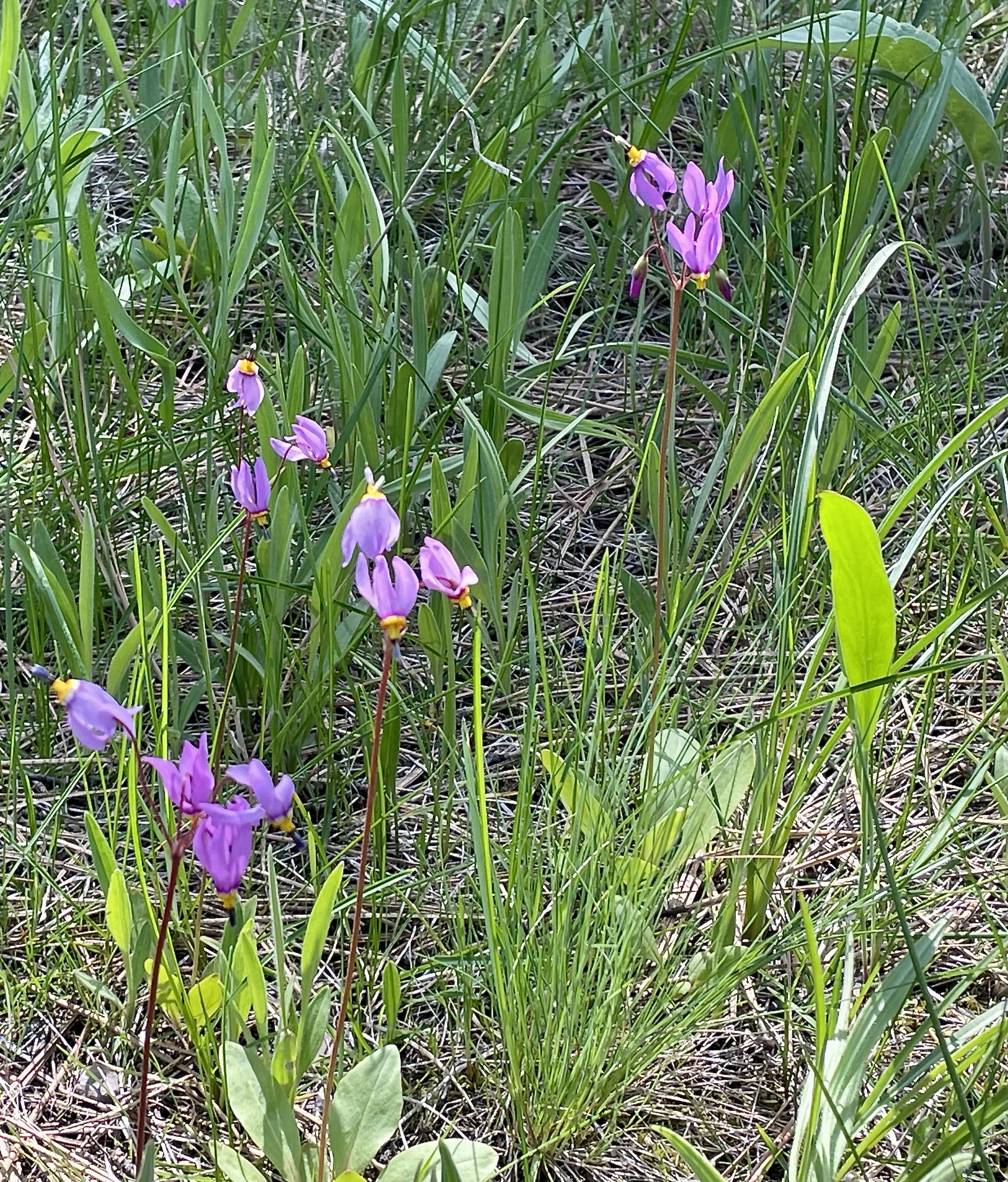
On our walk through the forest, we paused at the trees where Native people found the sweet layer of cambium beneath the bark during the starving time of early spring. Along the way, we did our best to name the season’s ephemeral flowers, then at the saddle, I outlined some of the island’s history.
We scanned the slopes and margins for bighorn sheep, mule deer, or horses, but we did not find any of these large animals. On the way back to the bay, I noticed that eagles that nested last year in a snag above the most visited area of the bay chose to locate this year’s nest somewhere else. I hope they found a safer and more secluded part of the island to raise their young. As we paddled out of the bay, we caught sight of three young bighorn rams. As easily as boys playing on a jungle gym, they scrambled over the rocks a few feet above the waterline, stood as silhouettes at the top, then vanished from view.
Leaving the cliffs, we felt the wind shift 180 degrees and oppose our every stroke. The return was even more difficult than getting to the island. We were not given the free ride we thought we deserved after paddling to the island.
As I think about the day, I feel as though I see clearly that each creature we encountered has its own life, a life separate from our own. Each animal and plant has a center to its own being, its own way in the world, and its own relations. They are not on the island for us, for our amusement, but for themselves. Each makes its own adjustment to temperature and light, to adversity or comfort, seeks its own safety, nourishment, and shelter. Each star has its own fire, trajectory, and circuit. In the same way that we humans had to adjust to not being the center of the universe at the dawn of the Copernican revolution, so we are not central to these other lives no matter how powerful we think we are. This was a good day because it de-centered us, dethroned us, and let us see, briefly, the autonomy of other living things. The grand total of two headwinds amounts to a warranted and appropriate humility. This is the gift we took home.
My brother-in-law is climbing through the turns along the river, on his way to Montana. On the phone he told me he wants to paddle to Wild Horse Island. I need to get ready. The lake temperature is still in the 40’s and no one has access to NOAA’s Graphical Forecast with its critical information about wind direction, speed, and wave height—another casualty of government efficiency. Preparation and experience count now more than ever.
I lift the heavy, dark-green Maine Guide Bag off the shelf in the garage and carry it into the house. It contains most of the things I load into the car before driving up to the lake. Inside the main compartment I find the skirt my friend Mary repaired over the winter. The Velcro had become fuzzy and did not tighten across my tummy as securely as it should.
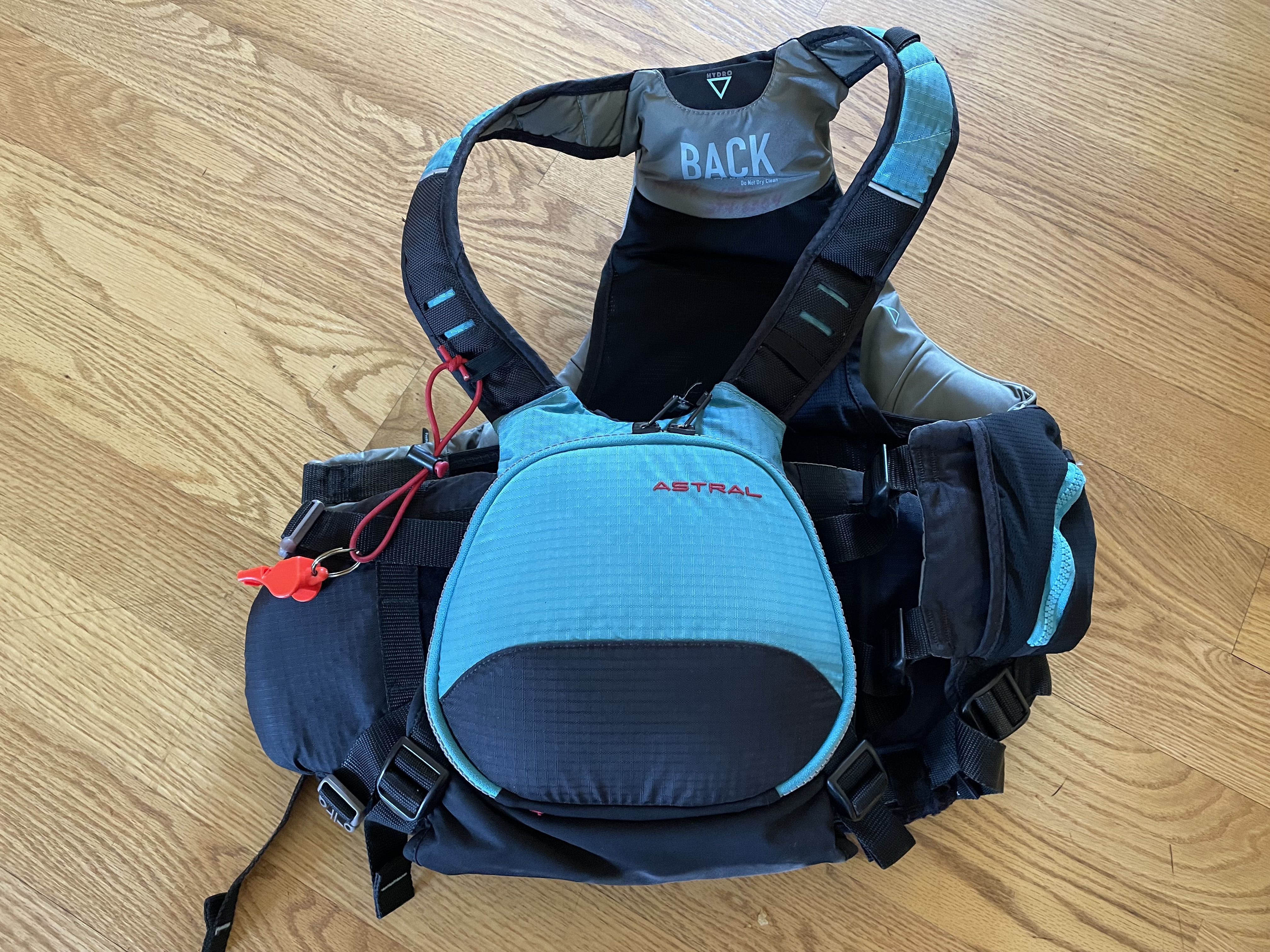
I pull out my Astral personal flotation device and test my memory of what I put where. Is the extra energy bar still in the narrow pocket and is the wider pocket still available for my phone, at hand when I want to take a photograph but also available in case of emergency? Do the inner pockets still contain nose plugs for later in the summer when I practice self-rescue techniques, extra sunscreen and lip balm? Does the small outer pocket on the left contain a stirrup to help me step up to the cockpit in the event of an unexpected spill? Does the opposite little pocket contain a paddle leash for exceptionally windy conditions?
I review what I’ve placed in the lime green bag for emergencies—water pump, fire-starter, a can of sardines, pouch of electrolyte solution, a towel, headlamp, and knit hat.
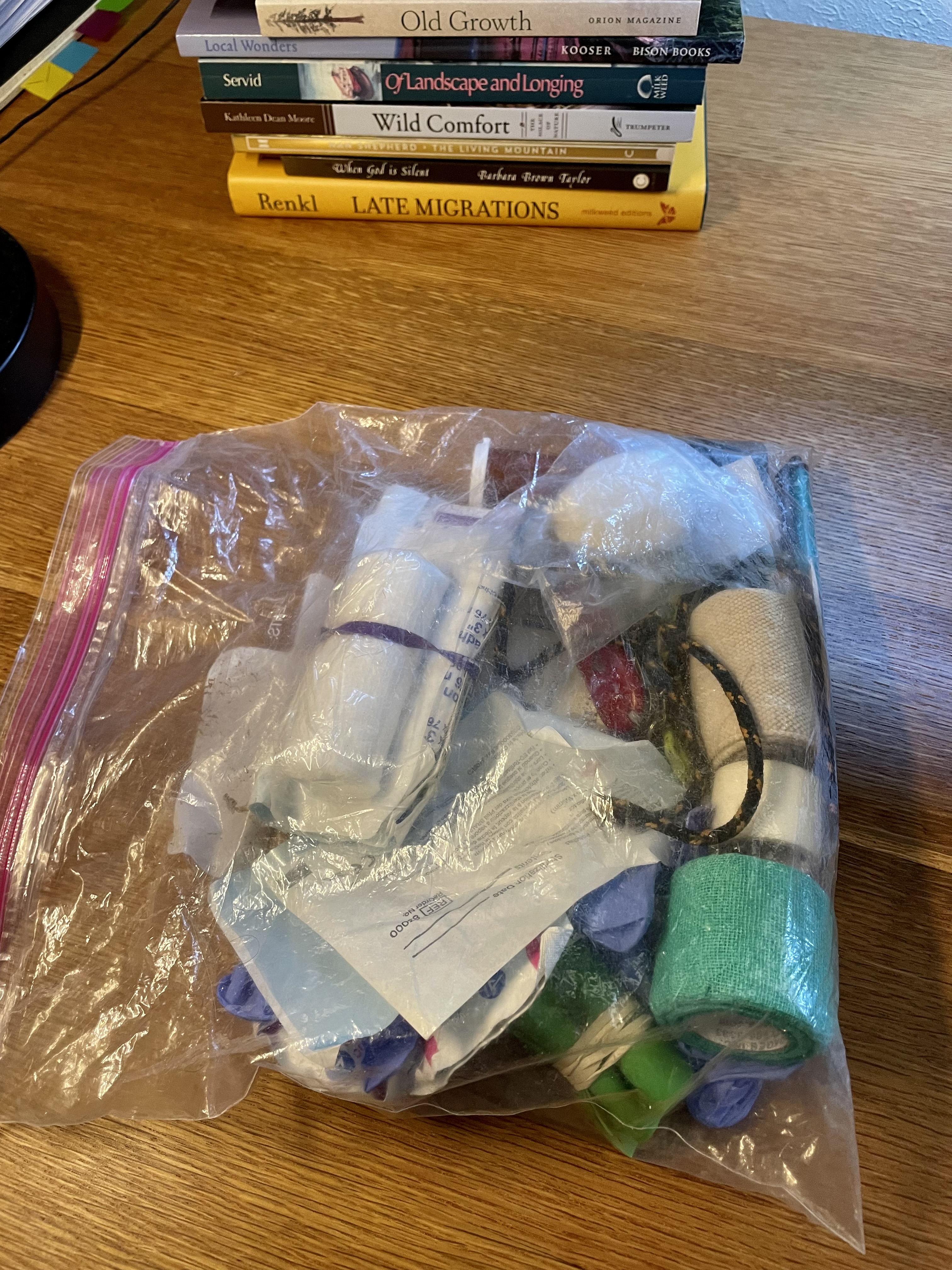
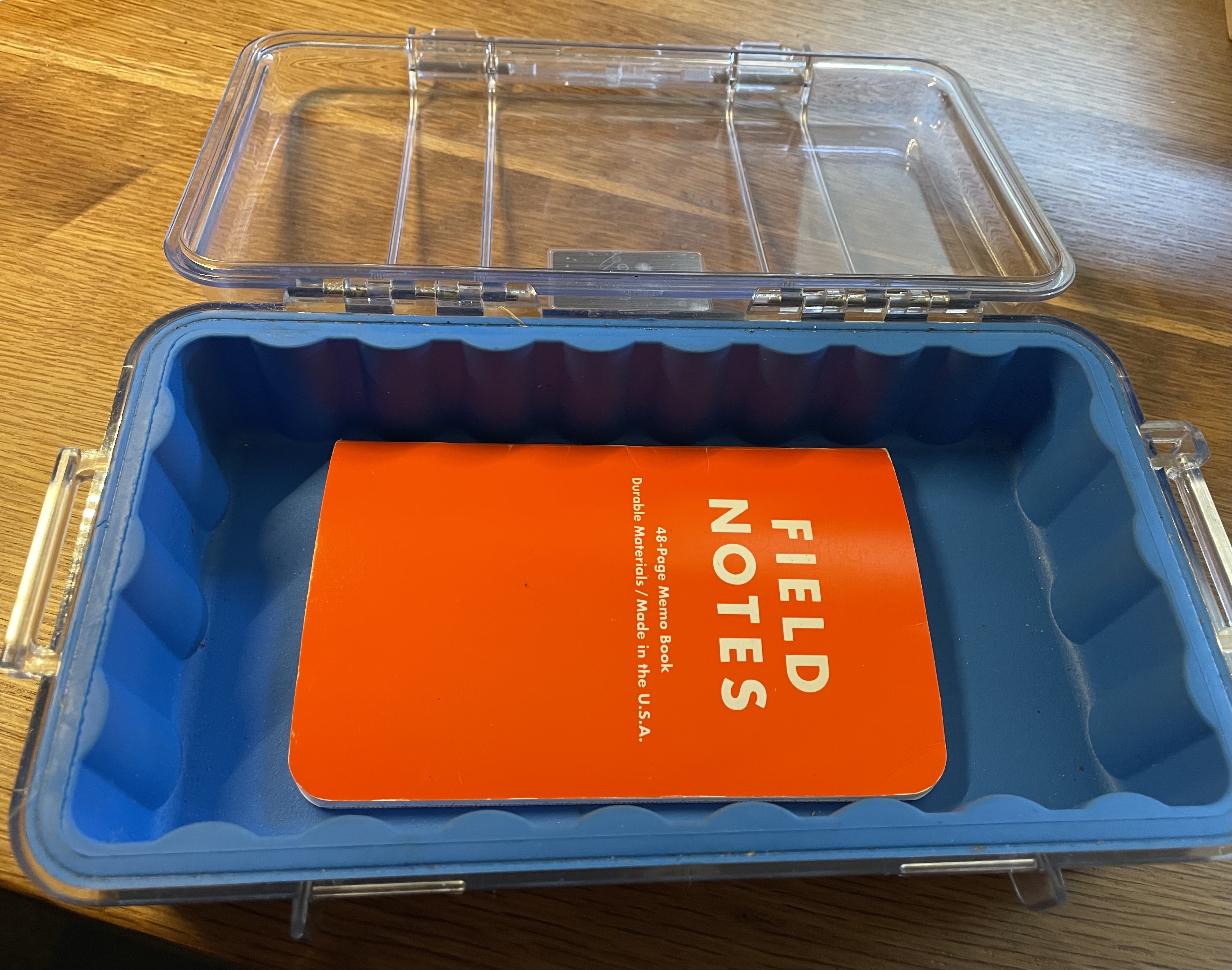
Because Ed and I will paddle in early May I want to make sure that I have my dry suit with its new wrist gaskets. I see the tightly folded Farmer John wetsuit for Ed and a synthetic shirt. Reassured by what I am finding, I unzip the side pockets of the gear bag. Here I find my old neoprene booties and wonder if they will get me through another season. The ankle gaskets have cracked. I’ll give Ed my paddling gloves and trust my hands calloused from gardening to hold up under the friction of paddling. Ed can have the Pelican box for his phone. I make sure that the first aid kit has a spare key to the truck, my old Swiss Army knife, appropriate bandages, medications, a pen, tourniquet, and Ace bandage. In the opposite pocket I see my cerulean-colored paddle jacket that I love to pull on over my head and shoulders.
Satisfied that I have the essentials I need and that I won’t forget an extra paddle for Ed, I feel almost ready. I enjoy the rituals of preparation, the creation of order, and access to items that add to the margins of safety. At the same time, I notice how these objects stimulate memories. It is almost as if memories stick to pieces of gear. Handling my thickest neoprene gloves I remember conditions during a cold autumn when I welcomed their insulation. Looking at the leash I remember a time when a gust of wind stripped the paddle from my hands. Reviewing the first aid kit I remember a time when I desperately needed what it contained and did not have it. The towel reminds me of a swim and times I used it as a tablecloth. As memories adhere to the big Stanley screwdriver, a silk tie, or the red sweater I inherited from my father, so stories abide in faded fabric, the snap of a buckle, the sound of a zipper. All this is part of the pleasure of paddling a kayak, an experience I hope to share with Ed, a man at home in the mountains, but eager to cross the strait on the way to the island. Now we can both look forward to Wednesday.












 ospreypaddler