Questions

When I go paddling now, perhaps because the interval between paddles is longer, several ideas for this blog present themselves simultaneously. Sometimes it is hard to select among them.

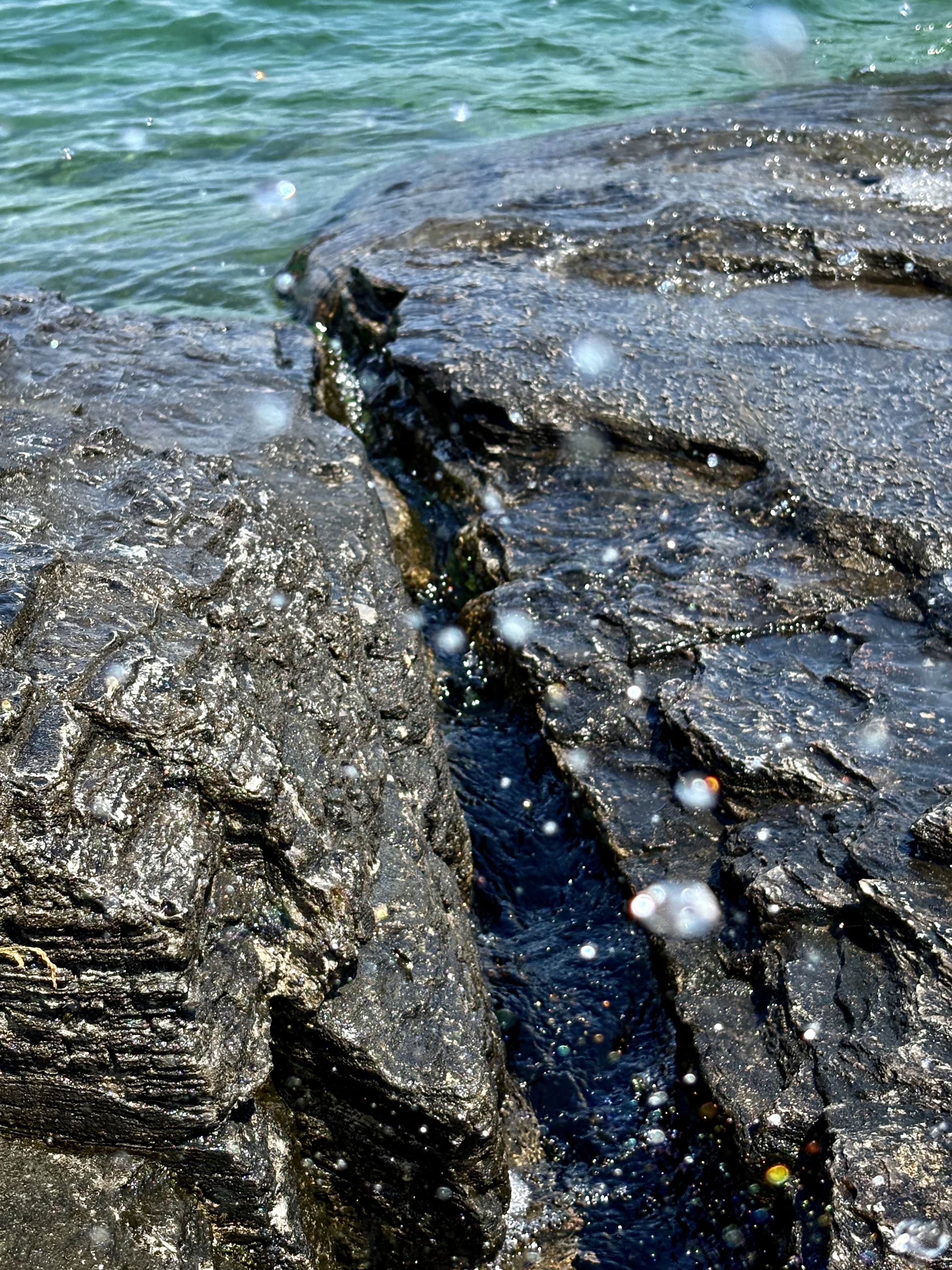
On Tuesday the forecast for Wednesday looked very good, but when I arrived at Finley Point State Park, I encountered the same winds out of the north that I experienced during my overnight in May. Now in warmer air and water temperatures, I did not hesitate to push off the concrete ramp and paddle out into Finley Bay. I stroked north into the wind but used small islands south of Bird Island to give me an occasional wind shadow. I stayed east of the main island and looked for places to land, but the high water-level covered most of the ledges where I have lifted my boat in the past. I rounded the northern tip of the island and paused. Could I paddle on, crossing the open water between Bird Island and Black Point? I studied the conditions. The day’s white-capped waves had begun to settle and rolling swells flowed south. Watching before moving, I ventured into the swells, sliding through the troughs and over the crests as I paddled perpendicular to their energy. I made the three-mile crossing easily, aiming for a big slab of rock that reflected sunlight and gave me a focal point on the opposite shore. To celebrate my passage, I touched the tip of my paddle to the sunlit stone. I felt amazed by the capability of our boats. So many years, perhaps thousands, have gone into the evolution of kayaks. A calm and patient paddler can go far and wide.

As I headed south from Black Point toward the east shore of Bull Island, I could not wash an image from my mind. Earlier in the day I came upon a memorial to a young man. It was not clear if his ashes had been left on the spot, but many objects remained as evidence of some kind of remembrance—a white steel cross inside a stone circle, a photograph in a wood and glass frame, many beer cans, plastic flowers, a Mylar whirligig, two plastic containers, one containing something like a Rubic cube. On the one hand I could tell that this man’s friends cared deeply for him and that they wanted to honor his short life. They had gone to a lot of trouble to create this memorial. On the other hand, I had questions. Is this the best way to remember people we love? Should we mark a wild place with painted steel, aluminum and plastic? Could we learn something from our Indigenous friends whose memorials are more perishable, vanishing into the earth in a much shorter time than modern manufactured materials? Could we remember where we placed the remains of those we love but leave the sites primarily in the folds of family memories, privately passing down the location from generation to generation but never forgetting? What if we saw our lives more modestly, more as a moment’s splash of bright particles rising into the air? I left the site well-aware that cultures and families have different customs, many quite beautiful, but still, I had my questions. I am choosing not to include a photograph out of respect for the man and his privacy.

I continued paddling south and found a gravely spot where I could land and go for a swim. Because it was a very hot day in the middle of summer, I felt inclined to avoid the two large bays on the south shore of the island. They would probably be occupied by numerous boats and people playing on various kinds of flotation devices. Though not much of a swimmer, I dove into the still-cool water, made a few strokes, turned around, and returned to shore. In the heat of the afternoon, I dried quickly and felt newly made. Why don’t I do this more often? I stowed clothes I had worn earlier in the day, felt comfortable in my swimsuit, and headed around the corner of the island past the two bays that indeed had attracted several boats and groups of people. I headed back to Finley Point at an even pace in freshening wind. After I pulled into the marina a man offered to help me load my boat. I accepted his offer and felt glad for it. On the drive home I pondered the rolling waves of my questions but could only find an answer for myself.

Snake, Geese, Shooting Stars and Sheep

May 12, 2025

Calling from Colorado, Ed, my brother-in-law, expressed the hope that we might paddle out to Wild Horse Island, a capstone of sorts to his long driving trip through the Rocky Mountain West. On Wednesday, we paddled from the Walstad Fishing Access to the biggest island in Flathead Lake. After we returned home I wanted to write about the experience, but it took me awhile to realize what most needed to be expressed. Not what it is like to paddle against a headwind both in crossing to the island and in returning to shore. Not the contrast between May’s warm air and lake water at 43 degrees. Not the island’s eponymous horses we never saw. I want to describe sight and insight about the snake, the geese, the rams, and the Shooting Stars.

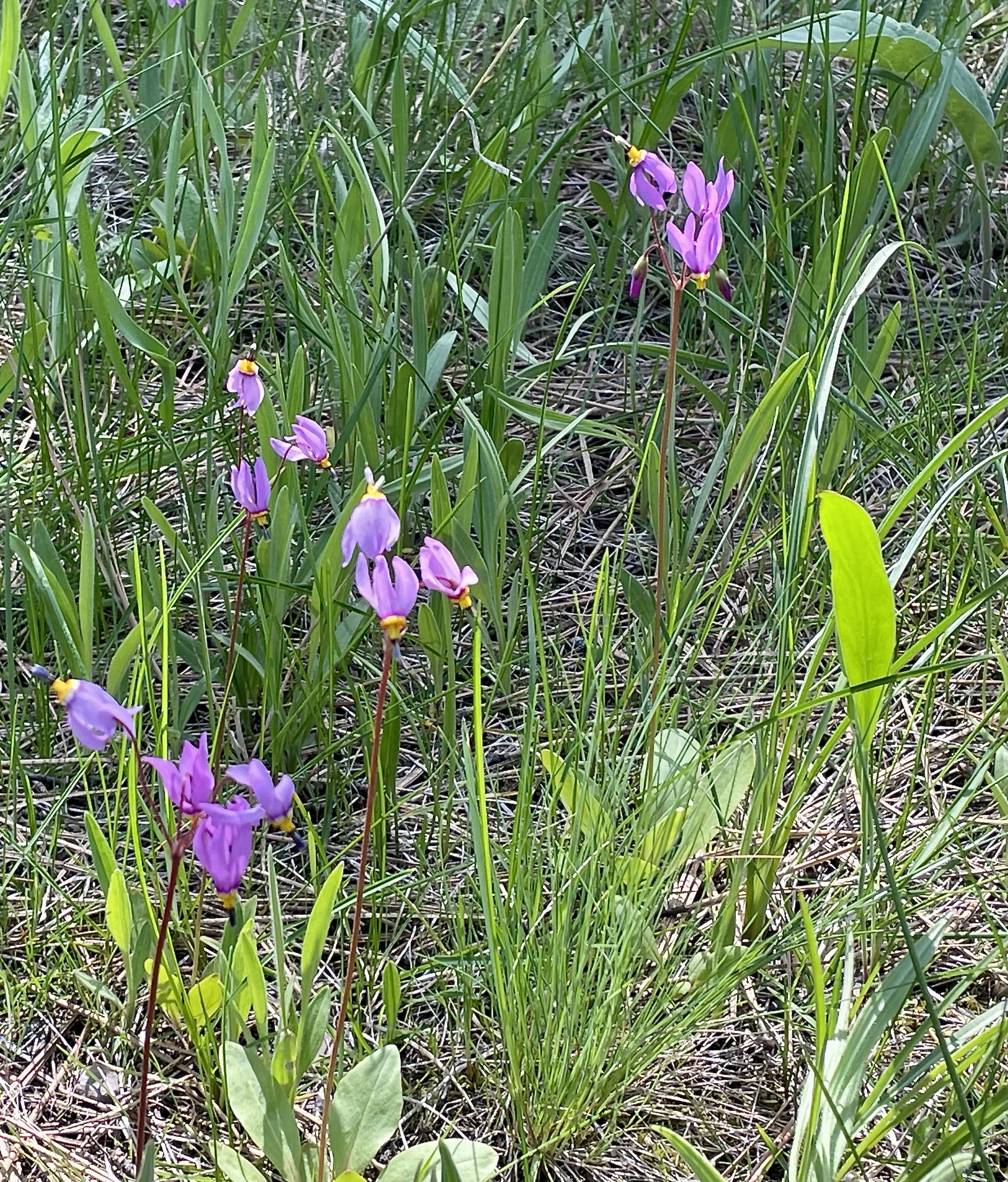
After reaching the island and padding up its west shore I waded ashore in Skeeko Bay. I noticed a garter snake swimming about my ankles; it too wanted to be on shore and to warm up. After lunch on a sun-silvered Ponderosa log, I returned to the boat and found the snake in the shade of the kayak where it had sought shelter from the sun. While Ed and I prepared to walk the trail to the island’s isthmus, we watched a mated pair of geese sail through the trees behind us, fly out over the water, and with sun on their backs, make synchronous wing beats to slow their descent and land smoothly on the bay.

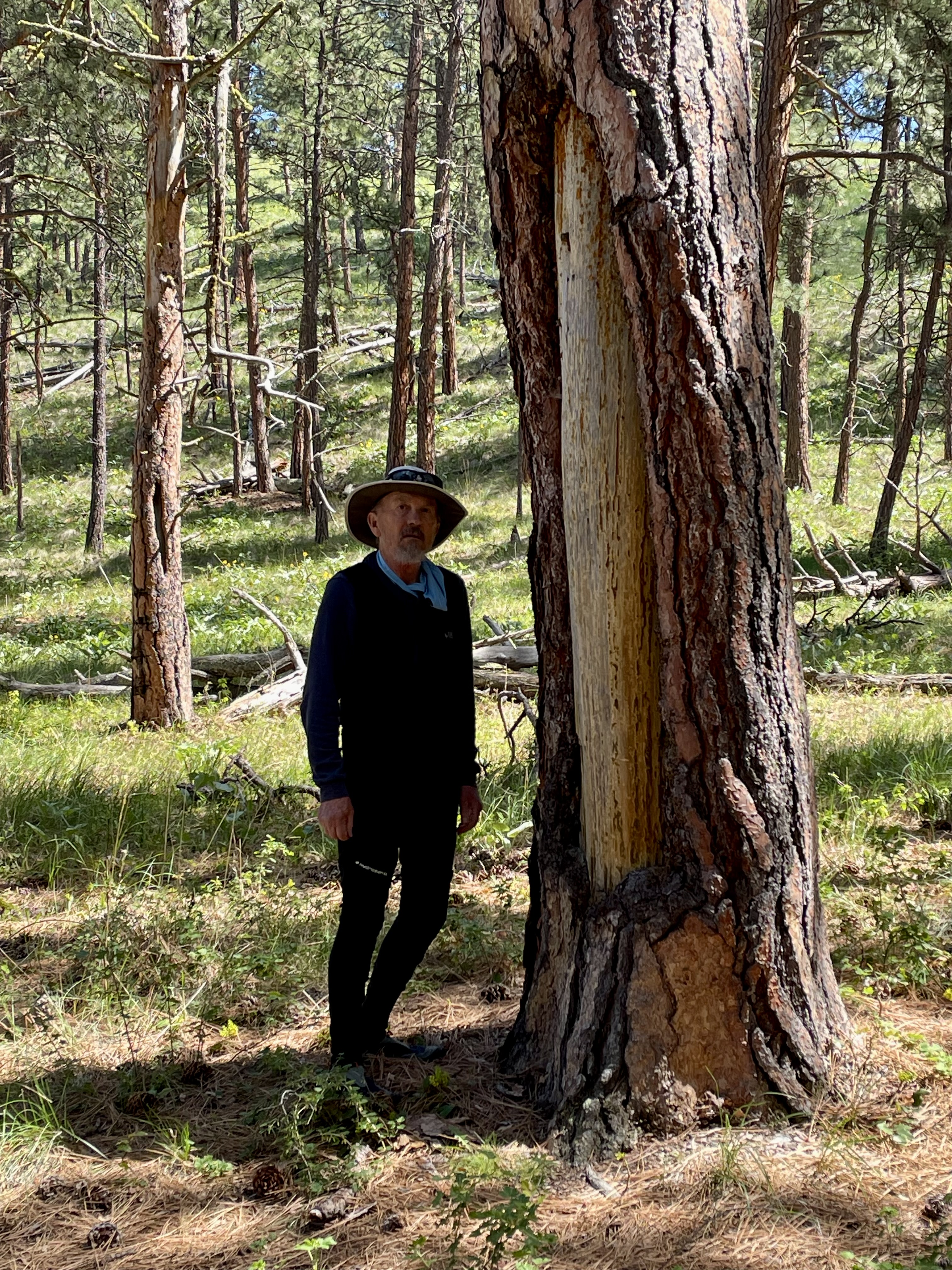
On our walk through the forest, we paused at the trees where Native people found the sweet layer of cambium beneath the bark during the starving time of early spring. Along the way, we did our best to name the season’s ephemeral flowers, then at the saddle, I outlined some of the island’s history.

We scanned the slopes and margins for bighorn sheep, mule deer, or horses, but we did not find any of these large animals. On the way back to the bay, I noticed that eagles that nested last year in a snag above the most visited area of the bay chose to locate this year’s nest somewhere else. I hope they found a safer and more secluded part of the island to raise their young. As we paddled out of the bay, we caught sight of three young bighorn rams. As easily as boys playing on a jungle gym, they scrambled over the rocks a few feet above the waterline, stood as silhouettes at the top, then vanished from view.

Leaving the cliffs, we felt the wind shift 180 degrees and oppose our every stroke. The return was even more difficult than getting to the island. We were not given the free ride we thought we deserved after paddling to the island.

As I think about the day, I feel as though I see clearly that each creature we encountered has its own life, a life separate from our own. Each animal and plant has a center to its own being, its own way in the world, and its own relations. They are not on the island for us, for our amusement, but for themselves. Each makes its own adjustment to temperature and light, to adversity or comfort, seeks its own safety, nourishment, and shelter. Each star has its own fire, trajectory, and circuit. In the same way that we humans had to adjust to not being the center of the universe at the dawn of the Copernican revolution, so we are not central to these other lives no matter how powerful we think we are. This was a good day because it de-centered us, dethroned us, and let us see, briefly, the autonomy of other living things. The grand total of two headwinds amounts to a warranted and appropriate humility. This is the gift we took home.

Getting Ready

My brother-in-law is climbing through the turns along the river, on his way to Montana. On the phone he told me he wants to paddle to Wild Horse Island. I need to get ready. The lake temperature is still in the 40’s and no one has access to NOAA’s Graphical Forecast with its critical information about wind direction, speed, and wave height—another casualty of government efficiency. Preparation and experience count now more than ever.

I lift the heavy, dark-green Maine Guide Bag off the shelf in the garage and carry it into the house. It contains most of the things I load into the car before driving up to the lake. Inside the main compartment I find the skirt my friend Mary repaired over the winter. The Velcro had become fuzzy and did not tighten across my tummy as securely as it should.

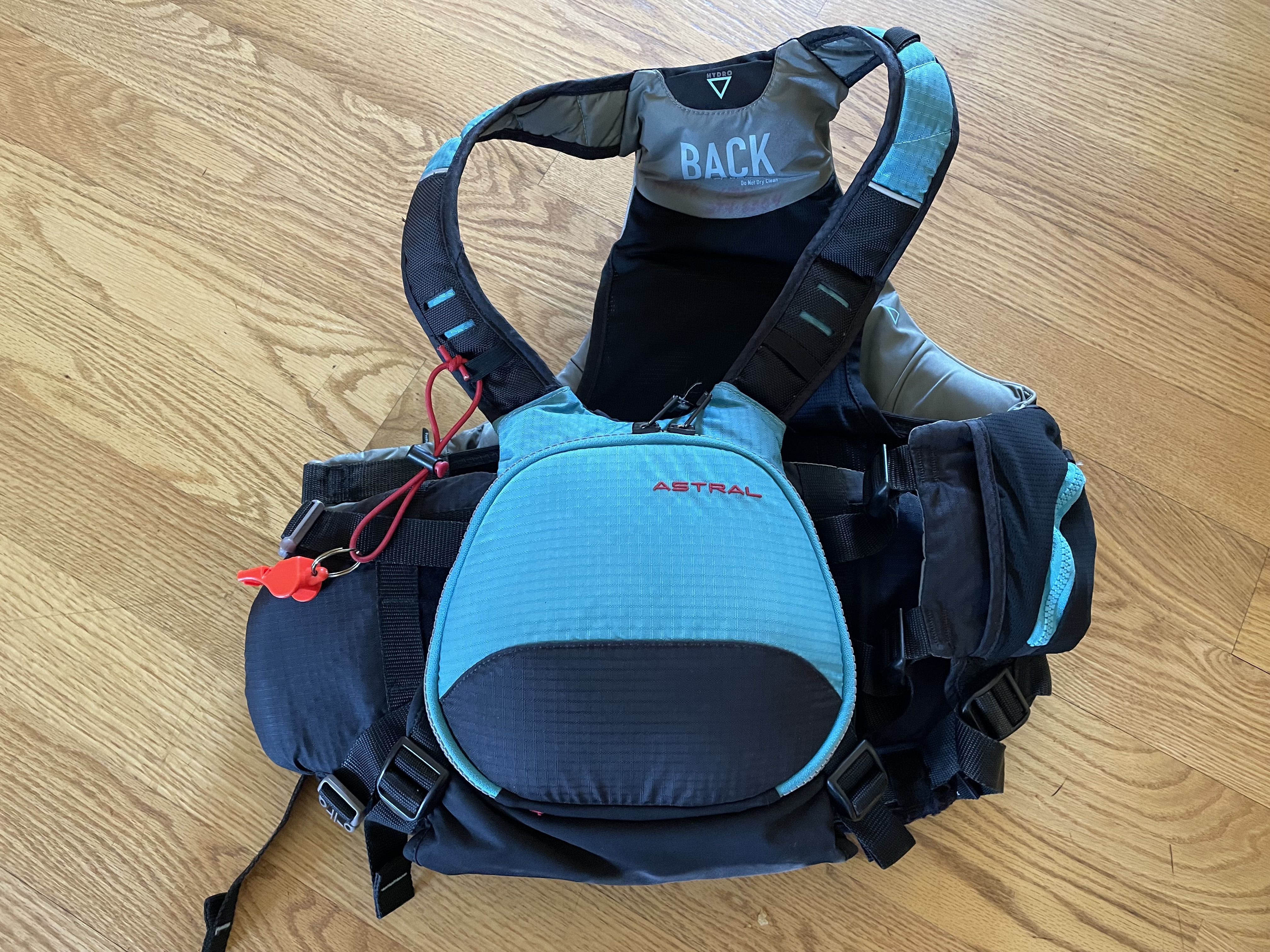
I pull out my Astral personal flotation device and test my memory of what I put where. Is the extra energy bar still in the narrow pocket and is the wider pocket still available for my phone, at hand when I want to take a photograph but also available in case of emergency? Do the inner pockets still contain nose plugs for later in the summer when I practice self-rescue techniques, extra sunscreen and lip balm? Does the small outer pocket on the left contain a stirrup to help me step up to the cockpit in the event of an unexpected spill? Does the opposite little pocket contain a paddle leash for exceptionally windy conditions?

I review what I’ve placed in the lime green bag for emergencies—water pump, fire-starter, a can of sardines, pouch of electrolyte solution, a towel, headlamp, and knit hat.

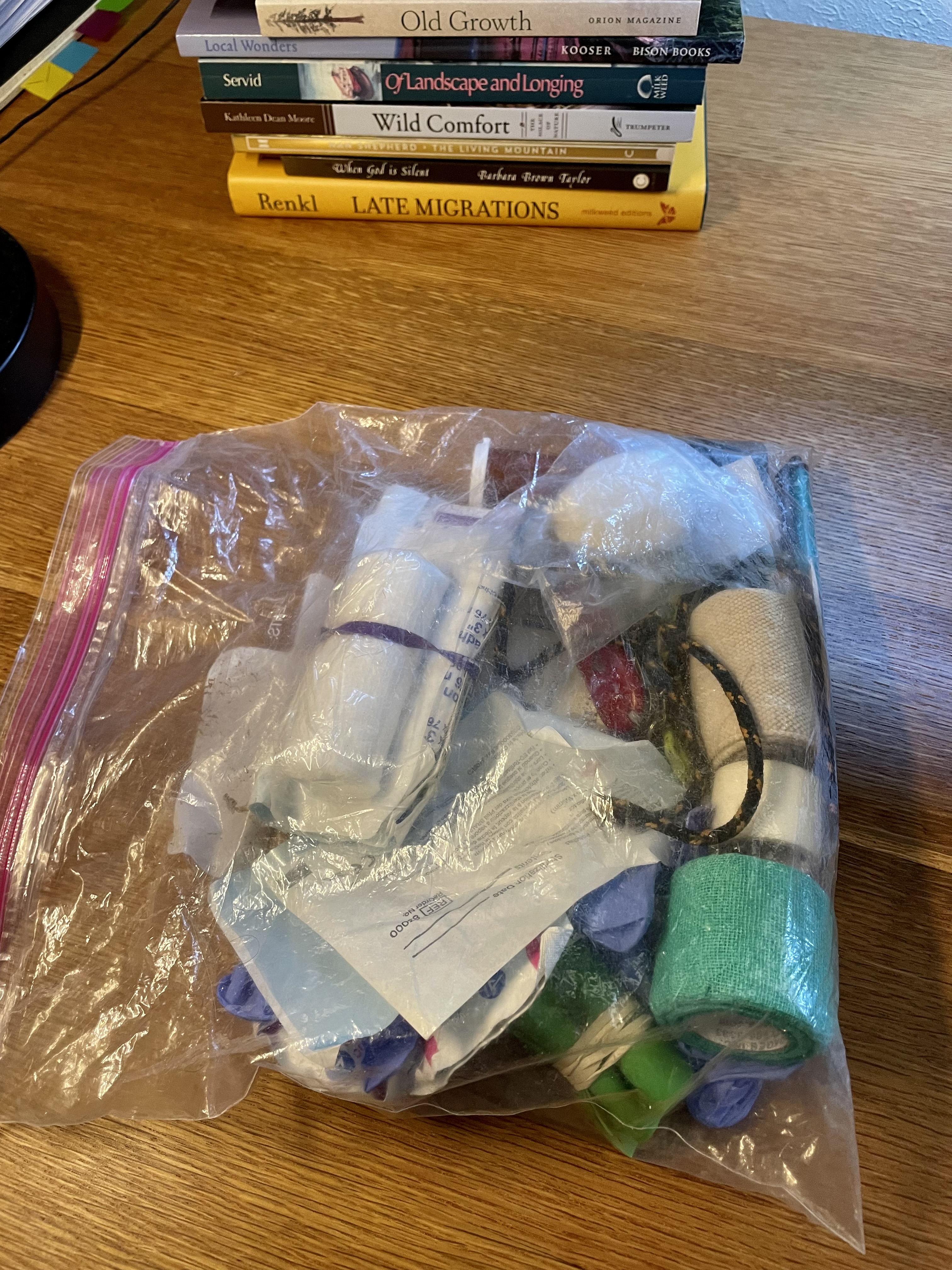
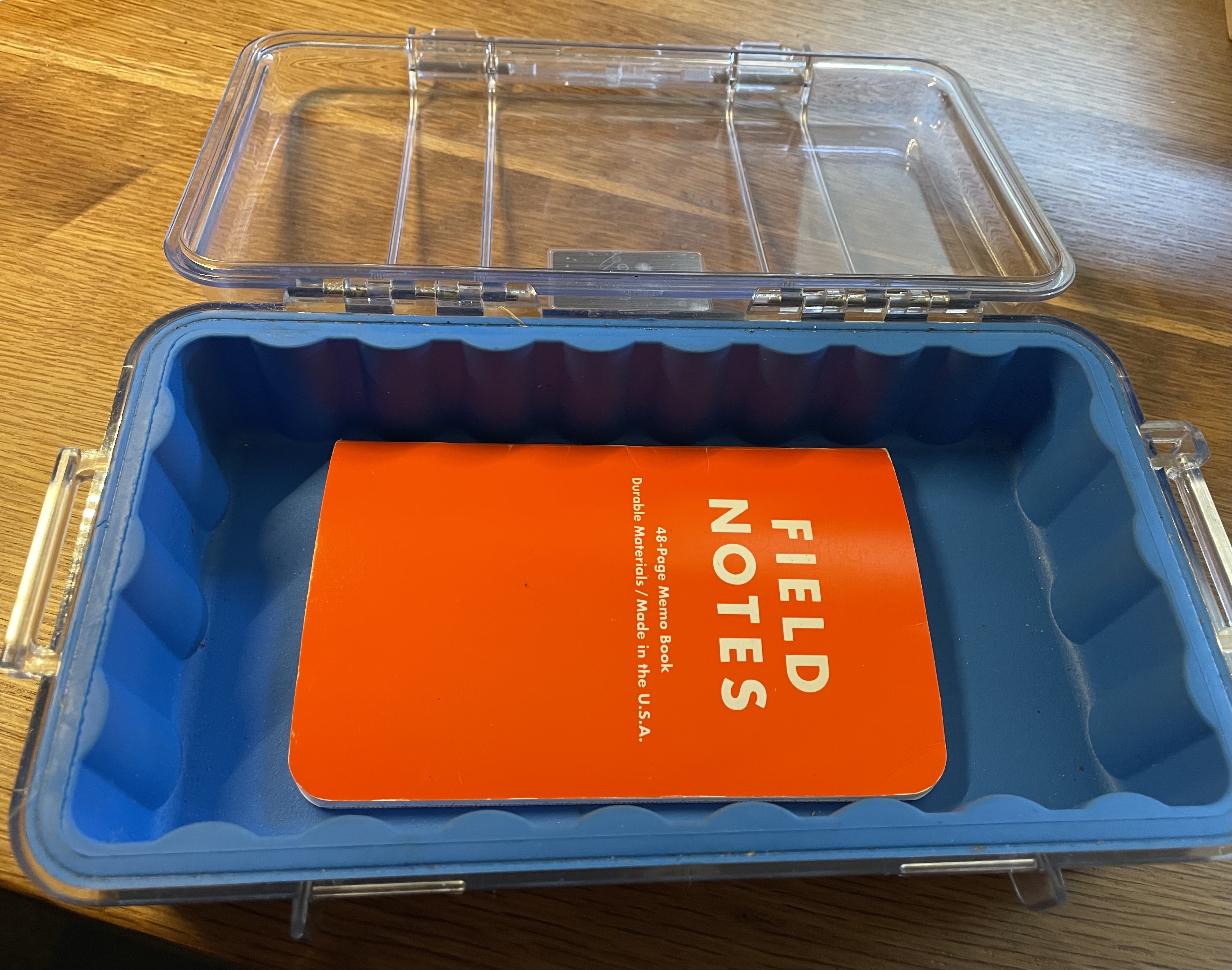
Because Ed and I will paddle in early May I want to make sure that I have my dry suit with its new wrist gaskets. I see the tightly folded Farmer John wetsuit for Ed and a synthetic shirt.  Reassured by what I am finding, I unzip the side pockets of the gear bag. Here I find my old neoprene booties and wonder if they will get me through another season. The ankle gaskets have cracked. I’ll give Ed my paddling gloves and trust my hands calloused from gardening to hold up under the friction of paddling. Ed can have the Pelican box for his phone. I make sure that the first aid kit has a spare key to the truck, my old Swiss Army knife, appropriate bandages, medications, a pen, tourniquet, and Ace bandage. In the opposite pocket I see my cerulean-colored paddle jacket that I love to pull on over my head and shoulders.

Satisfied that I have the essentials I need and that I won’t forget an extra paddle for Ed, I feel almost ready. I enjoy the rituals of preparation, the creation of order, and access to items that add to the margins of safety. At the same time, I notice how these objects stimulate memories. It is almost as if memories stick to pieces of gear. Handling my thickest neoprene gloves I remember conditions during a cold autumn when I welcomed their insulation. Looking at the leash I remember a time when a gust of wind stripped the paddle from my hands. Reviewing the first aid kit I remember a time when I desperately needed what it contained and did not have it. The towel reminds me of a swim and times I used it as a tablecloth.  As memories adhere to the big Stanley screwdriver, a silk tie, or the red sweater I inherited from my father, so stories abide in faded fabric, the snap of a buckle, the sound of a zipper. All this is part of the pleasure of paddling a kayak, an experience I hope to share with Ed, a man at home in the mountains, but eager to cross the strait on the way to the island. Now we can both look forward to Wednesday.