Grounded

In May we arranged to stay at an old resort for three nights on both sides of the summer solstice before desire to see other family members took us out of town. The first afternoon and the next morning I made a couple of paddles––south and then north along the east shore of the lake, covering about 26 miles in total. Everyone seemed anxious, however, about an impending storm.

When the sky turned gray and the temperature dropped into the 40s, leaving a distinct snow line on The Mission Mountains, people headed home, lost restaurant reservations, or tucked themselves inside with a book. Deck chairs sat empty as rain pelted the Trex. We were grounded.

Though I felt tempted to paddle in the cold conditions, having adequate clothing, my old skirt had begun to leak, and I did not enjoy the feel of cold water dripping into my lap. I relented. There was still so much to do. I watched a merganser mother teach six offspring how to chase little fish into a shallow corner between the dock and the storm wall. While the little birds pursued their breakfast, the mother kept a close eye on approaching swells and would eventually lead them toward a safer spot. I enjoyed watching big waves break against the sub-surface boulders marked by the weather station monitored by the Flathead Lake Biological Station. When their energies felt the boulders on the sloping bottom, they spent themselves in a white crash. From our second-floor deck I sensed the rhythm of the swells as they rose, rolled, and slid diminished up the shore. The lake had become an ocean. During the storm, a huge diesel-powered barge loaded with rock and a bucket loader gave the point a very wide berth before rounding it and entering the bay. I imagined interviewing a skipper of such a craft. Commissioned to build shelter all over the lake they would have weather stories to tell. Meanwhile, squalls like giant thumbs, pressed on the roiled surface of the lake.

In a brief interlude, I watched a man using a four-footed cane. While supporting himself with his sturdy prop, he worked patiently to make a transition from steep steps to dock to beach. With one hand he undid the knot tying the board to a stanchion, then positioned himself on the board so he could take a few strokes into the bay and back. He did not let the lack of adult-sized floatation devices stop him. I was pretty sure he would have been offended if I had offered to help. Later, I met him in the rain as he walked slowly up the driveway. He introduced himself and his Parkinson’s disease. He summarized his relationship to the diagnosis by saying, “I have learned a lot.” He did not linger or extend the conversation, however. Taking another step, he said, “I’ve got to keep moving.” I later learned that he had devoted his life to the protection of the Great Burn area along the divide between Montana and Idaho. It was a place he knew and loved even if he could not secure its final protection as wilderness.

I am glad I accepted my grounding. I know I would have enjoyed the thrill of paddling in a storm, but I was richly rewarded in my observations. Thwarted, we discover new doors and windows on a changing world.

Snake, Geese, Shooting Stars and Sheep

May 12, 2025

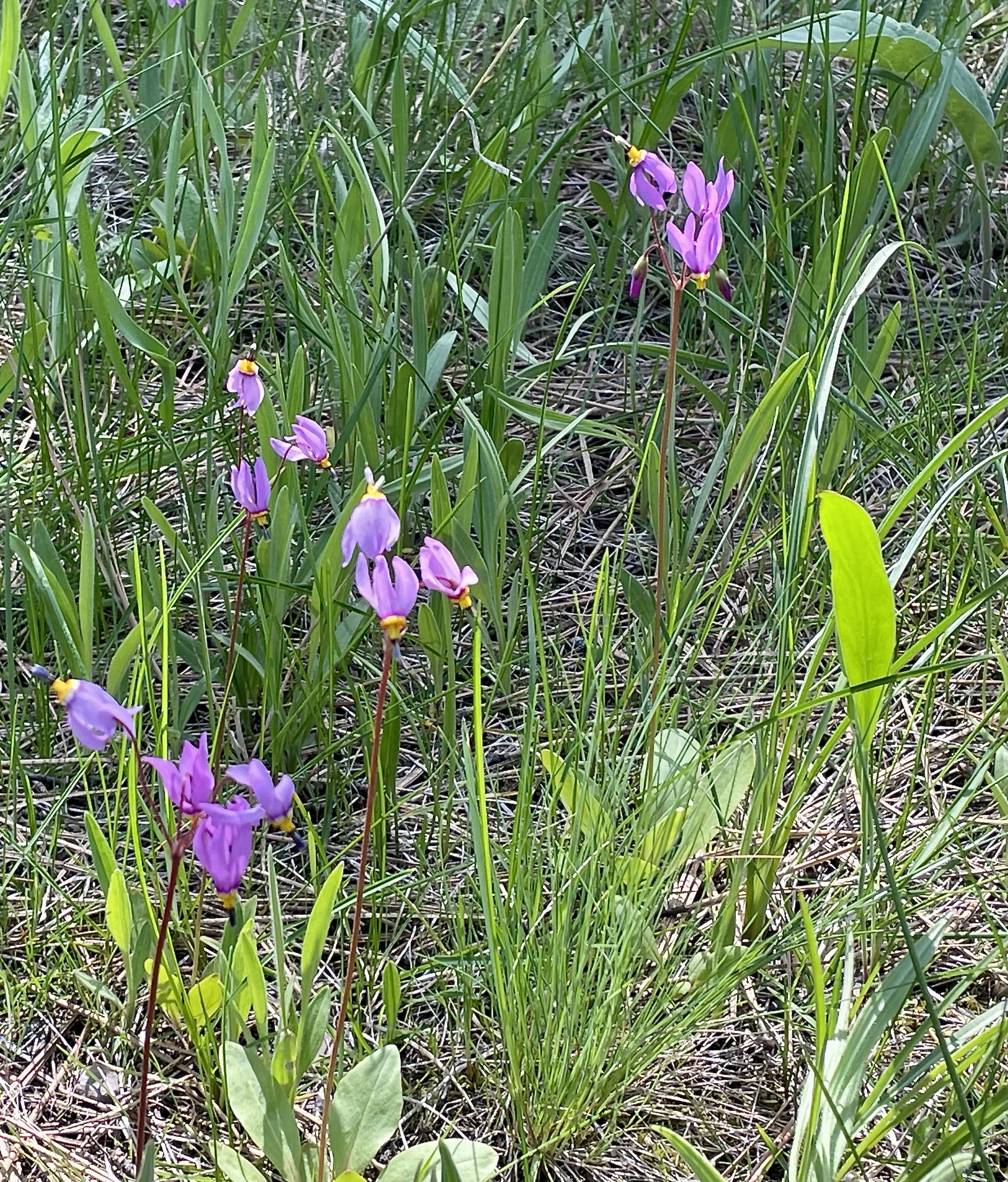
Calling from Colorado, Ed, my brother-in-law, expressed the hope that we might paddle out to Wild Horse Island, a capstone of sorts to his long driving trip through the Rocky Mountain West. On Wednesday, we paddled from the Walstad Fishing Access to the biggest island in Flathead Lake. After we returned home I wanted to write about the experience, but it took me awhile to realize what most needed to be expressed. Not what it is like to paddle against a headwind both in crossing to the island and in returning to shore. Not the contrast between May’s warm air and lake water at 43 degrees. Not the island’s eponymous horses we never saw. I want to describe sight and insight about the snake, the geese, the rams, and the Shooting Stars.

After reaching the island and padding up its west shore I waded ashore in Skeeko Bay. I noticed a garter snake swimming about my ankles; it too wanted to be on shore and to warm up. After lunch on a sun-silvered Ponderosa log, I returned to the boat and found the snake in the shade of the kayak where it had sought shelter from the sun. While Ed and I prepared to walk the trail to the island’s isthmus, we watched a mated pair of geese sail through the trees behind us, fly out over the water, and with sun on their backs, make synchronous wing beats to slow their descent and land smoothly on the bay.

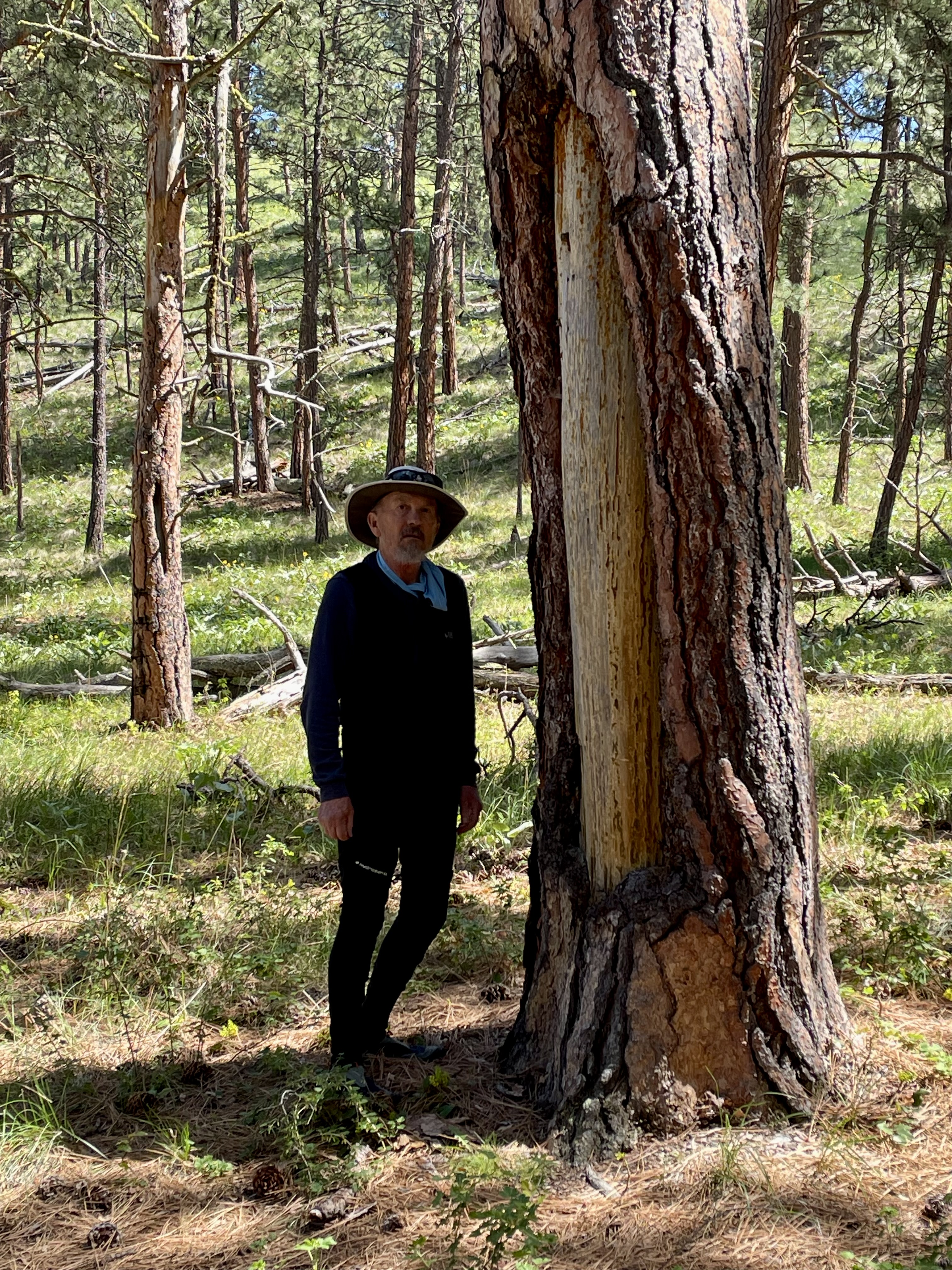
On our walk through the forest, we paused at the trees where Native people found the sweet layer of cambium beneath the bark during the starving time of early spring. Along the way, we did our best to name the season’s ephemeral flowers, then at the saddle, I outlined some of the island’s history.

We scanned the slopes and margins for bighorn sheep, mule deer, or horses, but we did not find any of these large animals. On the way back to the bay, I noticed that eagles that nested last year in a snag above the most visited area of the bay chose to locate this year’s nest somewhere else. I hope they found a safer and more secluded part of the island to raise their young. As we paddled out of the bay, we caught sight of three young bighorn rams. As easily as boys playing on a jungle gym, they scrambled over the rocks a few feet above the waterline, stood as silhouettes at the top, then vanished from view.

Leaving the cliffs, we felt the wind shift 180 degrees and oppose our every stroke. The return was even more difficult than getting to the island. We were not given the free ride we thought we deserved after paddling to the island.

As I think about the day, I feel as though I see clearly that each creature we encountered has its own life, a life separate from our own. Each animal and plant has a center to its own being, its own way in the world, and its own relations. They are not on the island for us, for our amusement, but for themselves. Each makes its own adjustment to temperature and light, to adversity or comfort, seeks its own safety, nourishment, and shelter. Each star has its own fire, trajectory, and circuit. In the same way that we humans had to adjust to not being the center of the universe at the dawn of the Copernican revolution, so we are not central to these other lives no matter how powerful we think we are. This was a good day because it de-centered us, dethroned us, and let us see, briefly, the autonomy of other living things. The grand total of two headwinds amounts to a warranted and appropriate humility. This is the gift we took home.