I went to the lake thinking I would write about one thing—a way of understanding the kayak’s motion in relation to the paddler—but now feel called to write something different.
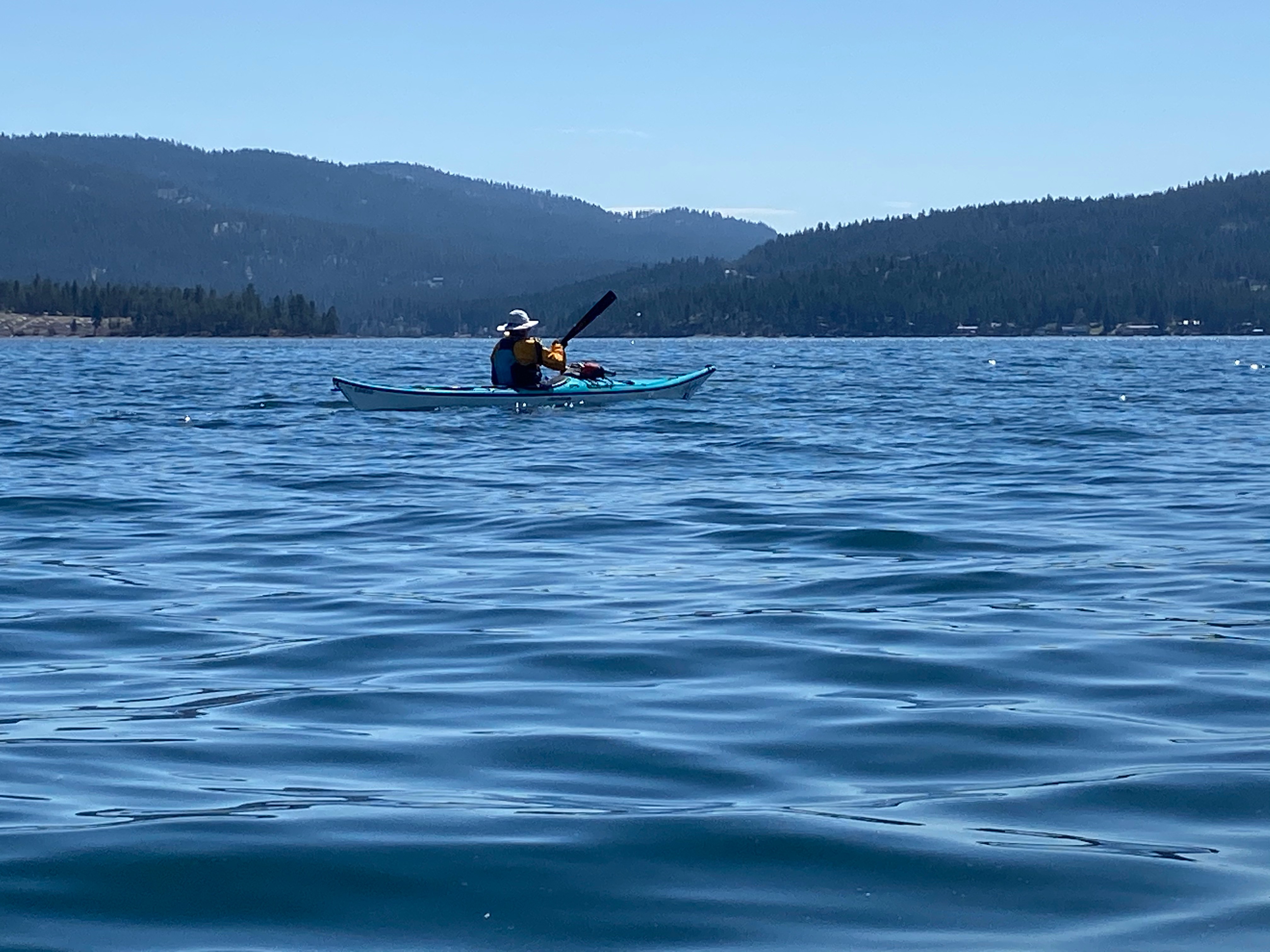
An overnight stay in Polson allowed me to paddle twice in succession, first an evening paddle in The Narrows in the calmest of conditions, then an early morning paddle from Finley Point to Bird Island and back. During both paddles I felt the shell of self-protective boundaries dissolve until I became I felt permeable to patterns of light, depths of blue and green, dabs and dashes of color in the shadows,
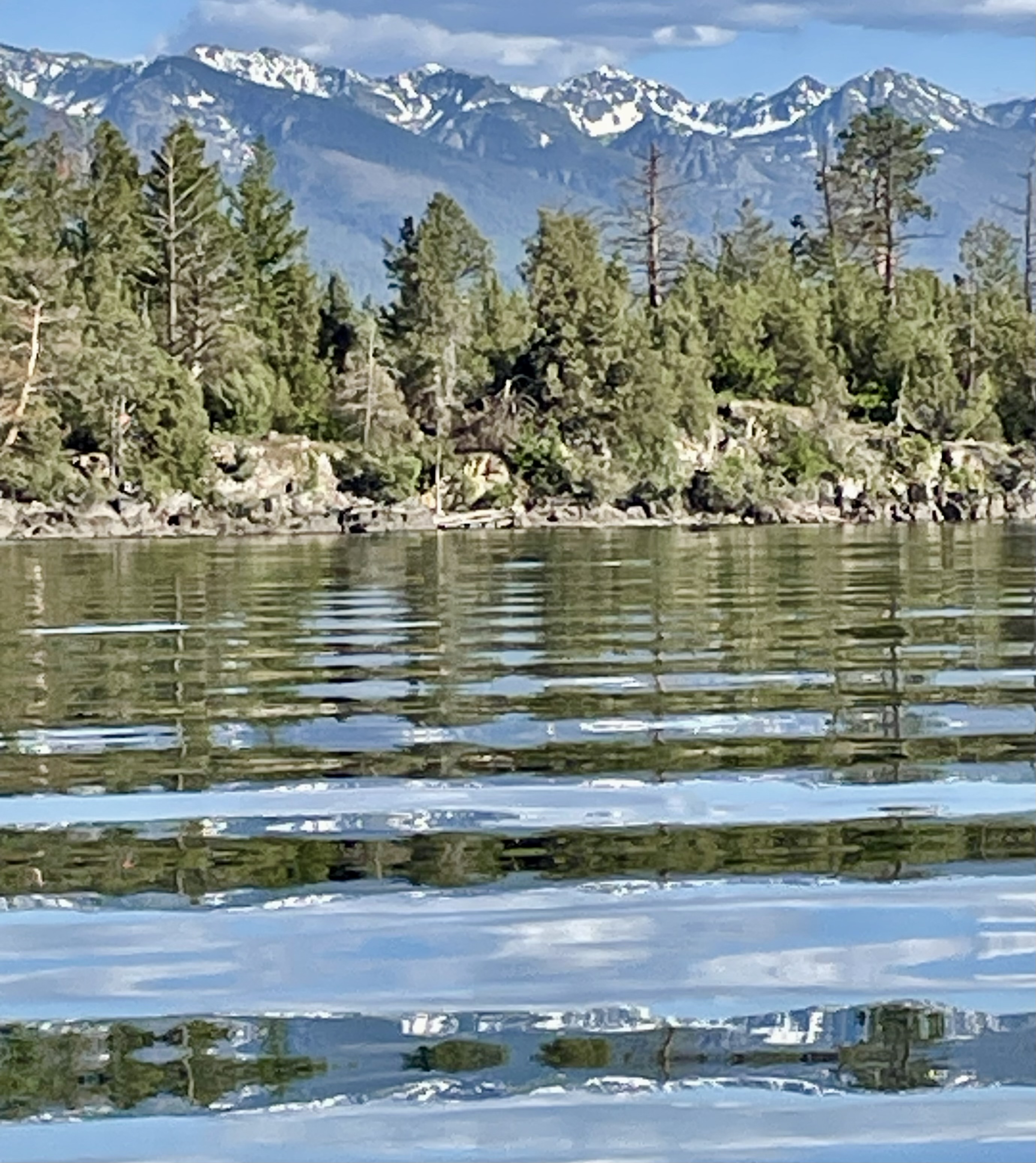
how the back of a swell became a convex mirror displaying the length of the Mission Range.
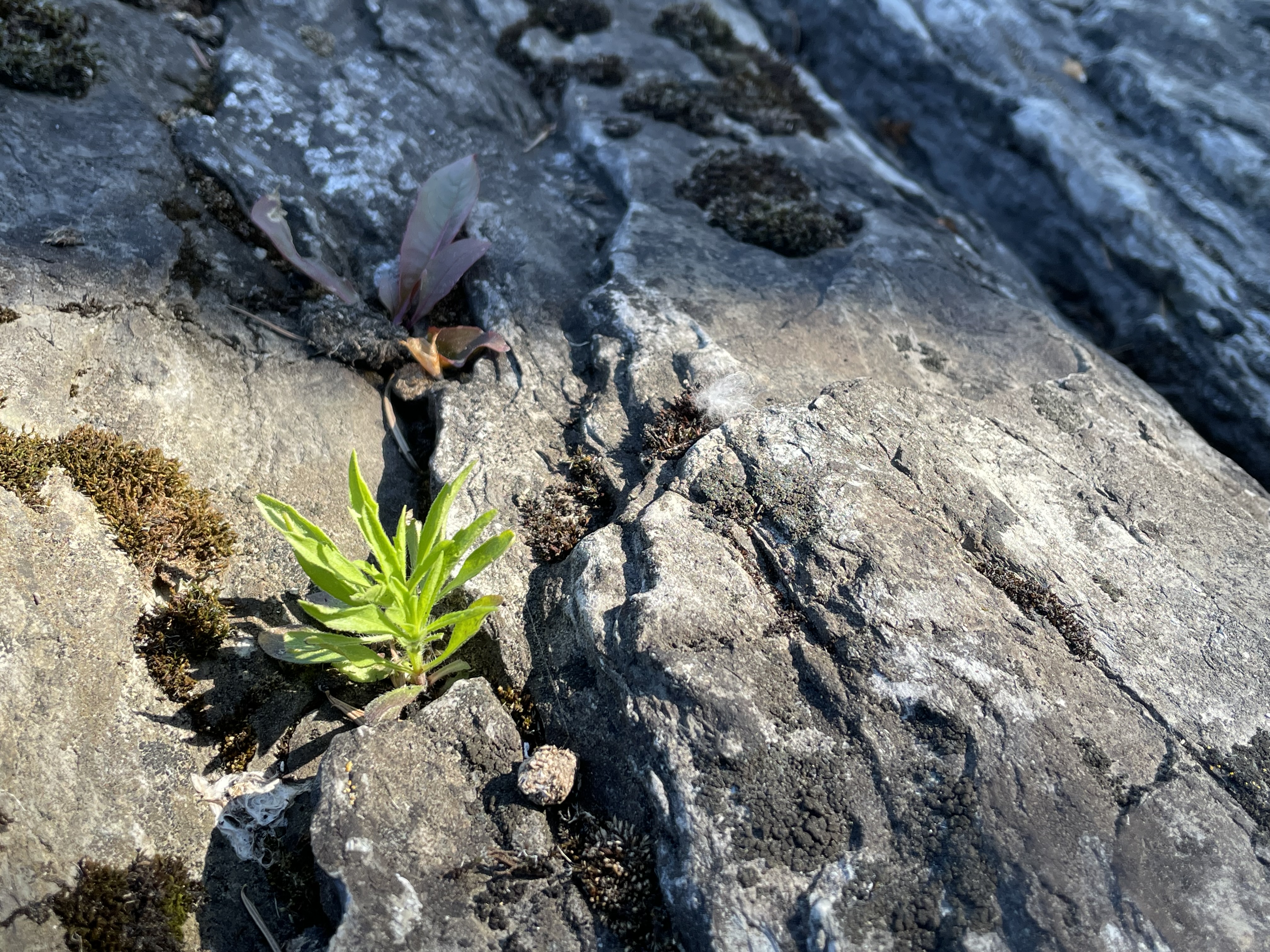
The next morning, launching from the state campground, I felt porous to the wonders of late spring before heat forced almost everything to become crepuscular. Here a pair of ospreys, there a pair of bald eagles. Here a plant growing, it seemed, out of stone,
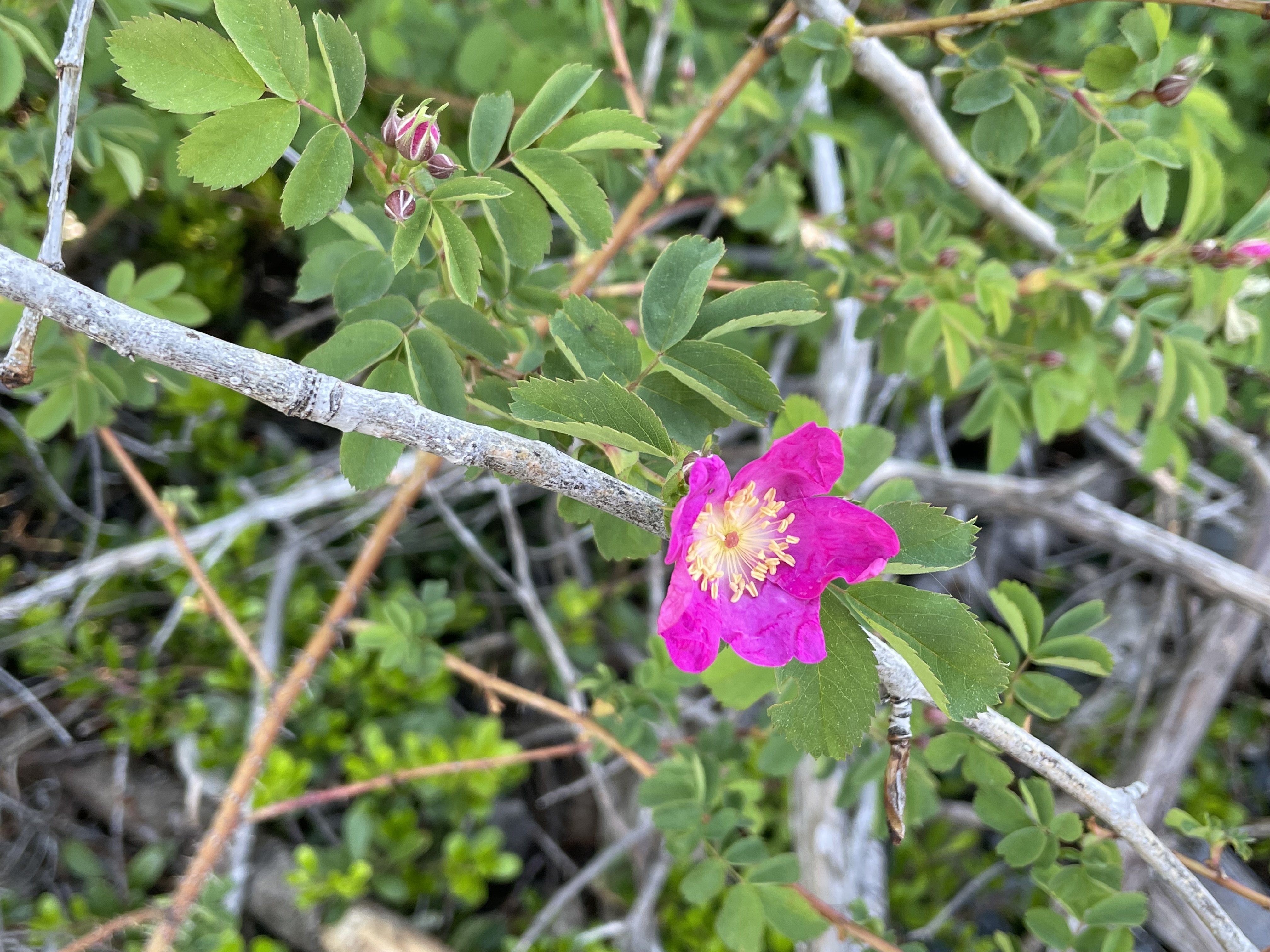
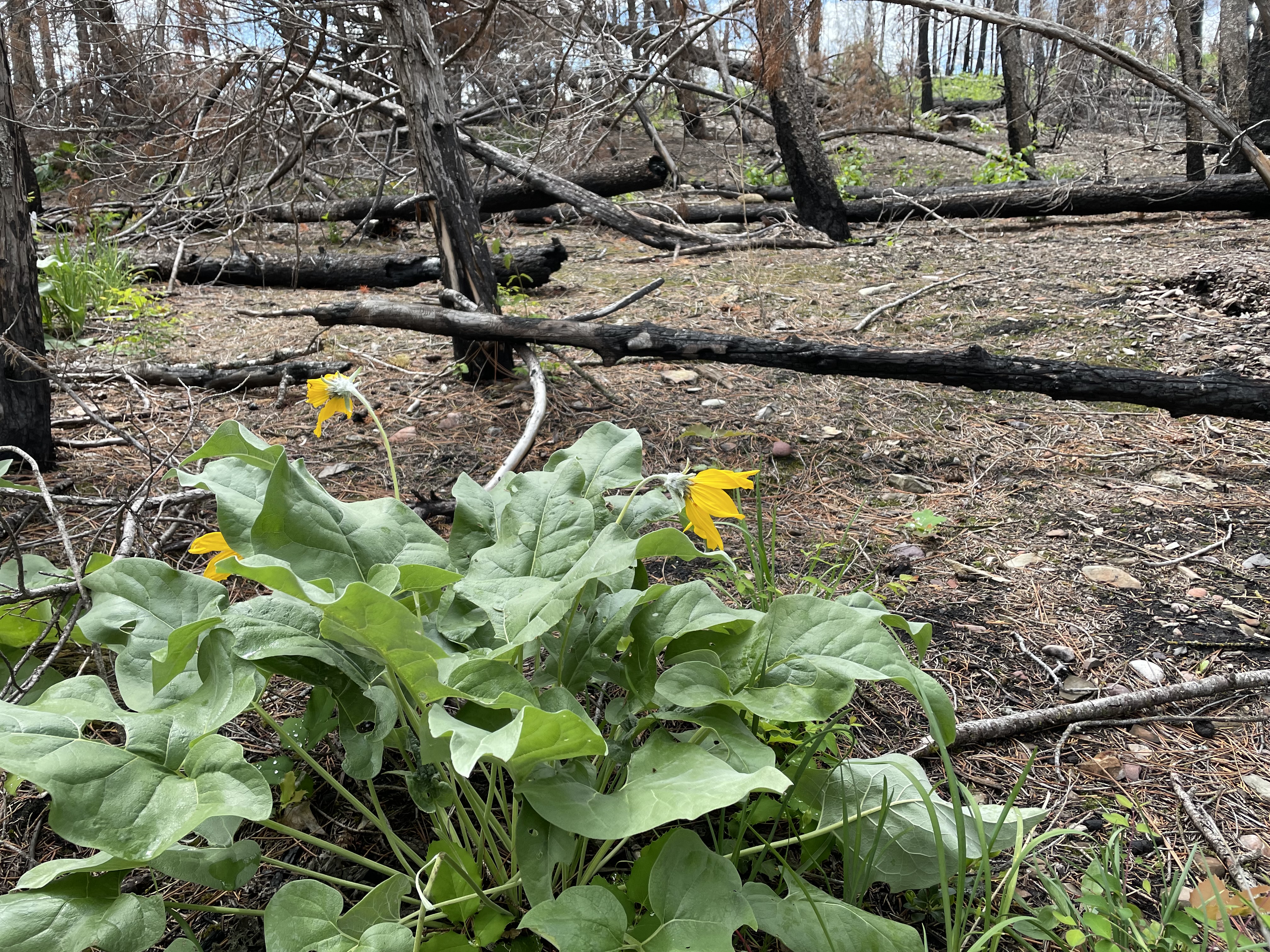
then in the sudden release of nutrients after fire—pink fireweed, honeysuckle, mock orange, ninebark, Rocky Mountain maple, and Wood’s rose. Here young geese growing into the weight of their formidable strength, then a squadron of swallows snipping gnats all around my gliding boat. Even my own breathing—out with a stroke on the left, in with a stroke on the right, seemed to coincide with the energy of gentle waves.
Wondrously, this radical openness to the flourishing of Life extended to the human realm. As I made a turn into the Finley marina, I could feel the sense of anticipation in a group of people who seemed to be preparing for a weekend wedding on the point. I felt the development of a deep bond between a muscular father pumping up an inflatable paddle board by hand and his son who watched his father’s every move. Then, as I began to load gear into the car, a woman approached me. She skillfully balanced offering information about her life on the edge of the Chiricahua Wilderness in Arizona with questions about the water temperature of Flathead Lake, how to pronounce Sel’ǐs Kasanka Qlispe’, and places to camp near shore. I knew more about places to camp than the pronunciation of Salish, though I did my best version of a glottal stop.
In Confessions of a Guilty Bystander Thomas Merton describes an astonishing experience on the corner of Fourth and Walnut in Louisville, Kentucky when he suddenly sensed the holiness of all the people around him and the breakdown of separateness between one life and another. These experiences are given to us rarely, but this different way of seeing into the secret beauties of other hearts can happen in the most congested of urban environments as well as on a lake surrounded by mountains. As William James knew so well, there are varieties of religious experience and boundaries can melt away almost anywhere if we are sufficiently open.
I went to the lake thinking I would write about a relatively technical matter in paddling a sea kayak, but having paid attention to everything my senses could apprehend, I think this is the wonder the lake wanted me to describe.
Calling from Colorado, Ed, my brother-in-law, expressed the hope that we might paddle out to Wild Horse Island, a capstone of sorts to his long driving trip through the Rocky Mountain West. On Wednesday, we paddled from the Walstad Fishing Access to the biggest island in Flathead Lake. After we returned home I wanted to write about the experience, but it took me awhile to realize what most needed to be expressed. Not what it is like to paddle against a headwind both in crossing to the island and in returning to shore. Not the contrast between May’s warm air and lake water at 43 degrees. Not the island’s eponymous horses we never saw. I want to describe sight and insight about the snake, the geese, the rams, and the Shooting Stars.
After reaching the island and padding up its west shore I waded ashore in Skeeko Bay. I noticed a garter snake swimming about my ankles; it too wanted to be on shore and to warm up. After lunch on a sun-silvered Ponderosa log, I returned to the boat and found the snake in the shade of the kayak where it had sought shelter from the sun. While Ed and I prepared to walk the trail to the island’s isthmus, we watched a mated pair of geese sail through the trees behind us, fly out over the water, and with sun on their backs, make synchronous wing beats to slow their descent and land smoothly on the bay.
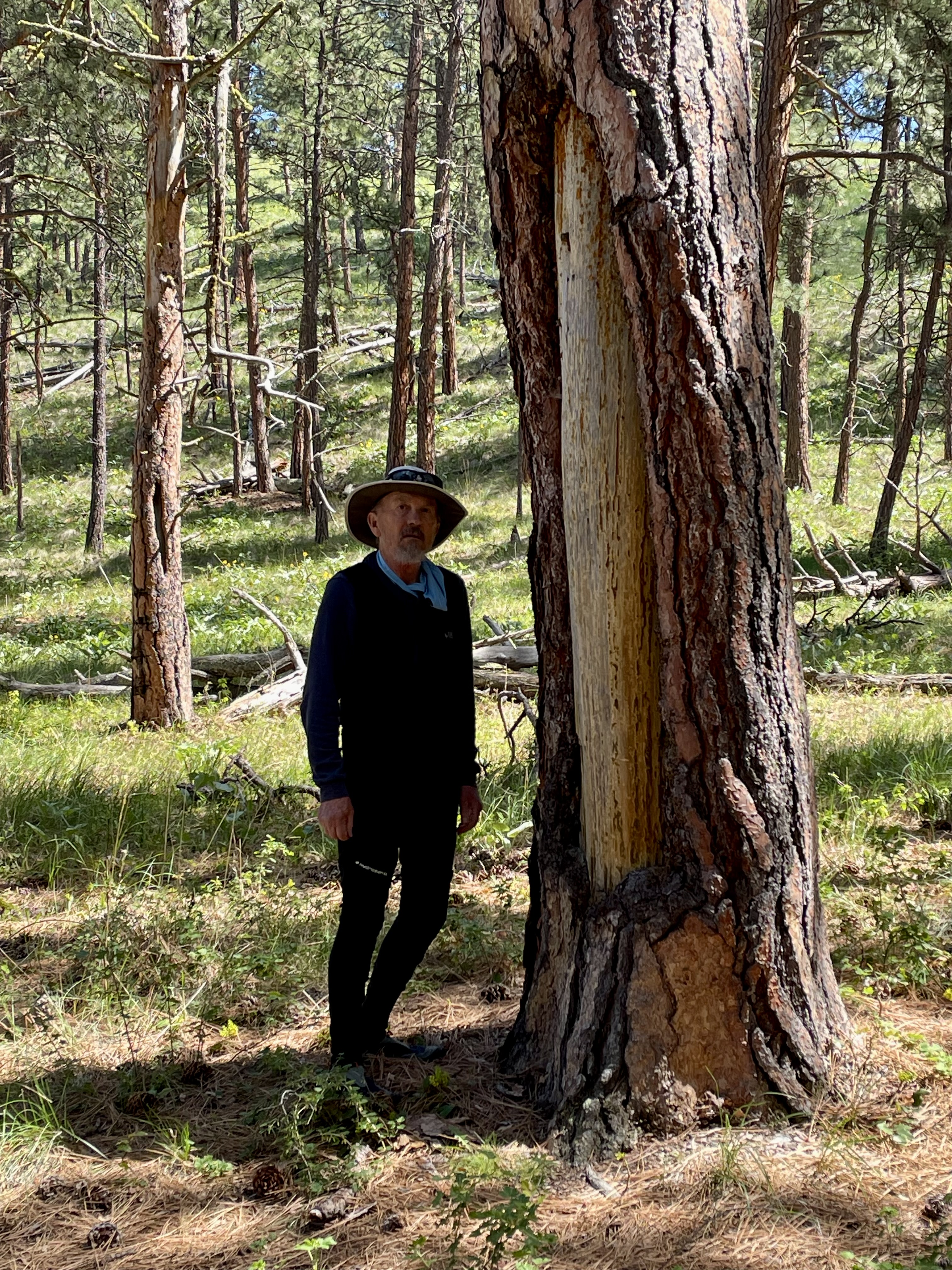
On our walk through the forest, we paused at the trees where Native people found the sweet layer of cambium beneath the bark during the starving time of early spring. Along the way, we did our best to name the season’s ephemeral flowers, then at the saddle, I outlined some of the island’s history.
We scanned the slopes and margins for bighorn sheep, mule deer, or horses, but we did not find any of these large animals. On the way back to the bay, I noticed that eagles that nested last year in a snag above the most visited area of the bay chose to locate this year’s nest somewhere else. I hope they found a safer and more secluded part of the island to raise their young. As we paddled out of the bay, we caught sight of three young bighorn rams. As easily as boys playing on a jungle gym, they scrambled over the rocks a few feet above the waterline, stood as silhouettes at the top, then vanished from view.
Leaving the cliffs, we felt the wind shift 180 degrees and oppose our every stroke. The return was even more difficult than getting to the island. We were not given the free ride we thought we deserved after paddling to the island.
As I think about the day, I feel as though I see clearly that each creature we encountered has its own life, a life separate from our own. Each animal and plant has a center to its own being, its own way in the world, and its own relations. They are not on the island for us, for our amusement, but for themselves. Each makes its own adjustment to temperature and light, to adversity or comfort, seeks its own safety, nourishment, and shelter. Each star has its own fire, trajectory, and circuit. In the same way that we humans had to adjust to not being the center of the universe at the dawn of the Copernican revolution, so we are not central to these other lives no matter how powerful we think we are. This was a good day because it de-centered us, dethroned us, and let us see, briefly, the autonomy of other living things. The grand total of two headwinds amounts to a warranted and appropriate humility. This is the gift we took home.
My brother-in-law is climbing through the turns along the river, on his way to Montana. On the phone he told me he wants to paddle to Wild Horse Island. I need to get ready. The lake temperature is still in the 40’s and no one has access to NOAA’s Graphical Forecast with its critical information about wind direction, speed, and wave height—another casualty of government efficiency. Preparation and experience count now more than ever.
I lift the heavy, dark-green Maine Guide Bag off the shelf in the garage and carry it into the house. It contains most of the things I load into the car before driving up to the lake. Inside the main compartment I find the skirt my friend Mary repaired over the winter. The Velcro had become fuzzy and did not tighten across my tummy as securely as it should.
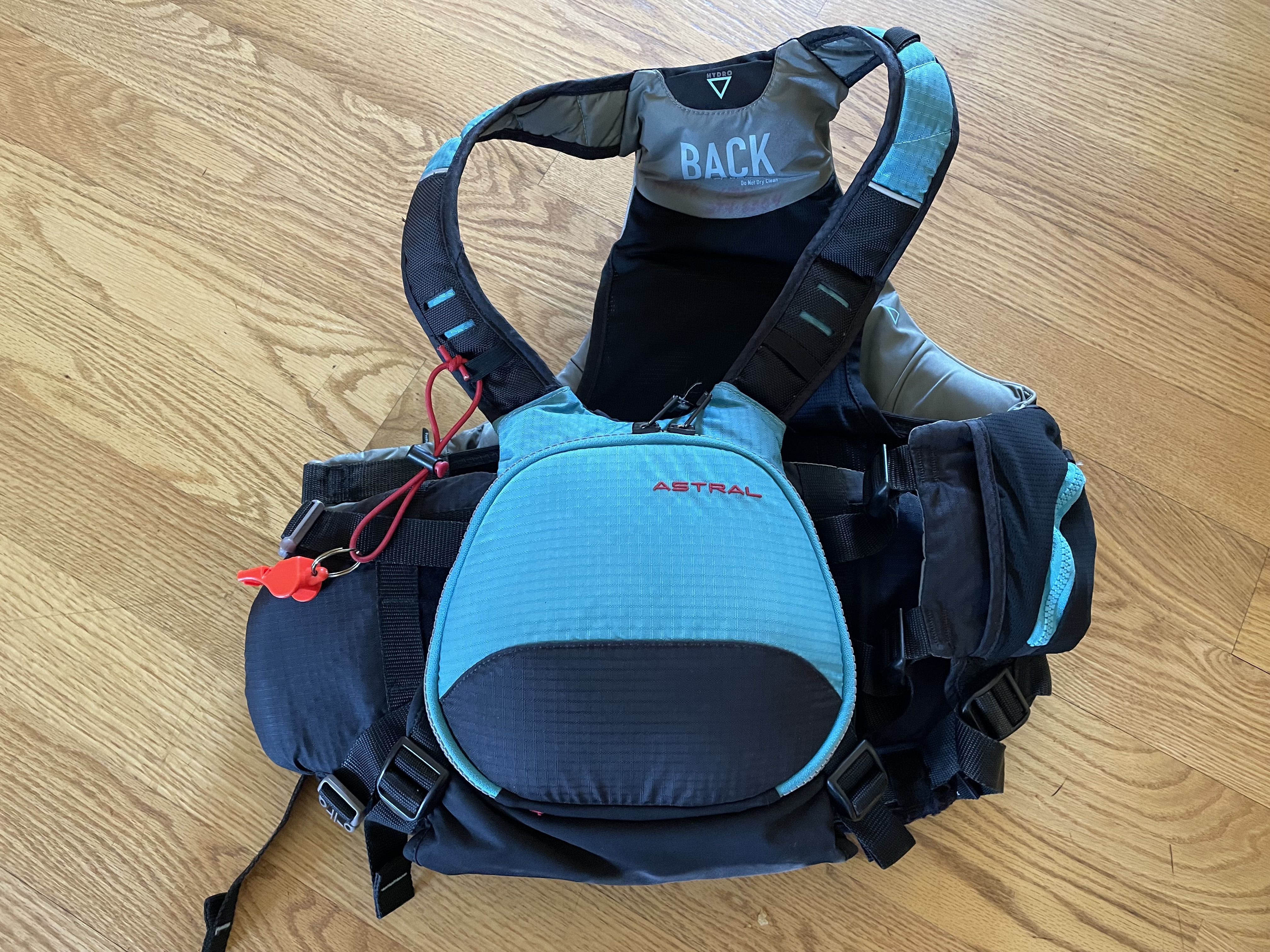
I pull out my Astral personal flotation device and test my memory of what I put where. Is the extra energy bar still in the narrow pocket and is the wider pocket still available for my phone, at hand when I want to take a photograph but also available in case of emergency? Do the inner pockets still contain nose plugs for later in the summer when I practice self-rescue techniques, extra sunscreen and lip balm? Does the small outer pocket on the left contain a stirrup to help me step up to the cockpit in the event of an unexpected spill? Does the opposite little pocket contain a paddle leash for exceptionally windy conditions?
I review what I’ve placed in the lime green bag for emergencies—water pump, fire-starter, a can of sardines, pouch of electrolyte solution, a towel, headlamp, and knit hat.
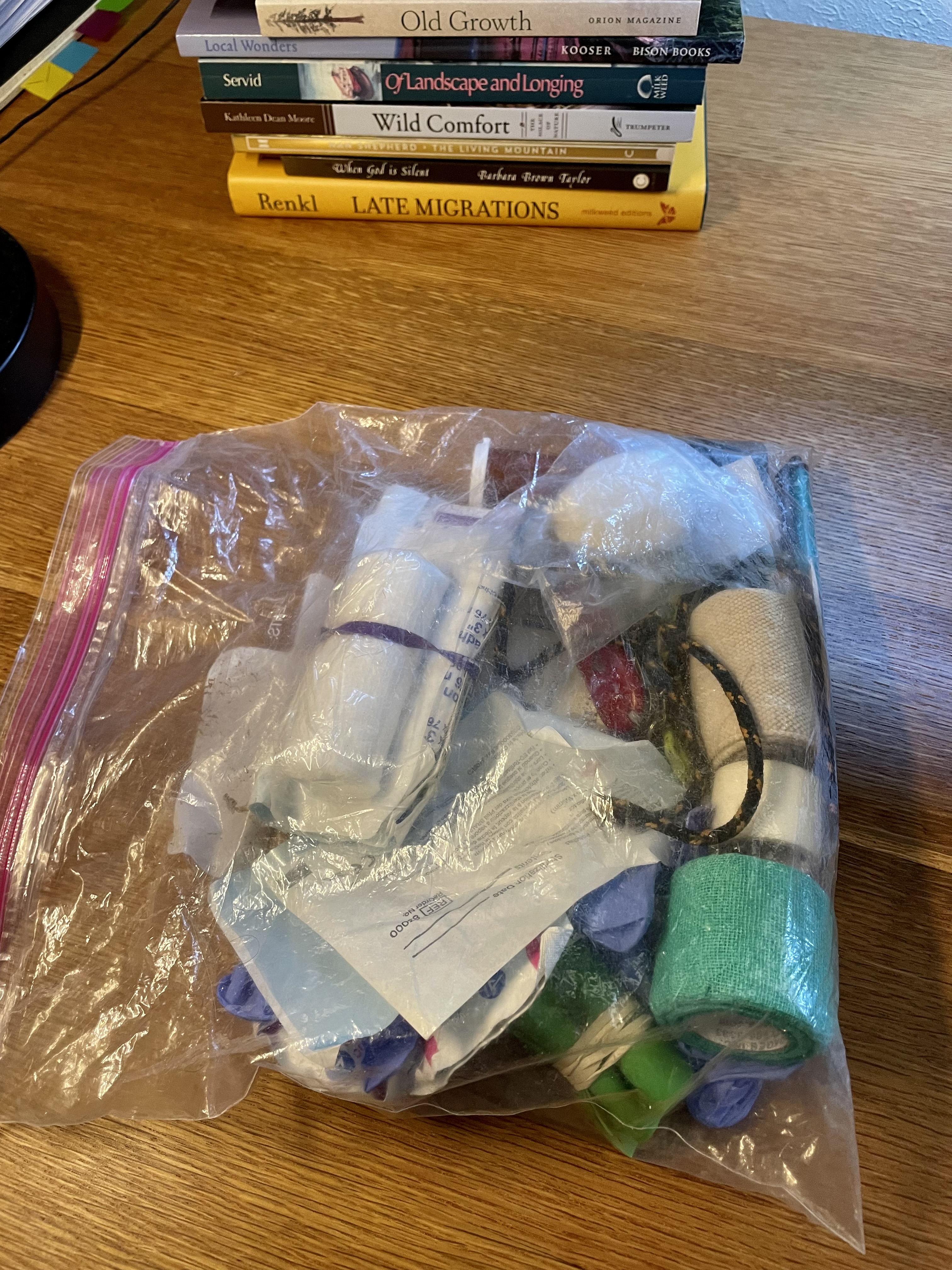
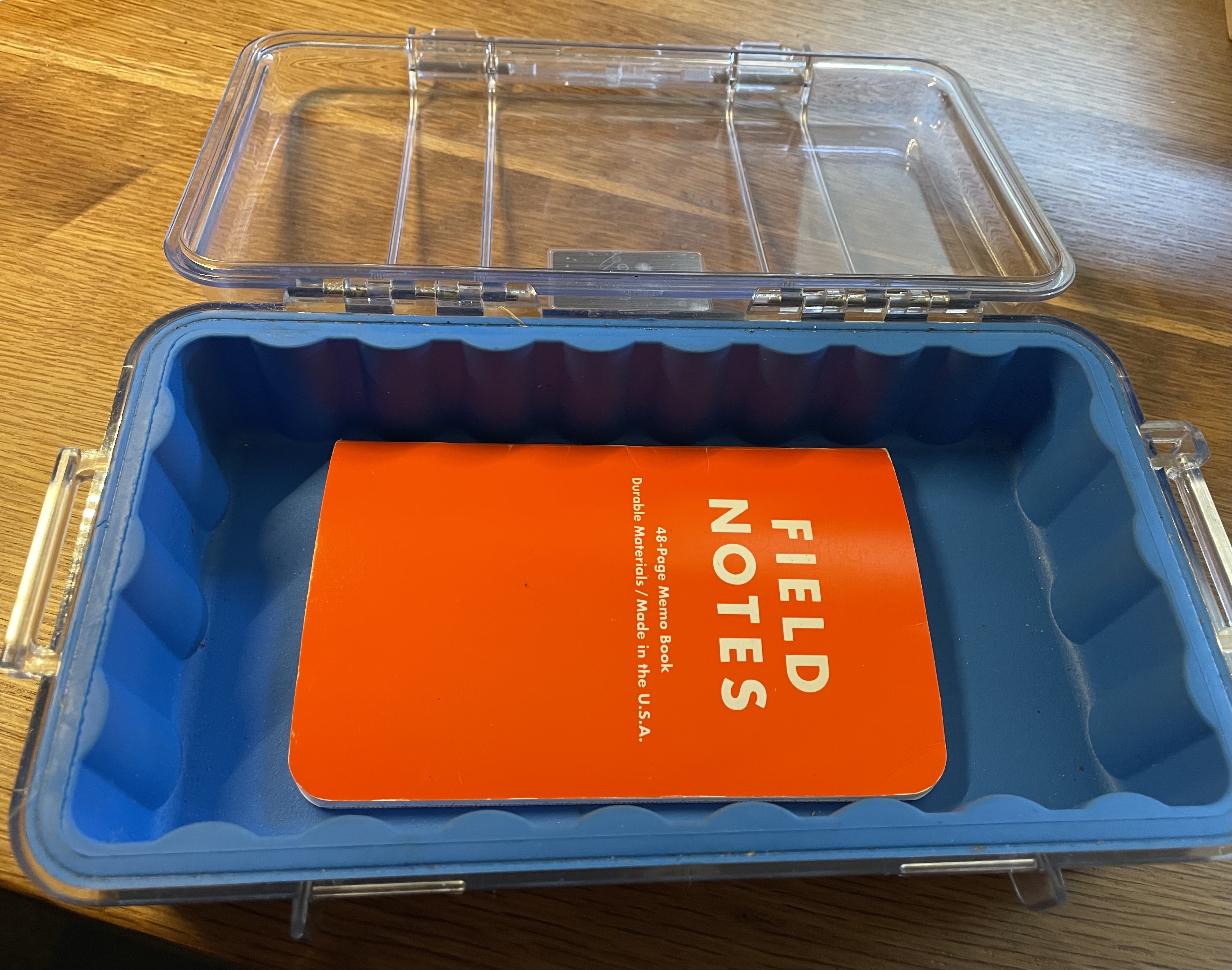
Because Ed and I will paddle in early May I want to make sure that I have my dry suit with its new wrist gaskets. I see the tightly folded Farmer John wetsuit for Ed and a synthetic shirt. Reassured by what I am finding, I unzip the side pockets of the gear bag. Here I find my old neoprene booties and wonder if they will get me through another season. The ankle gaskets have cracked. I’ll give Ed my paddling gloves and trust my hands calloused from gardening to hold up under the friction of paddling. Ed can have the Pelican box for his phone. I make sure that the first aid kit has a spare key to the truck, my old Swiss Army knife, appropriate bandages, medications, a pen, tourniquet, and Ace bandage. In the opposite pocket I see my cerulean-colored paddle jacket that I love to pull on over my head and shoulders.
Satisfied that I have the essentials I need and that I won’t forget an extra paddle for Ed, I feel almost ready. I enjoy the rituals of preparation, the creation of order, and access to items that add to the margins of safety. At the same time, I notice how these objects stimulate memories. It is almost as if memories stick to pieces of gear. Handling my thickest neoprene gloves I remember conditions during a cold autumn when I welcomed their insulation. Looking at the leash I remember a time when a gust of wind stripped the paddle from my hands. Reviewing the first aid kit I remember a time when I desperately needed what it contained and did not have it. The towel reminds me of a swim and times I used it as a tablecloth. As memories adhere to the big Stanley screwdriver, a silk tie, or the red sweater I inherited from my father, so stories abide in faded fabric, the snap of a buckle, the sound of a zipper. All this is part of the pleasure of paddling a kayak, an experience I hope to share with Ed, a man at home in the mountains, but eager to cross the strait on the way to the island. Now we can both look forward to Wednesday.
On Father’s Day I am still thinking about taking my oldest Pennsylvania granddaughter paddling on Monday, June 10. Bodhi spends time in the gym, treadmills at a steep angle and lifts weights. She is broad-shouldered and almost as strong as her father. Even though most of her paddles take place on the lazy Brandywine where she and her sister look for turtles, I thought she might be able to paddle from the Walstad access to Skeeko Bay on Wild Horse Island.
After pulling into the parking lot, I walked down to the dock, the lake now full as my wife’s coffee cup. I saw conditions like those predicted by the NOAA site I faithfully consult—winds out of the southwest at 15 mph, waves less than one foot, locally up to two feet. The only catch was that we would have to contend with quartering seas that would consistently push us off our compass point.
We laid out our gear and placed the boats on softer ground than the concrete handicapped pad. I offered my boat to Bodhi, a little more stable and faster than my old plastic Perception Carolina 14.5. When she accepted the invitation, I put my head inside the tunnels to adjust four foot pedals. On the second try I got them right. Because of the wind I also suggested that we wear our blue paddle jackets.
I nudged her off the ramp and told her to hang out and get a feel for the boat while I made ready to launch. At first, she felt uneasy with the rolling motion as waves pushed her port stern quarter, so we advanced slowly into the lake, giving her time to adjust herself to the conditions. I could tell that she felt anxious because she paddled hard and fast, as if eager to get to the island. In the shorter, heavier boat I found it difficult to keep up with her. We worked in manageable conditions for a little less than an hour, but the waves kept knocking her away from the tail of the island that we needed to be able to round. I occasionally dropped off the mark, urged her back up and tried to match her fast pace. About fifty yards from the island, I could tell that I had not made myself clear: she was going to try to land on the south-facing shore of the island where waves broke against the blocks of argillite. I had not adequately explained that she would need to postpone her relief until we entered the slightly calmer conditions around the corner of the island. Even before I drew close to warn her about landing, her instincts kicked in and she began back-paddling. Gradually, she came away from the island and, sighing, followed me around the corner where we both could catch our breath, though the wind still blew.
Deep in the shadows a mule deer buck, still in velvet, foraged for still-soft greens. Sight of her first mule deer seemed to inspire her and we paddled on. Still, I had a hard time matching her pace. Eventually we rounded the gravel bar that defines the entrance to Skeeko and we relaxed inside the protection of the bay. Bodhi called out her amazement as two bald eagles circled above us.
With the lake much higher than on my paddle less than a month earlier, we pulled the boats up onto the driftwood. After we extracted ourselves from our paddle jackets it was clear that we had both worked hard. My NRS shirt was soaked, as was her long-armed bathing suit. A cooling breeze felt great. Hungry now, we lifted tuna salad sandwiches from the bear vault and agreed that a person would become strong as a bear from trying to rotate the lid past two spurs and their catch. Orange and apple slices were the perfect accompaniment to our sandwiches.
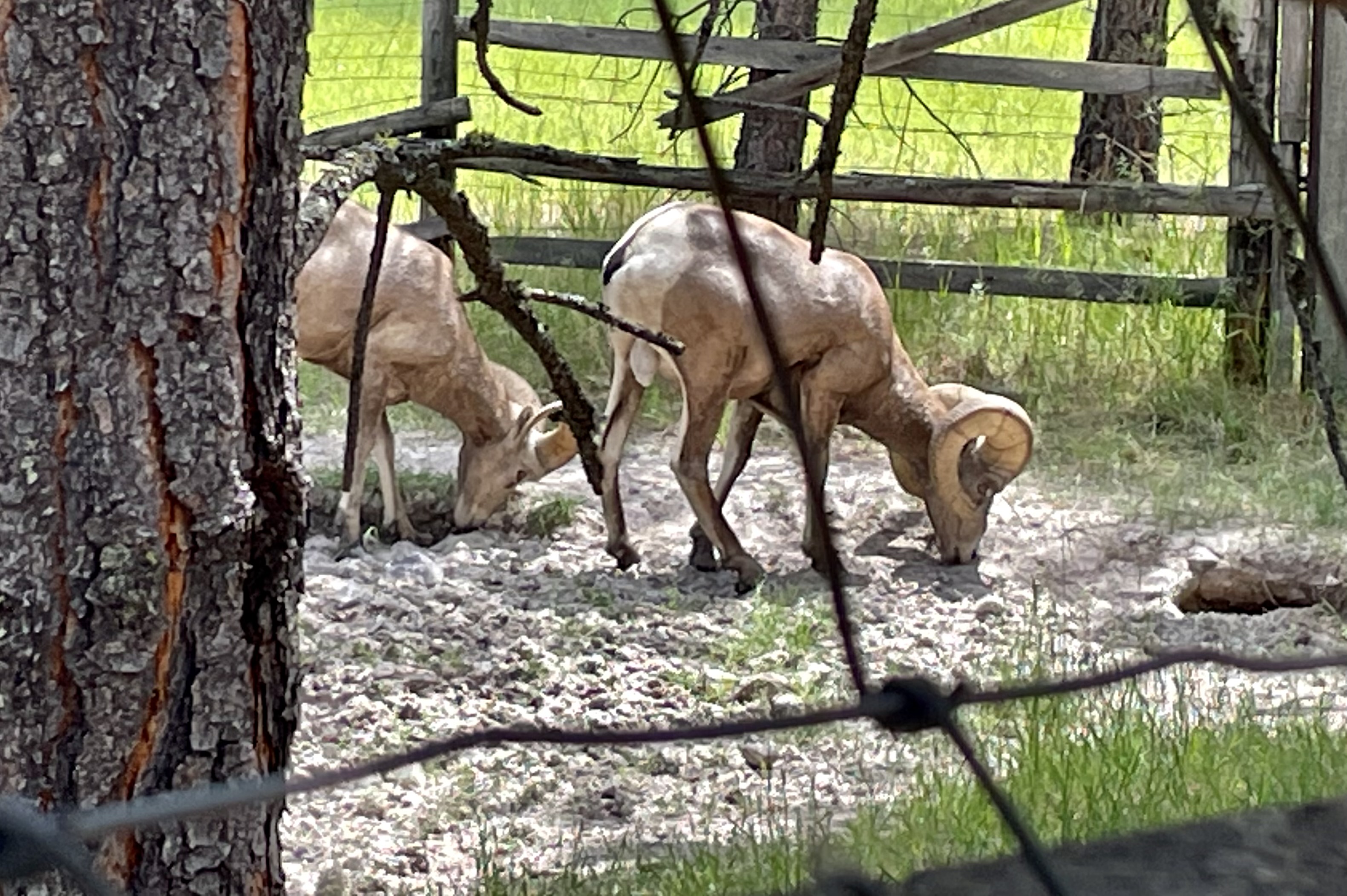
After lunch I proposed that we walk uphill to the island’s isthmus in the hope of seeing the wild horses who sometimes graze in the grass around an old and derelict corral. As though she were on the treadmill at home, she strode up the trail leaving me out of breath at the top where we paused and studied the slope below. Not horses but Rocky Mountain Bighorn sheep moved in and out of deep shadows cast by the pines. I said, “Let’s see if we can approach. We’ll use the wind in our faces to our advantage. They won’t smell us. Be sure to pause in the shade of each little cluster of trees.”
Like a huntress, she moved toward the animals who seemed nervous but did not flee. We got closer and closer until I realized that the big animals were drawn to minerals on the margins of an evaporating vernal pool. This was a magnet for them. As a wildlife biologist later explained to me, their exposure to green grass had elevated their potassium levels which could be re-balanced by consuming sodium in the drying soil.
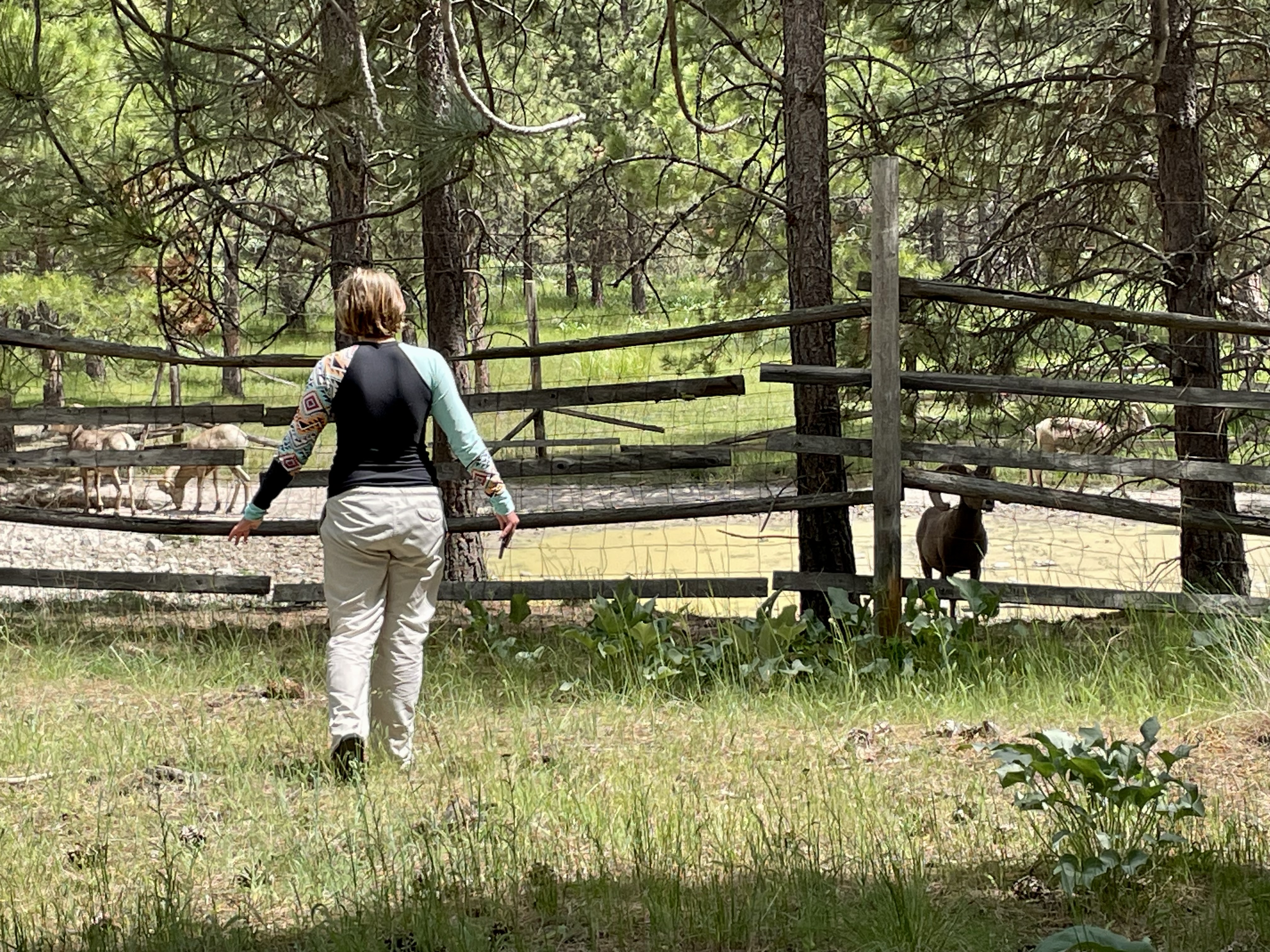
Bodhi and I stayed outside the old fence and never blocked an opening where the rails had failed. One time the largest ram, the tips of his horns blunted by time and competition, faced us squarely and stared, setting off our own alarms. But we kept getting closer and closer until only the wire stood between us and animals we could smell. We watched for several minutes, astonished by the good fortune of having such a close encounter with animals that often elude detection.
More than satisfied, we climbed back up the slope, pausing to find a couple of tired bitterroot flowers still blooming on the hot and dry slope behind the solar outhouse. Back at the boats we enjoyed more slices of fruit and kept telling each other how lucky we were.
Though the water temperature was around 52 degrees, we knew we would stay warm while working against the wind and waves approaching us now from the southwest. I told Bodhi, partly for my own benefit, that we did not need to hurry. We needed only to paddle at a pace we could maintain as the waves, taller now, pushed against us from the starboard corner and occasionally washed over our decks. This time Bodhi took my advice, controlled her anxiety about the long crossing from island safety to the southern shore of the lake. Having learned a great deal in the morning, she remained calm in even rougher conditions, let the boat move under her and paddled just behind me as I led us back to Walstad.
After landing, reloading the boats and stowing two mounds of wet gear I felt incredibly proud of my granddaughter. This had been her first visit to Montana, her first long paddle in challenging conditions, and her first encounter with heavy-bodied wild animals. Due to the trajectories of our lives and other commitments I have never been able to give my sons this experience. But my granddaughter will carry this memory as a prize in the pocket of her vest for the rest of her life—a gift for me on Father’s Day.
Yesterday I was able to make my memorial paddle in your honor, a paddle I try to make each year between Mother’s Day and your death day in late May, now fourteen years ago. When weather and time permit, I like to make this almost-annual paddle out to Wild Horse Island on Flathead Lake, a place you always wanted to see; yet for health reasons, this visit remained an unfulfilled desire. I would like to tell you about the experience in the simply human hope that our separate worlds might touch in some way, perhaps as gently as two twigs on a cherry tree. I am still writing you an occasional letter.
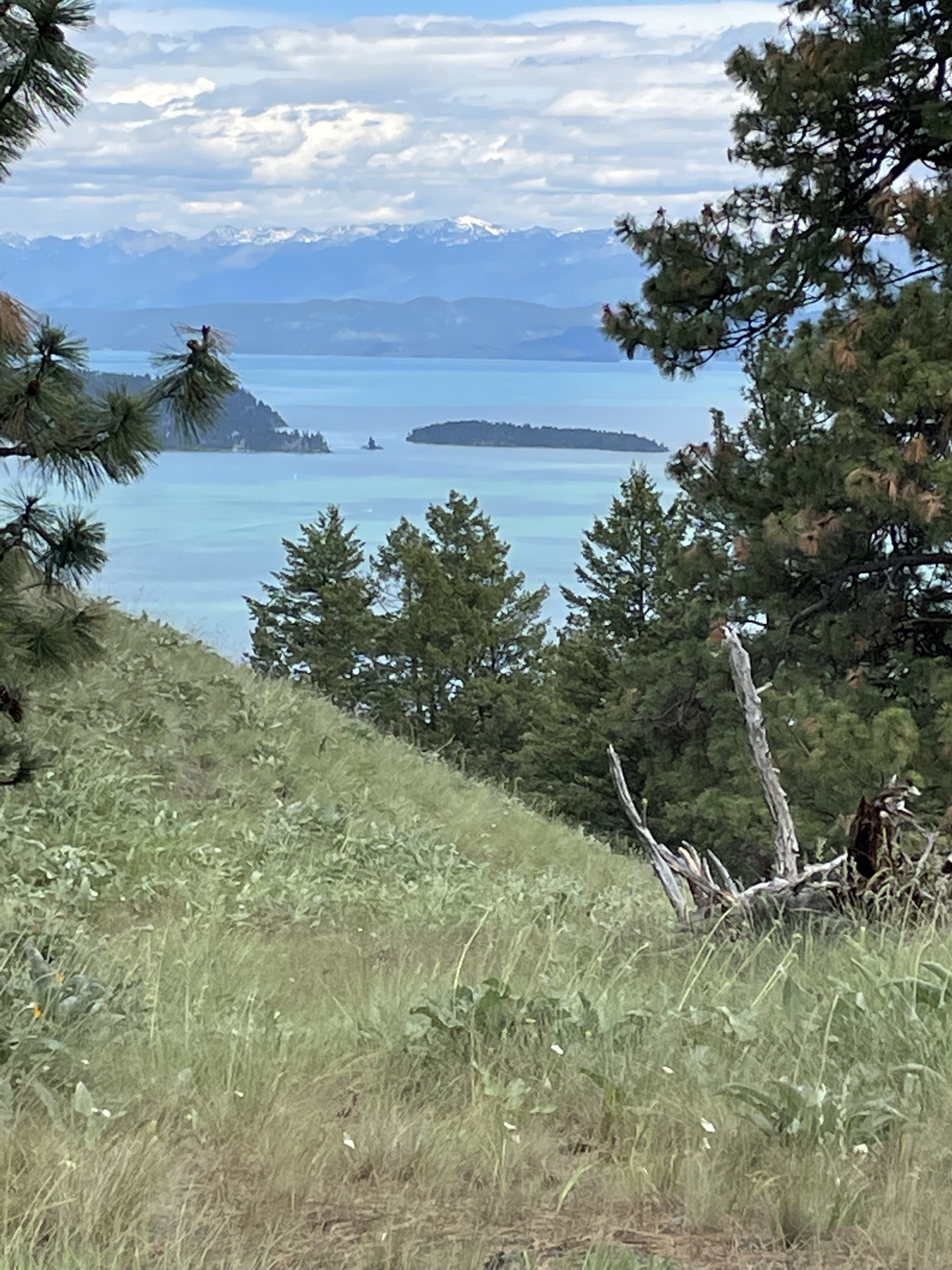
When I arrived at my launch site, wind poured off the Mission Mountains and ran through the strait between Melita and the big island. Conditions were brisk but safe. After crossing the strait, I approached the island and paused to watch a couple of Bighorn ewes nibbling on fresh plants and bending to the water to drink. They were so shaggy in the remnants of their winter coats that I could not tell if they had delivered their lambs.
After paddling up the west shore of Wild Horse I rounded the point and dropped into placid conditions in Skeeko Bay. After pulling my boat onto some driftwood and out of reach of rising water, I began to hike up the trail to the saddle. I was astonished by the quiet. In the first few hundred yards I heard one meadowlark and the wings of a robin. At the saddle I turned left onto what Fish, Wildlife and Parks calls “The Heritage Trail,” a path leading to some of the last signs of a brief agricultural presence on the island. Not far along I found the horses for which the island is named, but I did not approach. One of the horses swayed in an odd fashion. As the horse was not under stress, it may have been ill.
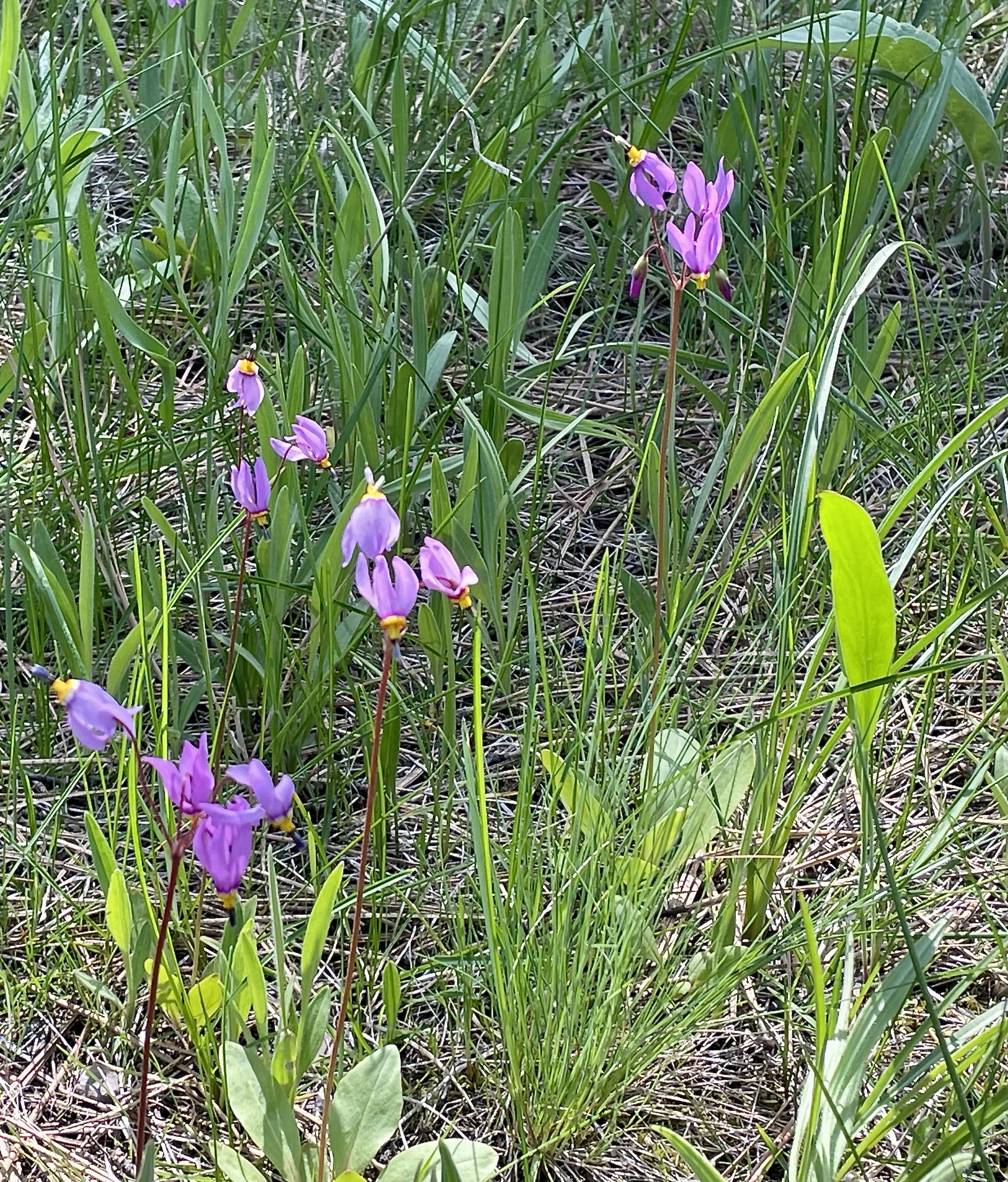
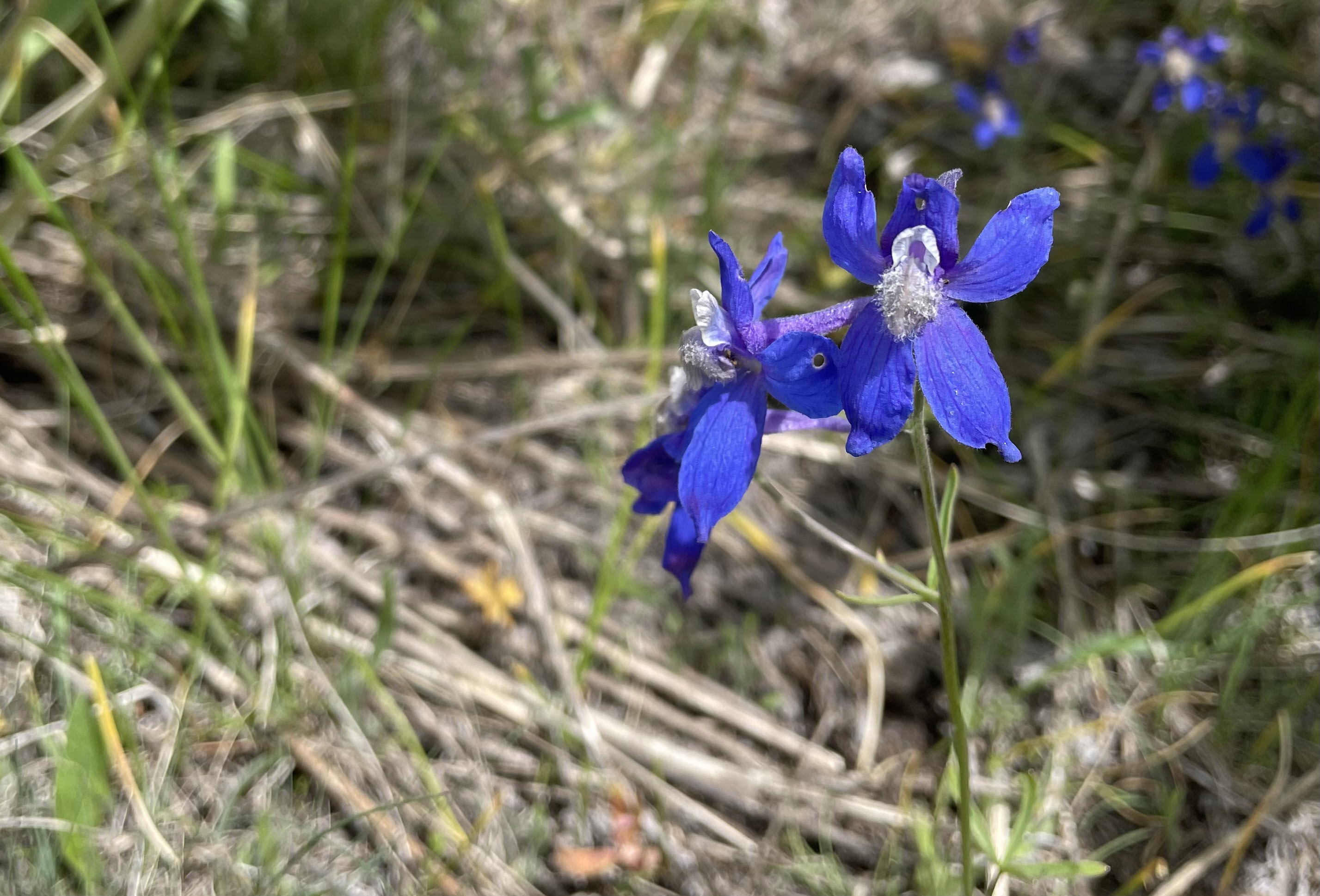
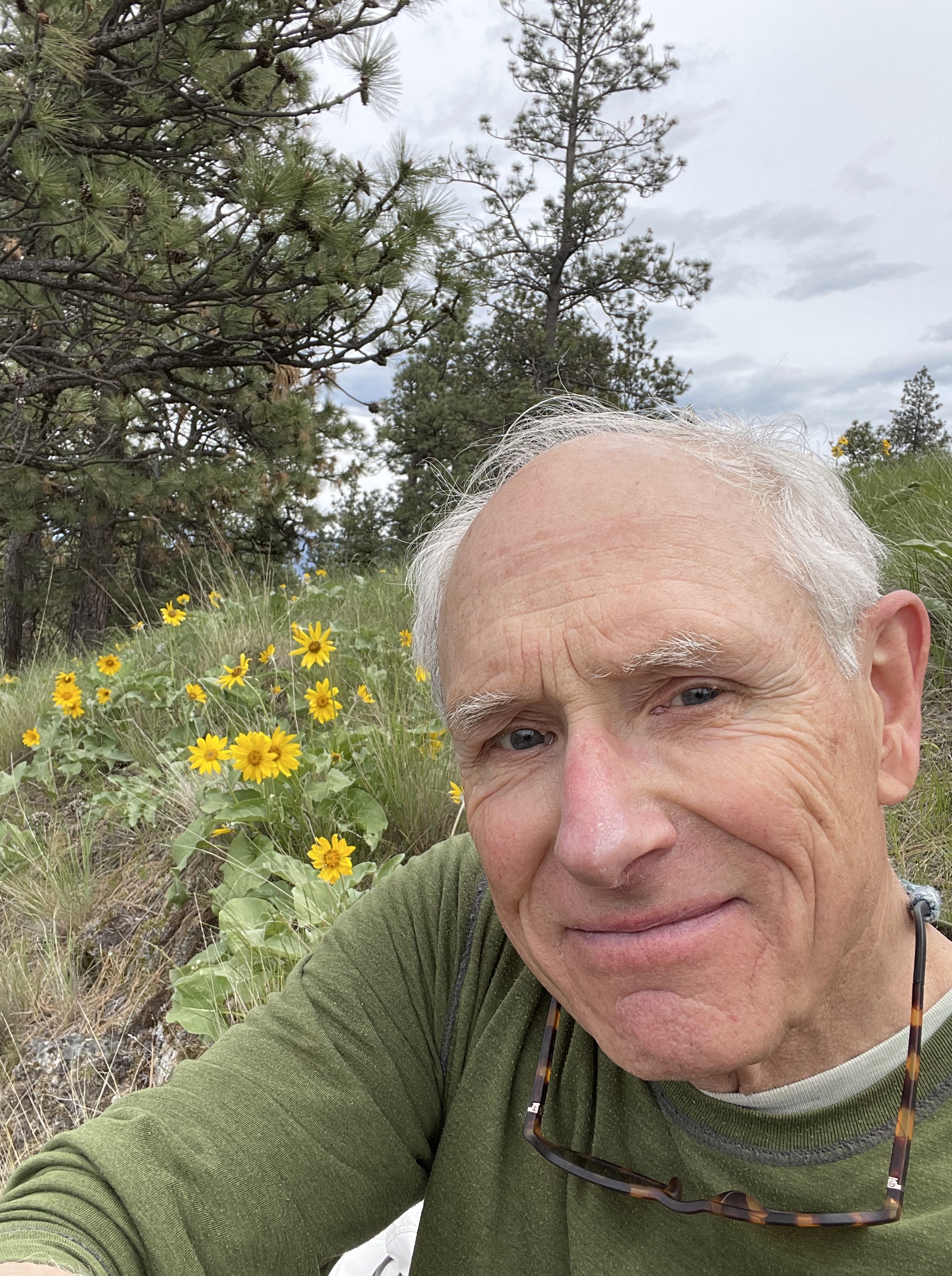
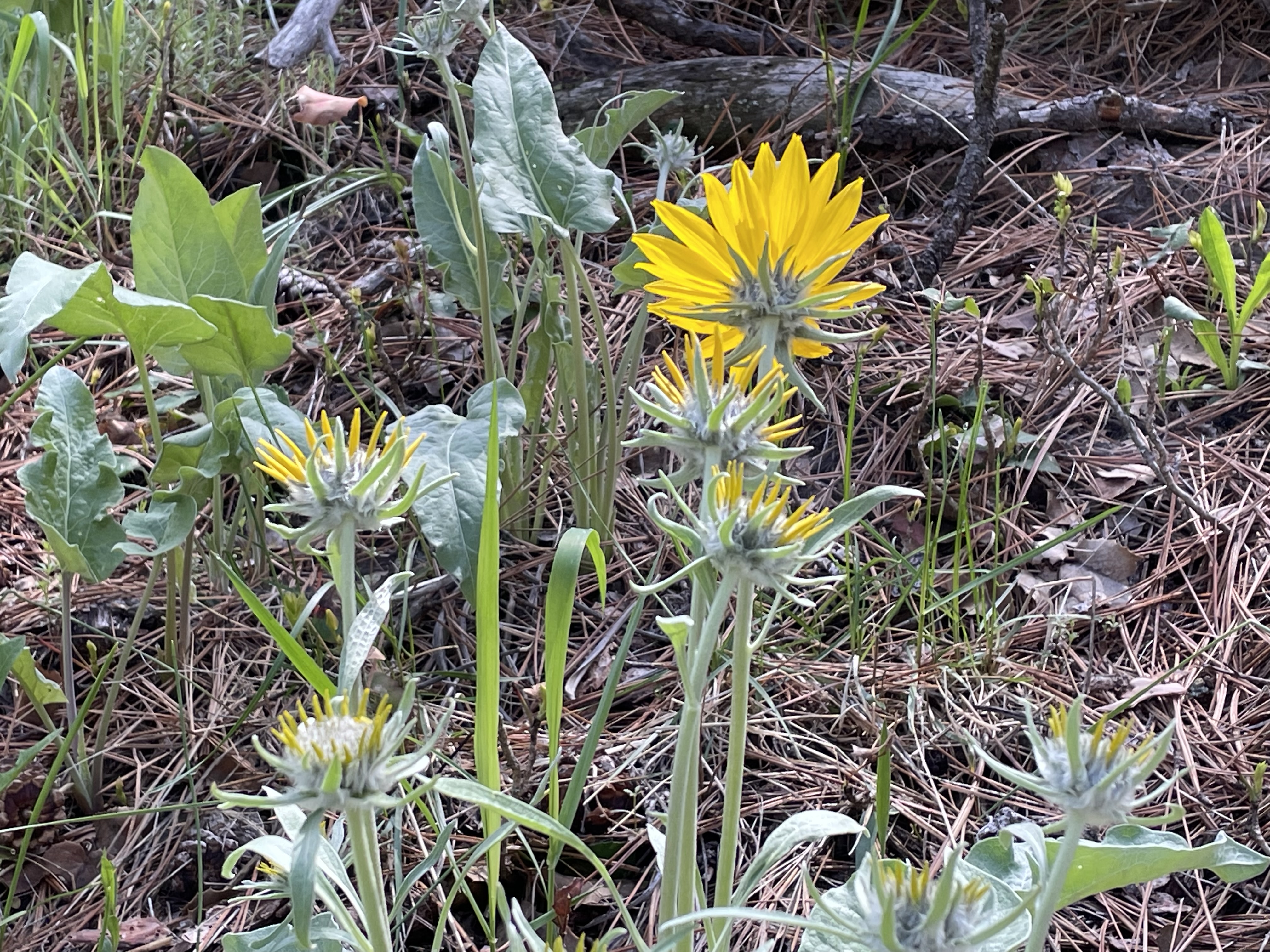
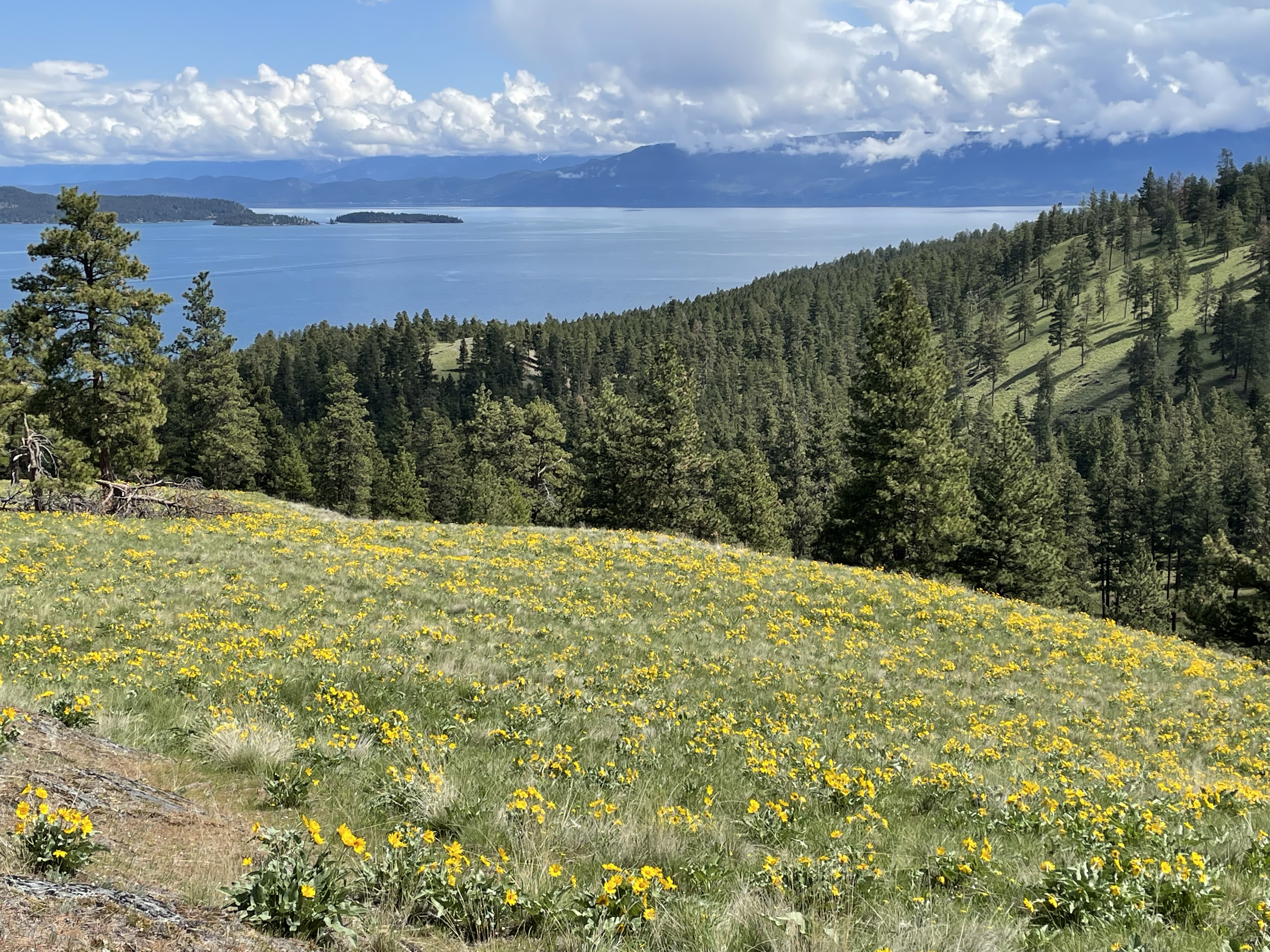
After I gained some elevation, I chose my own path through tall grasses along the edge between meadow and forest, hoping to find an animal trail and see a greater variety of flowers. As I walked along, I picked you an imaginary bouquet. As there are no rhododendrons and roses like you grew when you lived in in the Seattle area, I found the spring blossoms of the mountain west—arrowleaf balsamroot, larkspur, lupine, long-plumed avens, camas and the occasional shooting stars on the north-facing slope and forest edge. Near the top of the island I sat down and dangled my legs over a cliff. I had a perfect vantage point to look for more Bighorn sheep if they came into the small clearing far below, but they were elsewhere and not on the move. I ate my lunch and listened to the wind.
On the way down and back toward Bluebird I found scatterings of white bones in the spaces between tall clumps of fescue. On the island deer and sheep must simply die of old age as they are rarely pursued by predators like lions and bears who visit the island on occasion. Returning to the bay I gave a pair of eagles on a massive new nest a wide berth, hoping not to disturb them. I fear they may have nested in a location too frequently visited by humans and may not be able to bring their brood to the point of fledging.
Back at my boat I changed clothes for paddling in warmer conditions but knew I would face a strong headwind. I slipped back into the water grateful for the gift of my life, that I am still able to do these things at this late stage of my own life, and that I spent another day thinking about ways you taught me to appreciate the beauty of the world without ignoring its tragedies. In whatever way such a thing could come to you, I wish you a long slope of yellow flowers and the silence of birds on the glide. Love, Gary
Every year I try to paddle to Wild Horse Island in May. I do this to honor my mother who died this month sixteen years ago. Some people have ideal mothers. My brother and I were not so fortunate, thanks to a surgery when she was in her 20s. Medical mistakes set her up for a life of pain, chronic illnesses and multiple addictions in response to physical and mental suffering. Despite these difficulties, and partly in reaction to them, I remain the recipient of so many things. In truth my mother gave me everything I needed—a wariness of intoxicants, desire for a conscious life, my love of language, and attentiveness to the world within and around me.
Because she gave me the gift of life I am able to paddle to the island, hike its ridges, explore its valleys, appreciate its wildflowers.
Almost certainly she would have noticed and called attention to the way Balsamroot turn toward the morning light,
the composition of stone and flower, hard and soft,
an owl feather still wet with dew,
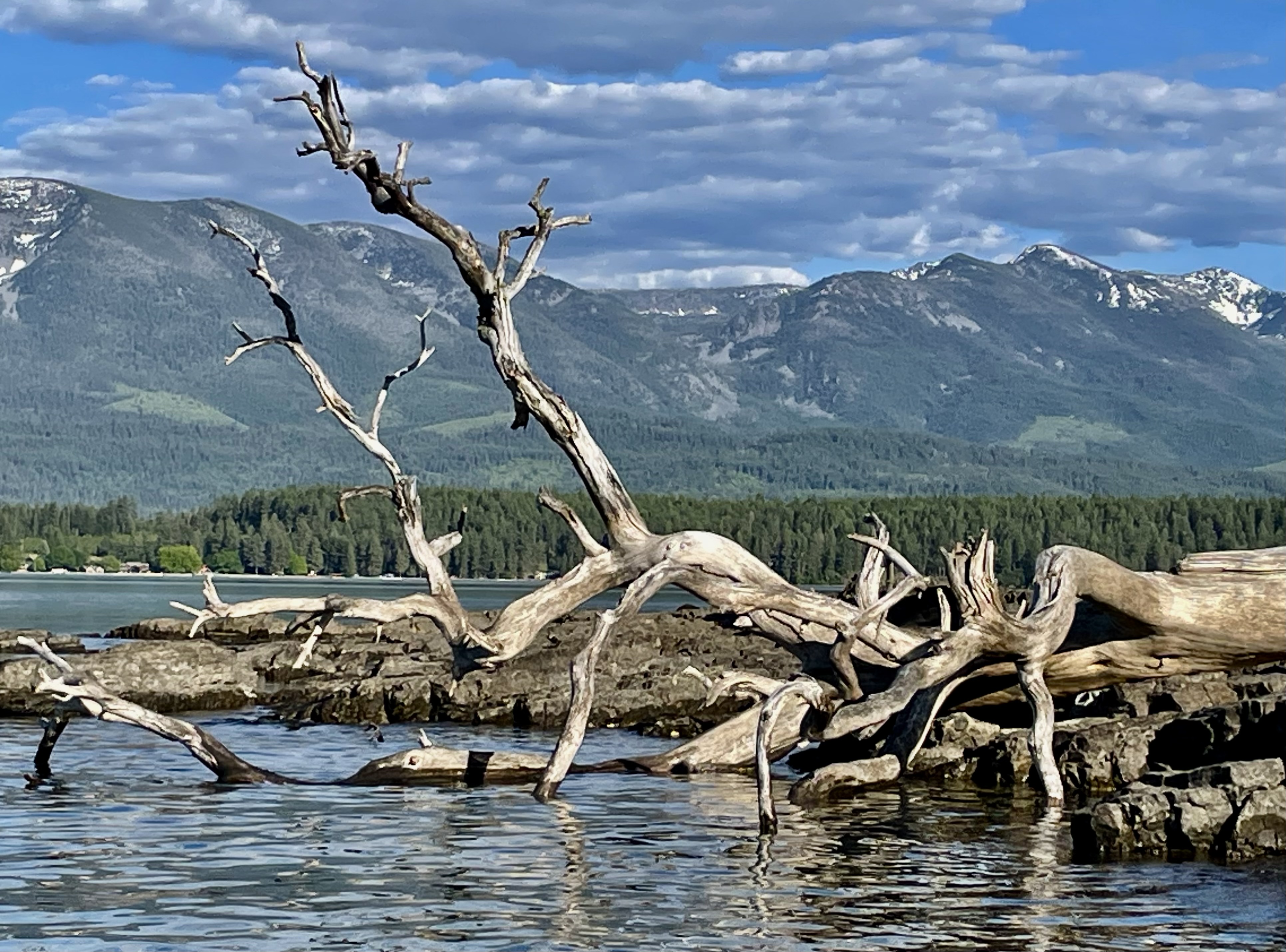
a once-living tree suspended above the current of its journey and the storms that threw it there upon the stone.
Trained by her at the window of sunrise, I notice the way cumulus clouds form the central reflection in ovoids, see the kestrel, on its perch in a pine tree, step in a full circle as it surveys the world.
Given a perfect day for paddling and a chance at life, I am nothing but grateful. In response I offer her the the whole island’s bouquet.
This week I hope to go fishing with my friend Robin. I like fishing with him because we don’t talk very much about fish; we talk about even more important things. One afternoon, for example, I remember rolling up his driveway after a day on the river and hearing him say something like, “Consciousness is the great mystery…” Maybe on Thursday we’ll return to this topic. Paddling a kayak also points toward the same mystery.
While trying to wait patiently for weather to turn incrementally warmer, I decided to repair my kayak. In the course of 16 years on the water, Bluebird’s sensitive gel coat acquired a number of scratches and dings. At the upturned end of the stern there was a spidery crack from shipping and handling, there from the beginning, a few long scratches when I did not see a sub-surface spine of sharp rock, a more serious wound received when a wave slammed Bluebird sideways into a log. To make the repairs I went to school on YouTube, bought supplies I needed from a company in Spokane, endured a little trial and error and began to make repairs before buffing the body of the boat with a series of compounds.
In the course of this project I came to appreciate how the gel coat seems as sensitive as skin and how the boat itself is actually an instrument of perception. It feels the world through which it moves as much as skin detects changes in temperature, the slightest breeze, a tender touch, puncture or scrape. In the water the kayak feels the tap of a piece of driftwood, the cutting action of a jagged rock, the friction of gravel or sand, push or slap of wave, the buffeting of headwinds, the pressure of a tail wind. As the skin perceives the outer world, so the kayak perceives the influences and effects of the the aquatic environment. This awareness motivated me to care for my boat, to try to make it last as long as possible. A boat is a story and I want to keep it alive.
To go one step farther, as I sanded the curves to get a better bond or used progressing abrasives to level the gel coat’s creamy surface, it occurred to me that the kayak actually extends my conscious awareness into the water and weather, into the liquid body of the lake, its shorelines and depths. In short, the boat is a tactile instrument that allows me to feel more than I am capable of perceiving with my mind alone. If the tip of the shovel feels the contours of the stone in the hole where one hopes to plant a tree, so the kayak extends awareness into the topography of the lake and the vagaries of weather.
If I had any doubts about this insight I would only need to recall what it feels like to paddle at night. In the absence of light the eyes are almost useless. As never before one is forced to use the body of the boat to feel the waves, the direction of their approach, their energy and strength. At night one feels—through the skin of the kayak—what is happening in the world. To the paddler’s body the kayak transmits every signal sent by water and wind.
Alert to these things, I sense how a kayak is not just a means of transport or a way to have fun on a lake but a tool that increases one’s awareness as it extends itself into the world. It is the tactile equivalent of binoculars used to focus on a vireo reaching for the last berry in a mountain ash, or a telescope turned toward a star. No wonder it seems worthy of attention and repair. Through its sensitive hull I want to keep in touch with the watery world.
Near the end of March it is still snowing, not in the fitful fashion of a spring squall but continuously, earnestly, as it usually snows in December. Once again the driveway is covered in snow and the back slope wears an armor of ice. We have been locked inside this winter for five solid months. Yet, the expansion of the light after the equinox has an effect on me in the same way that it normally affects the apple tree outside the south window. In a normal year, whatever that is, the buds would be swelling by now in response to the light if not the weather. Despite the weather, something in me is also awakening. Despite the snow and unseasonable cold, I am beginning to imagine paddling my kayak, negotiating wind and waves in a glassy vessel, exploring islands and coves, immersing myself in color, dissolving into the life of the lake.
from the top of the Polson moraine
This weather that keeps me indoors also leads me to reach toward my shelf of favorite books where I find The Living Mountain by Nan Shepherd, a slim, white paperback that stands in the company of hardbound Wendell Berry, Annie Dillard, Robin Wall Kimmerer and Robert Macfarlane. The book tells the story of Shepherd’s first sight of the Cairngorn plateau in Scotland when she was a child and how it awakened a desire to explore its heights and depths. She recounts encounters with wild weather and hardy human beings. She traverses slopes, climbs peaks, notes birds, animals and insects, crosses streams confined by granite walls, traces their courses from uppermost springs to the valleys of the Spey, Avon or Dee.
First published in 1977 by Aberdeen University Press, the book was written in the years during and soon after WWII. After Shepherd received a discouraging response to the manuscript she tucked it in a drawer where it sat untended for almost thirty years. Meanwhile she continued to climb and explore her living mountain, but also the mountain that had impressed itself on her mind and heart. In a disturbed and uncertain world the Cairngorns were her “secret place of ease.” Then as an old woman she began “tidying out my possessions,” as she says. Rereading the manuscript, she found it still valid and felt renewed energy to see it published. We are so much the richer for the second wind of this writer and her belief in what she had written.
In some ways the book resembles a kitchen pantry nearly bursting with sensory detail. As Shepherd opens the door on this pantry, she describes the taste, touch, smell, sights and sounds of the mountain in all seasons of the year, both night and day. With her description of the taste of a berry, the texture of a plant or stone, what it feels like to walk barefoot over heather, the sound of an owl landing on a tent pole or a storm crashing into the walls, canyons and corries, she practically places us inside the mountain. Then in the final chapter, acting as our mountain guide, she takes us beyond all the details of weather, the colors of leaves and feathers, the varieties of animals, the intricacies of trails and routes, human pleasures and fatalities. She leads us up and out, or down and in, until we break into the open to consider the deepest things of all, the mystery of what it means to be alive, to be aware of one’s own being in the company of Being itself. It is as if the fog and mist of sensory detail suddenly clear and in her company we see an open sky above the summit. Rereading the final chapter of The Living Mountain I realize that what Nan Shepherd says of her beloved range might easily be said of Flathead Lake. One only needs to change a few words from her closing paragraphs to experience the lake that, like her mountain, is its own living being. If she had lived in Montana instead of Scotland, when she crested the last moraine heading into Polson she might have written:
…So my journey into an experience began. It was a journey always for fun, with no motive beyond that I wanted it. But at first I was seeking only sensuous gratification—the sensation of height, the sensation of movement, the sensation of speed, the sensation of distance, the sensation of effort, the sensation of ease: a kind of lust of the flesh, the lust of the eyes, certainly the pride of life. I was not interested in the lake for itself, but for its effect upon me, as (a cat) caresses not the man but herself against the man’s pant leg. But as I grew older, and less self-sufficient, I began to discover the lake in itself. Everything became good to me, (its long shoreline, its islands, its rocky hillsides and forests, its shades of color, its crevice-held flowers, its birds). This process has taken many years, and is not yet complete. Knowing another is endless. And I have discovered that the experience enlarges (the ramps and slabs of stone, deep, dark depths, turquoise shallows, great banks of gravel, deer and sheep drawn to the margins). The thing to be known grows with the knowing. I believe that I now understand in some small measure why the Buddhist goes on pilgrimage to a mountain (lake). The journey is itself part of the technique by which the god is sought. It is a journey into Being; for as I penetrate more deeply into the (lake’s) life, I penetrate also into my own. For an hour or two I am beyond desire. It is not ecstasy, that leap out of the self that makes a human like a god. I am not out of myself, but in myself. I am. To know Being, this is the final grace accorded from the (lake).
I do not know when this storm will end, when the ground will thaw, when the water temperature will rise enough to make paddling seem safe. But as the light changes, whatever atmospheric rivers flow our way, I imagine what it will be like to be on and in the living lake. Like Shepherd the hiker and climber, walking herself “transparent” to every living thing in her world, I hope to paddle myself transparent, clear of fears and concerns, empty of self, open to every resonating thing in a still-living world. As Shepherd’s knowledge of the mountains evolved, so, too, has my motivation and knowledge of the lake evolved. I will return to the lake not for myself but to experience the lake being itself.
Have you visited the storehouses of the snow or seen the arsenal where hail is stored…? (Job, 38.22) In the southwestern U.S. conditions are drier than at any time in the last 1200 years. If Lake Powell drops another 33 feet, the water level will be too low to power the turbines that send electricity across the region. In Los Angeles people will soon have to choose between saving water to drink or watering their lawns. In my region of the country parts of the state remain in a state of severe drought. But around Flathead Lake it rains intermittently for two days and two nights, raising the water level of Flathead Lake over a foot across its 191 square miles, more than 122,000 acre feet of water.
Unable to reserve my own campsite because competition for these spaces is so keen, I ask a friend to let me set up my tent next to his recreational vehicle in space 11 at Finley Point State Park. He kindly allows me and Big Agnes to create shelter next to the picnic table in exchange for an oatmeal crisp made from cherries grown in the orchards above us and the reading aloud of two Kathleen Jamie poems while he drinks his morning coffee. My friend is in the grip of the latest James Lee Burke novel, so I take Bluebird down to the marina and paddle in the rain.
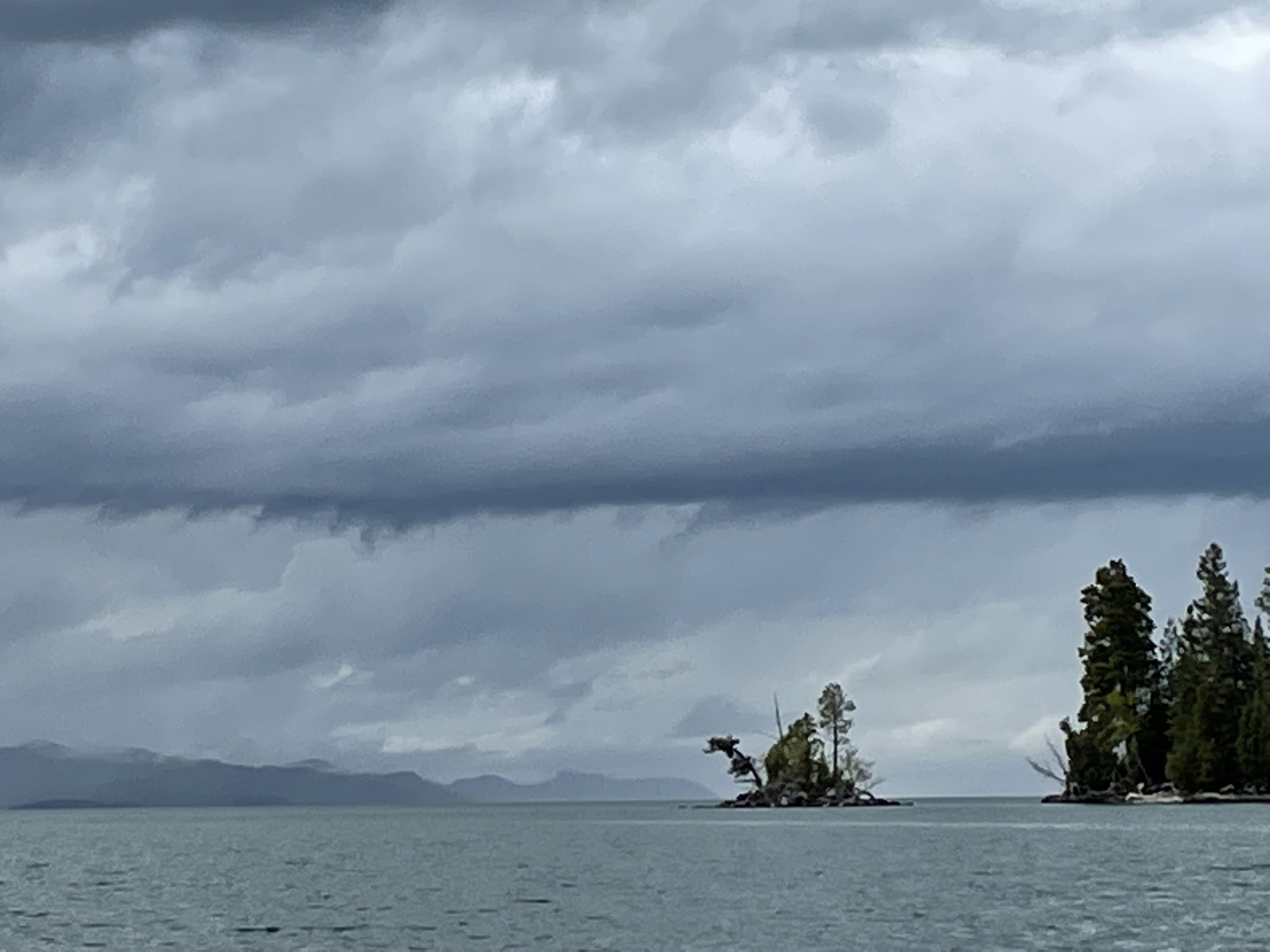
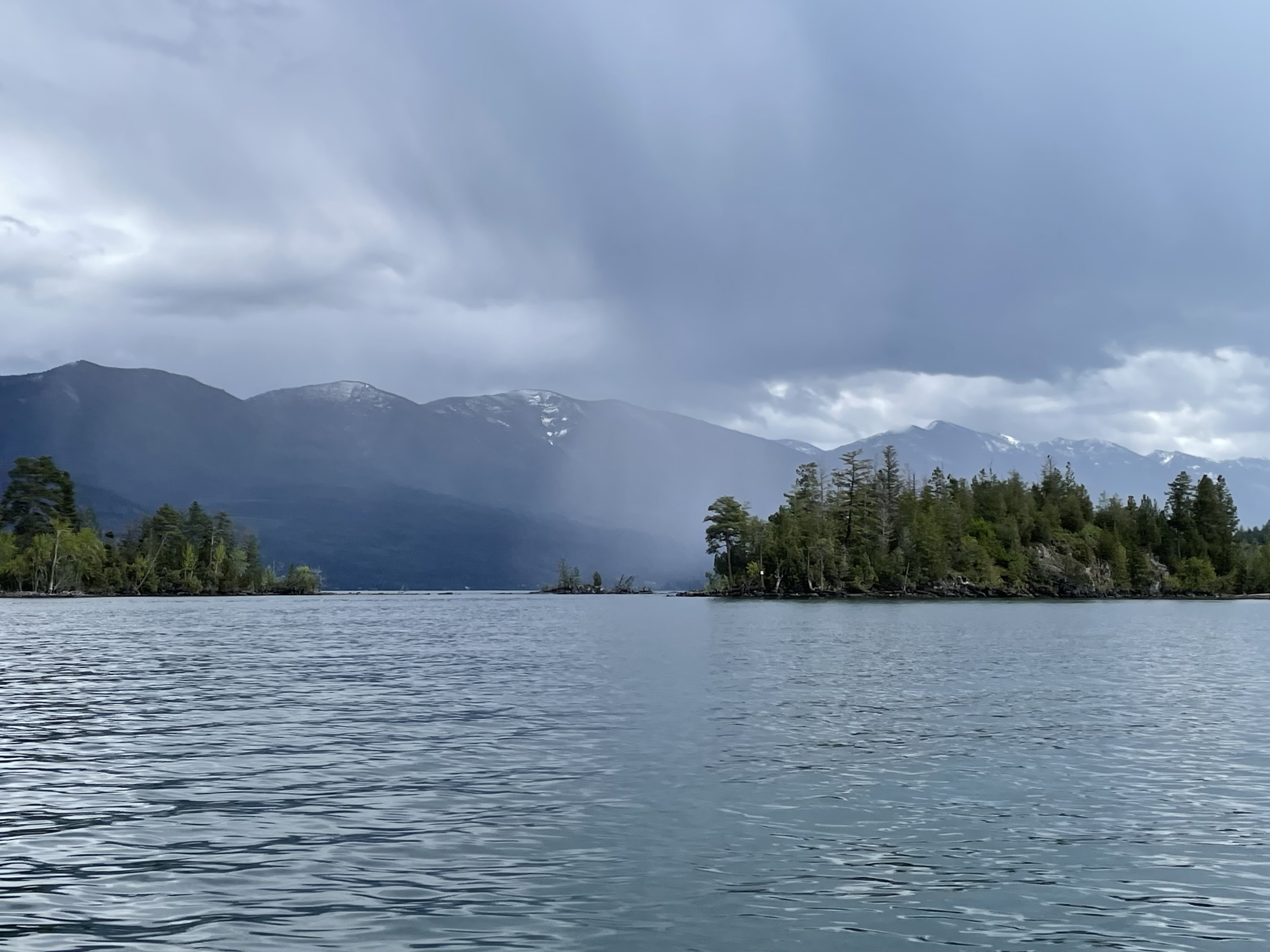
Wary of lightning and the risk of waving a wet piece of carbon in the air during a storm, I plan a short paddle through The Narrows, threading my way in a figure-eight pattern around the islands. But when clouds to the north look particularly ominous, I make a broad sweep, reverse course, head south along the backside of Bull Island and cross back to the protection of the marina. If it is gray above, it is blue and green below.
Since everything is wet when paddling a kayak, it makes little difference if it rains. So I go out the next day too. This time I head north across Finley Bay, the tip of the peninsula and the chain of rocky shark’s teeth disappearing under rising water. I have paddled in many different conditions but never before in a hail storm. This time a trunk of hail drops down to the lake surface and balls of ice pelt my hat, drysuit, bare hands and deck. Though the particles are little larger than course rock salt, they turn the lake surface into a layer of froth not unlike a beer poured too fast or a latté covered in a milky hat. When dramatic things happen while paddling I wish I had the poise to unzip my pfd pocket, reach for my phone and take photos; but the best I can do is hang on, hunch my shoulders like a hawk on a limb and wait for the storm cell to pass. Until the gray column of falling ice advances to the east I listen to the sounds of hail, each sound different depending on the surface it strikes. In time I circle Bird Island and begin to head south, eventually finding that perfect paddling rhythm that makes distances dissolve. Along the way I think of our good fortune. Though climate change models still predict a hot, dry summer and the potential for fire, at the moment we are being given the gift of rain and experiencing the release of more water from the storehouses of snow and hail. On Bird Island and the slopes of the Mission Mountains after the Boulder 2700 fire, mahonia, Rocky Mountain maple, chokecherry, arrowleaf balsamroot and cottonwoods rise from blackened ground. The hidden power in seeds is being set free by rain and light; the birds are having families; we will have water to drink and irrigation for our gardens and fields. After the isolation and fatigue associated with a pandemic; during the ravages of war; in the aftermath of gunfire in classrooms and shopping markets; after the danger of insurrection has passed—at least for now—we have rain, an unmerited gift from the sky that renews everything that is tired and worn. For a couple of days I visit the storehouse of life-giving water—whatever form it takes—and return with nothing but gratitude, rich in ways that cannot be counted.
And my friend steps out of his camper and says, “Would you like a cup of coffee?”
I stepped away from planting perennials in the rock garden and found someone eager to paddle with me in April. On Flathead Lake in April the air can be warm but the water is close to freezing. Before the mountains begin to release their snow and fine sediment flows down rivers into the lake, the water is clear. The water is deep blue and aquamarine and a kind of yellow in the shallows. On the best day between days that were too windy we paddled out to Wild Horse Island and into the shelter of Skeeko Bay.
During the day I thought about saying:
This is where I found a Bighorn ram dead on the rocks
This is where I saw a ewe with her lamb among the cliffs
This is where I found an iceberg tucked inside the curled hook of a gravel bar
This is where eagles used to perch before a wind storm blew down their snag
This is where Native people found food in a starving time
This is where I have ridden waves back to safety
This is where we might find the horses
This is where I find flowers
This is the rock where friends and I watched a solar eclipse
But I realized it was better to be quiet. These are my memories, coins in my purse. I count them again.










 ospreypaddler