Memories

We lose everything, but make harvest

of the consequences it was to us. Memory

builds this kingdom from the fragments

and approximation. We are gleaners who fill

the barn for the winter that comes on.

 –Jack Gilbert, “Moreover”

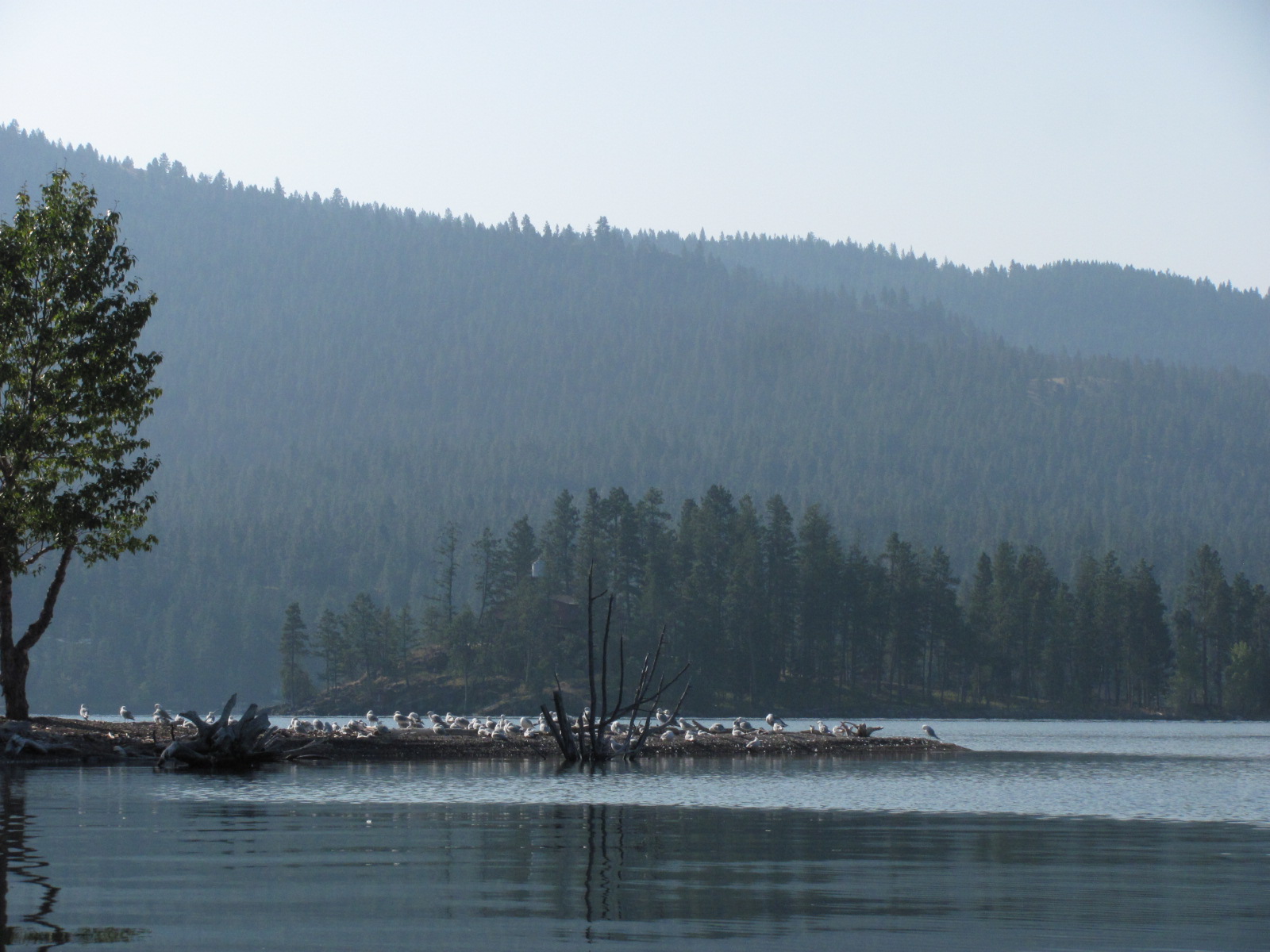
This is the time of year when ranchers in Montana pull stored sunlight out of their barns and spread it on frozen fields for hungry animals. This is the time of year when Blackfeet, Salish and Crow pull stories out of ancient storehouses and remind each other who they are and where they came from. Memories are the feast of the season.

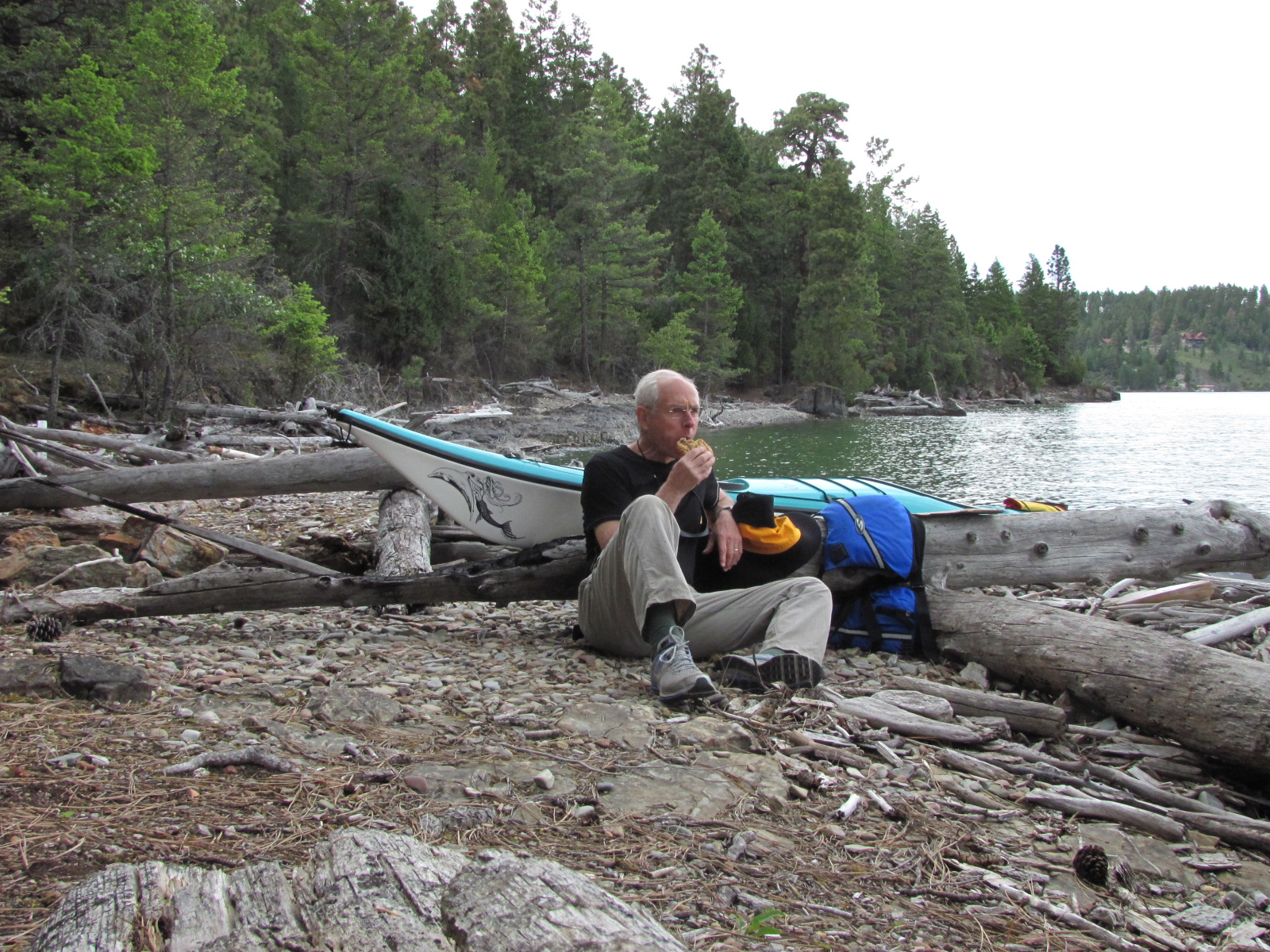
At this time of the year a paddler builds a kingdom out of remembered fragments and approximations of the season past. In many cases the memories are composed only of images—a wave that caught my brother on the upwind side of a dock, lifted him on its crest and almost set him down on its deck; a wall of stone where water flowed out of cracks and created a bank that overflowed with green and living things; an encounter with an eagle where the air flowing over its feathers was felt on my skin; a vast space of open water with the paddler a mere speck in the blue distance. And sometimes the memories take the form of a story. Like a tool in a cabinet, we keep pulling it out of the drawer where it is stored, handle it, turn it, reflect on its significance and use to us.
stones

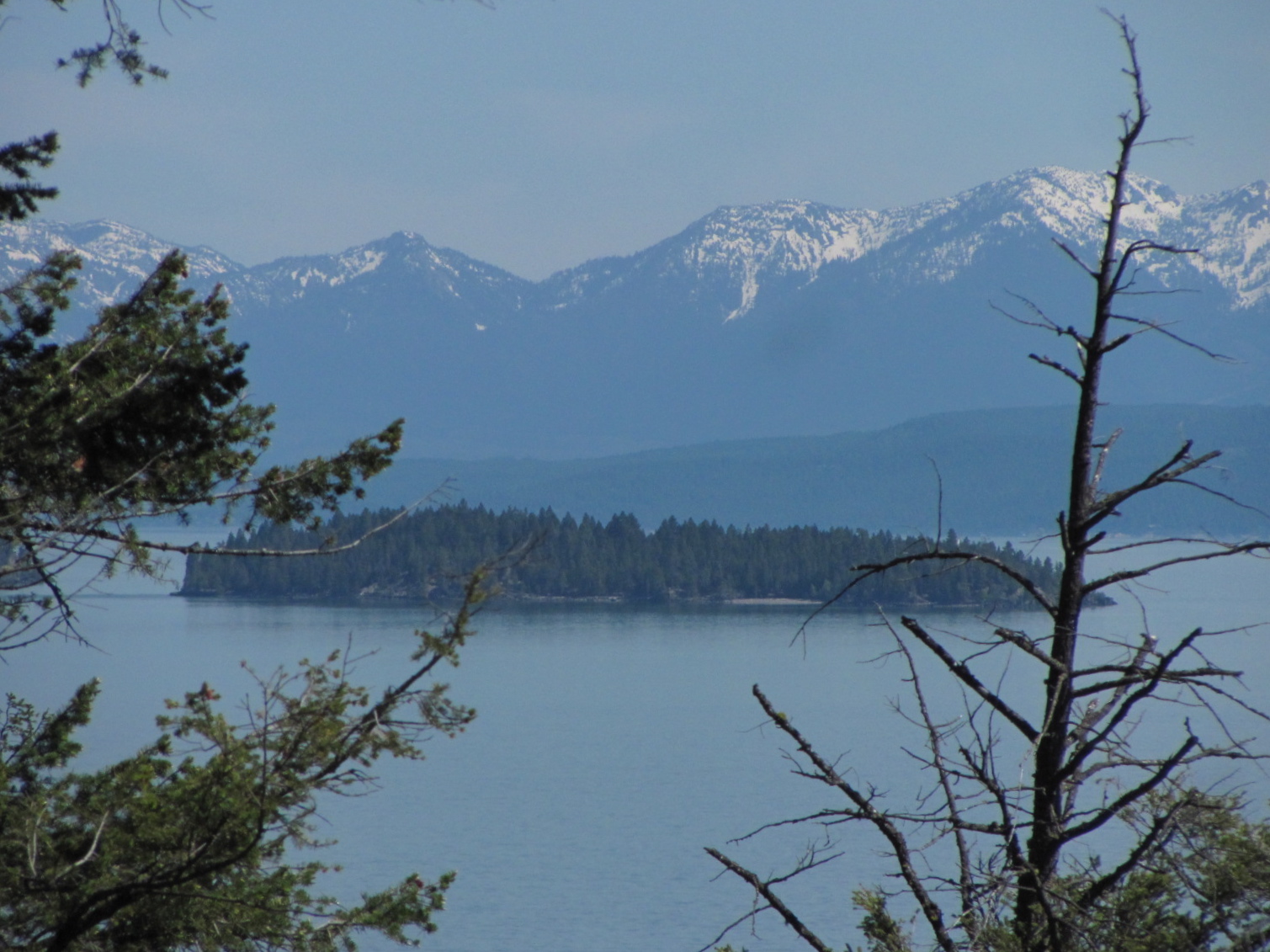
Though I could pull open any of several drawers of stored memories, this winter I feel drawn to return to a day in September a few years ago. Having begun the semester but not yet burdened with the first batch of student essays, I drove up to Finley Point. Drawing on the strength of a full season of paddles, I wanted to depart from the state campground and stroke my way to Wild Horse Island on as direct a line as possible. But I hesitated as I stood on the concrete abutment that helps to form the marina. Breaking waves flowed down the fetch from north to south. Would it be foolish to paddle alone on such a day, on a day when no one else was on the lake and available to render aid if I got in trouble? Was I willing to take the risk?

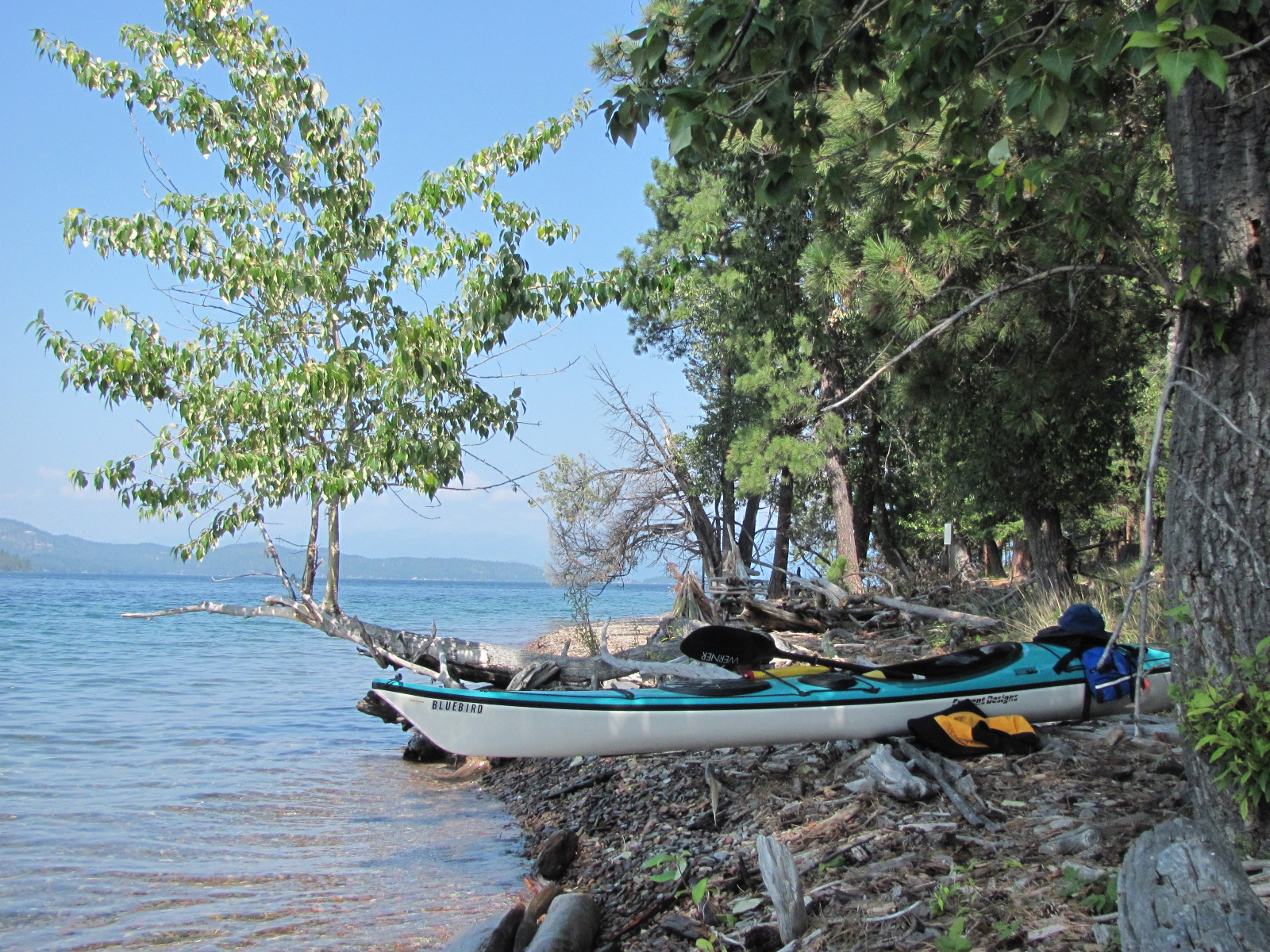
Trying to quiet these questions in my mind, I slid Bluebird into the channel between the bobbing docks. The moment I passed the mouth of the marina I felt the full force of the waves running down the lake and striking the starboard quarter of my boat. I committed myself to the process of meeting each wave as an individual, rose in the crests, dropped into the troughs, and adjusted to each push and slap with more or less forceful strokes. I maintained this focused attention for about two hours before I began to realize the true danger of my situation. If my attention faltered or wandered even slightly, as fatigue began to pervade my body, I might lose my balance in the waves and find myself in grave danger. This realization tapped the last measure of my strength and allowed me to reach the island safely. I hauled Bluebird out of the waves on the backs of some drift logs, climbed the bluff and drank all my water. I rested, waited, watched. I needed time to recover.

I wandered around the island’s east shore, grateful for the stability of rock and earth beneath my feet. When I eventually returned to my overlook I realized that the wind was beginning to drop. The waves no longer broke, though swells swept the surface of the lake. These were safe enough conditions for me to paddle back across the lake to another island and then the last three miles home.

I continue to reflect on this day. At times I think I was willful in relation to far greater powers and that my safe arrival and return were less a matter of skill and strength and more a matter of luck. Other times I feel the exhilaration that this day brought me, recalling, as Mihaly Csikszentymihayi said of happiness:

 Contrary to what we usually believe…the best moments in our lives are not passive, receptive, relaxing times—although such experiences can be enjoyable if we have worked hard to attain them. The best moments usually occur when a person’s body or mind is stretched to its limits in a voluntary effort to accomplish something difficult and worthwhile. Optimal experience is this something we make happen.

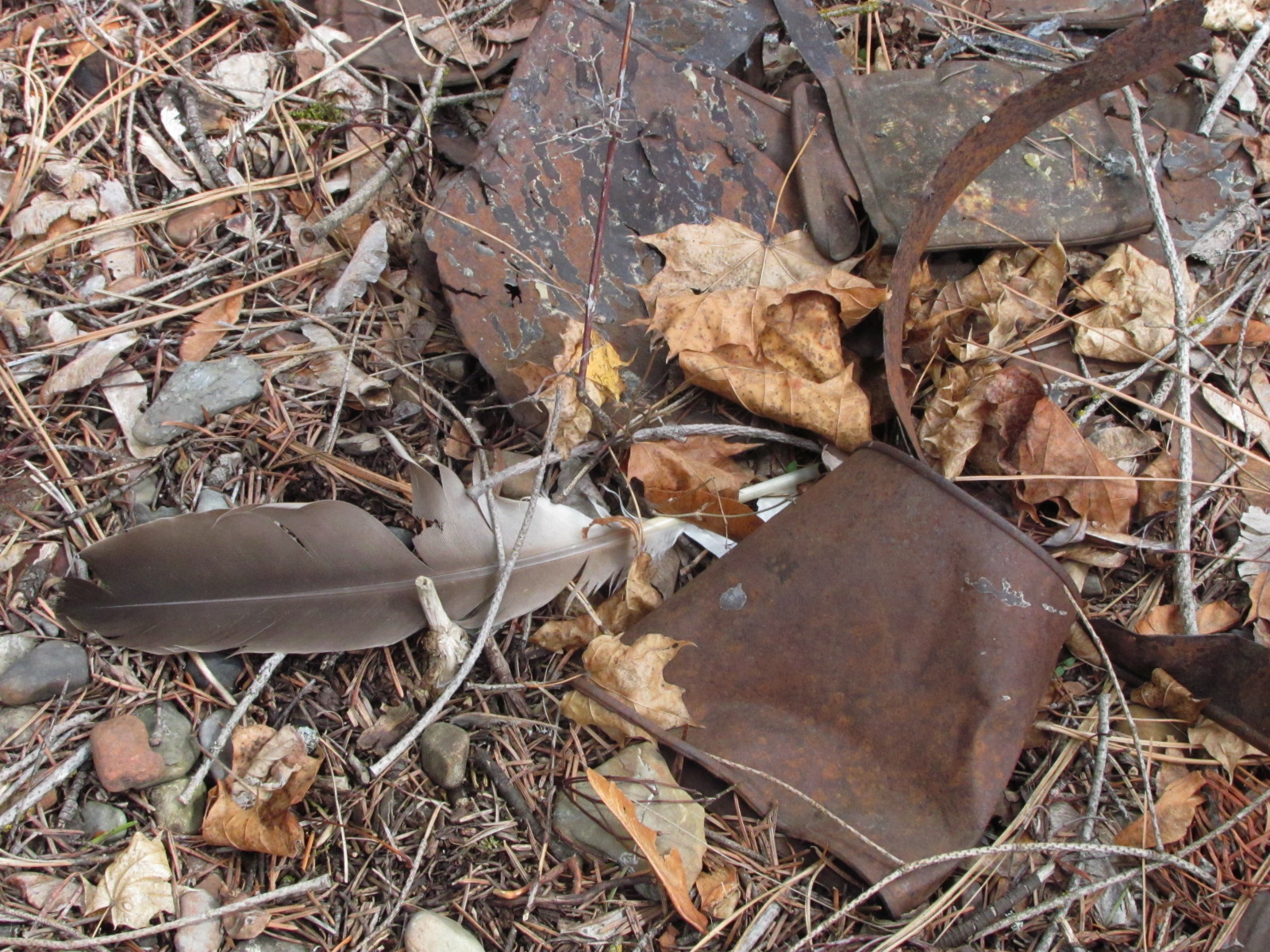
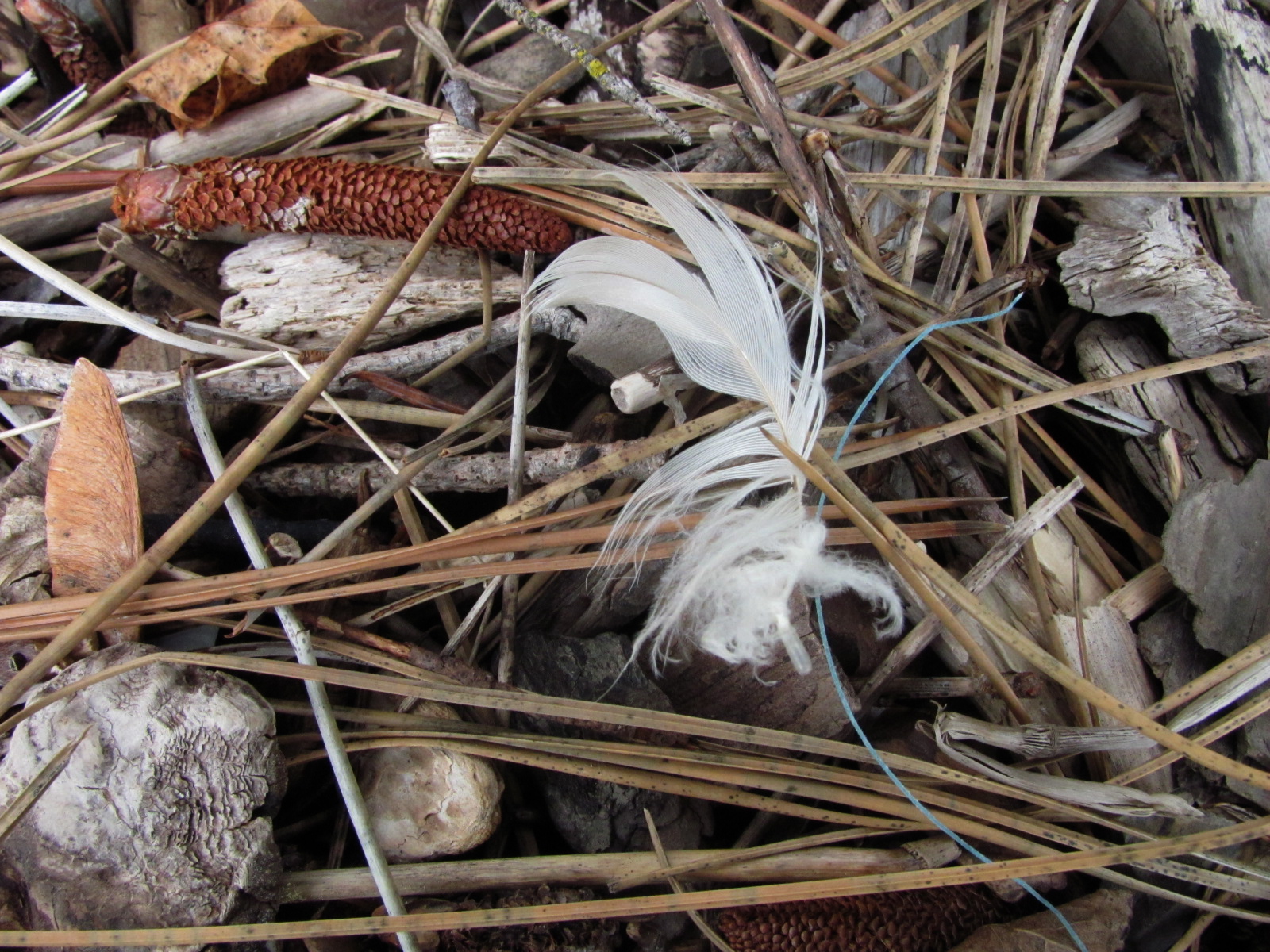
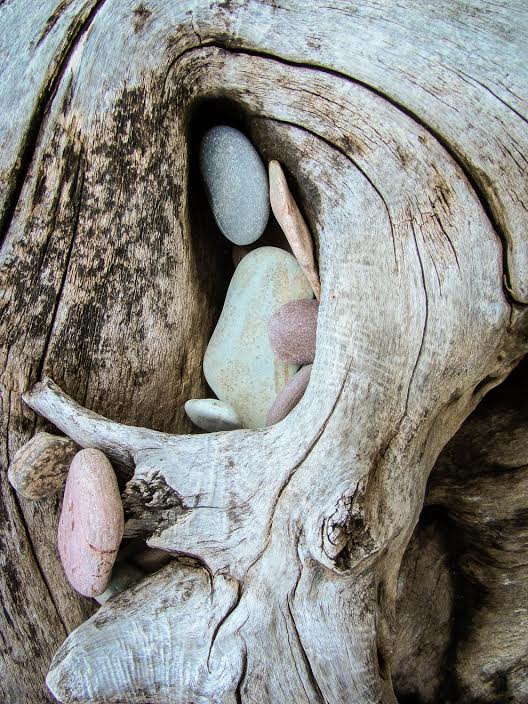
As near as I can tell, we live somewhere between the stone, feather, or spring that we happen upon and the happiness we “make happen.” If this is true, then I strive for consciousness not only of the wave as it surges toward me and the exhilaration of meeting it, but of the space between forcing my will upon the world and simply receiving its inexplicable gifts. I want to be aware of the edge of each, the things we make happen and the things we receptively receive. In this consciousness we make a way in the world.

I know I will lose the ability to make such paddles as I lean into the middle of my late decades. But between now and then I want to glean my experiences from the field of the lake and its islands; I want to harvest the consequences of memories, and fill the barn as long as I can. On a winter day I open the drawer where they are stored, pull them into the light and turn them in my hands.

into the wind


Different Ways of Being: A Meditation on Speed

Different Ways of Being

Different Ways of Being

After I wrote “A Perfect Summer Day” several people thought I may have been too generous toward those who race across the lake r on massively powerful machines. When I wrote more tolerantly than I sometimes feel I must have still been under the salutary influence of the lake. This post is an attempt to articulate more precisely what I feel and think with respect to this contrast, the contrast between the jet ski and the kayak.

First, I want to acknowledge that this is an old conversation, even older than Kenneth Brower’s attempt to address the same problem in his 1978 book The Starship and the Canoe. In this book he reflects on the difference between George Dyson and his astrophysicist father Freeman Dyson. The elder envisions a starship powered by the controlled explosion of nuclear devices while the son dreams of a wooden sea-going canoe. Undoubtedly, the conversation is as old as the day the Spanish introduced horses to the North American continent, or the first automobile rolled down a street, or someone on snowshoes encountered the first snow machine.

I once was asked to baptize two children at another large lake in Montana. The family that invited me to lead this ceremony owned jet skis and offered their use as inducement so I would honor their unusual request to baptize their youngest children in a lake rather than at church. Before the ceremony they convinced me to ride one of their machines. I confess it was really fun to make tight-radius turns, to leap over my own wake, and to speed across the surface at a hair-plastering rate. But after a few minutes I found the experience boring. It did not engage me at depth. I slowed down, motored back to the beach, thanked the family and thought to myself, I’ll never do this again. I did, however, baptize their children.

As someone who paddles a kayak, I notice that not every wave is the same. Some waves seem to have excavated the depths of the lake and carry in their bodies a hidden power. Some waves are like the whorls in a fingerprint; the angles of encounter vary with every stroke into their forms. Waves are not always parallel to each other. If for no other reason than safety, a paddler must pay careful attention to these changes. While paddling I enjoy the sounds of water sliding by the boat or lifting and dropping Bluebird in the interval between crest and trough. When I visit with people around the lake I occasionally hear people say things like, “The lake is alive; it is its own being,” or “We must learn its moods and respect them.” For anyone who is this sensitive to the world, who listens this carefully to the world embodied in the lake, passage through the water in the thrall of these energies and changing temperaments is part of what makes the encounter so varied and valuable.

Flathead-2313

For many people there is more than enough pleasure in speeding over the surface, arriving at a destination quickly, and feeling the wind wash over their skin. I once caught a wave in the open water off Yellow Bay and was propelled at a breathtaking speed. In those moments the boat belonged to the wave not me. I know the appeal of speed. But it seems to me that the difference between the kayak and the jet ski is similar to the difference between a Big Whopper received at a drive-through window and a meal at our dining table when my wife has set it with crystal glasses, candles, and her Pembroke china. It is similar to the difference between a You Tube video of the Wailin’ Jennies and a live concert at the Top Hat on a summer evening in Missoula when the temperature is 96 degrees. The difference between the two approaches to the lake is as great as the difference between driving through the Redwoods at Prairie Creek State Park and walking through them, smelling the duff, feeling the texture of the bark, having one’s face stroked by a little wand of moist and lacy needles.

The problem with technology generally, and the jet ski or powerboat in particular, is that its encounter with the world is shallow. It skims over the surface of experience rather than moves into and through the physical substance of the world. Some things are simply too fast. I often feel this way when I ride my bicycle across campus. Even this pedaled machine is too fast and its relationship to the world too shallow to allow me to adequately greet people I know, to recognize a person from a distance and recall a name as the distance closes. In much the same way, as a craftsman, I realize that one tool is occasionally too fast for a given task and that it is better to slow the process down, to create less momentum and open up more time for the careful consideration of consequences. Sometimes the rasp is better than the router.

One approach to the relationship with the lake requires the rider to listen to the machine; the other approach listens to the body and senses all the subtle but incredibly important changes that take place within it. As I paddle I register when I feel strong, when I am beginning to tire, when I need hydration or food, when the layers of clothing seem just right or need to be adjusted. I pay exquisite attention to every perceptible change in the weather—every shift in wind direction, velocity and cloud formations. In these situations where the pace is slower we read the lake through its effects on the body. In choosing a lower level of technology, a vessel like a kayak, labor and joy are unified and reconciled.

Except in the most extreme situations there is no such thing as being out of gas. In one mode of transportation the cessation of the machine is absolute and the silence that follows it must seem stunning; but in the other case, we are always capable of one more stroke. There are depths of strength in the body and mind that the machine cannot imagine. In these situations, perhaps after several miles of headwind, we find out what we are made of.

After more careful consideration of the problem this is what I think. Some might dismiss the distinction between those who go fast and those who make the passage more slowly as a problem of age. At 64 I should know; but I think the division is much deeper than the separation between young and old. It has to do with one’s whole orientation to the world.

I have seen people speed across the lake and throw their wakes wherever they please without any awareness of their effects on the water and atmosphere, much less a paddler. In the kayak or canoe one’s awareness extends outward to the whole living body of the lake, down into its depths, up into the sky, and during a night paddle, even to the moon and stars. The issue, it seems to me, is how far does consciousness extend. It is becoming clear to me that the character and future of civilization depends on this question and how we answer it.

Jeff at speed

Jeff at speed

A Perfect Summer Day

(August 18, 2014)

The syllabus needs to be revised. A Moodle shell needs to be created to contain all the readings for the course set to begin in one week. And the window trim needs to be scraped and painted yet again; but the weather is perfect. I decide not to waste the gift.

I load everything in my truck on Sunday night, hoping for an early start on Monday morning. I load Bluebird and stretch the cover over the cockpit to keep out the dew and spiders. I go to bed early with a keen sense of anticipation about the next day at the lake.

IMG_2222 When I arrive at the Walstad access site the lake is calm. I take time to load the boat thoughtfully so I know where everything is and so I can reach my camera relatively easily.

IMG_2223

Though I had planned a different circuit in my mind before stepping into the water, something calls me to paddle into the morning light, to head out to Melita Island and the gravel bar where birds gather and preen, then to touch each of the points along the Rocky Point peninsula—White Swan, Matterhorn, and Block before dropping into the bottom of Cat Bay to see a friend’s place where she has erected a bright tipi on a platform. I pick a pace I can sustain all day, recognizing however, that I am paddling over the top of a layer of physical pain that is a daily feature of my life, one I refuse to let rule my days. Along the way I see several people in bathrobes or, in one case much less, having coffee on their decks, reveling in the light and warmth, not taking for granted the comfort of summer at this latitude where winters are cold and dark.

IMG_2225

Paddling into the light everything before me is backlit, including the paddler who suddenly emerges from behind White Swan point. I feel pleased to see another paddler even in silhouette. I greet her, but unskirted and in deep water, she seems disinclined to have a conversation; she simply waves and heads into the sheltering bay, perhaps to join friends for breakfast. After my own visit to these sculpted points and bays I head out toward Wild Horse Island. I face a modest headwind that has not yet raised sets of waves. When I finally reach the big island I see boats tucked in almost all the little pockets of gravel that accumulate between the ledges and ridges of fractured rock. They have waited all summer for the water to warm and so now they swim, mess around on a paddle board, lounge in deck chairs set in the stones.

I find a spot of my own to rest, eat, and recover from a morning of paddling. I tuck myself behind a juniper brought down when an upwind Ponderosa crashed in a windstorm. I lay back in the shade and let the cool stones soothe my lower back. I close my eyes under the shadows of osprey that pass back and forth in search of fish.

IMG_2240

When a large boat loaded with parents and grandchildren pulls ashore on the other side of the juniper and plays a radio while handing out hotdogs and potato chips, I decide to cut short my respite and paddle on. I slip away almost silently, but they follow me, making no effort to trim their boat. They leave a big wake to rock me. I love this exposed north shore of the island and decide to focus on my own pleasures at seeing the wild edges of water and stone and the way life roots itself in the most unlikely places.

IMG_2246 I round the north end of the island, pass the crescent coves, and slide toward Skeeko Bay. Now that we are past July 15, it is legal to walk into the Special Resource Zone on the island set aside to protect the wild horses and the deer and sheep that give birth here in the spring. So I look for and find another small beach between parties that have also stopped here to soak up afternoon light and warmth. I find and take the shore-side trail and walk a mile or so to the saddle that overlooks the strait between Wild Horse and Melita Islands. Along the way I see people reading in their canvas chairs, gathering interesting pieces of driftwood, enjoying their beer, and desperate parents contending with a two-year-old who is content with nothing they offer.

IMG_2247

Back at my little spot I dive into the lake, as comfortable as it will ever be, but refreshing after a hike. It is time now to paddle on. First though, I finish the apple I have saved for this phase of the paddle, tuck everything away, and slip back into my boat for the paddle home. About half way between the south shore of the island and my landing point I see a sailboat moving at what seems to me an astonishing speed. I pick up my pace and alter my course a hair so that I can see them more closely as they fly by. Three men are hiked out over the upwind side of an extremely slick boat that cuts through the water like a blade. I shout “Beautiful.” They shout, “If you had been a jet ski, we would have sunk you with our torpedoes,” and summing up the conditions, “A perfect summer day.” I would have taken a photo of this magnificent boat with a circled “V” on the mainsail, but then I would have missed the encounter, so quickly did they pass.

Like the sailors I often feel a dark current of judgment toward other people who move about the lake differently than I do—team testosterone that throws wakes and noise all over the surface, tubers that burn through enormous quantities of precious fuel, party boats that bring their social clamor ashore or into the most quiet bays. But today I feel less of this. Everyone is enjoying the lake in the ways they know how to enjoy it. I want to relate to the lake on the most intimate terms. For me the kayak, my slim little shell, is the way to do it; but other people choose to and can afford to relate to the lake differently. They do not know my satisfactions; perhaps I do not know theirs.

After I come to shore and load everything back in my truck I turn on the radio for the drive home. I hear the day’s headlines: an eight-year–old girl fell off the cliffside trail on the way to the falls in Yellowstone Park; Ferguson, Missouri is still in turmoil after the shooting of another unarmed black man by a white policeman; the conflict with ISIS in Iraq has entered another stage in this long, costly contest; the ceasefire between Hamas and Israel has again broken down. I sometimes feel guilty when I slip out of the envelope of the news and into the beauty of the lake. Some deep part of me says that I should stay for what is difficult, grief-stricken, and full of rage or anguish. At the same time the lake offers itself to our thirst for beauty. To refuse the gift seems like another betrayal of life. I take in both, the heartbreaking news and the music of water and light playing on stone. As the sailors said, “A perfect summer day.”

Such Simple Pleasures

(July 10, 2014)

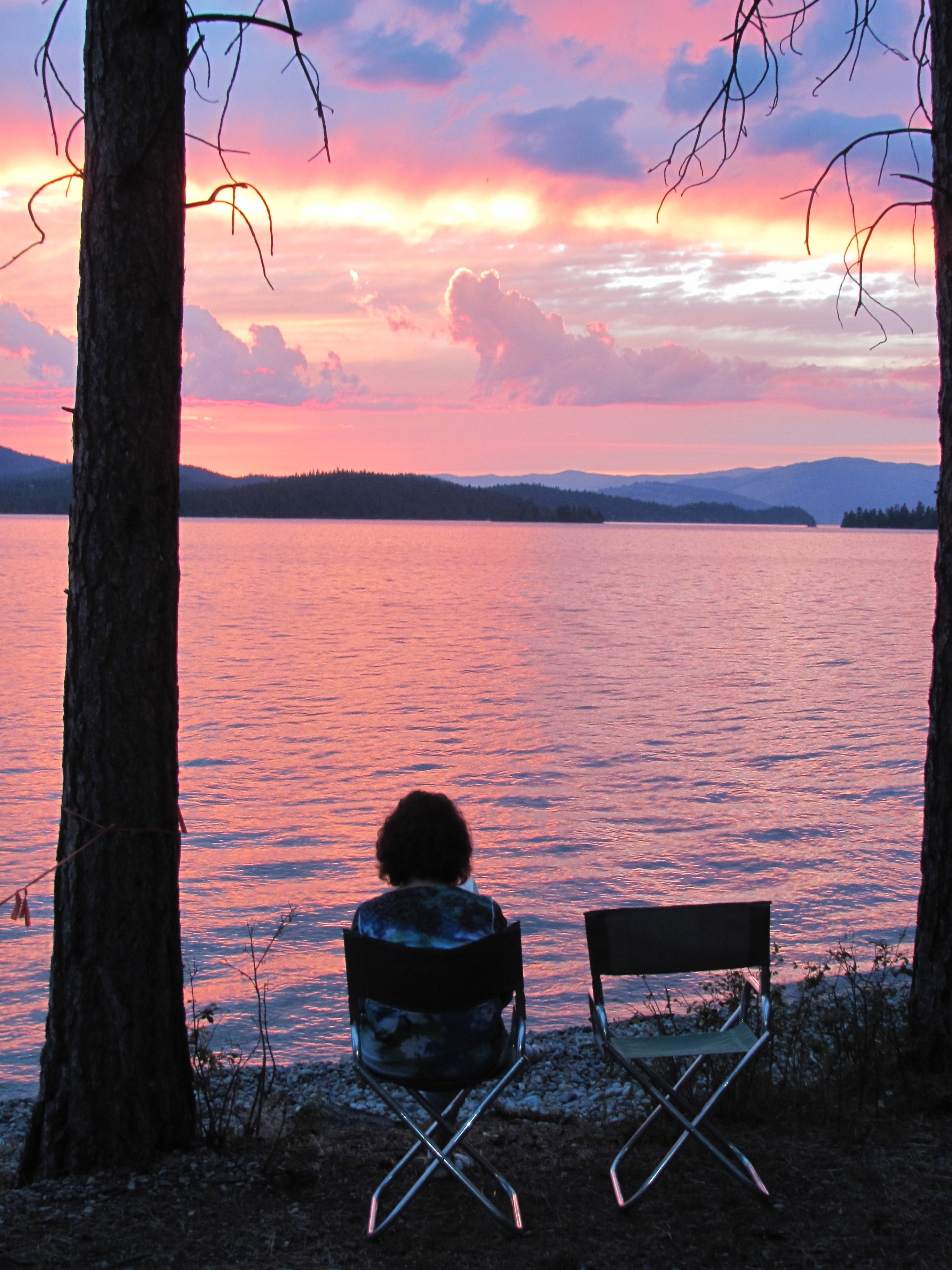
Two Chairs

On my paddles I pay attention to my own experience, both internal and external. Sometimes this happens out of necessity because conditions on the lake require my utmost concentration. But in midsummer, after two weeks in the nineties, and when many people take their Montana vacation, I am most aware of the experience of other people. These vignettes suggest the pleasure people take in being on, in, and near the water whether they own a piece of property or simply pull into an area where the public is granted access to the shore and all that lies beyond.

At Finley Point State Park where we have come for a picnic and a paddle around the islands a Japanese family, perhaps on a vacation to Glacier National Park, plays in the shallows. The father/husband photographs waves washing over stones with his iPhone while his wife prepares a simple meal at the picnic table and calls out swimming instructions to her two young children who are beginning to learn to swim underwater, their eyes protected by little sets of goggles. Meanwhile, the grandmother, no bare skin showing, tries to learn how to skip stones. She bends to pick out her stone and then gives it a side-arm toss. Clearly, she is hooked on the possibilities.

A couple from Alberta with a Scottish accent stops by to describe their happiness in being at the lake. They take two miniature poodles on leashes for a swim. When the dogs hesitate about being led into the water, the man turns to me and says with a wry smile, “They are supposed to like water.”

A man from Moab, camping with his siblings and parents rigs his GoPro camera to the back of his Airedale. He then takes the dog and camera for a swim, later downloading the dog’s-eye-view onto his laptop. I can tell that he is delighted by a non-human point of view.

An adolescent boy and his two sisters create their own game of tag in the shallows off the point. One sister on foot and the other sister in an inner tube try to catch the boy in a kayak. After he is tagged he tries to tag one of them.

During my paddle a newly fledged osprey flies overhead and lands on a dead branch below the nest where it was born. After I pass under the snag the bird leaps from the limb, circles behind me, then appears in front of me. With almost no effort and without wetting its wings the bird simply dips its talons in the water and picks up a live fish. Seemingly proud of its catch, it makes several more circles around me before returning to its perch.

In the bottom of Cat Bay, after passing property heavily marked with signs saying that a security company is watching me through its cameras, I find the deep fold of a tucked-back bay and slip past a couple in lounge chairs. When I wave and they do not respond I realize that they are taking a late afternoon nap. They have come deeply to rest.

After I complete my paddle and pull up on the rocky shore of the state park the man with the Airedale approaches. When he asks sophisticated questions about my boat I can tell he is also a paddler. He soon tells me about his own paddling experience and how last summer he and a friend crossed Lake Michigan, commencing to paddle at midnight, finishing at 5 p.m. the next day. As he tells the story of how they were assisted but concerned about big quartering seas, he gently swirls half a lime in a gin and tonic.

When it is time for me to reload my boat I return to the marina from which I launched. I find a grandfather tacking out of the narrow space with his two grandchildren. In a gentle breeze they head out for a sail in a Hobie Cat with a rainbow-colored sail.

While loading my boat back onto its rack I see a car pull into a parking spot facing the lake. A young woman in a cowboy hat emerges from her hot car. As she sees the lake on a cloudless evening she raises her arms and breaks into song. Her voice is beautiful, unexpectedly beautiful.

As I walk back to our picnic spot I pause to visit with a couple from Wyoming. They have rigged a tent over the bed of their pickup and then begin to roast hotdogs over their campfire. The man places an unopened can of beans in the fire to heat the contents before opening the can. Though I am not a fan of hotdogs my mouth begins to water as the flavors and scents rise with the smoke of the fire.

All through our picnic dinner a trio of children plays in the water. They invent games with rules of their own making. They swim and play past the shock of the water’s cool temperature. I can imagine how hungry they will be when they emerge from the water for whatever meal their parents are preparing.

During the drive home a nearly full moon rises over The Missions. As we pass slowly through Ronan our eyes, the moon, and Gray Wolf peak fall into an alignment strikingly similar to a gun sight. The moon accompanies us all the way down the valley, disappears as we go through the canyon section north of Arlee and then reappears over the Rattlesnake wilderness. After we descend Evaro hill it reappears over Mt. Sentinel east of the Missoula valley and promises to illumine the night.

I cherish my own meditative experience while paddling. But this day I have seen how the lake calls to all the other people and creatures I have encountered. They, too, dip their cups in this deep lake.

Overnight Solo

(June 9, 2014)

Glacierinthedistance

I had almost forgotten. Packing for an overnight paddle is a lot of work. Even though I take the simplest approach possible, especially with respect to food, I have to make a list of essential items. I cannot afford to forget anything. I begin to wonder whether such a trip is worth the effort. It would be easy to succumb to inertia. The lawn needs mowing. Weeds grow faster than I can pull them. I haven’t finished all the preparations for my fall course at the university. Several projects wait for my attention in the shop. I can think of dozens of reasons to stay at home. Yet, something calls to me.

I drive north through the light traffic of a Monday afternoon in early June and park at the Walstad access point, deciding to enter the lake via the little bay south of the parking lot and boat ramp. I want this area’s soft ground under my boat when I load it with gear. On the beach protected by a screen of willows I change into my dry suit. The lake is rough and the water is still too cold for a spill. I then reverse the morning’s process of packing the truck by taking everything out and loading it in suitable hatches, saving the day hatch for my camera, keys, cell phone for emergencies, an extra water bottle and a rescue rope.

On the way to the island I ride the back of the green dragon. It is not often that I have a tail wind, but this time wind and waves push the stern port quarter. I make the yaw of the boat less disconcerting by deploying the skeg and enjoy the rush and hiss of waves passing under me. I quickly reach the strait between Wild Horse and Cromwell Islands, advance through the channel, then set my sights on Cedar Island to the northeast. I cover the nine miles in relatively short order, round the island’s south tip and begin to paddle slowly up the east side searching for a place to land. Several spots seem promising but many are barred by fallen logs driven ashore by winter storms. I select one with a gradual slope and good access to the forest.

MonsterCookie

I haul out, choosing to skid Bluebird over the backs of two large pieces of polished driftwood rather than lift the loaded boat. I unpack everything I stowed and set up camp. I choose not to erect the tent, relatively confident about the weather and wanting to sleep in the open. (I will later regret this decision when carpenter ants come to visit and force me to erect the tent after midnight). In the course of the evening I explore the island and gradually make sense of some of the island’s history. Intact sections of a wire fence remind me that in years past the Montana Department of Fish, Wildlife and Parks used the island’s interior to corral bighorn sheep brought over from Wild Horse. The once grand bungalow on the north end of the island has become an easel for painted graffiti. Where cedar shingles have not been ripped off to start fires people have written their philosophies, proclaimed their love, declaimed themselves, cited scripture, sprayed wild mages. On the south side of the house tall lilacs, a symbol for domestic life, still bloom. In the shady forest interior behind the house the limestone root cellar recently provided shelter for nesting geese. Down covers the floor just inside the entrance, the door ripped from its hinges when the lock would not yield to someone’s curiosity or inclination to steal. In the course of the evening I play hide and seek with a doe that must have swum over from the mainland. On the edge of the meadow I spot a buck in velvet without him spotting me.

Cedargoose Back at camp I watch the effects of sunset to the west on the Mission Mountains and Swan Range to the east. Near dark I let myself down into my own down and begin to let sleep take me like a wave. I am suddenly roused, however, by an advancing sound. I look up just in time to see a bald eagle pass low over me. I do not so much hear the big pumping wings as feel the effect of the airflow. I have never been so close to an eagle as to feel the movement of the air it displaces.

I fall asleep to the image of the eagle passing over me but wake several times to sweep ants away. I don’t sleep well until after I erect the tent. Dawn arrives like a cymbal crash and I wake with a start. Before the atmosphere warms little puffs of clouds pass over the ranges to the east and disappear into the light. I make hot water for tea on my almost fifty-year-old Primus stove, amazed by its simplicity and efficiency; this must be the least technical stove still in use. After granola and raisins I repack my simple camp, re-stow the gear and circle the island counterclockwise. I pass into the cool shadow cast by the island over the strait between Cedar Island and Shelter Island with its incongruous castle. As I pass the imposing structure I think, at least the builder had sense enough to place the breakfast table in the morning light.

Crossing the open water again I set my sights on a small cove on the north side of Wild Horse. I am alone on the lake, stroking my way through distance and time.

I eventually come into the shelter of this shallow arc of land, one of my favorite places on earth. As I pull the boat out of waves’ reach I see that someone before me erected a simple marker by placing a large feather upright in the gravel: a fitting way to honor the bird and the beach.

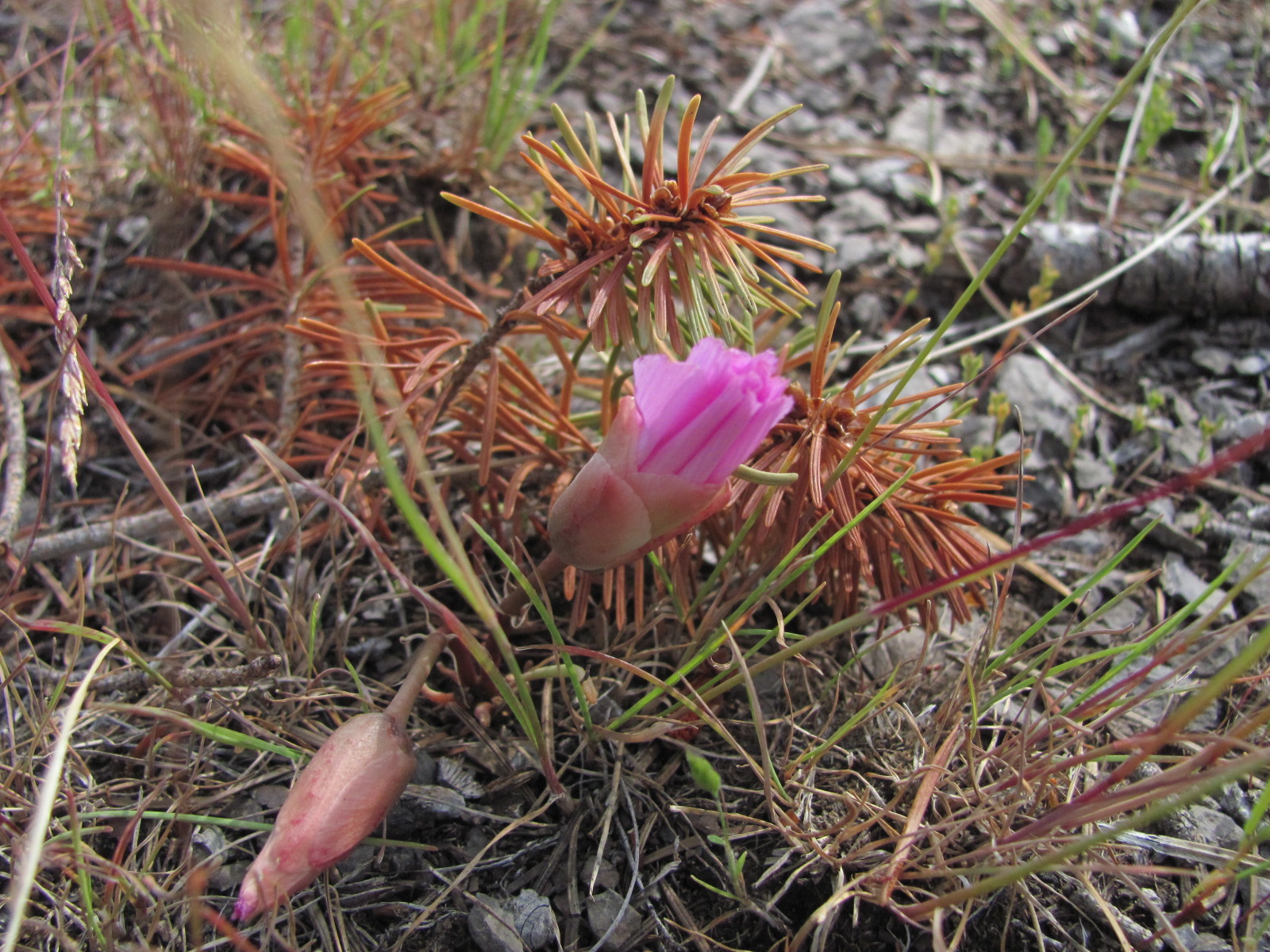
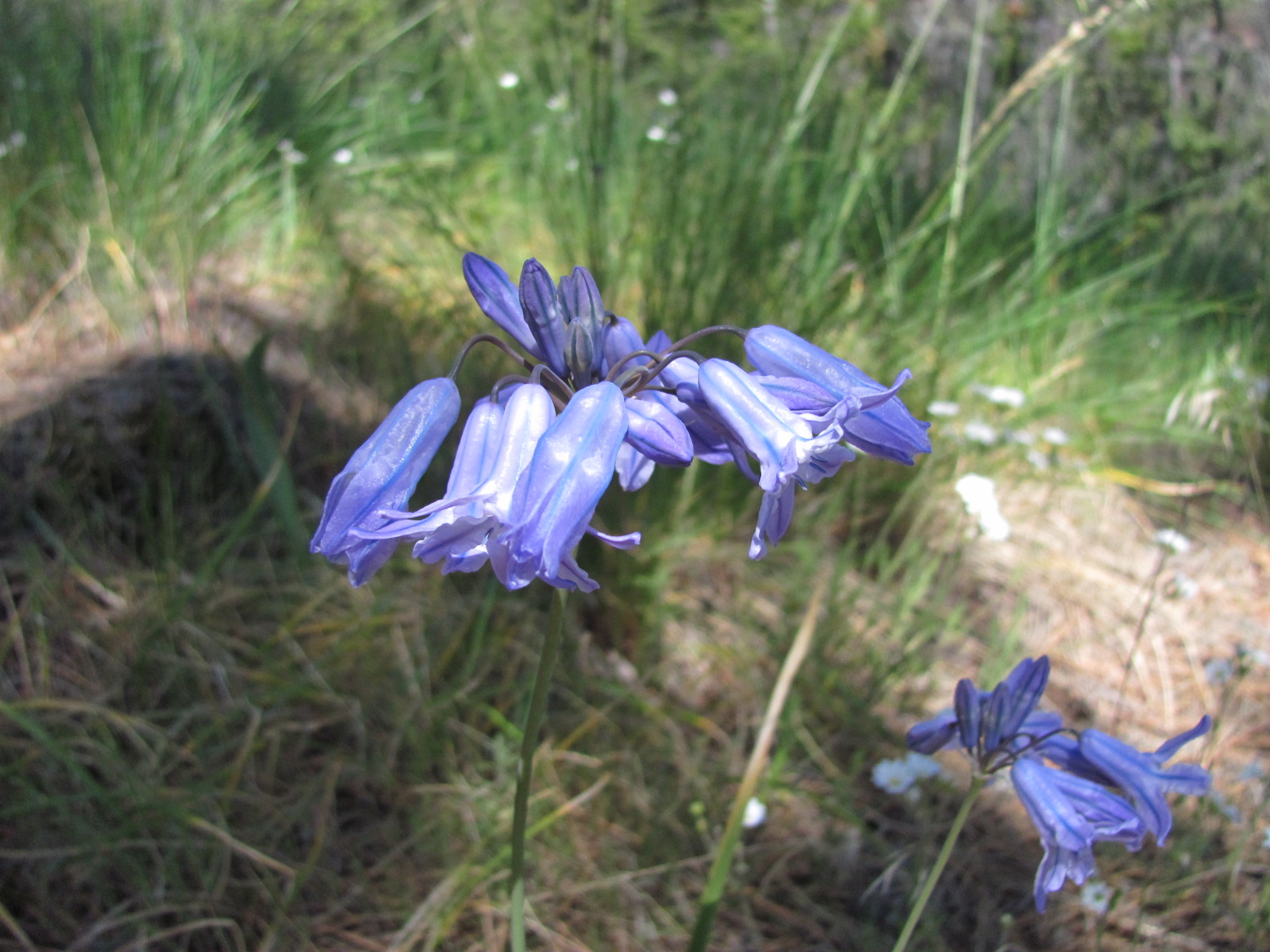
As I explore this part of the island I am pleased that unusually dry conditions for May and early June have not kept flowers from blooming and lush grass from growing in the swales. I take a moment to study the complex interior of a sago lily,

Cedarsago

the intensely pink blooms of bitterroot flowers sprawled improbably over a rocky spine,

IMG_2104

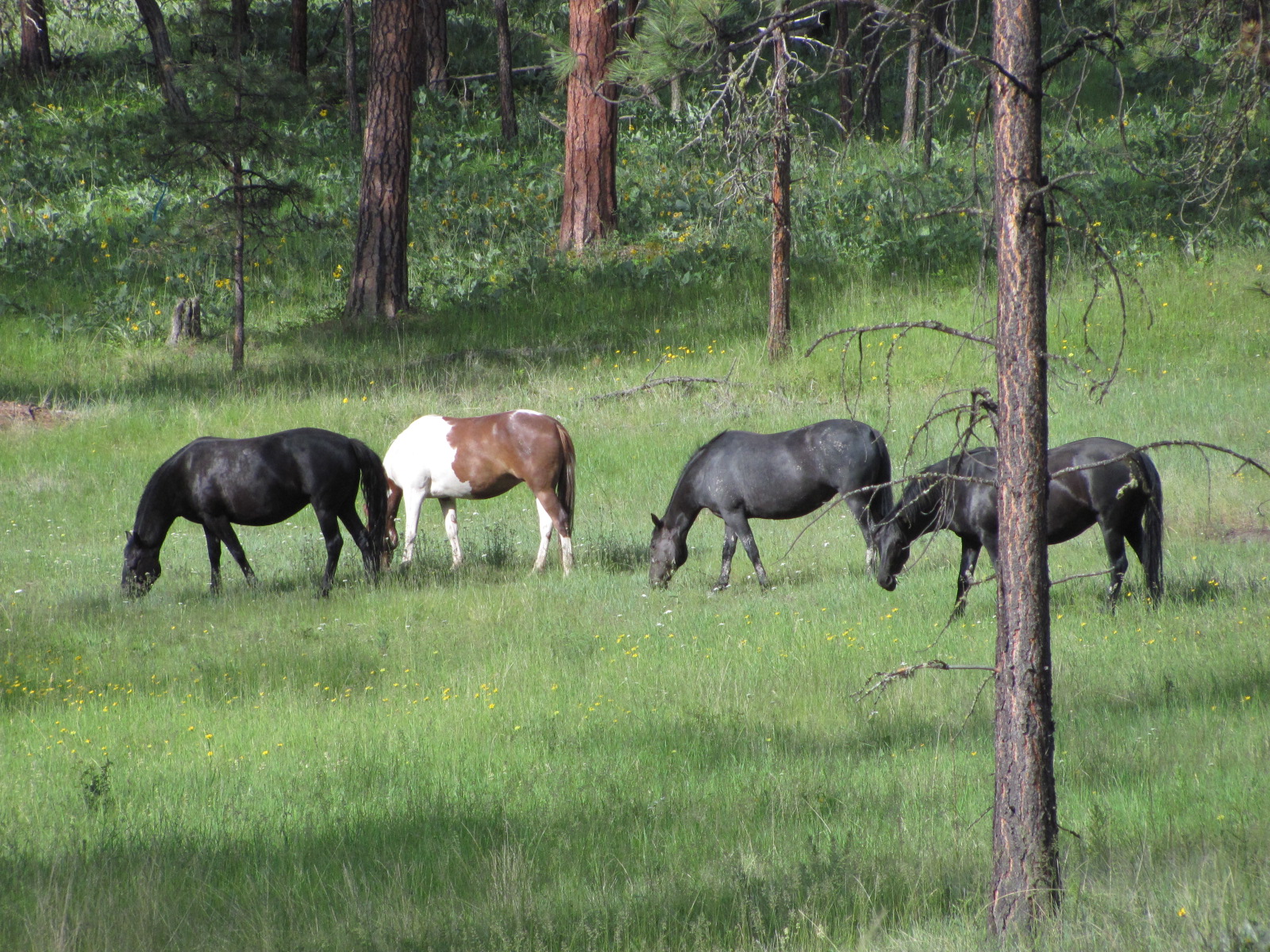
and some kind of ceremonial site set in a circle of stones and cones. Curious, I lift the central stone for clues. Only a little mold remains to commemorate a life or whatever led someone to create this modest circle of remembrance. After climbing the first ridge I drop into deep forest and hear a whinny: the wild horses are nearby and have detected my scent. I stand behind a large Ponderosa and wait. I see the lead mare come into the open. When she sees the lush grass she breaks into a gallop and her four companions, including the now-full-grown horse born on the island, race after her. They bend to the grass, switching their tails in what must be a sign of pleasure. I do not cross into the Special Resource Zone, obeying the sign that asks people to leave the area as a sanctuary for island animals until at least July 15. I am content to stand on the boundary watching the horses.

IMG_2113

I retrace my steps through the timber, over the ridge, and down to the beach. I tuck myself in and paddle the last miles home.

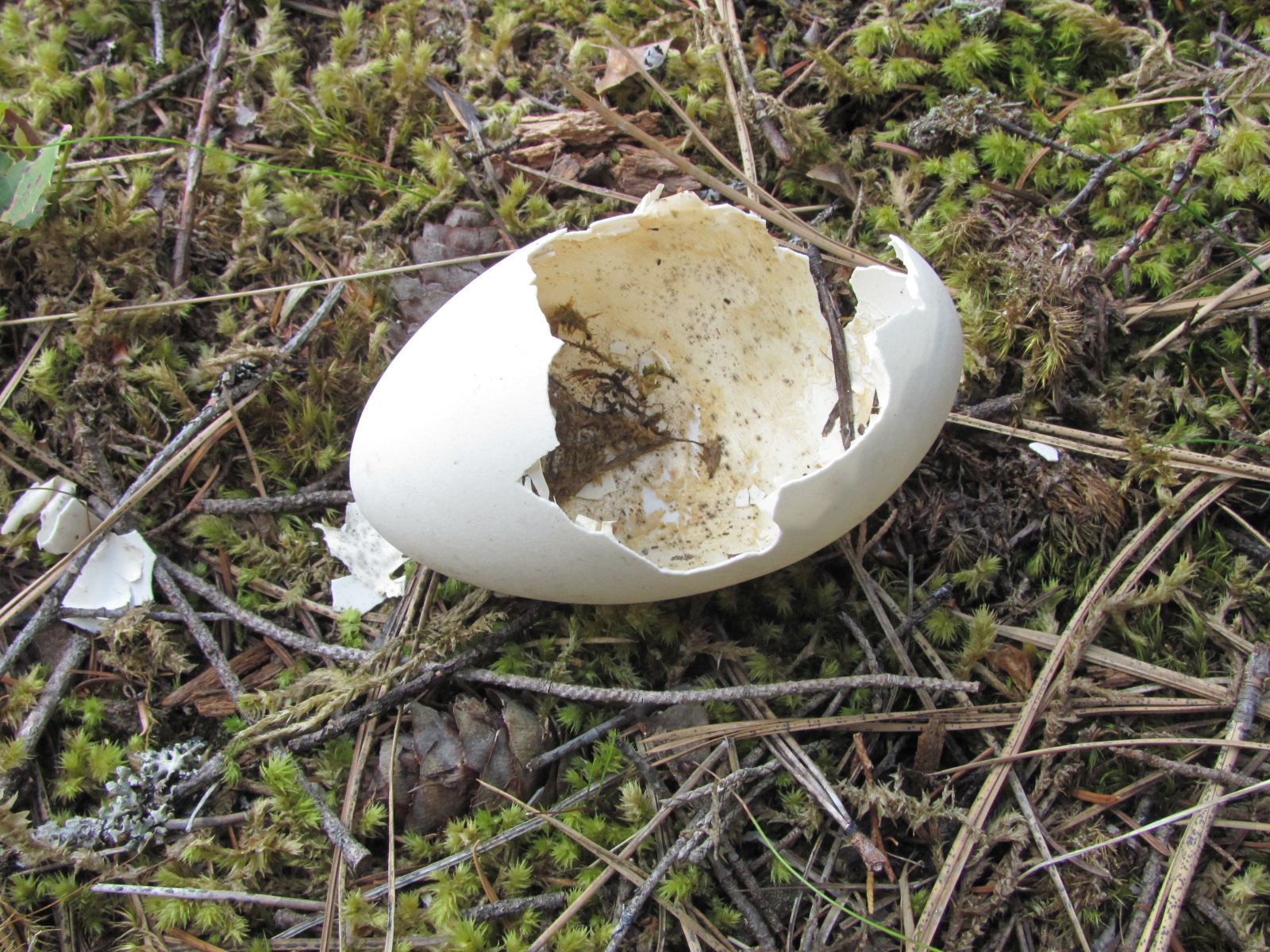
On the drive back to Missoula I review my decision to make this trip. If I had not left some things unfinished; if I had let inertia or a nagging sense of responsibility stop me in my tracks; if I had pulled back from the thoughtful packing of gear I would have missed the pulse of eagle wings at dusk. On the second morning I would have missed the calliope hummingbird attracted to my bright red paddle jacket, mistaking me for the largest hibiscus on record. I would have missed the architecture of the sago, the scent of spent balsamroot, the ghost of a goose in the broken shell it left behind, and the way morning shadows flowed over the island like a watercolor brush loaded with water and pigment.

Sometimes it is worth the effort to leave home, to take a few essentials on the way to experiences one might be able to imagine but not receive without pulling away from the gravity of responsibility and the drag of routine. It was good to let the islands and the lake pull at me and to respond with my consent.

May Miniatures

IMG_2052

…And these Things,

which live by perishing, know you are praising them; transient,

they look to us for deliverance: us, the most transient of all..

(Rilke, The Ninth Elegy)

If one is prepared for the paradox of cold water and warming air temperatures, paddling in May can be a joy. Though the lake level is rising as the rivers pour runoff into the basin, some of the public boat ramps and access points don’t provide enough clearance for powerboats to launch safely. As a result, far fewer boats churn the lake surface, especially before Memorial Day. If a paddler catches an interval of high atmospheric pressure between spring’s wind events, one can paddle great distances in relative calm. At such times the lake feels open for exploration.

IMG_2072

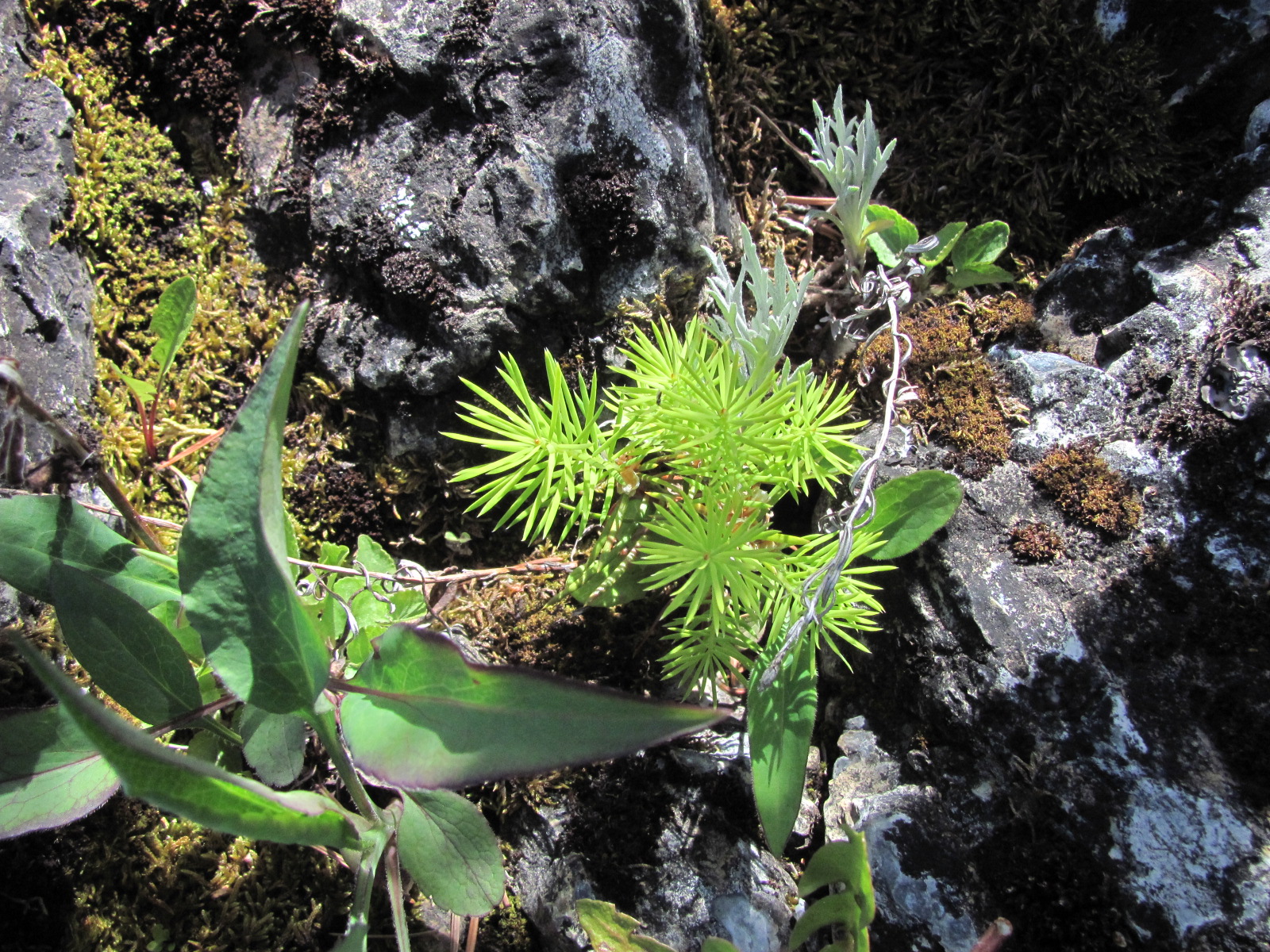
I recently took advantage of one of these opportunities and paddled through The Narrows and up to Wild Horse Island. Starting from the campground at Finley Point I landed at Osprey Cove. As I approached the cove I heard calls of distress from the osprey in the snag at the north end of the cove. Wanting to cause as little upset as possible, I hugged the rocks at the south end of the cove and hauled Bluebird up the steps of the adjacent gravel ramp then opened up my dry suit to cool off. Curiosity soon got the better of me and I began to explore the cracks in the big blocks of stone that armor the edge of the cove. Even these unlikely places host blooming plants and mosses. Soon I began to hike up the steeply wooded slope above the cove. Thanks to spring rains the ground was soft underfoot. Gaining a little elevation, I took in the broad view—Cedar Island and The Missions beyond. Mountains still held snow from late season storms, but the near-at-hand held my attention. On the body of a fallen tree I found a miniature garden of mushrooms, mosses, a fir seedling and silky phacelia. On more open slopes I found harebells at the end of their long fine stalks, shooting stars beginning to fade, arnica and balsamroot in full flush.

IMG_2043

This early season paddle reminds me that there is more to see on the island than Rocky Mountain Bighorn sheep and big bucks in velvet. Deep in the forest a palette of colors and diverse forms express themselves in miniature. A kayak offers access to these micro-worlds before tour boats motor by scouring the slopes for “game” and before jet skis cut high-speed turns in the liquid blue. Sometimes the world at our feet calls out for our attention. As the prophet reminds us, the grass withers, the flower fades.

IMG_2073

A Goal?

(May 3)

I unload Bluebird on a gray, windy morning at Wayfarer Park near Bigfork. While I stow a dry bag stuffed with emergency gear a fisherman backs his boat down the concrete ramp and nearly runs over me. By the look on his face I sense that he may be embarrassed, but he is in such a hurry to launch his boat that he doesn’t say a word. I step over my boat so that I am not caught between the man’s desperation and my own deliberations. I decide to wait for him to race off to the ledges and troughs where he pictures fish he wants to catch.

Knowing that conditions will be rough and the water cold, I choose a modest paddle: Wayfarer to Wood’s Bay, about six miles south, and then return. As soon as I am in the water wind and waves strike the right stern quarter. The waves slide under me diagonally and create a disconcerting rolling motion. It is rough enough that I hear the waves combing cobbles on the beach, a kind of mountain surf. I paddle south parallel to shore where vacant cabins await their summer visitors and most boats hang suspended above the rising lake level. Off to my left I spot first one and then a second giant boulder, “erratics” in the language of geologists, deposited by receding glaciers and large enough to be unmoved even by the torrents of Glacial Lake Missoula. On the hillsides above the lake larch trees turn a color that Winsor Newton calls “sap green.” This color is so intense it almost seems charged with electric current.

After about four miles of this rolling motion, and as it begins to rain, I rethink my goal for the day. If the conditions worsen, I will have a hard time making the return paddle. If I go over into water only a few degrees above snowmelt, I could become hypothermic very quickly, even in a dry suit. I remind myself that I am not obligated to round Yenne point and head into Wood’s Bay. I decide to execute a left turn I learned from watching Leon Somme. Turning back, heading now into a quartering wind and a corresponding chop, raises a question: what is the goal of a paddle? I often try to complete a circuit, reach an island or point, draw a triangle with my boat or fully explore a distant bay; but sometimes my goal is deeper than a destination. Today it seems right only to venture out with as little as possible between me and the forces around me—the wind, the waves, the rain, the white wall of a spring storm about to descend on me from Jewel Basin. In a kayak we scale back the layers of protection between ourselves and these great forces. We maximize exposure while preserving the ability to make a safe passage. Today I am like a climber who turns back twenty feet short of the peak because it is enough to have time on the mountain. It is enough to feel these forces painting the slopes green, driving the waves toward shore, equipping the body with a kind of neurological beauty that makes countless adjustments to pitch, roll, and yaw. At the turn I see my actual goal.

Waterline As Watermark

(April 4, 2014)

Image

For the past couple of years I have wanted to extend my paddling season, to venture out earlier and take advantage of the quiet beauty of autumn. As I think about my plans for tomorrow, the first paddle of the season, I confess to feeling a little anxious. Flathead Lake is not kind; it is its own self. I have an appropriate fear of cold water and wind blowing across its surface. I wonder if the competence I felt at the end of last season will come back to me when I tuck myself in the boat. I wonder if my physical conditioning during the winter will be equal to the demands of paddling in rough water or equip me to paddle the longer distances that curiosity requires. I also worry about the sudden changes in conditions that often occur in springtime, especially a blast of wind that pours down through the canyons between peaks and descends onto the lake. I only have my own strength, my own wits, attention to sky and water to help me avoid trouble. I have no engine whose throttle I can throw to get me back to shore and safety. At the same time I feel excited about exploring more carefully a portion of the lake I have usually passed on my way to some other destination. I wonder what Shelter Bay, protected from north winds, will be like in early April, and if I can cover seventeen miles in a round trip to a spot on the map and in my mind.

I have made careful preparations for this paddle. Over the winter I purchased my first dry suit, an extra layer of protection from the cold and wind. I have given more careful thought to the food I should take with me. Perhaps most important, I can draw on eight years of experience. This will help me turn back when conditions warrant, or not launch in haste. I know bays where I can seek shelter, have a better sense of what to look for in the sky that spells danger. I have a feel for that middle passage between foolishness and paralyzing fear; I have already reckoned with far superior powers.

Driving north the next morning I feel eager to see the lake again, especially after this winter with its hard, late storms and cold temperatures. This early in the year I doubt there will be another paddler on the lake.

In the early spring the lake is about ten feet lower than when it stands at full-summer pool. Regulated at Kerr Dam, Flathead Lake needs to be drawn down in winter to accommodate a massive influx of water from the Swan range and Glacier National Park. The best way to avoid the silt at the north end of the lake or on the east shore is to launch at Walstad on the south shore. I pull into the fishing access site and discover that the lake level is below the far end of the long, concrete boat ramp. It makes sense to back down the ramp rather than carry all my gear from the parking lot. On the cobbles I find a couple of slabs of stranded Ponderosa bark, place them on the concrete and then unload my boat, spanning the bark so as to protect the hull from an abrasive surface.

Looking out toward Wild Horse and Melita Islands I see a glassy surface. After a few minutes of paddling I encounter thin slips of ice in the channel between islands that tell me the lake was calm last night. I part them with the prow. They remind me of the glaze of sugar on the top of crème brulée. On the east shore of Cromwell Island I see a block of shelf ice that in the morning sun looks like a pack of pelicans.

Grateful for the benefits of time in the gym, I enter the open water between the northeast corner of Wild Horse and the west shore. With only a slight headwind I feel secure making this crossing. Unfortunately, in my eagerness to start paddling I forgot to “burp” the dry suit. It now puts pressure on my chest and lungs, making it more difficult to breathe. The neck gasket is still too tight and I am losing circulation in my hands from a combination of the wrist gaskets and having pulled the Velcro straps too tight. I adjust the gloves and fantasize about trimming off more of the neck gasket. I am not comfortable but must proceed. There is no place to stop.

Eventually, I am able to identify the Methodist Church camp on a point to the north. A large willow, beginning to turn orange, gives me a spot to aim for in Shelter Bay. I feel relieved when I finally enter the bay. I have covered about 8.5 miles without a break. I am eager to get out of the boat and unzip the dry suit. After landing, I pull out my lunch—cheese sandwich, apple, two cookies and a full bottle of gator aid. I find a nice spot under a fir tree well above a long ramp of exposed gravel.

After lunch I wander around the beach. I find a broken section of steel fence post. The shaft is buried in the gravel; the sharp end and fins stick up. A piece of steel like this would make a mess of a swimmer’s foot or a diver’s scalp. So I work it loose from the gravel and heave it up into the forest. Along the waterline I find things I have never paused long enough to notice—plastic wadding from shotgun shells, a blue strand of fishing line, a plastic lipstick tube, a girl’s naked doll, feathers from geese and gulls, a branch collar from a tree surrounding a yellow stone, a line of pine needles, maple samaras, catkins, the vertebra of a large mammal, highly polished roots that seem like a full spinal column, and birch bark that help define the water line. These lateral collections strike me as the year’s watermark, not pressed into paper, but resting on stone. Waterlines tell stories.

IMG_1996

Before getting back in the boat, I am careful to “burp” the dry suit this time. I immediately encounter headwinds. I feel strong enough to bear down and paddle against the resistance but know I will need to pause on Wild Horse Island before making the last open-water crossing. On the point marking the entrance to Skeeko Bay I haul out. Small waves breaking on the beach make the exit tricky. I lift Bluebird into a pool of water just inside a gravel berm. Stranded ice contributes melt water to the little pool. I take a few moments to lie back against the slope of pea-sized gravel and rest. The sun has warmed the stones enough to create a very comfortable place for me to rest. I drink almost all of my remaining water and eat the second half of my apple. I have about three miles to go, all against the wind.

waterline

Leaving the beach is even trickier than landing. Not thinking things through, I put the boat into the water parallel to the shore. A wave spills into the cockpit. I have to haul the boat out again, pump and then sponge the spill. The second time I wade out a few feet to get past the little breakers, swing a leg over the boat, straddle it, sit, and insert my legs, a process made slightly more difficult in the bulk of the dry suit. I resume paddling, make relatively swift progress along the island beginning to turn green and then face the open crossing. Fortunately, the wave height has not increased, though the wind still works against me. I am eager to step into the shallows below the end of the boat ramp.

On the drive home my optic nerve registers the imprint of trumpeter swans in a vernal pool and the emerald wash of grass beginning to spread across the fields. This has been a good, if exhausting first paddle of the year. The lake and I are back in touch.

Gravel

Today, housebound, I am thinking of gravel. As I paddle around the lake, into its bays and coves, around its islands, I am learning where waves push rounded stones into heaps that are often hard to climb after exiting the boat. Lubricated by waves the stones slip and slide against one another, make it almost impossible to find firm footing, ground that does not give. Trying to ascend these beaches reminds me of the days after someone dies: it feels as if everything is giving way, rolling out from under foot, as if there is no way to rise. Under the lake surface gravel seems almost part of the liquid, not in suspension, but barely more solid than the water itself. I think of one particular beach on an island. One night I pulled my boat high enough so that it would not slip away. In moonlight that rose over The Missions, the night barely less hot than the day, I swam alone, open-eyed over fields of moonlit gravel, pearly light reflecting off the stones.selfcropped

I know a few places where the forces that produce waves and the points that resist them work together to create fans and long fingers of stones. In these places I sometimes lay my paddle across the deck, coast, reach down, and run my fingers through countless loose stones before paddling on.

There are places, more exposed to the worst winter weather, where waves paw the beach, pick up stones and throw them up the beach, into cracks and crevices in logs, into pockets where limbs used to grow, onto shelves in bedrock. It may be hard to imagine the lake throwing stones, but it does.

Early in this process I thought gravel was gray; but I know better now. Gravel is blue and green, red, brown, yellow, and occasionally even black. Gravel is like millions of Impressionist brush strokes, individually distinct, collectively a hue that shifts with the angle of light. I am glad that gravel is not gray in the same way I am grateful that people are not all one color. And as any child knows, water makes stones more colorful, dull in the hand, astonishing in the shallows.

Each stone embodies its own story, descended from its own place, gave itself to the current of the river that brought it into the basin, let itself by pounded, ground, filed-off, perfect at each stage and on its way to becoming sand, glinting sand. Every stone has its own shape, depending on its composition, its ability to resist, its history of protection or exposure. Just like us.BirdGravel

I also think of the sounds gravel makes. It can rattle, as when a few small stones carried into the boat by the corrugations of footwear rattle in the bottom of a dry hull. It can roar as millions of frictioning faces rub against each other in a storm. And gravel beaches can sound hollow—a mystery I still have not solved.

Today I sing a song of praise to all these rounded stones.

Between Invisible Shores

(September 14, 2012)

In an earlier post (Clear at Last) I describe conditions on the lake that I could barely imagine in September, two months earlier. Smoke from the Sawtooth Fire in the Bitterroots to the south and smoke from the Mustang complex of fires spreading from Idaho, plus smoke from 140 square miles of fire in Washington State have poured into Montana and filled every valley. These conditions awaken a primal desire to be near water. With several years of history leading retreats at Deep Bay, we receive permission to rent a timber-frame house at the retreat center. This visit will give me an opportunity to paddle from Deep Bay to Woods Bay, a direct route across the lake, west to east.

When I pull out of the deep pocket of the bay I lose sight of the bottom almost as soon as I pass between the black teeth that protrude out of the lake at the northeast corner of the bay. I don’t see the lake’s foundations again until I approach the armored point on the north side of Wood’s Bay. I am not only unable to see the lake bottom, I am unable to see the opposite shore. I was not alive in 1910 to see for myself, but I have read that the firestorm of 1910 filled the lake basin with so much smoke that some boats could not find their docks or ran aground, so poor was the visibility.

As I begin the crossing I can hear a few boats on the lake but cannot see them. This feels disconcerting, if not dangerous. Almost an hour later, when I finally see a boat, it appears suspended in the air. There is almost no distinction between water that looks like liquid solder and air saturated with gray smoke. After more than an hour of blind paddling I detect a faint finger where the forested peninsula just north of Wood’s Bay seems to be drawn along the water line.

I press on through the dense air, using dead-reckoning to help me navigate. I have almost no visible sense of progress. I paddle a thousand strokes but everything around me seems the same. This must be how it feels to a cancer patient trying to recover from the enervating effects of chemotherapy; how it feels to people trying to revitalize an institution in need of radical transformation; or, how anxious parents feel when young adult children flounder from part-time job to part-time job, looking for a footing on the continent of a more stable future. Today I paddle in faith that all these strokes will eventually lead to the opposite shore.

I remind myself not to hurry the process. I need to save a certain amount of strength for the return trip and the possibility of a shift in the wind and weather. I let images from the morning and the night that preceded it flow through my mind. I try not to latch onto anything in particular. I drift on the surface of thought. Stroke, thought, stroke…

Not being able to see into the distance, I focus on the near-at-hand. As I paddle I notice something I have never seen before: a series of narrow parallel lines peels off the bow of my boat and spreads in a widening “V.” As a boy I saw lines like these along the lower jaw of the blue whale in the Museum of Natural History where my father used to take me on my birthday. I wonder if there is a connection between these little lines streaming off the prow and the anatomy of the lower jaw of the great whales. Are the lines more than the pleats of a great expanding mouth, perhaps even an efficient way to channel the flow of water around a form that propels itself through water?

In time I spot what looks like either a buoy or a small sailboat a half mile to the north of my course. The smoke makes it very difficult to identify anything with confidence. I shift my course slightly to the north so I can approach and see this object more clearly. I approach close enough to see that this is one of the two instruments that the Biological Station has anchored in the lake. Having made the identification, I readjust my course slightly back to the south. I am beginning to pick up details on the far shore–a roofline, a water tower on the hill, a glinting window. Stroke, thought, stroke.

By now I want to get out of the boat, stretch my legs, eat the cookie I keep thinking about, get a drink of water. I find a tight little spot, a grove of cottonwoods, some drift logs, a shallow landing, and pull out. With my feet and part of Bluebird still in the water, I settle my rear end into the gravel, pull out my water bottle, take a long drink, and open the plastic bag protecting my now-late lunch. It feels good to settle myself into the red, tan, gray, and green stones, to feel the earth after making my way through water and opaque light. I pick up stones, examine their colors and shapes, look for fissures and lines, then put them back. Nearby, little white feathers from the ring-billed gulls drift in the bay. I drink in the water’s clarity, a clarity that seems strange when everything else is obscure.

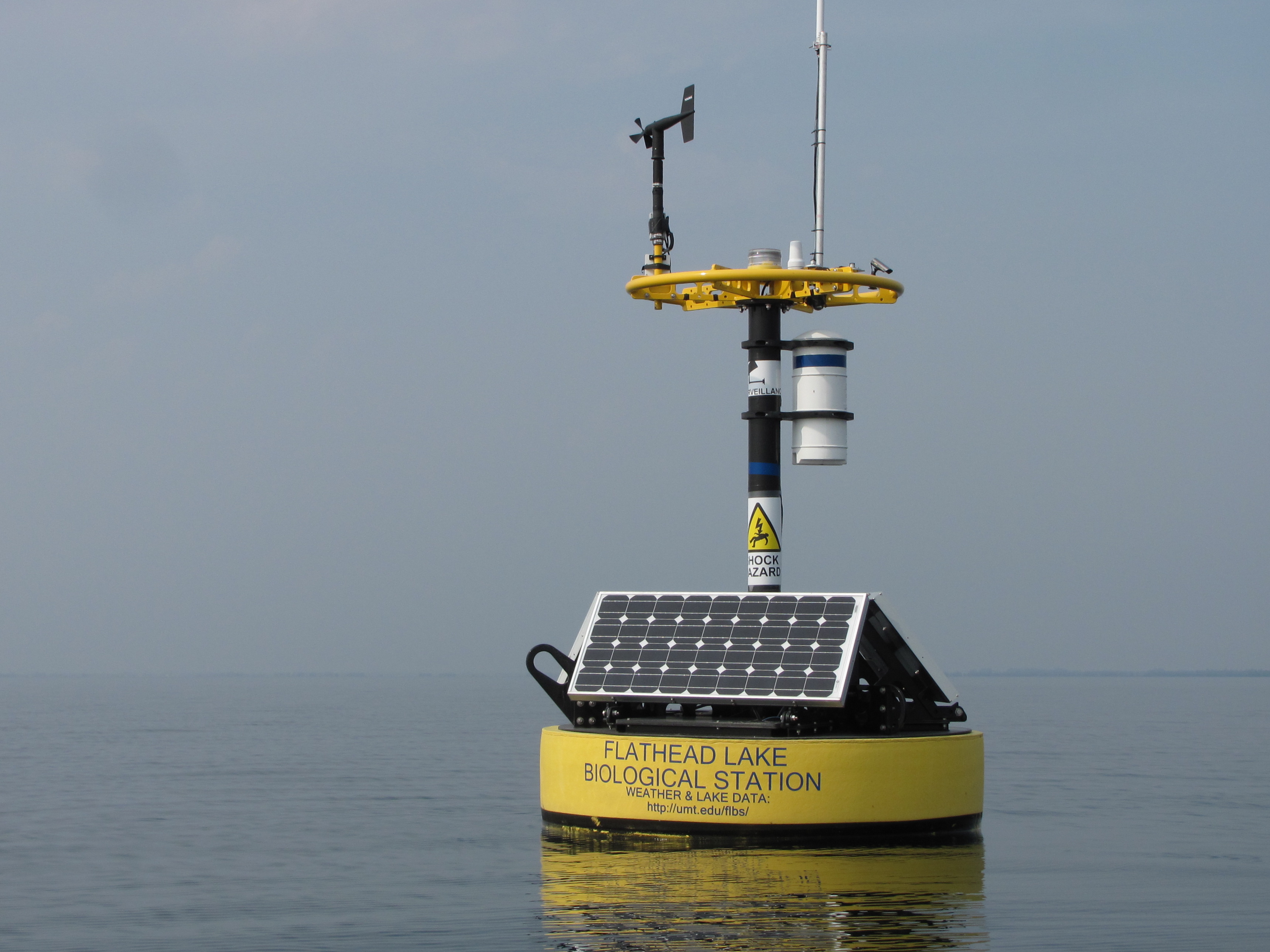
I stow my few items of gear, slide my boat back into the water, and look back over my shoulder. A vague depression, a footprint, is the only evidence of my presence. I paddle out of the bay, slide past the breakwater, take one last look at the green cobbles on the bottom, knowing I won’t see the lake bottom for nearly two hours, and head into open water. This time I aim for the barely visible buoy to the northwest. In the smoky air it is again hard to have a sense of progress. I look away from the buoy so as to not feel discouraged. I have no landmarks to the left or right against which to gauge my advance. Finally, I see the anemometer on the top of the device, the yellow ring of the float, three solar panels, and a sign warning about potential shock hazard for those who disturb the equipment. I drift in and take a few photos.

This instrument, one of two anchored in the lake and coupled with land-based meteorological stations, comprise the Virtual Observatory and Ecological Informatics System (VOIES). According to the Flathead Journal this system measures air temperature, humidity, barometric pressure, wind speed and direction, light and other meteorological parameters. The instrument, anchored above a deep water trench, also profiles temperature, dissolved oxygen, light, water clarity and algal pigments up and down the water column. All the data is relayed back to the Flathead Lake Biological Station. The summer 2012 edition of the Journal describes what scientists have already learned from this new system. The instruments accumulate enough data to be able to predict weather and changes in water quality. In addition, Dr. Mark Lorang uses the data to develop models of water circulation and wave patterns. Dr. Bonnie Ellis uses the information to enhance her studies of the food web of Flathead Lake. The most immediately useful information is available to the public at http://www2.umt.edu/flbs/. Today, however, the instrument seems like a phantom floating on the water. It is strangely virtual.

Buoy Pleased to have seen one of the two instruments anchored in the lake up close, I turn away and resume my paddle. I adjust my course a few degrees south, having come north to the buoy. But almost everything is guesswork. I know there is a far shore, but I see no indication of Angel Point, the meditation structure on top of the rock, no sign of the points marking the entrance to Hockaday or Hughes Bays. Every now and then I catch the faintest hint of what may be the few protruding rocks and trees of Goose Island. One moment I see the shape and the next I lose it. Trying to see this island is like looking at a star: look at it directly and it is gone; look to the side and it reappears. Far to the south I see the round gray-green shape of Cedar Island. I imagine my destination and stroke for it. Given the angle of the light, I once again feel as if I am stroking into radiance.

On the return trip I settle into a slightly slower rhythm. I am not especially tired. I simply have more confidence that this labor, despite the lack of visible progress, will return me to my starting place. I trust the cumulative effect of all these strokes, that infinite gray will resolve into green and blue, red and yellow, the black of water-licked stone. After an hour or so of paddling I discern the mass of the peninsula that protects Griswold Bay, the roofline on Cummins Point, the second mass of rock that protects Hughes Bay. Stroke after stroke I become clearer that the shape I first saw faintly is indeed Goose Island, that the entrance to Deep Bay lies just north of the orange landslide barely visible through the smoke.

I try not to focus on closing the distance between the dock and me. It is enough to keep Bluebird in motion and on course. Eventually I slide past a stone house I admire, snake through the teeth at the entrance to the bay, make the few last strokes across the still bay and pop the skirt. I lift Bluebird to safety for the night, change out of my booties and gather a few things I want to take up to Earth House. I have paddled through miles of uncertainty, leagues of guesswork, creating a triangle of about 15 miles.

Hardly anything is more satisfying than paddling in the crystal clarity of late May or in October after the first few frosts. In September I fear that paddles through a smoke-filled basin will become more common as global climate change becomes more severe, as more frequent droughts and attendant fires radically change our perception of “normal.” The effects of these changes fill even the most pristine places. I hike up the trail pondering our impact on the planet. At the same time I look forward to seeing people who have waited for my return.

smokybasin